A Car Moving with Constant Speed Turning Around a Curve
Understanding how a car moving with constant speed turning around a curve behaves is essential for both drivers and physics enthusiasts. This article explores the fascinating science of centripetal force, tire friction, and the practical implications of navigating curves at a steady pace. By grasping these concepts, you can enhance your driving safety and appreciate the mechanics of your vehicle in action.
Key Takeaways
- Centripetal Force is Key: When a car turns, a centripetal force directed toward the center of the curve is required to change its direction, even if the speed remains constant.
- Friction Provides the Force: The primary source of this centripetal force is the friction between the car’s tires and the road surface.
- Constant Speed Does Not Mean Constant Velocity: Velocity is a vector quantity that includes direction. Therefore, a car turning at a constant speed is constantly accelerating because its direction is changing.
- The Role of Radius and Speed: The required centripetal force increases with the square of the speed and decreases with the radius of the curve. A sharper turn at high speed demands much more force.
- Safety Implications: Understanding these physics principles helps drivers maintain control, avoid skids, and navigate curves safely without oversteering or understeering.
📑 Table of Contents
The Physics of Constant Speed in a Curve
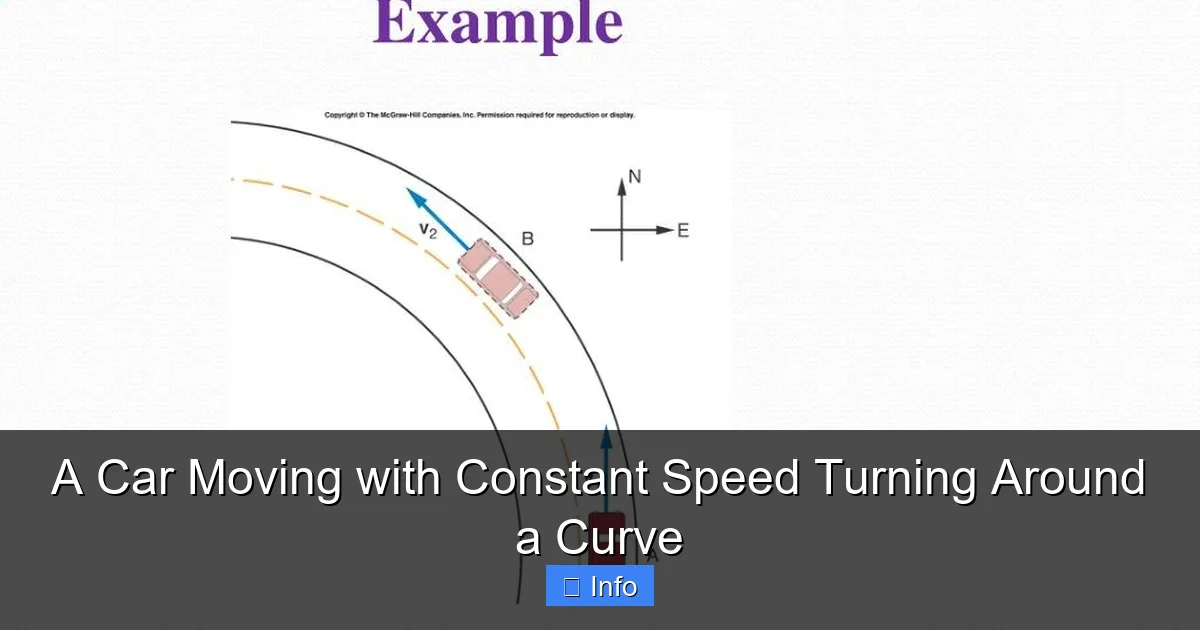
Have you ever wondered what is really happening when a car moving with constant speed turning around a curve seems to defy the simple rules of motion? On the surface, it looks like the car is just following the road. But in physics, things are rarely that simple. Even if the speedometer stays at exactly 50 miles per hour, the car moving with constant speed turning around a curve is actually undergoing a constant change in direction. This change in direction means the car moving with constant speed turning around a curve is accelerating, even though the speed is constant. Understanding this phenomenon is key to appreciating how vehicles interact with the road and how we can drive more safely every day.
Understanding Velocity vs. Speed
To grasp this concept, you first need to understand the difference between speed and velocity. Speed is a scalar quantity, meaning it only has magnitude. It tells us how fast something is moving. Velocity, however, is a vector quantity. It has both magnitude and direction. When a car moving with constant speed turning around a curve changes its direction, its velocity is constantly changing. This is a crucial distinction in physics because acceleration is defined as the rate of change of velocity. Since the velocity of a car moving with constant speed turning around a curve is changing, the car is accelerating, even if the speed remains completely steady. This subtle difference is what makes circular motion so fascinating to scientists and drivers alike.
The Concept of Centripetal Acceleration
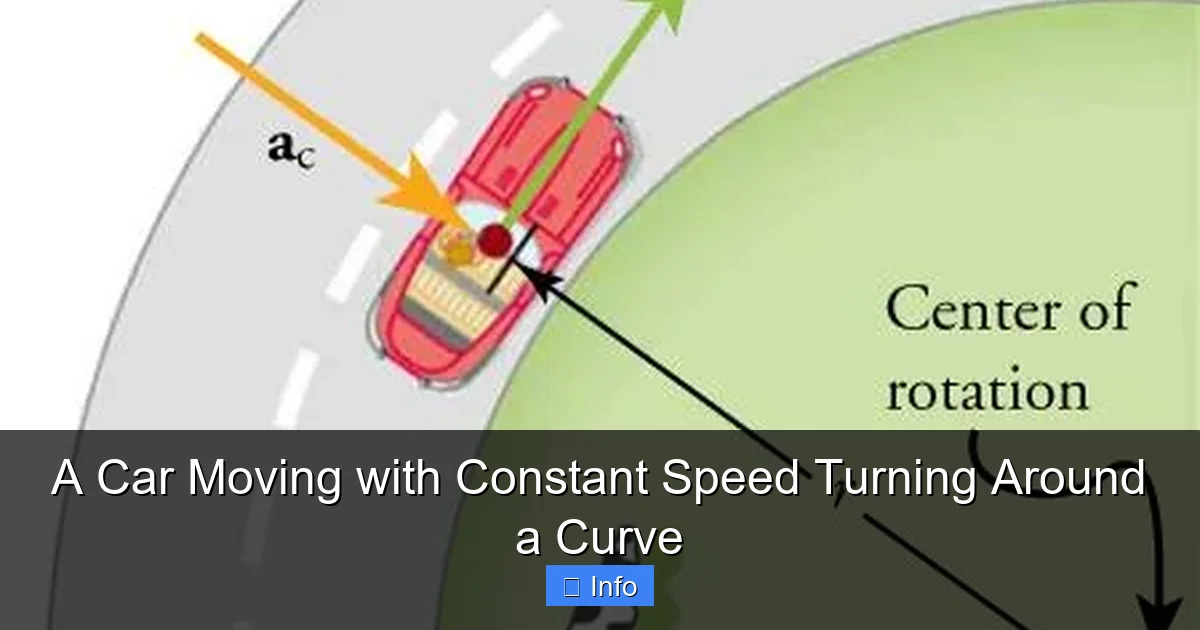
This specific type of acceleration is known as centripetal acceleration. The word “centripetal” means “seeking the center.” It is the acceleration that pulls an object toward the center of its circular path. For a car moving with constant speed turning around a curve, this force must be directed toward the inside of the curve. Without this inward force, the car moving with constant speed turning around a curve would continue in a straight line, flying off the road. This fundamental principle of physics explains why we feel pushed outward when we take a sharp turn. That feeling is the reaction to the centripetal force pulling the car moving with constant speed turning around a curve inward, while our bodies resist that change in direction due to inertia.
How Friction Keeps Your Car on the Road
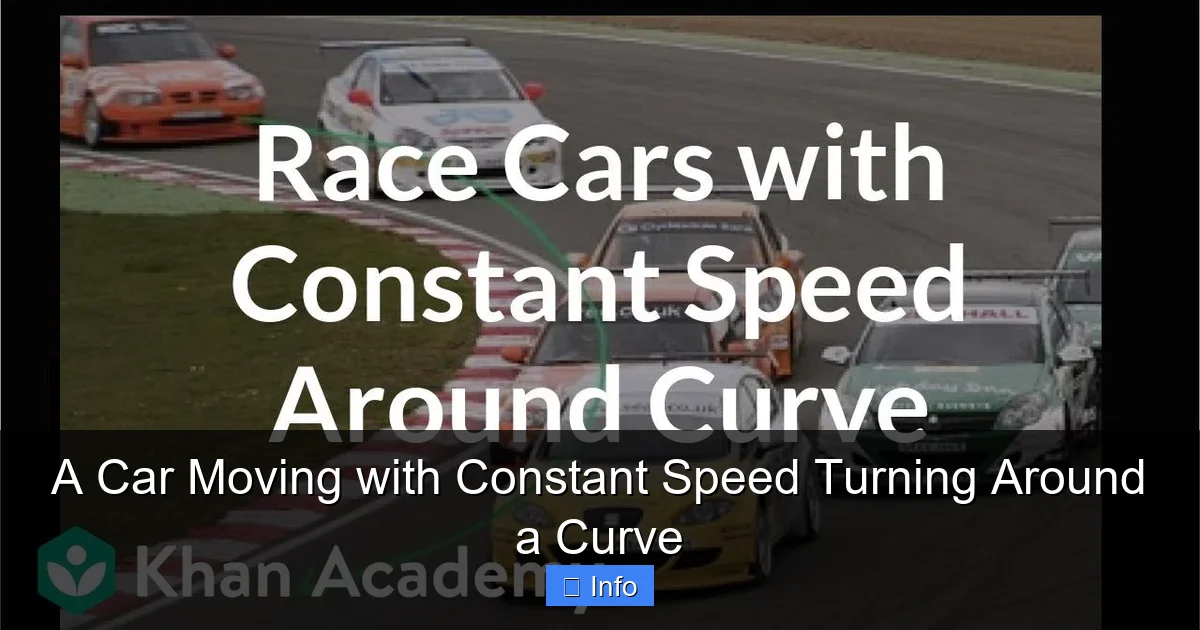
Now that we understand the need for an inward force, the next question is: where does this force come from? The answer lies in the friction between the car’s tires and the road. Friction is the force that resists the relative motion between two surfaces. In the case of a car moving with constant speed turning around a curve, the tires are trying to push the car straight ahead, but the road is curving. The friction between the tire rubber and the asphalt provides the necessary centripetal force to keep the car moving with constant speed turning around a curve on its curved path. Without sufficient friction, the car cannot turn and will slide outward.
Visual guide about A Car Moving with Constant Speed Turning Around a Curve
Image source: i.ytimg.com
The Grip of Tires on Asphalt
The effectiveness of this friction depends heavily on the condition of your tires. Tires are designed with tread patterns that channel away water and provide maximum contact with the road. If your tires are worn out, or if you are driving on a wet or icy road, the available friction decreases dramatically. This is why taking a curve too fast can lead to a loss of control. When the required centripetal force exceeds the maximum frictional force the tires can provide, the car will skid. To ensure your tires maintain optimal grip, it is wise to keep them in top condition. When a car moving with constant speed turning around a curve relies on tire friction, the quality of the rubber matters immensely. You can learn more about maintaining tire appearance and performance by checking out resources on best car tire shine products for a lasting finish, which can help you protect the rubber and keep your tires looking and performing their best. Proper tire maintenance is a simple yet effective way to maximize safety on the road.
What Happens When Grip is Lost
When a car moving with constant speed turning around a curve loses tire traction, the results can be dramatic. The car will begin to slide outward, a phenomenon often accompanied by the unmistakable sound of tires losing their grip. If you have ever experienced or heard a car moving with constant speed turning around a curve squealing, you have directly observed the physical limits of tire friction in action. This squeal is the sound of the tire rubber scrubbing against the pavement as it struggles to maintain traction for the car moving with constant speed turning around a curve. Understanding this warning sign is vital for any driver who wants to avoid a collision. If you want to read more about this common issue, you can visit our detailed guide on car squealing when reversing and turning, which explains the causes and solutions for tire noise during maneuvers.
The Math Behind the Turn
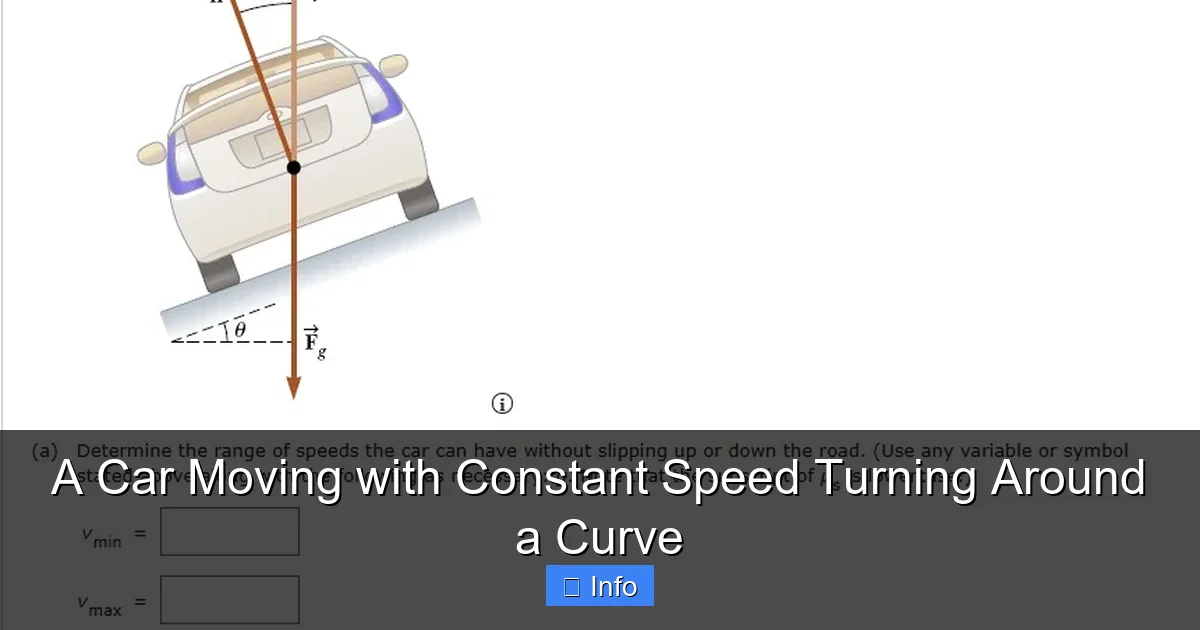
While the concepts of centripetal force and friction are intuitive, physicists use precise mathematical formulas to describe them. For a car moving with constant speed turning around a curve, the centripetal force ($F_c$) required to keep the car on its path can be calculated using a simple equation. This equation relates the mass of the car, its speed, and the radius of the curve. By looking at this formula, we can see exactly how changes in speed or road design affect the forces acting on a car moving with constant speed turning around a curve. This mathematical perspective allows engineers to design safer roads and helps drivers understand the limits of their vehicles.
Visual guide about A Car Moving with Constant Speed Turning Around a Curve
Image source: cdn.numerade.com
The Centripetal Force Formula
The formula for centripetal force is $F_c = \frac{m \cdot v^2}{r}$, where $m$ is the mass of the car, $v$ is the speed of the car, and $r$ is the radius of the curve. This formula reveals two critical relationships. First, the force increases with the square of the speed. This means that if you double your speed, the required force quadruples. Second, the force is inversely proportional to the radius of the curve. A tighter turn (smaller radius) requires a much larger force to keep the car on the road than a wide, gentle turn. This mathematical relationship is why high-speed highways have very large curve radii, while city streets have much sharper turns with lower speed limits.
How Speed and Curve Radius Affect Your Drive
Let’s look at a practical example. Imagine a car moving with constant speed turning around a curve with a radius of 50 meters. If the driver increases the speed from 20 mph to 40 mph, the centripetal force required to keep the car moving with constant speed turning around a curve jumps by a factor of four. This is why highway exits often have speed limit signs that decrease as the curve gets sharper. Road engineers design these curves with specific radii to match safe speed limits. If a driver exceeds these limits, they are demanding more centripetal force than the tires can safely provide, leading to a dangerous situation for a car moving with constant speed turning around a curve. Always check your speedometer and adjust your driving accordingly to stay safe.
Understanding the physics of turning is not just for scientists in a lab; it has direct applications for drivers every day. When you are behind the wheel, knowing how a car moving with constant speed turning around a curve behaves can help you make safer decisions. The key is to manage the forces acting on your vehicle by adjusting your speed and steering inputs before and during the turn. Here are some practical tips to keep your rides smooth and secure when driving a car moving with constant speed turning around a curve. Applying these techniques will make you a more confident and safer driver on any road.
Visual guide about A Car Moving with Constant Speed Turning Around a Curve
Image source: d1yqpar94jqbqm.cloudfront.net
Slowing Down Before the Turn
The most important rule for navigating any curve is to slow down before you enter it. Once your tires are committed to the curve, your ability to generate friction is limited. If you wait until you are already in the turn to brake, you are asking the tires to do two jobs at once: provide lateral force for the turn and longitudinal force for braking. This can easily exceed the tire’s grip, causing a skid. Always ease off the accelerator or apply the brakes gently before the curve, and then maintain a steady speed through the turn. This proactive approach to speed management is the cornerstone of safe driving on curved roads.
Maintaining a Steady Path
When a car moving with constant speed turning around a curve, it is best to maintain a smooth, steady steering input. Avoid sudden jerks of the wheel, as these can disrupt the balance of forces and cause the car moving with constant speed turning around a curve to lose traction. Keep your eyes on the road ahead and let the car follow the natural geometry of the curve. Smoothness is key to maintaining stability and ensuring that the centripetal force is applied evenly across all four tires of the car moving with constant speed turning around a curve. This simple technique helps you stay in control and enjoy a comfortable ride for you and your passengers. Remember, gentle steering inputs are your best friend when navigating bends.
Real-World Examples and Common Mistakes
To truly appreciate the physics of turning, it helps to look at real-world scenarios. Roadways are filled with curves, from gentle highway bends to tight city corners. Each of these presents unique challenges for a car moving with constant speed turning around a curve. By examining common driving mistakes, we can learn how to avoid them and drive more defensively when a car moving with constant speed turning around a curve is on the road. Learning from these examples helps us become better drivers and reduces the risk of accidents.
Roundabouts and Sharp Bends
Roundabouts are excellent examples of constant-speed turning in action. Drivers must navigate a circular path at a relatively low, steady speed. The design of a roundabout ensures that the radius is large enough to allow for a comfortable speed that keeps the required centripetal force within safe limits for a car moving with constant speed turning around a curve. In contrast, sharp bends on mountain roads require much lower speeds. Entering a sharp bend too fast is a common mistake that can lead to a loss of control, as the tires cannot generate the massive centripetal force needed to keep the car moving with constant speed turning around a curve on the road. Always approach sharp curves with caution and be prepared to slow down significantly.
Avoiding Overcorrection
Another common error is overcorrection. If a driver feels the car starting to slide outward on a curve, their natural instinct might be to turn the wheel sharply in the opposite direction. However, this sudden input can destabilize the car further. Instead, the correct response is to stay calm, ease off the accelerator, and gently steer in the direction of the slide. Sudden movements disrupt the delicate balance of friction and centripetal force, making it harder to regain control of the vehicle, especially for a car moving with constant speed turning around a curve. Practicing calm and deliberate steering in low-speed situations can build the muscle memory needed to avoid overcorrection in an emergency.
The Dangers of Skidding on Curves
Skidding on a curve is one of the most frightening experiences a driver can face. It occurs when the required centripetal force for a car moving with constant speed turning around a curve exceeds the maximum frictional force available between the tires and the road. The car then slides outward in a straight line, ignoring the driver’s steering inputs. This loss of control can lead to serious accidents, especially if the car moving with constant speed turning around a curve leaves the roadway or collides with other vehicles. Understanding the physics behind a skid is the first step toward preventing one and maintaining control in challenging driving conditions.
Understanding the Consequences
The consequences of losing control on a curve can be severe, particularly if the vehicle is involved in a collision or sustains significant damage. If you find yourself in a situation where you have wrecked your car, understanding your financial and legal responsibilities is crucial. For instance, if you are driving a vehicle that is being paid off, you can find out more about what happens if you wreck a financed car without insurance. Knowing how to handle the aftermath of an accident can help you navigate a difficult situation more effectively and protect your financial well-being. Always ensure you have
Frequently Asked Questions
What is a car moving with constant speed turning around a curve?
a car moving with constant speed turning around a curve is an important topic with many practical applications.