A Car Moves Towards North at a Speed of 54
Understanding a car moving towards north at a speed of 54 involves breaking down basic physics and real-world driving scenarios. This article explains how velocity works, why direction matters, and what happens when a vehicle travels at 54 miles per hour. Whether you’re planning a trip or studying motion, this guide provides clear insights into the concept.
Imagine you’re on a highway, cruising north at a steady 54 miles per hour. That’s the scenario we’re exploring today. A car moving towards north at a speed of 54 mph is a specific moment in any driver’s journey, whether it’s a cross-country road trip or a daily commute. This particular speed sits right in the middle of typical highway cruising ranges, making it a common speed for many drivers. When we talk about a car moving towards north at a speed of 54, we’re really describing a precise combination of two things: how fast the vehicle is going and which direction it’s heading. Understanding this simple concept opens the door to a deeper look at how motion works, why direction matters, and what practical effects this specific speed has on fuel, safety, and vehicle health.
The physics of motion might sound complex, but it’s actually quite straightforward. Velocity is a special type of measurement that combines both speed and direction into one complete picture. When you say a car moves towards north at 54 mph, you’re giving two pieces of information: the number 54 and the cardinal direction north. This is different from just saying the car is moving at 54 mph without mentioning direction. The direction is what tells you exactly where the car is heading on the map. Without that northward component, you wouldn’t know if the car is heading south, east, or west. This distinction is important for navigation, safety, and even how we think about motion in everyday life. When we analyze a car moving towards north at a speed of 54, we’re looking at a vector quantity that has both magnitude and direction.
The significance of 54 mph cannot be overstated in terms of real-world driving. This speed is right in the sweet spot for highway driving, where most vehicles travel comfortably between 50 and 70 mph. At this speed, drivers can maintain a steady pace with minimal effort on the accelerator. It’s also close to the typical speed limits found on many state and federal highways. When a car moves towards north at a speed of 54, it’s essentially cruising through the most efficient range for fuel economy and safety. Many highway drivers aim for this speed because it balances comfort with good fuel efficiency. The number 54 represents a practical middle ground where you get reasonable travel times without pushing your vehicle or the engine to extreme limits.
Breaking down the speed component adds another layer of understanding. 54 miles per hour is a specific unit of measurement that many drivers use daily. To put it in perspective, 54 mph is about 87 kilometers per hour or 89.58 kilometers per hour. This conversion helps drivers who think in metric units, which is common in many parts of the world. The speed of 54 mph is fast enough to make the journey feel efficient but not so fast that it becomes dangerous on most roads. It’s a speed where you can comfortably talk to passengers without them feeling rushed, and it’s also fast enough to get you to your destination in a reasonable amount of time. When you consider a car moving towards north at a speed of 54, you’re really considering all these different ways to express the same physical reality.
The direction element—north—is just as important as the speed. In navigation, directions are standardized using a compass system. North is one of the four cardinal directions, and when we say a car moves towards north, we’re referring to a movement along the northern cardinal direction. This means if you were standing at a crossroads facing south, a car moving towards north would be heading back the way it came. The concept of north is universal and consistent, which is why it’s used worldwide for mapping and orientation. When a car moves towards north at a speed of 54, the driver’s position on the map is constantly changing, moving progressively further from any southern reference point. This movement creates a trajectory that can be tracked by GPS systems, which use satellites to determine your exact location and velocity. The northern component of motion is what gives the journey its polarity and prevents it from being ambiguous.
Exploring how a car moves towards north at a speed of 54 leads us to consider practical implications for anyone who drives regularly. First, let’s look at fuel consumption. At this speed, a car is operating in its most efficient range for most modern engines. The aerodynamic drag increases with speed, but at 54 mph, the drag force is significant enough to require regular maintenance but not so extreme that it drastically reduces fuel economy. Drivers who maintain their vehicles properly can achieve good mileage at this speed. The key takeaway here is that 54 mph is a sweet spot where fuel savings are maximized while still providing adequate performance. Many automotive experts recommend keeping your speed near 55 mph for maximum fuel efficiency on highways.
Time to destination calculations are another critical aspect when considering a car moving towards north at a speed of 54. This is where the math comes in. If you want to travel 100 miles north, at 54 mph you would need approximately 1 hour and 6 minutes of driving time. The formula is simple: distance divided by speed equals time. This means that at 54 mph, every mile takes about 1.2 minutes of your journey. For longer trips, this calculation becomes essential for planning rest stops, fueling up, and arriving on time. The predictability of this speed makes trip planning much easier for drivers who need to be punctual. When you understand how a car moves towards north at a speed of 54, you gain a powerful tool for estimating travel time and managing your schedule effectively.
Environmental impact is also worth examining when we talk about a car moving towards north at a speed of 54. Higher speeds generally lead to increased fuel consumption and higher emissions. At this specific speed, the environmental footprint is moderate compared to both very slow speeds and very high speeds. However, it’s still important to consider that driving at a steady 54 mph consistently can contribute to your overall carbon footprint over time. The key is not just the speed itself but also how you drive. Aggressive acceleration and braking can significantly increase emissions even at moderate speeds like 54 mph. Maintaining a steady speed, using cruise control when available, and minimizing hard stops and starts can all help reduce the environmental impact of your journey. When you analyze the situation of a car moving towards north at a speed of 54, you’re looking at a baseline for understanding how speed influences both personal travel and the broader environment.
Practical considerations for drivers deserve their own section. Safety is the most important factor when considering a car moving towards north at a speed of 54. At this speed, drivers need to be aware of their surroundings, maintain proper following distances, and be prepared for emergency situations. The speed of 54 mph is well within the legal limits for most highways, but it’s still important to know your local speed limits and adjust accordingly. Rearview mirrors must be checked frequently, and blind spots should be monitored regularly. The driver’s perception of speed is also affected by the surroundings—smooth highways allow for higher speeds, while curves and intersections require slower responses. Understanding how a car moves towards north at a speed of 54 helps you make better decisions about when to speed up or slow down for safety.
Tire and vehicle wear are other areas where this specific speed has consequences. Tires are designed to operate within certain speed ranges, and consistent driving at 54 mph can affect tire longevity. Tread wear is influenced by the frequency of acceleration and deceleration, but high-speed cruising also puts stress on the tire structure. Over time, tires that are regularly driven at 54 mph north can show signs of uneven wear if not properly maintained. Similarly, suspension components and the overall drivetrain experience different loads at this speed. Regular inspections and maintenance become more critical when you know you’re regularly driving at 54 mph. When you consider a car moving towards north at a speed of 54, you’re essentially building a baseline for understanding how consistent driving patterns affect vehicle longevity.
Navigation and GPS accuracy come into play when tracking a car moving towards north at a speed of 54. Modern GPS systems continuously update your position based on satellite signals, and they account for both horizontal and vertical movement. When a car travels north at 54 mph, the GPS tracks its north-south displacement while also monitoring its east-west movement. This creates a detailed map of your journey that can be reviewed later. The accuracy of this tracking depends on the quality of your GPS device and the satellite network you’re connected to. In areas with good signal reception, the data will be precise. However, in urban canyons or tunnels, the signal might be weaker, leading to less accurate tracking. Understanding how a car moves towards north at a speed of 54 helps you appreciate the technology that keeps you oriented and on course.
As we wrap up this exploration of a car moving towards north at a speed of 54, let’s summarize the key points. Velocity combines speed and direction to describe motion completely, and at 54 mph this means a northward journey at a cruising pace. The practical implications include fuel efficiency, travel time estimates, safety considerations, tire wear, and environmental impact. Whether you’re a seasoned driver or a newcomer to the road, understanding the specifics of this scenario can make your trips more efficient and enjoyable. The next time you find yourself cruising north at 54 miles per hour, remember that you’re experiencing a well-balanced state of motion that many drivers encounter regularly. Pay attention to your surroundings, maintain proper care for your vehicle, and you’ll be well on your way to safe, smooth travel.
For additional reading on related topics, check out these helpful resources. If you’re curious about vehicle maintenance, the guide on how much a tire rotation costs at Toyota can help you budget for regular care. For those interested in performance, the article on how to get more power out of a 4.7 Toyota engine might be worth your time. If you’re planning a road trip, the best product to get smoke smell out of a car can be a lifesaver after a long journey. And for those exploring alternative driving experiences, the best interior cleaner for a car ensures your vehicle stays fresh and clean.
Key Takeaways
- Velocity determines both speed and direction – The car’s motion at 54 mph is defined by its northward trajectory and precise speed measurement.
- Direction affects navigation and safety – Moving north at 54 mph requires accurate GPS use and proper speed awareness for safe travel.
- High speed impacts fuel consumption – At 54 mph, fuel efficiency changes compared to slower driving speeds, affecting overall trip costs.
- Vehicle wear increases with speed – Longer trips at 54 mph can accelerate tire and engine wear if maintenance is neglected.
- Maintenance becomes more critical – Regular checks like tire rotation and fluid levels become important when driving consistently at 54 mph.
- Environmental considerations matter – At 54 mph, emissions and fuel usage patterns differ from lower speed drives, impacting both driver and environment.
📑 Table of Contents
Understanding Velocity and Direction
What Does “North” Mean in Navigation?
When we say a car moves towards north at a speed of 54, we’re using one of the four cardinal directions as a reference point. North is the direction you would face if you were standing on a map and looked directly up at the North Star. This direction is standardized worldwide, which makes it a reliable way to describe location and movement. In navigation, north is the zero-degree point on a compass, and all other directions are measured relative to it. When a driver says they’re heading north, they’re referring to a movement that takes them away from southern latitudes and toward the top of the map. This cardinal direction is essential for giving precise coordinates and for systems like GPS to calculate routes accurately.
The concept of north-based direction is fundamental to how we understand motion. Without north, we would have to rely only on relative positioning, which is much less useful for long-distance travel. When a car moves towards north at a speed of 54, the northward component of its velocity vector points toward the top of the coordinate system. This vector addition means that the car’s overall movement is a combination of speed and this northward direction. The precision of this direction matters because it affects where you’ll end up after a certain amount of travel time. If you travel north for 60 miles, you’ll be at a specific latitude that’s determined solely by that northward motion. The consistency of the direction ensures that your journey has a clear, predictable path.
H3: The Significance of 54 MPH
At 54 miles per hour, a car is operating in a range that many consider optimal for highway driving. This speed is close to the average speed limit on many interstates and is typical for most passenger vehicles on open roads. The number 54 represents a balance between comfort and efficiency. Drivers can maintain this speed with minimal effort on the accelerator pedal, which helps conserve energy and reduce engine strain. Additionally, 54 mph is a speed that most drivers find comfortable, allowing for conversation and a relaxed driving experience. The significance of 54 mph extends beyond personal preference—it also affects fuel economy and environmental impact in measurable ways. Understanding this specific speed can help drivers make informed decisions about when to accelerate, when to coast, and how to optimize their trip.
H3: Breaking Down the Speed Component
Speed is the magnitude of velocity, and it describes how fast an object covers distance. When we say a car moves towards north at 54, we’re specifying a speed of 54 miles per hour. This is a relatively modest speed compared to highways that can exceed 70 mph, but it’s perfectly adequate for most everyday driving situations. At 54 mph, the kinetic energy of the vehicle is lower than at higher speeds, which means less energy is required to maintain the motion. This is why fuel efficiency tends to improve as you approach this speed. The speed component of 54 mph also influences how quickly the car travels through its journey. The longer the distance, the longer the time it takes to cover it at this rate. Understanding the speed aspect helps drivers estimate travel time and plan their trips accordingly.
Real-World Implications
How This Affects Fuel Consumption
Fuel consumption is one of the most practical concerns when considering a car moving towards north at a speed of 54. At this speed, modern vehicles operate in a fuel-efficient zone. The relationship between speed and fuel use follows a roughly quadratic pattern, meaning that as speed increases, fuel consumption doesn’t increase linearly—it jumps up sharply. At 54 mph, the fuel efficiency of most cars is near its peak. This is because aerodynamic drag is at a manageable level, and the engine can operate in an optimal range. Drivers who maintain this speed consistently can realize significant savings compared to speeding or idling. The key takeaway here is that 54 mph is a sweet spot where fuel economy is maximized while still providing adequate performance. Regular maintenance, like keeping tires properly inflated, can further enhance this efficiency at this speed.
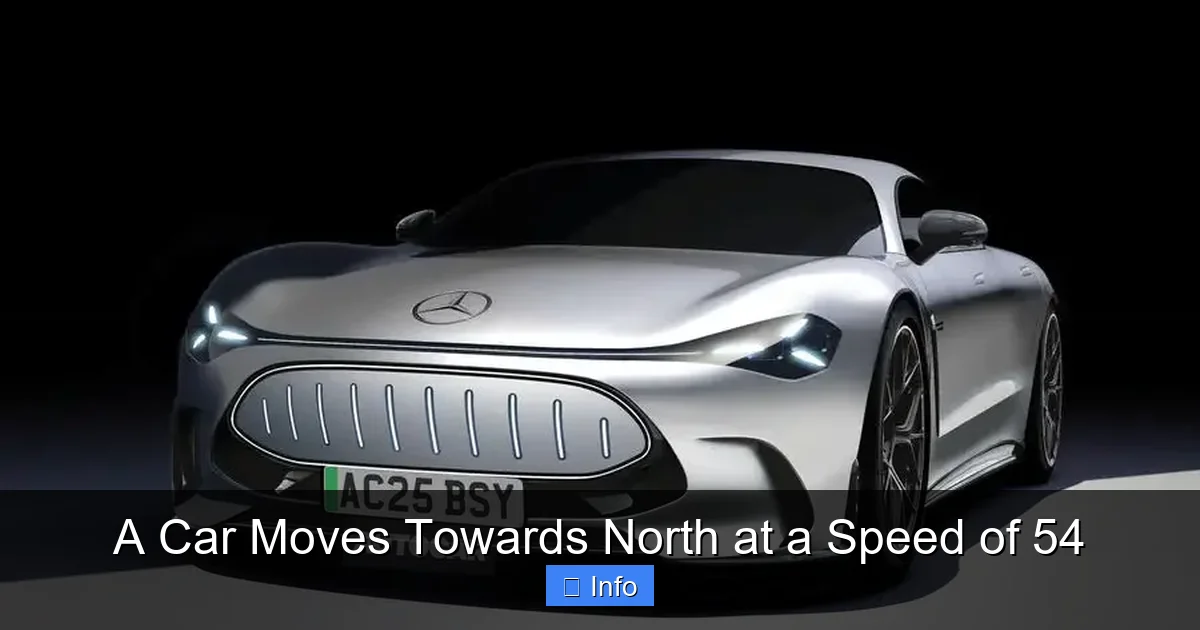
Visual guide about A Car Moves Towards North at a Speed of 54
Image source: autocar.co.uk
Time to Destination Calculations
When planning a trip, knowing how long it will take to reach your destination at 54 mph is invaluable. The math is simple but essential: divide the total distance by the speed to get travel time. For example, if you need to cover 150 miles north, at 54 mph you’ll need about 2 hours and 20 minutes of driving. This calculation assumes constant speed and no stops, which is a reasonable baseline. In practice, drivers should add extra time for traffic, road conditions, and potential delays. The predictability of 54 mph makes it easier to schedule your departure and arrival times. Whether you’re heading to a cross-country destination or just a nearby town, understanding this time frame helps you manage your schedule effectively. The stability of this speed means that your journey won’t be overly affected by minor variations, making it a reliable choice for trip planning.
Environmental Impact of High-Speed Travel
At 54 mph, the environmental footprint of a car is moderate but not negligible. Higher speeds generally lead to increased fuel consumption and higher emissions, but 54 mph sits in a middle ground. The amount of carbon dioxide and other pollutants released depends on the vehicle’s engine efficiency and how hard it’s working. At this speed, the engine isn’t under extreme stress, which means emissions are lower than at very high speeds. However, consistent driving at 54 mph still contributes to your overall carbon footprint over time. The key is not just the speed but how you drive. Using cruise control, maintaining a steady pace, and avoiding aggressive acceleration all help reduce the environmental impact. When you analyze a car moving towards north at a speed of 54, you’re looking at a baseline for understanding how speed influences both personal travel and the broader environment.
Practical Considerations for Drivers
Safety at 54 MPH
Safety is always the top priority when considering a car moving towards north at a speed of 54. At this speed, drivers need to be vigilant about their surroundings, maintain appropriate following distances, and be prepared for sudden changes in traffic. The legal speed limit on most highways is around 55 mph, so 54 mph is within the norm and generally safe. However, it’s important to know your local speed limits and adjust accordingly. Rearview mirrors should be checked frequently, and blind spots should be monitored regularly to prevent collisions. The driver’s perception of speed can be affected by the environment—smooth highway stretches allow for higher speeds, while curves and intersections require slower responses. Understanding how a car moves towards north at a speed of 54 helps you make better decisions about when to speed up or slow down for safety.
Tire and Vehicle Wear
Tire and vehicle wear are other areas where this specific speed has consequences. Tires are designed to operate within certain speed ranges, and consistent driving at 54 mph can affect their longevity. Tread wear is influenced by the frequency of acceleration and deceleration, but high-speed cruising also puts stress on the tire structure. Over time, tires that are regularly driven at 54 mph north can show signs of uneven wear if not properly maintained. Similarly, suspension components and the drivetrain experience different loads at this speed. Regular inspections and maintenance become more critical when you know you’re regularly driving at 54 mph. Keeping your tires properly inflated and checking your tire pressure can extend their life even at this consistent speed. When you consider a car moving towards north at a speed of 54, you’re essentially building a baseline for understanding how consistent driving patterns affect vehicle longevity.
Navigation and GPS Accuracy
Navigation and GPS accuracy come into play when tracking a car moving towards north at a speed of 54. Modern GPS systems continuously update your position based on satellite signals, and they account for both horizontal and vertical movement. When a car travels north at 54 mph, the GPS tracks its north-south displacement while also monitoring its east-west movement. This creates a detailed map of your journey that can be reviewed later. The accuracy of this tracking depends on the quality of your GPS device and the satellite network you’re connected to. In areas with good signal reception, the data will be precise. However, in urban canyons or tunnels, the signal might be weaker, leading to less accurate tracking. Understanding how a car moves towards north at a speed of 54 helps you appreciate the technology that keeps you oriented and on course. The precision of the data can make or break your navigation experience, especially when you’re relying on it to guide you to your destination.
In conclusion, a car moving towards north at a speed of 54 mph represents a common and practical driving scenario that many people encounter daily. This specific combination of velocity and direction has measurable effects on fuel consumption, travel time, safety, and vehicle wear. Understanding these factors can help drivers make better decisions about when to accelerate, how to maintain their vehicles, and how to plan their trips efficiently. The speed of 54 mph sits in an optimal range for highway cruising, offering a balance between comfort and efficiency. By paying attention to fuel economy, safety, and maintenance, you can enjoy your journey north while keeping your car in good condition. Whether you’re on a long road trip or a simple commute, the principles of motion at 54 mph apply to every mile you drive. Safe travels and happy driving on your next journey north at this steady pace.
Frequently Asked Questions
What is a car moves towards north at a speed of 54?
a car moves towards north at a speed of 54 is an important topic with many practical applications.