How to Troubleshoot Jeep Ignition Switch
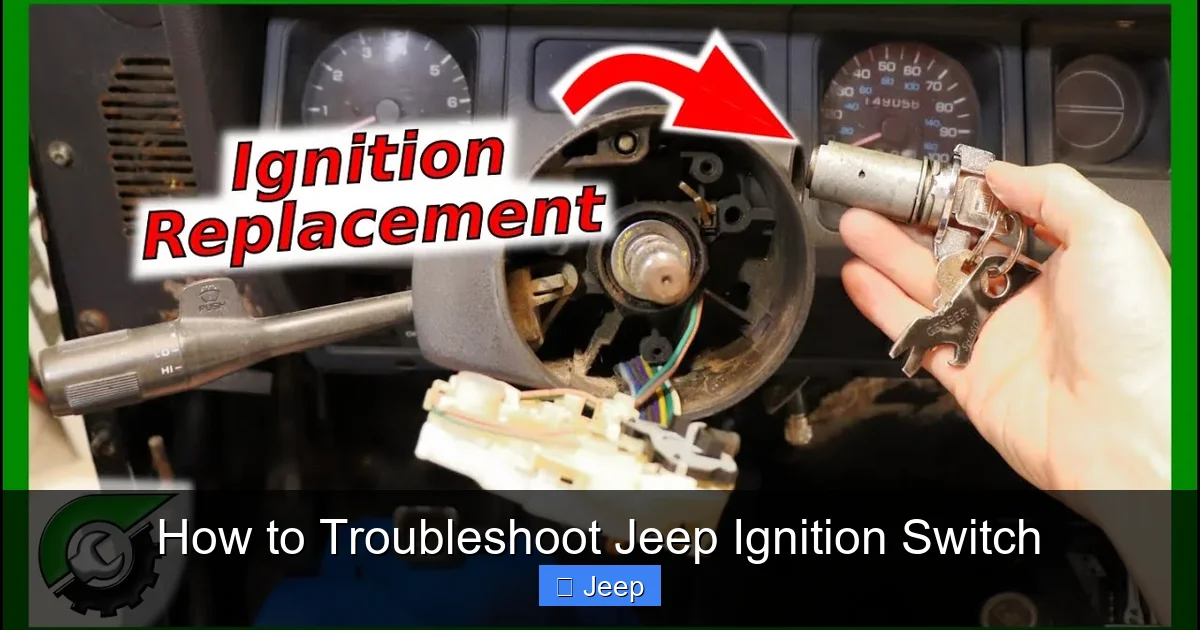
If your Jeep won’t start, stalls unexpectedly, or shows electrical glitches, the ignition switch may be at fault. This guide walks you through common symptoms, basic checks, and a step‑by‑step troubleshooting process to diagnose and fix a Jeep Ignition Switch problem safely.
Jeep owners know that a reliable ignition switch is the heartbeat of their vehicle’s starting system. When that small but vital component begins to fail, you might experience anything from a stubborn key that won’t turn to sudden engine stalls while driving. Because the Jeep Ignition Switch also powers accessories like the radio, lights, and power windows, symptoms can appear in many places, making diagnosis a bit tricky.
This article is designed to help you troubleshoot a Jeep Ignition Switch with confidence. We’ll walk through the most common signs of trouble, show you how to perform preliminary checks, and then guide you through a detailed step‑by‑step process using basic tools like a multimeter and a test light. Along the way, we’ll point out when it’s smart to inspect related parts such as the ignition coil or acceleration system, and we’ll share tips to keep your switch in good shape for the long haul.
Whether you drive a Wrangler, Grand Cherokee, Cherokee, or any other Jeep model, the principles below apply broadly. Grab your safety glasses, set the parking brake, and let’s get started.
Key Takeaways
- Recognize the warning signs: Difficulty turning the key, intermittent stalling, or accessories losing power often point to a failing Jeep Ignition Switch.
- Start with simple checks: Verify battery voltage, inspect fuses, and test related accessories like power windows before diving deeper.
- Use a multimeter for voltage tests: Measure power at the ignition switch terminals in different key positions to confirm proper operation.
- Rule out related components: A weak ignition coil or poor acceleration can mimic switch issues; test them separately.
- Know when to replace: If the switch shows consistent voltage drops or mechanical wear, replacement is usually the most reliable fix.
- Prevent future problems: Keep the ignition cylinder clean, avoid heavy keychains, and perform periodic electrical inspections.
📑 Table of Contents
Understanding the Jeep Ignition Switch
The Jeep Ignition Switch is more than just a key‑turn mechanism. It’s an electrical gateway that routes battery power to various systems depending on the key position: OFF, ACC (accessory), ON (run), and START. In the START position, the switch sends a high‑current signal to the starter solenoid, which cranks the engine. In the ON position, it powers the engine control unit, fuel pump, and ignition coil. In ACC, it supplies power to accessories like the radio and interior lights.
Because the switch handles both low‑current accessory circuits and high‑current starter signals, wear and tear can affect different functions independently. You might notice that the radio works fine but the engine won’t crank, or vice versa. Internal contacts can become corroded, pitted, or loose, especially if the vehicle is frequently exposed to moisture, dirt, or heavy keychains that put extra strain on the cylinder.
Understanding this dual role helps you narrow down symptoms. If only the starter circuit fails while accessories remain live, the problem may be isolated to the START circuit contacts. If multiple systems lose power together, the fault could be in the common power feed or the switch’s internal rotor.
Common Symptoms of a Failing Jeep Ignition Switch
Recognizing the early warning signs can save you from being stranded. Below are the most frequent indicators that your Jeep Ignition Switch needs attention.
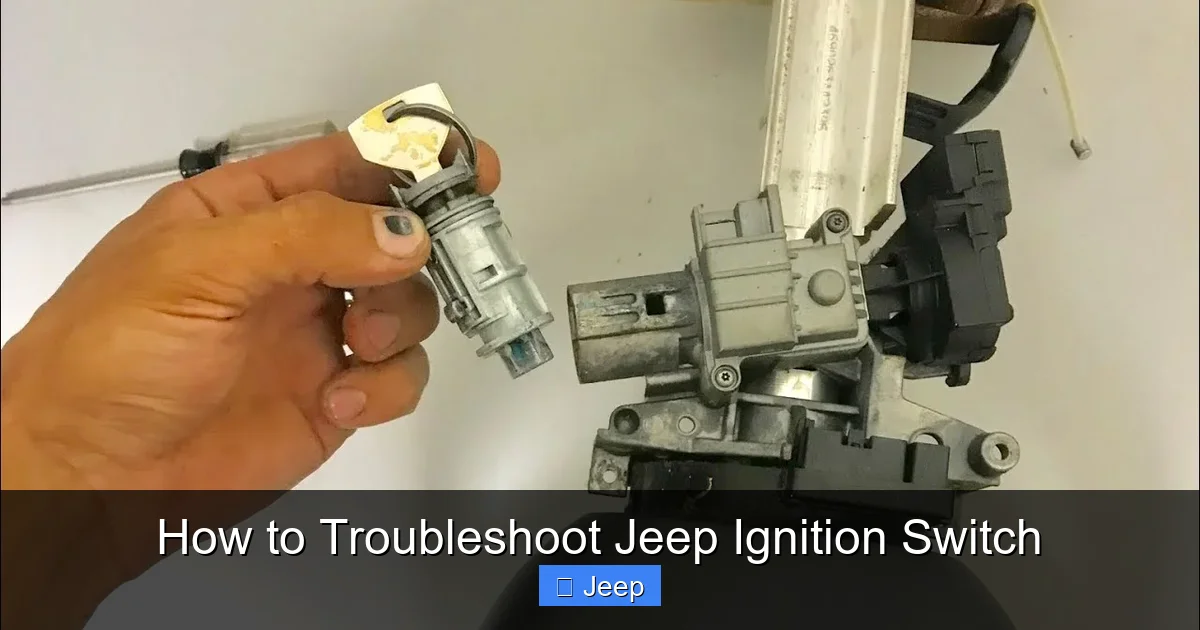
Visual guide about How to Troubleshoot Jeep Ignition Switch
Image source: i.ytimg.com
Engine Won’t Crank or Starts Intermittently
You turn the key to START, hear a click, but the engine doesn’t turn over. Sometimes it works after several attempts, or only when the key is jiggled. This points to a worn START circuit contact or a loose internal connection.
Stalling While Driving
The engine suddenly dies while you’re moving, yet the lights and radio may stay on. When you turn the key to OFF and back to ON, the engine may restart. This intermittent loss of power to the ignition coil or fuel pump often stems from a deteriorating ON‑position contact.
Accessories Lose Power
The radio, interior lights, or power windows cut out when the key is in ACC or ON, but return when you wiggle the key. This suggests that the accessory circuit tracks inside the switch are corroded or worn.
Key Feels Loose or Difficult to Turn
Mechanical wear inside the lock cylinder can make the key feel sloppy or require extra force to turn between positions. While this is more of a mechanical issue, it can also accelerate electrical contact wear.
Security Light Flashes
Some Jeep models have an immobilizer that communicates with the ignition switch. A flashing security light when attempting to start can indicate the switch isn’t sending the proper signal to the immobilizer module.
If you notice any of these symptoms, it’s time to move on to preliminary checks before diving into deeper testing.
Preliminary Checks Before Troubleshooting
Before you start probing wires, rule out the simple and common culprits that can mimic ignition switch failure.
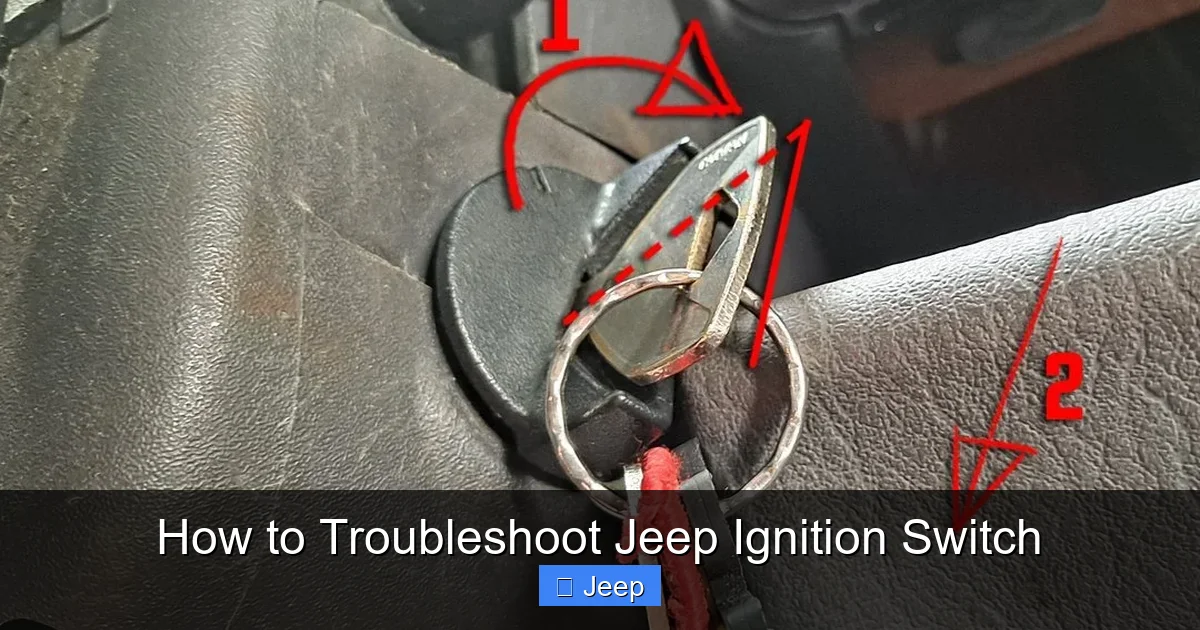
Visual guide about How to Troubleshoot Jeep Ignition Switch
Image source: images.squarespace-cdn.com
Battery and Connections
A weak battery or corroded terminals can cause cranking issues that look like a switch problem. Measure battery voltage with a multimeter; it should read 12.6 V or higher at rest. Clean the terminals and ensure tight connections.
Fuses and Relays
Check the fuse box for any blown fuses related to the ignition, starter, or accessory circuits. Refer to your owner’s manual for the exact locations. Also, listen for the starter relay clicking when you turn the key to START; a silent relay may indicate a relay issue rather than the switch.
Starter Motor and Solenoid
If the battery is good and the fuses are intact, test the starter motor directly. Using a jumper cable, supply 12 V to the starter solenoid’s small trigger wire (with the key in OFF). If the engine cranks, the starter is fine and the problem lies upstream—possibly in the ignition switch.
Accessory Power Test
Turn the key to ACC and operate accessories like the radio, interior lights, and power windows. If the windows won’t move, you may need to know how to manually roll up a window in a pinch. Our guide on how to manually roll up a power window Jeep Cherokee offers a quick workaround while you diagnose the electrical issue.
If accessories work fine but the engine still won’t crank, focus your testing on the START circuit of the ignition switch.
Step‑by‑Step Troubleshooting Guide
Now that you’ve eliminated the basics, it’s time to test the Jeep Ignition Switch itself. You’ll need a multimeter (set to DC volts), a test light or probe, and optionally a wiring diagram for your specific Jeep model.
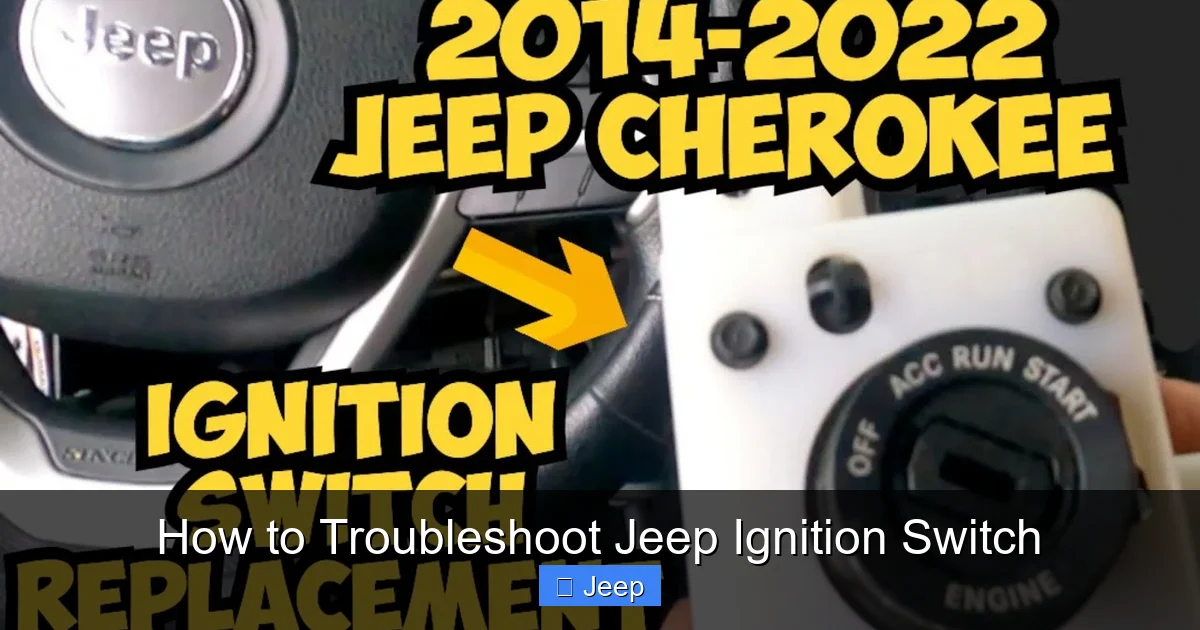
Visual guide about How to Troubleshoot Jeep Ignition Switch
Image source: i.ytimg.com
Locate the Switch and Identify Terminals
The ignition switch is usually mounted on the steering column, behind the key cylinder. Consult your service manual to pinpoint the exact location and identify the terminals: BAT (battery feed), ACC, ON, START, and sometimes GND. Having a diagram helps you avoid probing the wrong wire.
Test Battery Feed (BAT Terminal)
With the key in OFF, measure voltage between the BAT terminal and a good ground. You should see battery voltage (≈12.6 V). If not, the problem is upstream—check the fuse, wiring, or battery connection.
Test ACC Position
Turn the key to ACC. Measure voltage between the ACC terminal and ground. It should match battery voltage. If you see zero or low voltage, the ACC track inside the switch is faulty.
Test ON Position
Move the key to ON (just before cranking). Check the ON terminal voltage. Again, it should be battery voltage. Low or missing voltage indicates wear in the ON circuit.
Test START Position (Cranking)
This test requires a helper or a remote starter switch because you need to hold the key in START while measuring. Place the multimeter probe on the START terminal and ground. While the key is held in START, you should see battery voltage. If the voltage drops significantly (below 10 V) or is absent, the START circuit contacts are burned or corroded.
Check for Voltage Drop Under Load
For a more thorough test, measure voltage at the START terminal while cranking the engine (with the helper holding the key). Compare it to the battery voltage at the BAT terminal. A drop greater than 1 V suggests excessive resistance in the switch or wiring.
Rule Out the Ignition Coil
A failing ignition coil can produce symptoms similar to a bad switch, especially stalling or no‑start conditions. Before condemning the switch, verify the coil’s health. Our article on how to reset the ignition coil walks you through a quick reset and test procedure that can save you time.
Consider Acceleration‑Related Issues
If the engine starts but sputters or lacks power, the problem might not be the switch at all. Poor acceleration can stem from fuel delivery, spark, or sensor faults. For related diagnostics, see our tips on how to improve acceleration in Jeep Grand Cherokee. While not a direct switch test, it helps you avoid misdiagnosing a performance issue as an ignition switch fault.
If all voltage tests show proper battery voltage at each position and the switch feels mechanically smooth, the ignition switch is likely good. If any position shows low or missing voltage, or you notice erratic readings when wiggling the key, the switch should be replaced.
When to Replace vs. Repair the Ignition Switch
Deciding between repair and replacement depends on the nature of the fault and the cost of parts.
Repair Options Are Limited
Unlike some older vehicles where you could clean or re‑spring the internal contacts, modern Jeep Ignition Switches are sealed units. Attempting to open them often damages the housing and makes reassembly unreliable. Therefore, repair is generally not recommended.
Replacement Is Straightforward
Replacing the switch involves removing the steering column covers, disconnecting the electrical connector, unscrewing the mounting bolts, and swapping in the new unit. Most Jeep models allow this with basic hand tools and about an hour of labor. Always disconnect the battery before starting to avoid accidental shorts.
Cost Considerations
An OEM ignition switch for a Jeep typically ranges from $80 to $150, depending on the model and year. Aftermarket options can be cheaper but verify compatibility and quality. If you’re comfortable with the swap, doing it yourself saves labor costs.
When to Seek Professional Help
If you’re uncomfortable working around the steering column, airbag system, or immobilizer wiring, or if the switch is integrated with a complex anti‑theft module, it’s wise to have a certified Jeep technician perform the replacement. They can also reprogram any security codes if needed.
Preventive Maintenance Tips
Keeping your Jeep Ignition Switch in good shape reduces the chance of unexpected failures.
Avoid Heavy Keychains
Excess weight on the key ring puts constant side load on the lock cylinder, accelerating wear. Keep your keychain light—just the key and perhaps a small fob.
Keep the Cylinder Clean
Dirt and moisture can infiltrate the key cylinder, leading to corrosion. Periodically spray a small amount of electrical contact cleaner into the keyhole (with the key removed) and operate the key through all positions to distribute the lubricant.
Inspect Wiring and Connectors
During routine under‑hood checks, glance at the wiring harness leading to the ignition switch. Look for frayed insulation, loose connectors, or signs of heat damage. Address any issues early.
Monitor Accessory Behavior
If you notice accessories like the radio or power windows acting intermittently, treat it as an early warning sign. Addressing the symptom early can prevent a full switch failure.
Use Quality Replacement Parts
When the time comes to replace the switch, choose a reputable brand that meets or exceeds OEM specifications. A quality part will endure the electrical loads and mechanical cycles better than a cheap alternative.
By following these simple habits, you’ll extend the life of your Jeep Ignition Switch and enjoy more reliable starts, smoother accessory operation, and peace of mind on every adventure.
In summary, troubleshooting a Jeep Ignition Switch involves recognizing symptoms, performing basic battery and fuse checks, testing voltage at each key position, and ruling out related components like the ignition coil or acceleration system. If the switch fails any of its voltage tests or shows mechanical wear, replacement is the most reliable fix. Regular maintenance—light keychains, a clean cylinder, and periodic wiring inspections—helps keep the switch healthy for years to come. Safe travels, and may your Jeep always start on the first turn.
Frequently Asked Questions
What is How To Troubleshoot Jeep Ignition Switch?
How To Troubleshoot Jeep Ignition Switch is an important topic with many practical applications.