How to Do If Jeep Brakes Fail While Driving
If your Jeep brakes fail while driving, stay calm and act fast. Downshift to lower gears, pump the brake pedal firmly, and use the parking brake gradually to slow down. Pull over safely and call for roadside assistance immediately.
Picture this: you’re cruising down the highway in your Jeep, wind in your hair, music playing, when suddenly you press the brake pedal and nothing happens. Your heart jumps into your throat. Brake failure is every driver’s nightmare, but staying calm and knowing the right steps can make all the difference. In a Jeep, whether you’re behind the wheel of a Wrangler, Grand Cherokee, or Cherokee, the fundamentals of handling a brake emergency are similar, but knowing your vehicle’s quirks helps. This guide walks you through exactly what to do if Jeep brakes fail while driving, so you can protect yourself, your passengers, and your ride.
The first thing to understand is that brake failure rarely happens without warning signs. Sometimes the pedal feels softer than usual, or you might notice a squeak or grind that gets louder over time. Other times, the brake warning light on your dashboard illuminates, signaling that something isn’t right. Paying attention to these early clues can give you precious minutes to prepare, but if you ever find yourself in a situation where the brakes stop responding entirely, the actions you take in the next few seconds are critical. Let’s dive into the step-by-step response, starting with recognition.
Key Takeaways
- Point 1: Stay calm and focused; panic can lead to poor decisions.
- Point 2: Downshift manually to use engine braking and reduce speed.
- Point 3: Pump the brake pedal rapidly to build hydraulic pressure.
- Point 4: Apply the parking brake slowly to avoid wheel lockup.
- Point 5: Steer to a safe location and turn on hazard lights.
- Point 6: Call roadside assistance or a mechanic for inspection.
- Point 7: Have brakes inspected and repaired before driving again.
📑 Table of Contents
1. Recognize the Warning Signs Before Total Failure
Most Jeep owners develop a feel for their vehicle over time. When brakes start to fail, the vehicle usually tries to tell you first. A spongy or soft pedal often indicates air in the brake lines or a leaking master cylinder. A pedal that sinks all the way to the floor without much resistance is a red flag for hydraulic failure. If you hear grinding or metal-on-metal sounds when braking, your pads may be completely worn, and the metal backing is contacting the rotor.
Common Physical Indicators
Pay attention to how the pedal feels during your normal commute. If you notice it traveling farther down than usual, or if you have to press much harder to achieve the same stopping power, don’t ignore it. These sensations often precede a more serious issue. Additionally, if your Jeep pulls to the left or right when you brake, it could mean a stuck caliper or uneven pad wear, both of which can compromise braking efficiency over time.
Dashboard Alerts You Should Never Ignore
The brake warning light on your instrument cluster is designed to catch problems early. Whether it’s a simple sensor glitch or a genuine hydraulic issue, that light is your first line of defense. Similarly, if you see the ABS light illuminated alongside the brake light, it suggests a more complex system fault. Pull over safely when you see these warnings and have your braking system inspected by a professional before continuing your journey.
2. Stay Calm and Maintain Vehicle Control
Panic is the enemy when brakes fail. Your instinct might be to stomp on the pedal or yank the steering wheel, but both can make the situation worse. Instead, take a deep breath, grip the steering wheel firmly with both hands, and focus on guiding your Jeep to a safe area. Your goal right now is to maintain directional control, not to stop immediately.
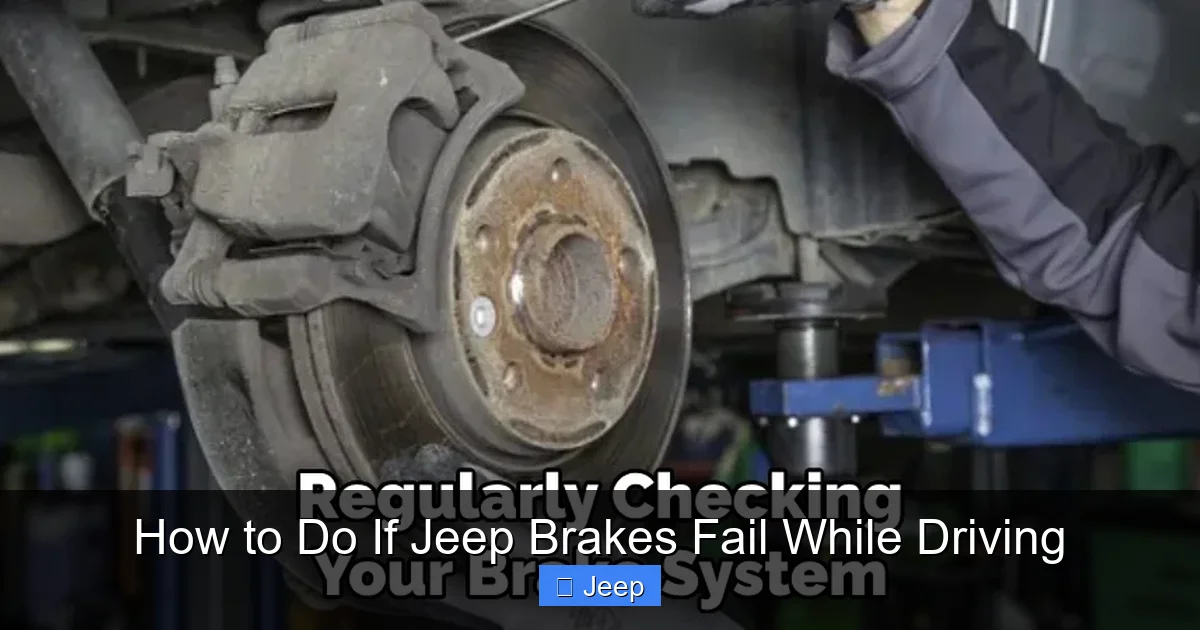
Visual guide about How to Do If Jeep Brakes Fail While Driving
Image source: jeepfixes.com
Grip the Steering Wheel Firmly
Keeping a solid hold on the wheel prevents sudden swerves that could lead to a rollover or collision, especially at higher speeds. Keep your hands at the 9 and 3 o’clock positions for maximum control. If your Jeep starts to sway or drift, make small, smooth steering adjustments rather than sharp corrections.
Activate Hazard Lights Immediately
As soon as you realize brakes aren’t responding, flip on your hazard lights. This alerts other drivers that something is wrong and encourages them to give you extra space. In many jurisdictions, it’s also legally required to use hazard lights when your vehicle is disabled or moving abnormally slowly. The flashing lights buy you crucial seconds as other motorists react to your presence.
3. Downshift to Leverage Engine Braking
One of the most effective ways to slow a Jeep without functioning brakes is to use the engine. Engine braking occurs when you shift to a lower gear, causing the engine to resist the vehicle’s forward motion. This technique can significantly reduce your speed, giving you time to employ other stopping methods.
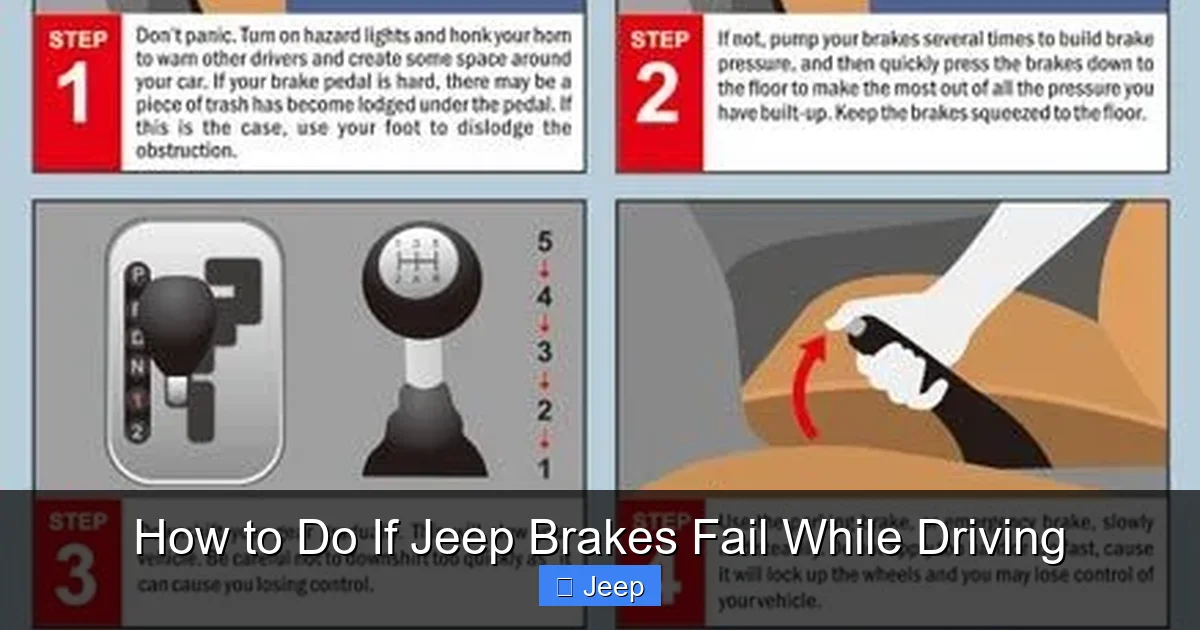
Visual guide about How to Do If Jeep Brakes Fail While Driving
Image source: i.pinimg.com
Manual Transmission Techniques
If you drive a Jeep with a manual transmission, the process is straightforward. Release the accelerator, press the clutch, and shift down through the gears—typically from 5th to 4th, then 3rd, and so on. Each lower gear provides more resistance than the last. Be careful not to shift too quickly at high speeds, as this can cause the engine to lug or the rear wheels to lock. Practice this technique in a safe, open area if you’re unfamiliar with it.
Automatic Transmission Downshifting
Automatic Jeeps have a lower gear setting, often labeled “L” or “M” (Manual). Moving the gear shifter into this mode locks the transmission into lower gears, mimicking the effect of downshifting a manual. Some modern automatics also feature paddle shifters or a gear selector that allows you to manually choose 3rd or 2nd gear. Engage this setting while gently easing off the gas, and the engine will begin to slow the vehicle. If your Jeep has a sport mode, switching to it can sometimes enhance engine braking response.
4. Pump the Brake Pedal to Build Hydraulic Pressure
Even if your brakes have failed completely, pumping the pedal might restore some hydraulic pressure. This works because many braking systems have a residual pressure valve or a dual-circuit design that can still provide limited stopping power after a brief failure.
Visual guide about How to Do If Jeep Brakes Fail While Driving
Image source: content.artofmanliness.com
How Pumping Works
When you pump the brake pedal, you’re forcing brake fluid through the system at intervals, which can temporarily rebuild pressure in a compromised circuit. This doesn’t guarantee the brakes will work, but it’s worth attempting, especially at lower speeds. The key is firm, rapid presses rather than a continuous hold.
Step-by-Step Pumping Technique
Press the brake pedal down firmly, release quickly, and press again. Repeat this motion several times while simultaneously downshifting and using the parking brake. You might feel the pedal firm up slightly after a few pumps. If you do, steer toward a safe stopping area and apply steady pressure. If the pedal stays soft or goes to the floor, move immediately to the next strategy: the parking brake.
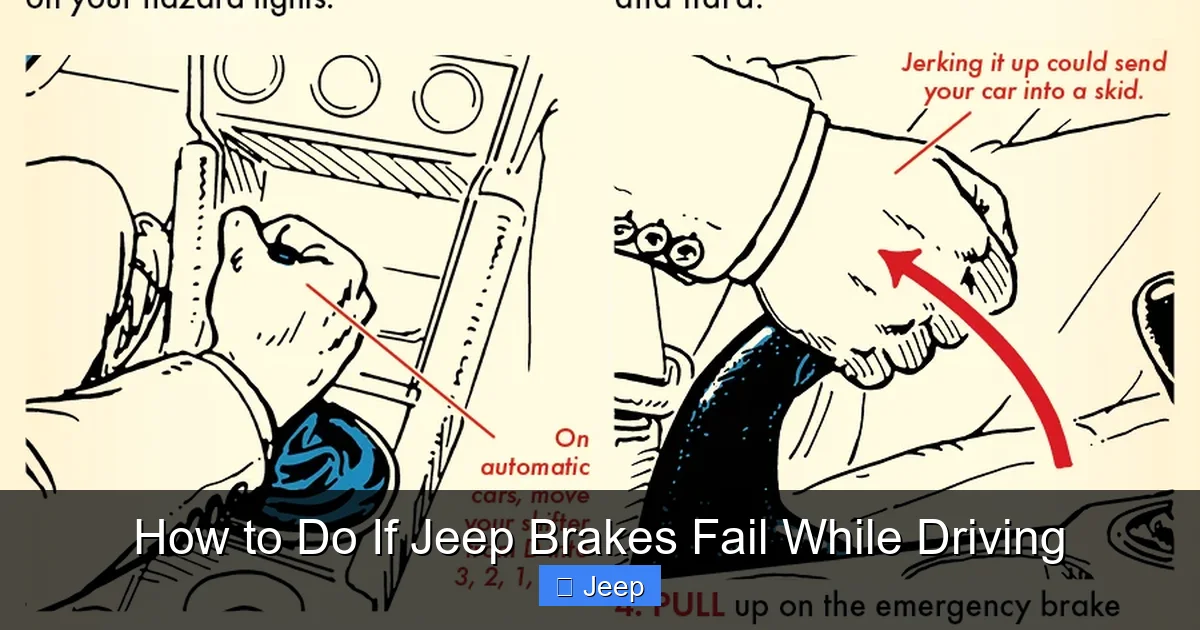
5. Use the Parking Brake with Caution
The parking brake, also known as the emergency brake, is a backup system designed to hold a vehicle stationary. It doesn’t rely on hydraulic pressure like your main brakes, so it can still function even if the primary braking system has failed. However, it must be used correctly to avoid losing control.
Gradual Application Is Key
Pull the parking brake lever or press the button slowly and steadily. If you yank it hard at speed, the rear wheels can lock up instantly, causing the Jeep to skid or slide, especially on wet or uneven pavement. Apply just enough tension to begin slowing the vehicle, and feel for resistance. If the Jeep starts to skid, release the brake slightly and reapply more gently.
Risks of Locking Rear Wheels
Locked rear wheels reduce your ability to steer, which can be dangerous if you need to maneuver around obstacles. On a Jeep with rear-wheel drive or part-time four-wheel drive, the effect is more pronounced. Always keep your foot on the regular brake pedal while using the parking brake, as this can help modulate pressure and maintain some level of control. Remember, the parking brake is a supplement, not a primary stopping method at high speeds.
6. Safely Pull Over and Get Help
Once you’ve reduced your speed using engine braking, pedal pumping, and the parking brake, it’s time to bring the Jeep to a complete stop. Look for the nearest safe location—a wide shoulder, a parking lot, or a side road. Avoid stopping in the middle of a travel lane if possible.
As you slow down, continue to signal your intentions and check your mirrors. Other drivers need to see you coming and adjust their speed accordingly. Once you’ve come to a halt, shift into park (or neutral if you have a manual), turn off the engine, and activate your hazard lights fully. Place reflective triangles or flares behind your Jeep if you have them, especially on a highway or low-visibility road.
Now, call for assistance. Contact roadside assistance, a tow truck, or a trusted mechanic. Describe your location, the situation, and that you’re experiencing brake failure. Do not attempt to drive the Jeep any significant distance with known brake issues, as this puts you and others at risk. If you must move the vehicle a short distance to a safer spot, do so at the slowest possible speed, using all the techniques we’ve discussed.
7. Conclusion and Prevention Tips
Dealing with brake failure is terrifying, but knowing what to do can turn a potential disaster into a manageable situation. The key takeaways are simple: stay calm, downshift to use engine braking, pump the pedal to try restoring pressure, apply the parking brake gradually, and get off the road safely. Every second counts, and your quick, decisive actions can save lives.
Beyond emergency response, the best way to prevent brake failure is regular maintenance. Have your brake pads, rotors, and fluid inspected during every oil change or at least once a year. Pay attention to any changes in pedal feel, noise, or dashboard warnings. If you notice any of the signs we discussed earlier, don’t wait—schedule a brake inspection immediately.
For Jeep owners who enjoy DIY maintenance, learning basic brake skills can be empowering. For instance, if you ever need to replace brake pads or service calipers, knowing how to push brake piston back is a handy skill that can save you a trip to the shop. You can find a detailed guide on how to push brake piston back in our related article. Similarly, if you encounter a situation where brake fluid needs to be bled from the system, learning how to bleed slave cylinder without bleeder screw can get you back on the road safely in a pinch. And if you ever find yourself dealing with a compromised brake line, understanding how to cap off a brake line temporarily can prevent fluid loss and give you time to seek professional help. Stay safe, stay prepared, and keep your Jeep’s braking system in top shape.
Remember, your Jeep is built for adventure, but safe stopping is what makes every journey possible. By staying informed and proactive, you can enjoy the freedom of the open road with confidence, knowing you’re prepared for whatever comes your way.
Frequently Asked Questions
Can I drive my Jeep with brake failure?
No, driving with brake failure is extremely dangerous and should be avoided at all costs. If you suspect your brakes are failing, pull over safely immediately and seek professional assistance. Continuing to drive can lead to a complete loss of stopping power, increasing the risk of a serious accident.
What should I do if my Jeep’s brake pedal goes to the floor?
If the brake pedal goes to the floor, stay calm and act quickly. Downshift to a lower gear to use engine braking, pump the pedal firmly and rapidly to try building hydraulic pressure, and apply the parking brake gradually to slow the vehicle. Pull over to a safe location and call for roadside assistance.
Can engine braking alone stop a Jeep?
Engine braking can significantly reduce your speed, but it alone cannot bring a vehicle to a complete stop, especially from highway speeds. It should be used in combination with pumping the brake pedal and the parking brake for the best chance of slowing down safely.
How often should I check my Jeep’s brakes?
It’s recommended to have your Jeep’s brakes inspected at least once a year or every 12,000 miles, whichever comes first. If you notice any warning signs such as squeaking, grinding, a soft pedal, or the brake warning light illuminated, have them checked sooner.
Will ABS help if my brakes fail completely?
ABS (Anti-lock Braking System) prevents wheels from locking up during hard braking, but it cannot function if there is no hydraulic pressure reaching the brakes. If you experience total brake failure, ABS will not engage, which is why the emergency techniques in this guide are so important.
Is it safe to use the parking brake at high speed?
No, using the parking brake at high speed is not safe. Applying it abruptly can lock the rear wheels, causing the Jeep to skid or spin out of control. If you must use the parking brake while moving, do so gradually and at lower speeds to maintain some level of steering control.