Can You Put a Turbo in an Automatic
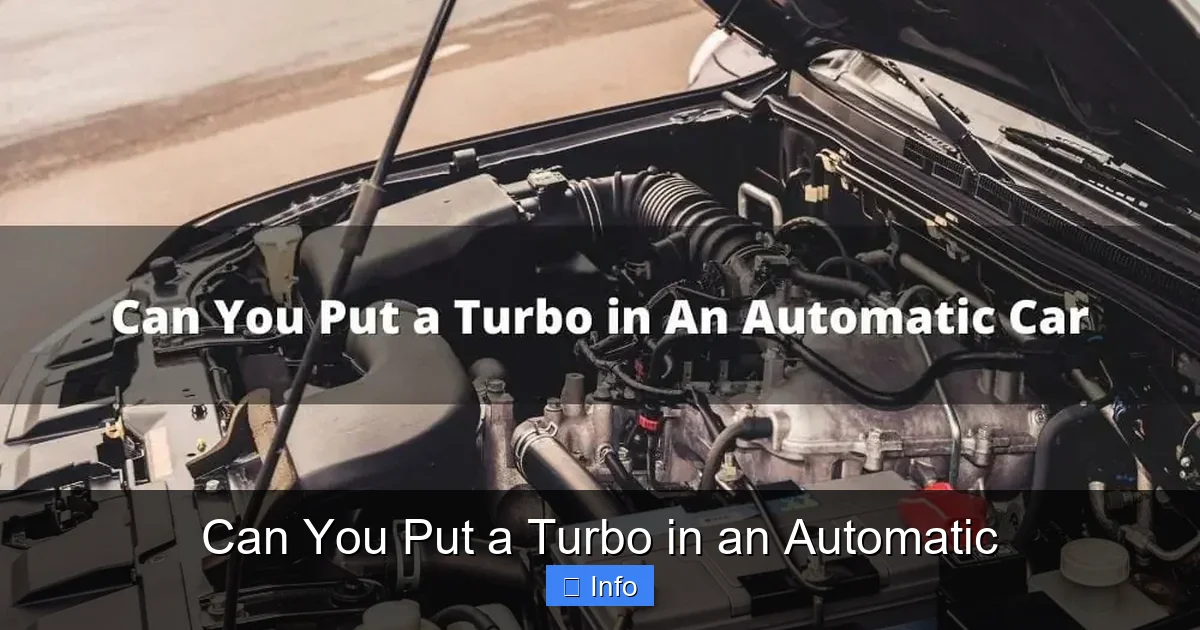
Yes, you can put a turbo in an automatic. It is common from the factory, but an aftermarket build needs compatible engine parts, a strong enough transmission, proper fuel control, cooling, and a safe tune.
Can You Put a Turbo in an Automatic
If your naturally aspirated car feels slow, a turbo can sound like a quick fix. You may even ask, can you put a turbo in an automatic without harming the gearbox? Yes, you can. Many cars leave the factory with a turbocharger and an automatic transmission. The hard part is making an older non-turbo car handle boost safely.
Boost is only one part of the change. A turbo uses exhaust gas to spin a compressor. That compressor packs more air into each cylinder. The engine then needs more fuel and careful spark control. Without those changes, boost can cause knock and fast engine damage. The extra torque also reaches the converter, gears, clutches, axles, and tires.
This guide explains the real work behind the swap. It also shows where automatic cars need special care. You will learn about parts, tuning, transmission limits, cost, and upkeep. With a sound plan, the idea can work. With a random kit and no tune, it is a costly gamble. The goal is a car that feels quick without asking one weak part to save the whole build.
Key Takeaways
- Yes, it is possible: Many factory vehicles pair a turbocharger with an automatic transmission.
- The engine must be ready: Pistons, rods, gaskets, fuel delivery, cooling, and engine management all need to support boost.
- Transmission capacity matters: The automatic must handle the added torque and heat without slipping or failing.
- A proper tune is essential: Boost, fuel, ignition timing, and shift behavior must be controlled safely.
- It is not a simple bolt-on: Exhaust, oil, coolant, intake, and sensor work are usually required.
- Reliability depends on planning: A clear power goal, quality parts, testing, and regular maintenance reduce risk.
📑 Table of Contents
Yes—but It Depends on the Whole Car
Putting a turbo in an automatic is not a one-part swap. A naturally aspirated engine may have pistons, rods, and a head gasket meant for no boost. Its computer may also lack boost controls. Every weak point must be checked before pressure is added. The transmission is only one part of that check.
Factory Turbo Automatics Prove It Can Work
Factory turbo cars prove that automatics and turbos can work well together. Engineers match the turbo, engine, converter, cooling system, and shift logic from the start. The transmission may have stronger clutches or a larger cooler. Its software can also limit torque during hard shifts. That factory planning is what makes the pairing reliable.
Adding a Turbo Later Is Harder
Adding a turbo later is harder. A universal manifold may not clear the case, steering parts, or frame. The oil drain must slope back to the sump. Charge pipes need room, and the exhaust needs a safe route. Fitment is often more work than bolting on the turbo. A part that looks close may still fail once heat and vibration enter the mix.
Signs of a Good Candidate
A good candidate usually has these traits:
- A healthy engine with no major oil leak, overheat, or compression loss.
- An ECU that can be tuned or replaced for boost control.
- An automatic with a known torque margin and good cooling.
- Enough space for safe exhaust, oil, coolant, and charge-air parts.
If the base car is worn, fix it first. A turbo will expose weak rings, bearings, gaskets, and cooling parts. In some cases, buying a factory turbo model costs less than building one.
A Common Mistake to Avoid
Do not buy the turbo first and plan the rest later. A used turbo with a familiar badge may have the wrong housing, wheel, or wastegate. A cheap universal kit may omit a proper oil return, sensor ports, or heat shielding. Get the vehicle identification number, service history, and transmission code before choosing parts. That small step can prevent a pile of costly returns.
What Parts Does a Turbo Conversion Need?
A complete system must move air, fuel, oil, coolant, and data. Missing one support part can ruin the build. These are the main groups to plan.
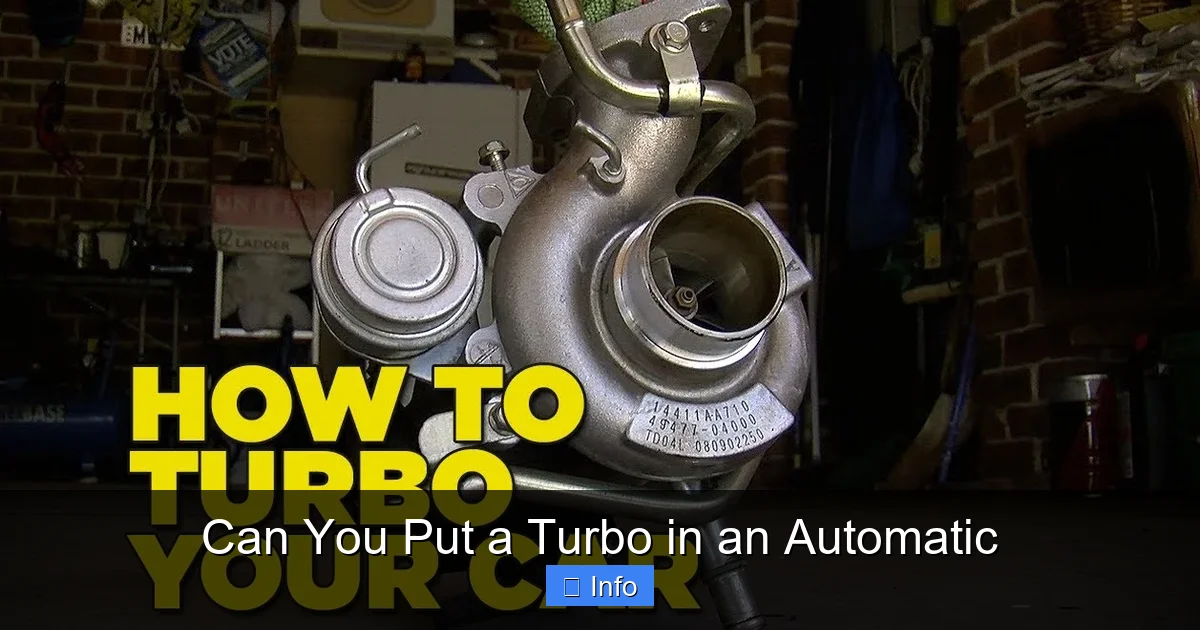
Visual guide about Can You Put a Turbo in an Automatic
Image source: i.ytimg.com
Exhaust and Air System
You need an exhaust manifold that suits the engine and turbo. A wastegate must control turbine speed. The downpipe and exhaust must flow without hitting nearby parts. Most street builds also need an intercooler and leak-free charge pipes.
- Turbo manifold and correct gaskets.
- Correct turbo and wastegate.
- Downpipe and suitable exhaust.
- Intercooler, piping, clamps, and heat shields.
Pressure-test the intake after assembly. A small boost leak can make the engine run lean or cause erratic shifts. It can also make a good tune look bad.
Fuel and Engine Control
More air needs more fuel. Stock injectors or a weak pump may fail under boost. Sensors must read pressure and air flow. The ECU must control fuel, spark, boost, and knock response.
- Fuel pump and filter.
- Larger injectors when needed.
- MAP or MAF sensor.
- Wideband air-fuel gauge.
- Standalone ECU or safe reflash.
A boost gauge helps the driver, but it does not protect the engine. Data logging and knock control matter far more.
Oil and Cooling System
Most turbos need clean oil under the correct pressure. The feed is often restricted, and the drain must return oil by gravity. A blocked or kinked drain can force oil past the seals. Coolant lines may also be needed. Add proper heat shields so nearby wiring and hoses do not bake.
Use new gaskets, quality lines, and correct fittings. Prime the turbo with oil before startup. Never rely on sealant inside an oil drain. Check every joint before the engine sees boost.
How the Automatic Transmission Handles Boost
An automatic is not weak just because it has no clutch pedal. Many stock automatics handle strong torque. The key is rated capacity, heat, and shift control. Horsepower gets attention, but torque is what loads the gears and clutches.
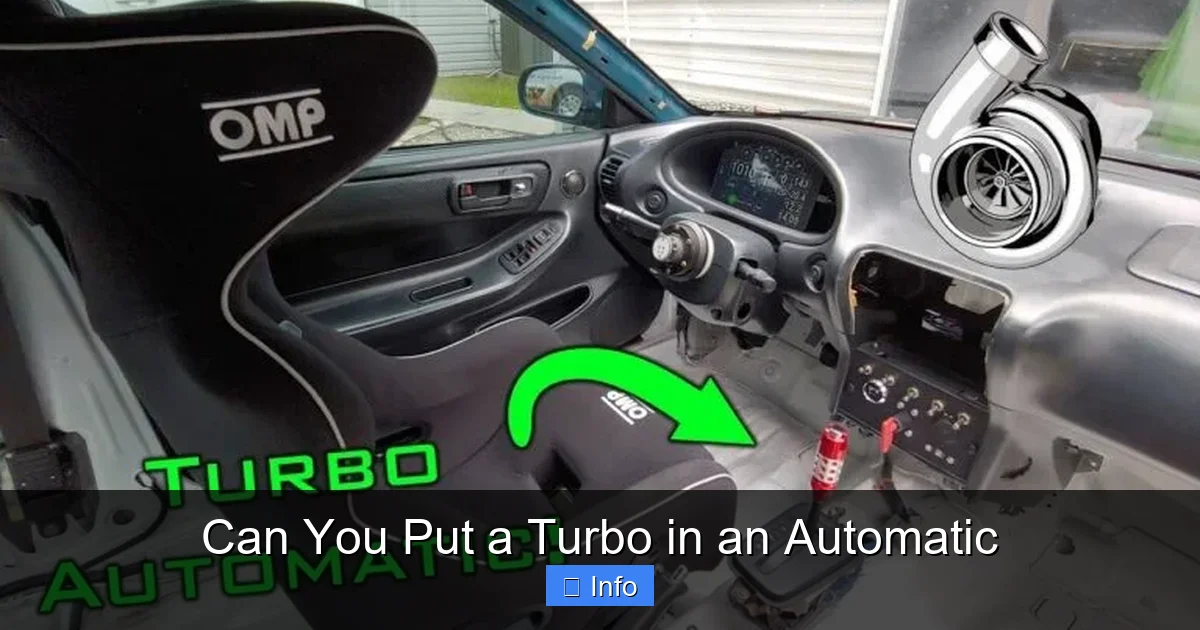
Visual guide about Can You Put a Turbo in an Automatic
Image source: thecarhow.com
Check Torque Capacity First
Find the transmission model and its factory torque rating. Then compare it with the engine’s expected output. Do not rely on horsepower alone. The converter, clutch packs, bands, planetary gears, and final drive all share the load. A high-stall converter can add heat if it slips too much.
Have the unit tested for leaks, worn clutches, and soft shifts before boost. Rebuilding a failing transmission and adding turbo power at the same time hides the cause of later trouble.
Consider the Torque Converter
The torque converter acts like a fluid coupling. Its stall speed and lockup behavior affect launch feel and heat. A converter made for a different power range can slip, surge, or overheat. CVT and dual-clutch units need maker-specific research, since generic pressure changes may not work.
Shift Logic May Need Changes
Boost can change how the gearbox shifts. The control module may need firmer line pressure, safer shift points, and torque limits. Sudden kickdown can spike torque. Full-throttle upshifts can also shock the driveline.
Some cars offer drive modes, such as the controls described in how sport mode changes shift behavior in a Toyota Camry. Sport mode can alter shift feel, but it cannot make weak hard parts stronger.
Heat Can Shorten Transmission Life
Extra power makes extra heat. The converter and clutch packs warm the fluid. A larger cooler may be needed for street use, towing, or repeated hard runs. Use fluid that meets the maker’s exact spec.
For a model-specific service example, see this Toyota Highlander transmission fluid service interval, but always follow the guide for your own car.
- Delayed engagement.
- Slip or flare between gears.
- Burnt smell or dark fluid.
- Leaks, overheat codes, or harsh shifts.
Any one sign calls for a pause. Do not add boost until the cause is found.
How to Plan a Safe Turbo Build
A good build starts with a written power goal. “More boost” is not a plan. Decide how the car will be used and what reliability means.
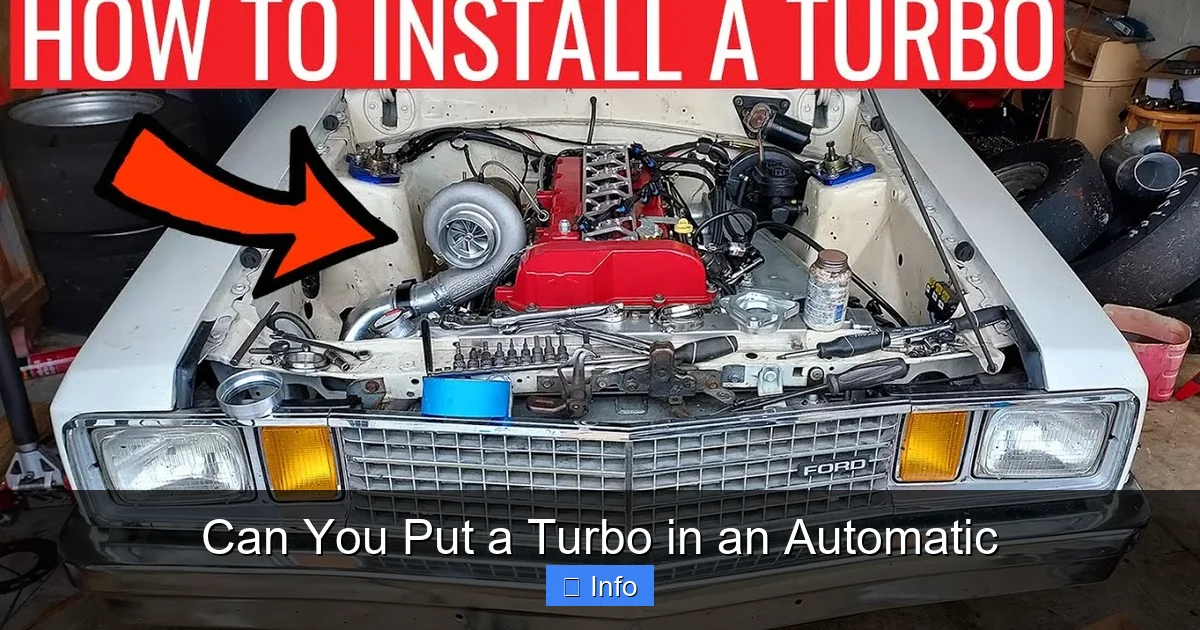
Visual guide about Can You Put a Turbo in an Automatic
Image source: i.ytimg.com
Match the Setup to Your Goal
Two cars can use very different setups. A commuter may need quick spool and mild torque. A track car needs more cooling and a wider safety margin. These examples show why target use matters.
- A mild street build may use a smaller turbo, modest boost, basic fuel upgrades, and a conservative tune. A healthy stock engine may suit this, but only after tests.
- A high-power build may need forged pistons and rods, larger injectors, a stronger fuel pump, an upgraded converter, firmer clutches, and a bigger cooler.
Never copy another car’s boost level by name alone. Displacement, compression, fuel, cams, intercooling, and tune all change the safe limit.
Use a Sensible Build Order
- Check engine health with compression, leak-down, oil-pressure, and cooling tests.
- Choose a realistic wheel-horsepower and torque target.
- Match turbo size to engine displacement and desired rpm range.
- Plan exhaust, intake, fuel, oil, coolant, and sensor upgrades.
- Inspect or reinforce the automatic as the target requires.
- Install parts, then pressure-test oil, boost, and coolant circuits.
- Tune on a dyno, inspect the car, and road-log the results.
Keep the order logical. For example, do not install a large turbo before confirming that the fuel pump can support it. Do not tune boost before checking for leaks.
Test Before Adding Boost
Before final assembly, mock up the turbo and piping. Check clearance at full steering lock and when the engine moves on its mounts. Look at the starter, oxygen sensors, dipstick, and heat-sensitive wiring. Prime the turbo and crank the engine until oil pressure builds, if the maker’s procedure allows it.
Save a baseline scan before boost. Record idle quality, fuel trim, coolant temperature, and misfire data. If the car is not healthy without boost, it will not become healthy with boost.
Get a Professional Tune
The tune is where many builds succeed or fail. A skilled tuner checks air-fuel ratio, ignition timing, exhaust temperature, knock data, and boost rise. Fuel cuts and overboost protection should also be tested. Start low, inspect for leaks, and add power in small steps.
Before road use, confirm local emissions rules. Some areas ban aftermarket turbo systems unless they have an approved exemption. A dyno sheet does not make an illegal setup legal.
Cost, Risks, and Long-Term Maintenance
Price varies with the car, turbo size, labor rate, and power goal. The cheapest quote may leave out fuel work, cooling, or tuning.
Understand the Likely Cost
A basic single-turbo street build can cost several thousand dollars in parts alone. With labor, tuning, and needed transmission work, a broad range may be $4,000 to $10,000 or more. A high-power build can pass $15,000. Custom fabrication and rare parts raise the total fast.
Set aside at least ten to fifteen percent for missed parts and fixes. Plan for a retune if later changes affect air or fuel flow.
Know the Main Risks
The biggest engine risks are lean mixtures, detonation, overboost, oil starvation, and heat. The main transmission risks are slip, burnt fluid, converter failure, and broken hard parts. Driveline angle, mounts, axles, and tires matter too. Turbo power can also void coverage and affect insurance disclosure.
Use a reputable shop with turbo and automatic experience. Ask what torque limit it assumes, how it tests the build, and what support items are included. A clear written plan is worth more than a vague promise of “easy power.”
Maintain the Complete System
Reliability depends on upkeep. Use the specified oil and change it on time. Let the turbo receive stable oil flow, and follow any needed cool-down routine. Watch coolant as well; this Toyota antifreeze change schedule explains one brand-specific service plan, while your manual gives the correct one for your vehicle.
Check charge pipes, oil lines, coolant hoses, and transmission fluid often. Log boost and fix small leaks at once. A safe build stays safe because its owner pays attention.
Conclusion: Plan the Car, Not Just the Turbo
So, can you put a turbo in an automatic? Yes. The transmission type is not the main barrier. The real questions are whether the engine, fuel system, cooling, electronics, and gearbox can work as one system.
For a mild goal, a healthy car may need a compact turbo, support parts, and a careful tune. For a high-power goal, budget for engine and transmission upgrades from the start. Do not treat the automatic as an afterthought.
A turbo can make an automatic car quick and dependable, but only when the full build is matched, tuned, tested, and maintained. If any part of that chain feels uncertain, get expert help before the engine starts.
Frequently Asked Questions
Can a turbo damage an automatic transmission?
Yes, it can if the added torque or heat exceeds the transmission’s limits. A healthy, correctly rated automatic with suitable tuning and cooling can often handle a mild turbo build.
How much boost can a stock automatic handle?
There is no universal safe boost number. Some stock engines tolerate low boost, but even 5 to 8 psi is not safe for every car. The engine condition, transmission rating, fuel system, and tune all matter.
Do you need a tune after installing a turbo?
Yes. A tune controls fuel, spark timing, boost pressure, and knock protection. Running boost on an untuned engine can cause serious damage.
Is a turbo better than a supercharger for an automatic car?
Neither option is always better. A turbo can be efficient but adds heat and needs more plumbing, while a supercharger may be easier to package but uses engine power. Both require proper tuning and transmission planning.
Can you install a turbo on an automatic yourself?
It is possible for an experienced builder with the right tools and knowledge. Oil routing, fuel control, exhaust fitment, and tuning create major risks, so most owners should use a qualified shop.
Will a turbo conversion affect emissions or the warranty?
It may affect both. Check local emissions laws before buying parts, and ask the manufacturer or dealer about warranty coverage. Keep records of legal approvals and all work performed.