How to Reset Pre Safe Inoperative
Pre Safe inoperative messages can be alarming, but they often have simple fixes. The Pre Safe system is a Mercedes-Benz safety feature that prepares the vehicle for potential collisions. When it shows as inoperative, you can typically reset it through a series of dashboard steps, battery disconnection, or by addressing the underlying sensor issues. Most Pre Safe inoperative warnings can be cleared at home without needing a mechanic, saving you time and money.
Key Takeaways
- Pre Safe is a Mercedes-Benz safety system that monitors driving conditions and prepares the vehicle for potential collisions by pre-tensioning seatbelts and adjusting seats.
- Common causes include sensor malfunctions, low battery voltage, debris covering radar sensors, and temporary system overloads.
- Reset methods range from simple dashboard procedures to battery disconnection techniques that anyone can perform.
- Regular sensor maintenance prevents most Pre Safe inoperative messages from appearing in the first place.
- Professional diagnosis is recommended if the warning persists after attempting basic resets, as it may indicate a deeper electrical issue.
- Understanding the warning lights helps you distinguish between minor glitches and serious safety system failures.
- Preventive care extends system longevity and ensures your safety features work when you need them most.
📑 Table of Contents
Understanding the Pre Safe System in Your Mercedes-Benz
The Pre Safe system represents one of Mercedes-Benz’s most innovative safety advancements. This intelligent system continuously monitors your driving conditions, looking for signs of potential accidents or emergency situations. When it detects something concerning, like sudden braking or loss of vehicle control, Pre Safe immediately takes protective measures. It pre-tensions the seatbelts, adjusts the seats to a more protective position, and can even close the windows and sunroof to prepare for a potential collision.
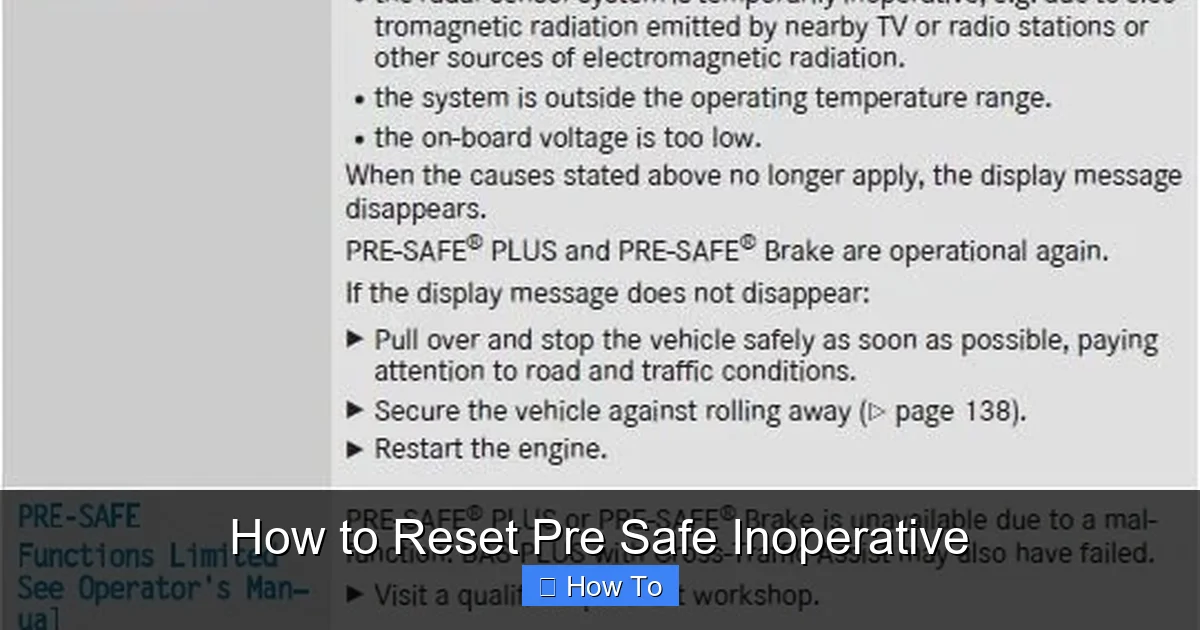
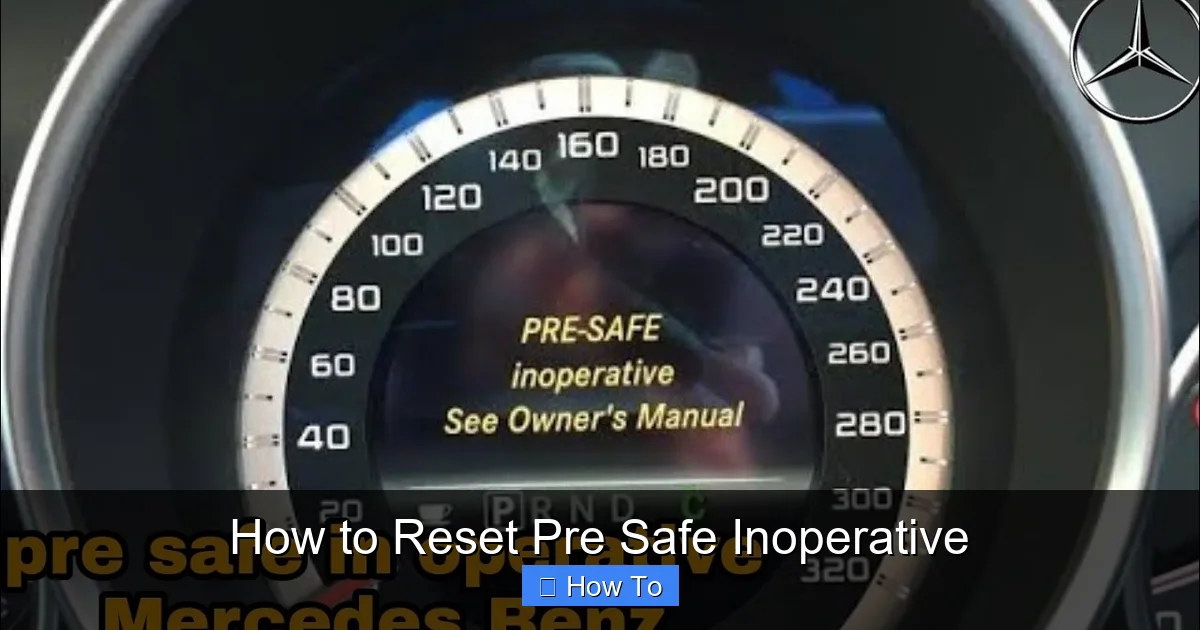
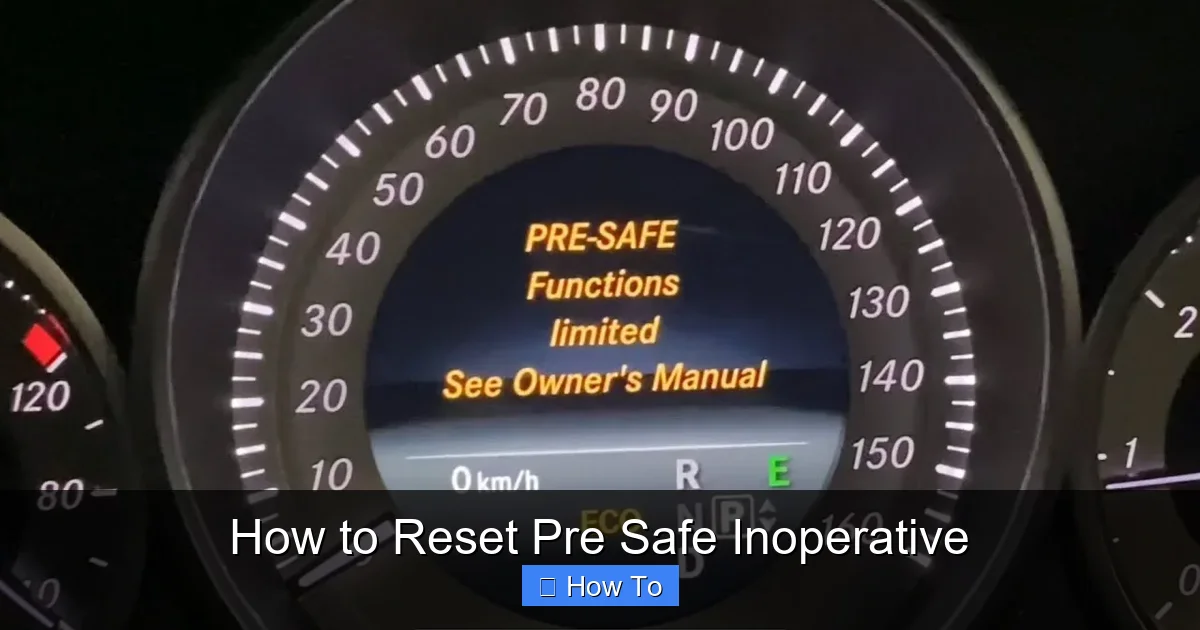
When your dashboard displays a “Pre Safe inoperative” message, it means this sophisticated safety system has detected a fault and cannot function properly. This warning should never be ignored, as it indicates that your vehicle’s collision preparation systems are not available during an emergency. The system might be completely non-functional or only partially working, which compromises your protection on the road.
Modern Mercedes-Benz vehicles rely heavily on a network of sensors, cameras, and control modules to operate Pre Safe effectively. These components work together to create a comprehensive safety net around your vehicle. When even one element fails or becomes obstructed, the entire system may shut down as a safety precaution. This is why addressing the issue promptly is so important for maintaining your vehicle’s safety features.
Common Triggers for Pre Safe Inoperative Warnings
Several factors can trigger the Pre Safe inoperative message on your Mercedes-Benz dashboard. Understanding these triggers helps you identify the most likely cause and determine the best approach for resetting the system. Battery voltage issues rank among the most common causes, as the Pre Safe system requires stable electrical power to operate correctly. If your battery is weak, dying, or has recently been disconnected, the system may display this warning.
Sensor obstructions represent another frequent trigger for Pre Safe warnings. The system uses front-mounted radar sensors located behind the grille or bumper to detect vehicles and obstacles ahead. These sensors can become covered with dirt, snow, ice, or road debris, which interferes with their ability to scan the road ahead. When the sensors cannot function properly due to obstruction, the system automatically disables itself and displays the warning message.
Electrical system malfunctions can also cause Pre Safe to become inoperative. This includes issues with the control modules that process sensor data, wiring problems that interrupt communication between components, and software glitches that affect system operation. Sometimes extreme temperature changes can trigger temporary faults that clear once the vehicle warms up or cools down.
The Simple Dashboard Reset Method
Visual guide about How to Reset Pre Safe Inoperative
Image source: cimg5.ibsrv.net
Before attempting more involved procedures, try the simplest reset method first. This approach often works for temporary glitches and minor sensor hiccups that do not indicate a serious problem. Start by parking your Mercedes-Benz on a level surface and ensuring the engine is running. Let the vehicle idle for several minutes to allow all systems to initialize properly.
Next, turn the steering wheel all the way to the left until it stops, then turn it all the way to the right until it reaches its limit. Repeat this full steering movement three times. This action helps recalibrate certain sensors and can sometimes clear minor communication errors between the Pre Safe components. After completing the steering sequence, turn off the engine and wait for approximately thirty seconds.
Start the vehicle again and check if the Pre Safe inoperative warning has cleared. If the message persists, try a slightly different approach. Turn the steering wheel only while driving at low speeds in a safe, open area. Drive forward in a straight line, then turn the wheel a quarter turn to the left and hold it for three seconds. Straighten the wheel, then repeat the process turning to the right. This method provides a different type of sensor recalibration that some Mercedes models respond to better.
Disconnecting the Battery to Reset Pre Safe
Visual guide about How to Reset Pre Safe Inoperative
Image source: i.ytimg.com
When the dashboard reset does not work, battery disconnection offers a more thorough approach to clearing electronic warnings. This method essentially forces your vehicle’s computer systems to reboot, which can eliminate persistent error codes and system glitches. Before attempting this procedure, gather the necessary tools and ensure you have your radio and navigation security codes available.
Open your Mercedes-Benz hood and locate the battery. The battery is typically found in the engine compartment, though some models house it in the trunk for better weight distribution. Identify the negative battery terminal, which is marked with a minus sign and is usually connected to a black cable. Using an appropriate wrench, loosen the nut on the negative terminal clamp and carefully remove the cable from the battery post.
After disconnecting the negative cable, wait for a full five minutes before reconnecting it. This waiting period allows the vehicle’s control modules to fully discharge and reset their internal memory. While waiting, you can press the brake pedal and the start button several times to help discharge any remaining electrical charge in the system. Once the waiting period is complete, reconnect the negative cable securely and start your vehicle normally.
The battery reset method often resolves Pre Safe inoperative warnings caused by temporary electrical issues, low voltage events, or minor software glitches. However, if the warning returns shortly after resetting, this indicates a deeper problem that requires further investigation. If you have recently replaced your battery or the battery is more than four years old, consider having it tested at a local auto parts store or service center.
Checking and Cleaning the Pre Safe Sensors
Your Mercedes-Benz Pre Safe system depends on clean, unobstructed sensors to function correctly. The primary sensors are located behind the front grille or bumper, and they use radar technology to detect vehicles and obstacles ahead. Over time, these sensors can accumulate dirt, road grime, ice, and debris that block their signals and cause system failures.
Inspect your front grille and bumper area carefully for any visible obstructions. Remove leaves, bugs, dirt clumps, or snow that may be covering the sensor area. Use a soft cloth and gentle cleaning solution to wipe the sensor surfaces, being careful not to scratch or damage the sensitive components. Avoid using high-pressure water sprays directly on the sensors, as this can force water into the housing and cause electrical problems.
After cleaning the sensors, take your vehicle for a test drive on the highway if possible. Pre Safe systems often need to encounter moving traffic to fully recalibrate and verify their functionality. Drive at speeds above 40 miles per hour for at least ten minutes, allowing the system to run through its diagnostic self-checks. If the warning persists after thorough sensor cleaning, the issue may be with the sensor itself rather than simple obstruction.
For more detailed information about maintaining your vehicle’s safety sensors, consider learning how to clean pre collision sensors to understand general sensor care principles that apply to most modern vehicles with similar safety systems.
When to Seek Professional Diagnosis
Visual guide about How to Reset Pre Safe Inoperative
Image source: thecarhow.com
Sometimes Pre Safe inoperative warnings persist despite your best efforts at home troubleshooting. When this happens, your vehicle requires professional attention from someone with specialized diagnostic equipment and Mercedes-Benz expertise. The Pre Safe system involves complex interactions between multiple control modules, and identifying the exact fault often requires dealer-level diagnostic tools.
A qualified Mercedes-Benz technician can connect your vehicle to official diagnostic equipment that reads specific fault codes stored in the various control modules. These codes provide precise information about which component is failing and why. Without this specialized equipment, you may only address symptoms rather than the root cause of the problem, leading to recurring warnings and continued safety system failures.
The cost of professional diagnosis is typically reasonable, especially when compared to the potential consequences of driving with an inoperative safety system. Many issues can be resolved quickly once a technician identifies the specific faulty component. Common professional repairs include sensor replacement, control module updates, wiring harness repairs, and recalibration procedures that require specific tools and knowledge.
If you notice other warning lights accompanying the Pre Safe inoperative message, this often indicates a more serious electrical problem that definitely requires professional attention. Warning lights that appear together frequently share common circuits or power sources, making the diagnosis more complex than isolated issues. Pay attention to traction control, ABS, and airbag warning lights, as these systems share components with Pre Safe.
Preventing Future Pre Safe Issues
Taking preventive measures significantly reduces the likelihood of experiencing Pre Safe inoperative warnings in the future. Regular vehicle maintenance plays a crucial role in keeping all electronic systems functioning properly. This includes maintaining proper battery health, keeping electrical connections clean and secure, and addressing any warning lights promptly before they escalate into larger problems.
Keep your front grille and bumper area clean, especially during winter months when road salt and slush can accumulate quickly. Inspect these areas during regular car washes and remove any debris that might obstruct the sensors. In extremely cold climates, consider using a protective cover for the front sensors when parked outdoors for extended periods.
If you are experiencing multiple electrical warnings or have an older vehicle with a history of battery problems, consider having your charging system tested regularly. A properly functioning alternator and healthy battery ensure that all safety systems receive consistent power regardless of driving conditions. Many automotive shops offer free battery and charging system testing that takes just a few minutes.
For additional maintenance tips that can help prevent electronic warning messages, you might find it helpful to understand how to reset airbag lights as these procedures share similar concepts with resetting other safety system warnings in modern vehicles.
Alternative Reset Techniques and Tips
Beyond the methods already discussed, some Mercedes-Benz owners have found success with alternative approaches when dealing with stubborn Pre Safe inoperative warnings. One technique involves using the vehicle’s onboard settings menu to access system information and clear stored data. Not all models support this feature, but checking your owner’s manual for system reset options is worthwhile.
Another approach involves performing a more comprehensive system reboot by disconnecting both battery terminals. After removing both cables, touch them together for approximately thirty seconds to discharge any residual power. This method ensures that all capacitors in the vehicle’s electrical system are fully discharged, providing a cleaner reset than single-cable disconnection.
Some owners have reported success with driving the vehicle through a car wash immediately after attempting a reset. The combination of getting the sensors wet, which can sometimes clear minor obstructions, and the motion of the vehicle through the wash process helps the system recalibrate. While this approach lacks scientific backing, it has worked for enough people to be worth mentioning as a simple thing to try.
Consider keeping a detailed record of when the Pre Safe inoperative warning appears and what you were doing at the time. This information can be valuable for both professional diagnosis and identifying patterns that suggest specific triggers. Note factors like weather conditions, driving surface, vehicle speed, and any other circumstances that might correlate with the warning’s appearance.
Understanding Your Vehicle’s Safety Systems
The Pre Safe system works in conjunction with other advanced safety features in your Mercedes-Benz. Understanding how these systems interact helps you appreciate the importance of keeping Pre Safe operational and recognizing how one system can affect another. Active brake assist, lane keeping assist, and blind spot monitoring all share data and components with the Pre Safe system.
These integrated safety systems represent significant advancements in vehicle protection. They work together to create multiple layers of safety that protect you in various driving situations. When any component in this network fails, it can affect the functionality of related systems. This interconnected design is why a single sensor malfunction can trigger multiple warning lights simultaneously.
Modern vehicles contain dozens of computers and control modules that communicate through complex networks. The CAN bus system allows these modules to share information rapidly, enabling the quick response times required for effective safety systems. Learning basic information about how jumper OBD2 systems work can provide helpful background knowledge about how your vehicle’s diagnostic systems function.
Taking a proactive approach to vehicle maintenance ensures that all your safety systems remain ready to protect you when needed. Regular service appointments, prompt attention to warning lights, and careful driving habits all contribute to a safer driving experience. Your Pre Safe system is there to help in emergencies, so keeping it functional should be a priority for every vehicle owner.
Conclusion
Dealing with a Pre Safe inoperative warning on your Mercedes-Benz can be frustrating, but the situation is often resolvable with patience and the right approach. Start with the simplest solutions like steering wheel recalibration and sensor cleaning before moving to more involved procedures like battery disconnection. Most temporary glitches respond well to these home troubleshooting methods.
When home remedies do not resolve the issue, seeking professional diagnosis is the responsible choice. Your safety and the safety of your passengers depends on having functional safety systems available during emergencies. A qualified technician can identify and repair the specific problem, restoring your vehicle’s protective features to full operation.
Regular maintenance and sensor care go a long way toward preventing Pre Safe issues from developing in the first place. Keep sensors clean, maintain your battery health, and address any warning lights promptly. These simple habits help ensure that your Mercedes-Benz safety systems remain ready to protect you through countless miles of driving.
Frequently Asked Questions
What does Pre Safe inoperative mean on my Mercedes-Benz dashboard?
The Pre Safe inoperative warning indicates that your vehicle’s collision preparation system has detected a fault and cannot function properly. This means the automatic seatbelt tensioning, seat adjustments, and other protective features will not activate during an emergency situation. You should address this warning promptly to restore your vehicle’s safety features.
Can I drive my Mercedes-Benz safely when Pre Safe shows as inoperative?
Yes, you can still drive your vehicle when Pre Safe is inoperative, though you should have the system diagnosed and repaired as soon as possible. Your other safety features like airbags and standard seatbelts remain functional. However, you will be without the additional protection that Pre Safe provides during collision scenarios.
How much does it cost to fix a Pre Safe system issue at a Mercedes dealership?
Diagnostic costs typically range from $100 to $200, while repairs can vary widely from $200 for sensor cleaning or recalibration to over $1,000 for replacing control modules or sensors. The exact cost depends on the specific cause of the failure and your vehicle model. Getting a detailed diagnosis before approving repairs helps you understand the exact charges.
Will disconnecting my battery reset the Pre Safe warning?
Disconnecting the battery can sometimes reset Pre Safe warnings, especially those caused by temporary electrical glitches or low voltage situations. For the best results, disconnect the negative terminal and wait at least five minutes before reconnecting. If the warning returns shortly after resetting, this indicates a deeper issue that requires professional diagnosis.
Can weather conditions cause Pre Safe to show as inoperative?
Yes, extreme weather conditions can trigger temporary Pre Safe warnings. Heavy rain, snow, ice, and severe cold or heat can affect sensor performance and electrical system stability. These warnings often clear automatically once weather conditions improve. However, if the warning persists after the weather returns to normal, further investigation may be needed.
How often should I clean my Pre Safe sensors to prevent issues?
Inspect and clean your Pre Safe sensors every two weeks or after driving through particularly dirty conditions. Regular washing and inspection during routine car care is usually sufficient. During winter months or when driving on unpaved roads, more frequent checks may be necessary to prevent debris accumulation from triggering warning messages.