What Is Toyota Smartpath?
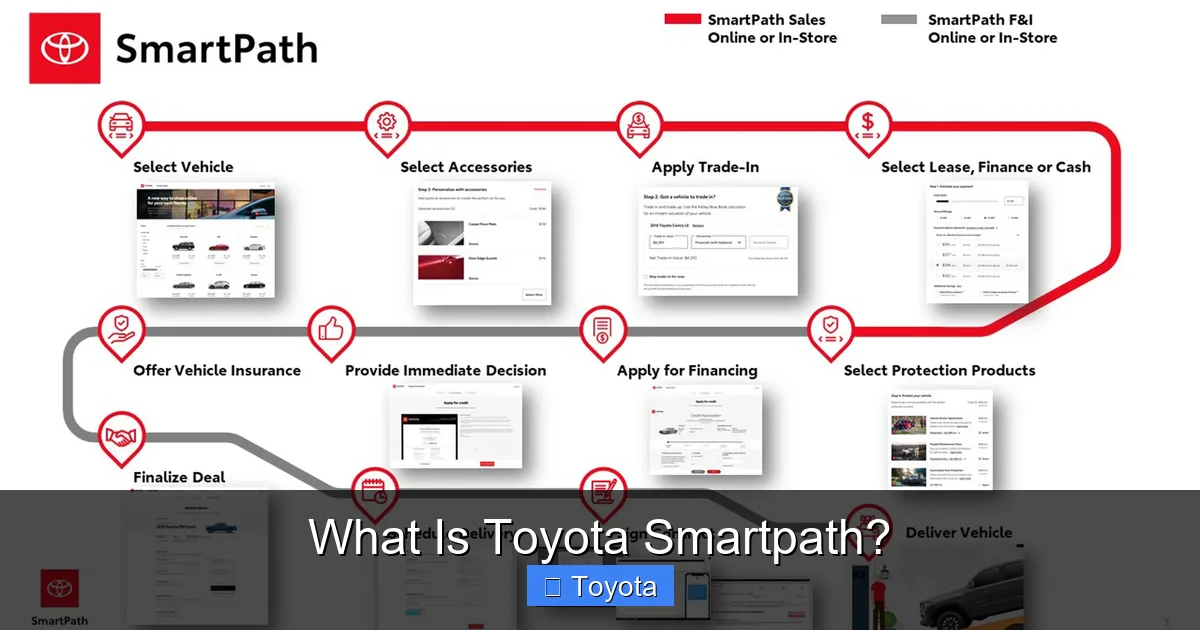
Toyota SmartPath is an advanced connectivity and driver-assistance system designed to enhance safety, convenience, and vehicle monitoring for Toyota owners. It integrates seamless telematics, real-time diagnostics, and intuitive controls to keep you connected on every journey.
If you’ve recently browsed Toyota’s online resources or talked with a dealer about the latest features, you’ve likely heard the term Toyota SmartPath. But what exactly is it? In simple terms, Toyota SmartPath is the brand’s smart-integrated platform designed to connect your vehicle’s systems with your digital life. It’s not a single feature you toggle on or off; instead, it’s the intelligence behind many of the convenience and safety functions found in newer Toyota models. From the moment you start your engine to the time you park, Toyota SmartPath works in the background, learning your habits and optimizing your drive. Understanding how it works can help you make the most of your Toyota’s technology without needing extra equipment or complicated setup.
The connectivity backbone of Toyota SmartPath is built on a sophisticated network of hardware and software that communicates constantly. At its heart is a telematics control unit, a small but powerful computer installed in most modern Toyota vehicles. This unit collects data from the engine, transmission, brakes, and various sensors, then transmits it to Toyota’s cloud servers via cellular networks. The frequency of data uploads is intelligent; it sends critical health information regularly, while less urgent stats are batched to conserve bandwidth. This setup ensures that when you check your Toyota app, you’re seeing current, accurate information without unnecessary delay.
Real-time data processing is where the “smart” part truly comes alive. Once the cloud receives your vehicle’s data, algorithms analyze patterns to identify anomalies. For example, if the system detects unusual fuel consumption trends, it can flag the issue and send a notification through the Toyota SmartPath interface. Similarly, driving behavior analysis—such as harsh braking or rapid acceleration—can be monitored if you’ve opted into the safety features. This information isn’t just for show; it can influence insurance premiums, service scheduling, and even resale value documentation. The transparency offered by this level of detail empowers owners to make informed decisions about their vehicle’s care.
Another key element is smartphone integration. Toyota SmartPath leverages both Apple CarPlay and Android Auto compatibility, but goes deeper by syncing contacts, messages, and preferred destinations directly into the vehicle’s infotainment map. When you input a destination on your phone, the system can suggest it on the dashboard, and vice versa. This two-way street means your routines are remembered. If you frequently drive to a specific coffee shop every Monday, Toyota SmartPath may start suggesting that route proactively, especially if it aligns with your calendar events. The learning capability is gradual; it won’t overwhelm you with suggestions immediately, but after several weeks of data, the relevance increases.
Security and privacy are woven into every layer. Toyota employs encryption standards that meet or exceed industry benchmarks, ensuring that your driving data isn’t exposed to unauthorized access. You have control over what’s shared; within the Toyota app, toggles allow you to opt out of certain data collections without losing core SmartPath functionality. This balance between utility and privacy is crucial for building trust, especially as more aspects of driving become connected. You can enjoy the benefits of intelligent feedback without feeling like every mile is being meticulously logged for third-party purposes.
The system also supports over-the-air updates. Just as your smartphone receives software patches, Toyota SmartPath can update its firmware wirelessly. This means new features, improved algorithms, and security enhancements can be delivered without a dealership visit. If a new routing algorithm is proven to save fuel, your vehicle can receive it overnight. This future-proofing ensures that your investment in Toyota SmartPath remains valuable as the technology evolves, rather than becoming obsolete after a few years.
Key Takeaways
- Point 1: Toyota SmartPath is an integrated smart-platform system designed to enhance connectivity, safety, and vehicle monitoring for Toyota owners.
- Point 2: It leverages cloud data and real-time processing to monitor vehicle health, predict maintenance needs, and deliver proactive alerts.
- Point 3: Key features include remote vehicle monitoring, smart navigation integration, driver behavior feedback, and over-the-air software updates.
- Point 4: Benefits extend to daily commuting, long road trips, and family driving, offering predictive routing, remote start, and safety analytics.
- Point 5: Compared to traditional infotainment, SmartPath provides bidirectional data flow, deep customization, and ongoing improvements via over-the-air updates.
- Point 6: Maximizing the experience involves keeping software updated, personalizing alert settings, reviewing driving summaries, and exploring smart home integrations.
📑 Table of Contents
How Toyota SmartPath Works
The connectivity backbone of Toyota SmartPath is built on a sophisticated network of hardware and software that communicates constantly. At its heart is a telematics control unit, a small but powerful computer installed in most modern Toyota vehicles. This unit collects data from the engine, transmission, brakes, and various sensors, then transmits it to Toyota’s cloud servers via cellular networks. The frequency of data uploads is intelligent; it sends critical health information regularly, while less urgent stats are batched to conserve bandwidth. This setup ensures that when you check your Toyota app, you’re seeing current, accurate information without unnecessary delay.
Real-time data processing is where the “smart” part truly comes alive. Once the cloud receives your vehicle’s data, algorithms analyze patterns to identify anomalies. For example, if the system detects unusual fuel consumption trends, it can flag the issue and send a notification through the Toyota SmartPath interface. Similarly, driving behavior analysis—such as harsh braking or rapid acceleration—can be monitored if you’ve opted into the safety features. This information isn’t just for show; it can influence insurance premiums, service scheduling, and even resale value documentation. The transparency offered by this level of detail empowers owners to make informed decisions about their vehicle’s care.
Another key element is smartphone integration. Toyota SmartPath leverages both Apple CarPlay and Android Auto compatibility, but goes deeper by syncing contacts, messages, and preferred destinations directly into the vehicle’s infotainment map. When you input a destination on your phone, the system can suggest it on the dashboard, and vice versa. This two-way street means your routines are remembered. If you frequently drive to a specific coffee shop every Monday, Toyota SmartPath may start suggesting that route proactively, especially if it aligns with your calendar events. The learning capability is gradual; it won’t overwhelm you with suggestions immediately, but after several weeks of data, the relevance increases.
Security and privacy are woven into every layer. Toyota employs encryption standards that meet or exceed industry benchmarks, ensuring that your driving data isn’t exposed to unauthorized access. You have control over what’s shared; within the Toyota app, toggles allow you to opt out of certain data collections without losing core SmartPath functionality. This balance between utility and privacy is crucial for building trust, especially as more aspects of driving become connected. You can enjoy the benefits of intelligent feedback without feeling like every mile is being meticulously logged for third-party purposes.
The system also supports over-the-air updates. Just as your smartphone receives software patches, Toyota SmartPath can update its firmware wirelessly. This means new features, improved algorithms, and security enhancements can be delivered without a dealership visit. If a new routing algorithm is proven to save fuel, your vehicle can receive it overnight. This future-proofing ensures that your investment in Toyota SmartPath remains valuable as the technology evolves, rather than becoming obsolete after a few years.
If you’re curious about how Toyota SmartPath compares to factory navigation, learning about Toyota Dynamic Navigation can provide useful context.
Key Features of Toyota SmartPath
Visual guide about What Is Toyota Smartpath?
Image source: dealer-fx.com
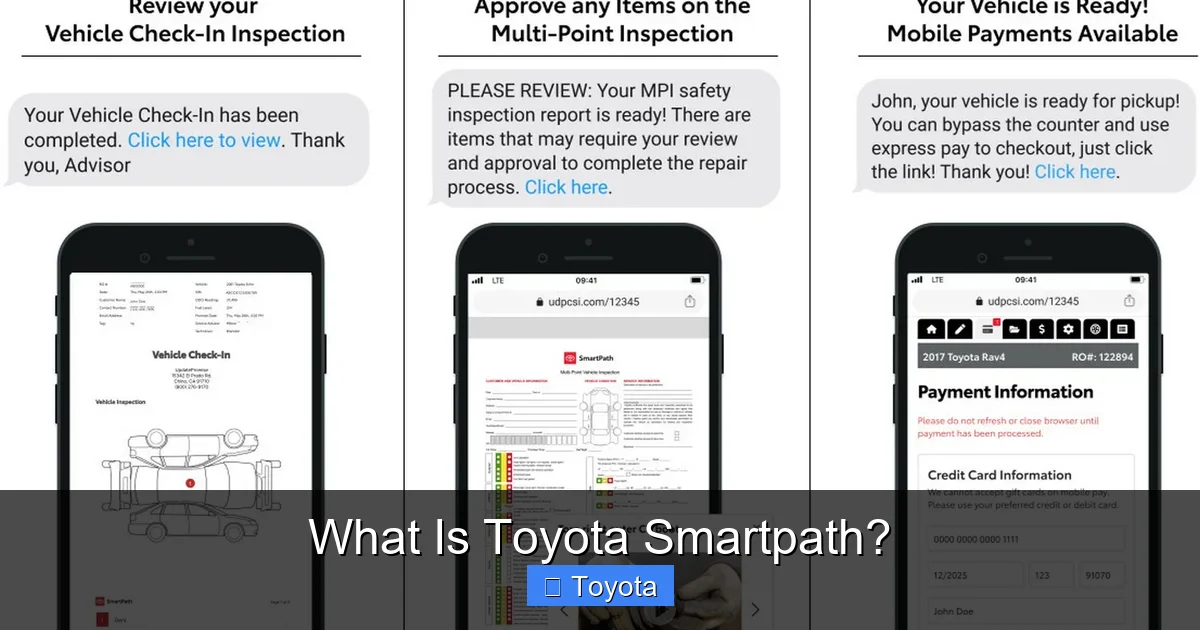
Toyota SmartPath boasts a suite of features designed to touch every aspect of the driving experience. One of the most immediately noticeable is remote vehicle monitoring. Through the Toyota app, linked via SmartPath, you can check your fuel level, tire pressure, and estimated range from anywhere with a cellular connection. This is particularly useful on cold mornings when you want to start the engine and warm up the cabin before stepping outside. The remote start function, when equipped, is seamlessly integrated, meaning a single tap in the app triggers the process without needing a separate key fob sequence.
Another standout feature is smart navigation integration. Unlike basic GPS systems that only provide turn-by-turn directions, Toyota SmartPath considers real-time traffic, weather conditions, and your personal driving history to recommend the most efficient route. If a sudden accident blocks your usual highway, the system can recalculate using live data, often suggesting side streets that save time. Additionally, if you’ve saved frequent destinations—like your workplace or a child’s school—the system can auto-populate the address, reducing the number of taps needed to start a trip. This predictive capability extends to estimating arrival times with surprising accuracy, thanks to the continuous learning loop.
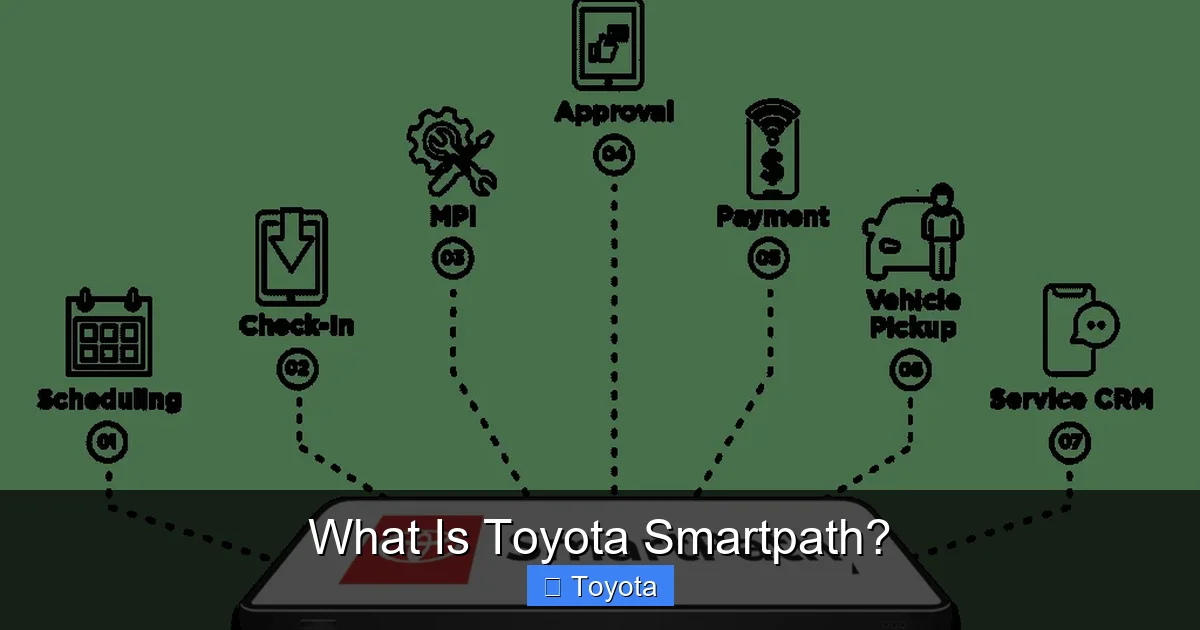
Vehicle health alerts are also central. Toyota SmartPath doesn’t wait for a warning light to illuminate; instead, it monitors engine parameters, oil life, and battery status in real time. When your oil life drops below a certain threshold, a notification appears in the app, often accompanied by a suggestion to schedule service at your convenience. Some models even allow you to book a service appointment directly through the interface, selecting a time that fits your schedule. This shift from reactive to proactive maintenance can save money by addressing small issues before they become expensive repairs.
Lastly, the system includes a driver feedback module. If you’ve enabled the safety analytics, Toyota SmartPath provides a weekly summary of your driving habits. It might note things like average speed, frequency of hard stops, and time spent idling. For families with teenage drivers, this can be a valuable coaching tool, offering objective data to discuss safe driving practices. The feedback is presented in easy-to-read graphs, and you can choose to share it with insurance partners for potential discounts, making it both a safety and financial asset.
Features like ECT Power on a Toyota Tacoma demonstrate how Toyota optimizes performance through intelligent system management, a philosophy that SmartPath also embraces.
Benefits for Everyday Driving
Visual guide about What Is Toyota Smartpath?
Image source: ardmoretoyota.com
The practical benefits of Toyota SmartPath become most apparent during daily routines. For the commuter stuck in morning traffic, the real-time traffic integration means less time idling and fewer frustrations. Instead of relying on a static map, the system reroutes based on current conditions, often finding gaps in traffic that shave minutes off the trip. Over a year, those saved minutes add up to significant fuel savings and reduced stress. The peace of mind that comes from knowing your vehicle’s health is being watched even when you’re not behind the wheel is invaluable, especially for parents of new drivers or those owning older Toyota models that lack modern diagnostics.
For long road trip enthusiasts, the predictive routing and calendar sync are game-changers. Imagine planning a weekend getaway: you input the destination, and Toyota SmartPath automatically checks your calendar for any conflicting events, suggesting the optimal departure time to avoid rush hour at both the start and end of your journey. It can also locate compatible charging stations if you drive a hybrid or plug-in model, integrating those stops into the route without manual searching. The remote features mean you can pre-cool the interior on a scorching afternoon or warm up the seats before a winter ski trip, all from your phone while still at home.
Families benefit from the driver feedback and safety analytics too. Parents can monitor how the vehicle is being driven, ensuring that guidelines about speed and braking are being followed. The weekly summaries provide conversation starters, making it easier to address concerns without guesswork. Additionally, the remote lock/unlock functionality means you never have to wonder if you locked the doors; a quick app check confirms, and you can lock them remotely if forgotten. These small conveniences compound into a more confident, controlled driving experience.
Even for the casual weekend driver, the maintenance alerts translate to fewer unexpected breakdowns. Getting a notification that your battery is weakening before it dies on a remote highway means you can replace it on your terms, not at the mercy of a tow truck. This proactive approach extends the vehicle’s lifespan and protects your investment, making Toyota SmartPath a practical companion for any owner, regardless of driving frequency or style.
Toyota SmartPath vs. Traditional Infotainment Systems
Visual guide about What Is Toyota Smartpath?
Image source: automotivian.com
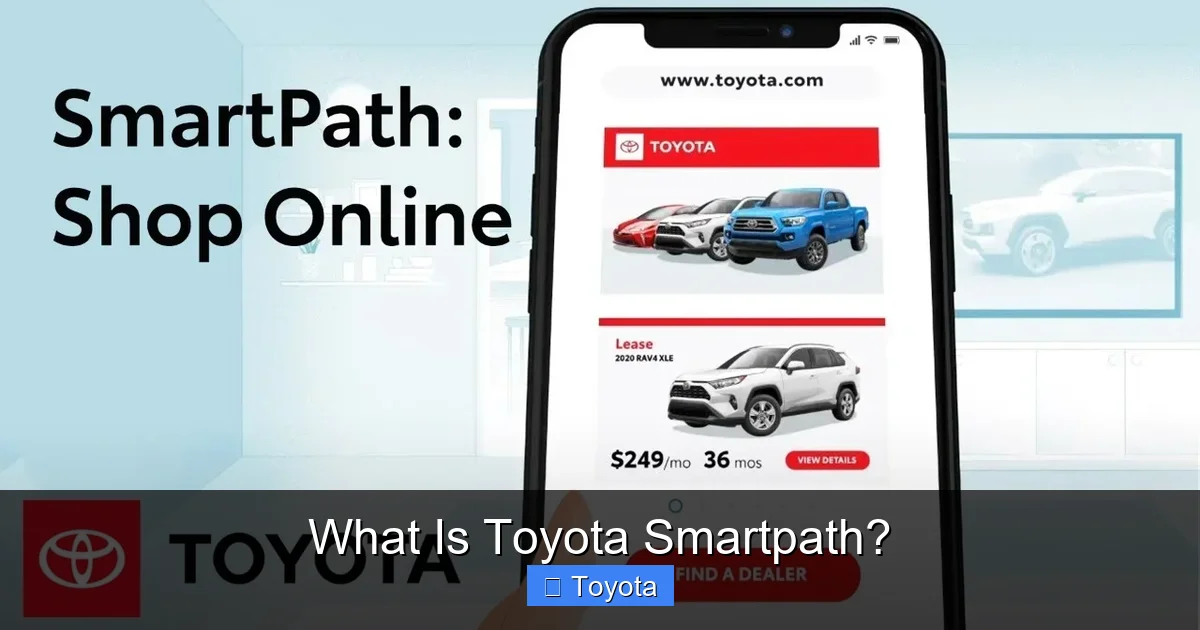
Comparing Toyota SmartPath to older, standalone infotainment systems highlights just how much connectivity has evolved. Traditional systems were often limited to a screen, a radio, and perhaps a USB port for music playback. They lacked internet connectivity, meaning features like real-time traffic, remote diagnostics, or smartphone syncing were either absent or required aftermarket additions. Toyota SmartPath, by contrast, is built on a foundation of constant data exchange. The difference is akin to comparing a feature phone to a smartphone; one performs basic tasks, while the other adapts, learns, and connects across multiple platforms.
One of the most striking differences is the update cycle. A traditional infotainment system might remain unchanged for the entire life of the vehicle, requiring a new head unit to get new features. Toyota SmartPath receives over-the-air updates, meaning the system evolves while you own the car. If Toyota introduces a new voice command phrase or improves route algorithms, your vehicle can receive those improvements at no extra cost. This longevity is a major selling point for buyers who prioritize long-term value.
Another area of distinction is data integration. Traditional systems might connect your phone for music, but they don’t feed vehicle data back into the phone ecosystem. Toyota SmartPath creates a two-way street: not only do you get apps and messages on the screen, but the car sends health alerts, fuel efficiency tips, and maintenance reminders to your phone. This bidirectional flow means your digital life and your vehicle’s status are always in sync, rather than operating in isolation.
Customization also sets them apart. With a standard system, you arrange icons and adjust volume. With Toyota SmartPath, you can personalize the types of alerts you receive, adjust the sensitivity of driving analytics, and even choose which data points appear on your dashboard cluster. If you only care about fuel economy, you can configure the system to highlight that metric exclusively. If safety is your priority, you can emphasize collision-avoidance alerts. This level of tailoring ensures that the system serves you, rather than you serving the system.
Finally, the ecosystem reach is broader. Traditional infotainment stays within the car. Toyota SmartPath extends to the app, the cloud, and even third-party integrations. For instance, some insurance companies offer discounts for drivers who share driving data from Toyota SmartPath, and smart home integrations can trigger actions based on your arrival status. This interconnectedness makes the driving experience feel like part of a larger, supportive network, rather than a solitary machine.
Getting the Most Out of Toyota SmartPath
If you’ve decided to explore Toyota SmartPath fully, a few practical steps can help you maximize its potential from day one. First, ensure your vehicle’s infotainment software is up to date. Most over-the-air updates happen automatically when the car is off and connected to Wi-Fi, but occasionally a manual check in the settings menu reveals available improvements. Keeping the system current ensures you have the latest features and security patches, which is especially important as new functionalities are rolled out.
Next, take time to personalize the alert settings. Within the Toyota app, you’ll find menus dedicated to SmartPath preferences. You can choose which notifications appear on your phone versus
Frequently Asked Questions
What is What Is Toyota SmartPath??
What Is Toyota SmartPath? is an important topic with many practical applications.