How Fast Does a Toyota Camry Go?
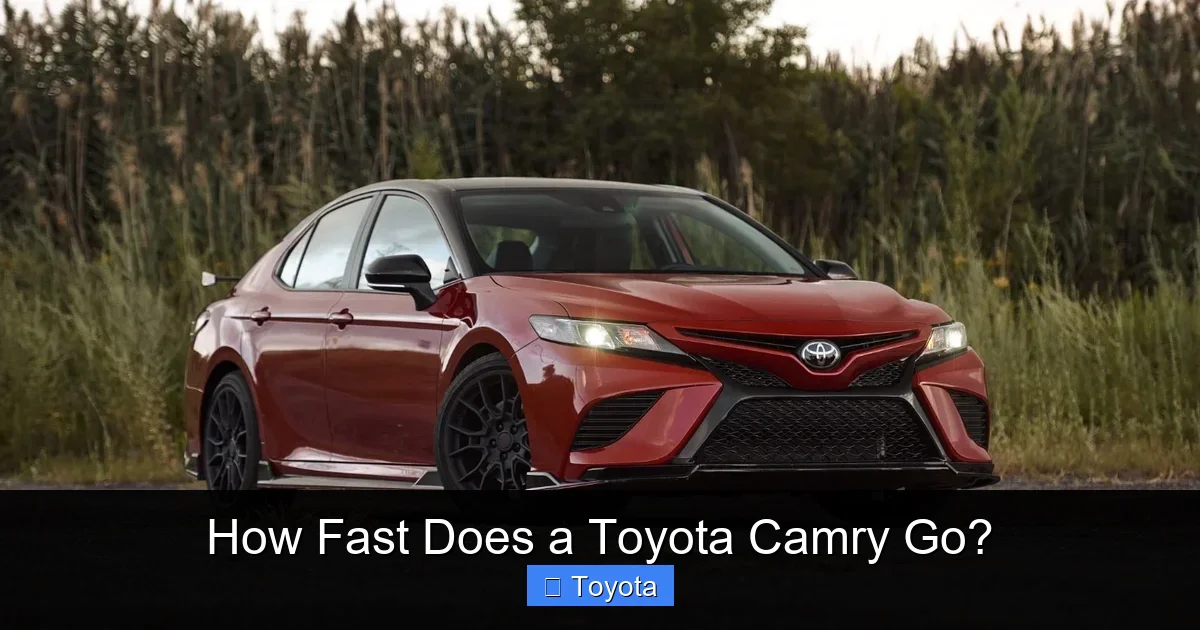
The Toyota Camry’s speed varies by trim, engine, and model year. Most Camrys reach a top speed of 115–130 mph, with 0-60 mph times from 7.5 to 9.5 seconds. While not a sports car, its balance of power and efficiency makes it a top choice for daily driving.
Key Takeaways
- Top Speed: Most Toyota Camrys have a top speed between 115–130 mph, depending on the engine and trim.
- Acceleration: The base 2.5L engine hits 0-60 mph in ~8.5 seconds, while the V6 does it in ~5.8 seconds.
- Engine Options: The Camry offers a 2.5L inline-four, a 3.5L V6 (varies by year), and hybrid variants.
- Real-World Performance: Designed for comfort and fuel efficiency, the Camry prioritizes reliability over raw speed.
- Factors Affecting Speed: Weight, aerodynamics, tire condition, and engine tuning all influence performance.
- Trim Differences: Higher trims like XSE or XLE often feature sport-tuned suspensions for better handling.
📑 Table of Contents
Introduction: The Speed of Reliability
When you think of the Toyota Camry, what comes to mind? For many, it’s reliability, comfort, and maybe even a bit of boredom. But have you ever wondered *how fast does a Toyota Camry go* in real-world driving? While it’s not built for track days or drag races, the Camry’s performance specs are surprisingly respectable for a midsize sedan. Whether you’re cruising on the highway or merging onto a busy road, understanding its speed capabilities can help you make informed decisions about your next vehicle.
The Camry’s speed story isn’t just about raw numbers—it’s about how that performance feels behind the wheel. Let’s dive into the details and explore what makes this iconic sedan tick.
What Factors Influence a Toyota Camry’s Speed?

Visual guide about How Fast Does a Toyota Camry Go?
Image source: aautomotives.com
Several variables determine how fast a Toyota Camry can go. While engine power is the most obvious factor, other elements like aerodynamics, weight, and even tire condition play a role.
Weight and Aerodynamics
The Camry’s design balances efficiency and performance. Its aerodynamics are optimized for highway cruising, which helps it maintain stability at higher speeds. However, its curb weight—around 3,300 pounds for most trims—means it’s not the lightest car on the road. For comparison, the Toyota Camry’s weight affects both acceleration and top speed, as heavier vehicles typically require more power to move.
Engine Power and Transmission
The engine is the heart of any car’s speed. The Camry’s base 2.5L inline-four produces 203 horsepower, while the optional 3.5L V6 (available in select trims) cranks out 301 horsepower. These numbers translate to noticeable differences in acceleration and highway merging. The 8-speed automatic transmission helps optimize gear shifts for smooth power delivery.
Tire Condition and Maintenance
Worn tires or improper inflation can reduce traction and throttle response, indirectly impacting perceived speed. Regular maintenance, like oil changes and air filter replacements, ensures the engine runs efficiently, maintaining its designed performance.
Engine Options and Performance Specifications

Visual guide about How Fast Does a Toyota Camry Go?
Image source: s7d9.scene7.com
The Toyota Camry has evolved over the years, offering a range of engine options tailored to different driving needs.
Base Engine: 2.5L Inline-Four
The standard 2.5L engine delivers 203 horsepower and 184 lb-ft of torque. Paired with an 8-speed automatic, it provides adequate power for daily driving. On paper, the Camry accelerates from 0-60 mph in about 8.5 seconds, making it suitable for city and highway use.
V6 Engine: 3.5L V6
For drivers craving more power, the 3.5L V6 (available in XLE and XSE trims) produces 301 horsepower and 267 lb-ft of torque. This upgrade slashes 0-60 mph times to around 5.8 seconds, giving the Camry a sportier feel without sacrificing fuel economy.
Hybrid Variants
The Camry Hybrid combines a 2.5L engine with an electric motor, producing 208 total horsepower. While its acceleration (0-60 mph in ~7.5 seconds) rivals the base model, its seamless power delivery and exceptional fuel efficiency make it a popular choice for eco-conscious drivers.
Real-World Speed and Driving Experience
Visual guide about How Fast Does a Toyota Camry Go?
Image source: vehiclerides.com
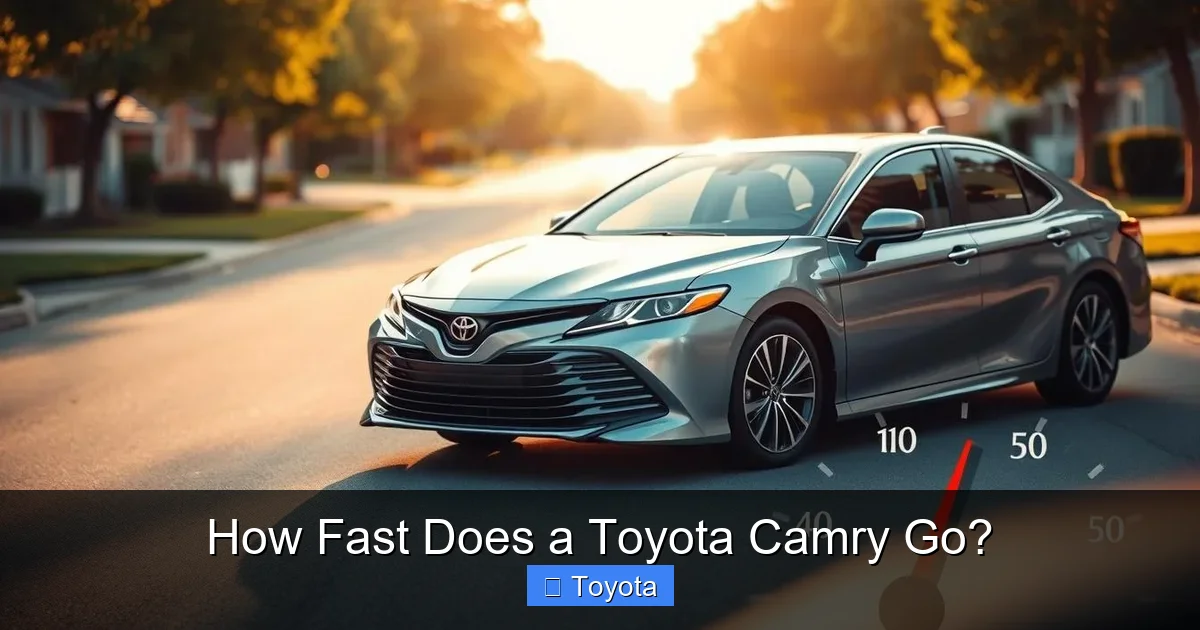
While spec sheets tell part of the story, real-world performance often differs. The Camry’s speed feels most noticeable during highway merging, where its V6 variant shines. Drivers report confident acceleration and stable handling at speeds up to 80 mph, thanks to its well-tuned suspension.
Top Speed Limitations
Most Camrys are electronically limited to a top speed of 115–130 mph, depending on the trim. This ceiling ensures safety and tire longevity while still allowing for spirited driving on open roads.
Driving Dynamics
The Camry’s ride quality leans toward comfort, with a smooth suspension that absorbs bumps without feeling floaty. Higher trims like the XSE add sport-tuned features, including larger brakes and a stiffer suspension, for a more engaging drive.
How Does the Camry Compare to Other Vehicles?
In the midsize sedan segment, the Camry holds its own against competitors like the Honda Accord and Nissan Altima. While the Accord’s turbocharged engine offers similar acceleration, the Camry’s V6 provides a broader powerband. Compared to luxury sedans like the BMW 3 Series, the Camry prioritizes comfort over sportiness, but its price point—often lower than many rivals—adds value.
For those curious about pricing, the Camry’s cost ranges from around $26,000 for the base LE trim to over $35,000 for the V6 XSE. If you’re weighing options, consider how its speed and features stack up against your priorities.
Tips for Maximizing Your Camry’s Performance
Even if you’re not chasing lap times, a few tweaks can enhance your Camry’s driving experience.
Regular Maintenance
Keep your engine tuned with timely oil changes and air filter replacements. A well-maintained Camry delivers consistent power and fuel economy.
Optimize Driving Habits
Use the Eco mode for daily commuting and reserve Sport mode for highway passing. Smooth acceleration and gentle braking also improve efficiency.
Upgrade Tires and Brakes
High-performance tires can boost grip, while upgraded brake pads ensure safe stopping power during spirited driving.
Reduce Excess Weight
Remove unnecessary items from the trunk or back seat to improve acceleration and handling.
Conclusion: Speed Meets Practicality
So, how fast does a Toyota Camry go? While it won’t outpace a sports car, its performance specs—especially the V6 and hybrid variants—are more than sufficient for most drivers. Whether you’re prioritizing fuel efficiency, comfort, or a punch of power, the Camry adapts to your lifestyle. By understanding its capabilities and maintaining it properly, you’ll enjoy a reliable, capable ride that balances speed and practicality.
Frequently Asked Questions
What is the top speed of a Toyota Camry?
Most Toyota Camrys have a top speed between 115–130 mph, depending on the engine and trim. Higher-performance variants like the V6 XSE may reach slightly higher speeds.
How fast is a Toyota Camry 0-60 mph?
The base 2.5L engine accelerates from 0-60 mph in about 8.5 seconds, while the V6 does it in ~5.8 seconds. The hybrid variant clocks in around 7.5 seconds.
Is the Toyota Camry fast enough for highway driving?
Yes, the Camry’s highway performance is solid. Its V6 variant excels at merging and passing, while the base engine handles daily commuting with ease.
Does the Toyota Camry’s speed vary by model year?
Yes, newer models often feature updated engines and transmissions. For example, the 2023 Camry introduced a revised infotainment system and minor performance tweaks.
Can I improve my Toyota Camry’s acceleration?
Upgrades like performance tires, ECU tuning, or adding a cold-air intake can enhance acceleration. Regular maintenance also ensures optimal power delivery.
How does the Camry’s speed compare to the Honda Accord?
The Honda Accord’s turbocharged engine offers similar acceleration (0-60 mph in ~6.5 seconds), but the Camry’s V6 provides a broader powerband for highway driving.