How Many Toyota Supras Were Made?
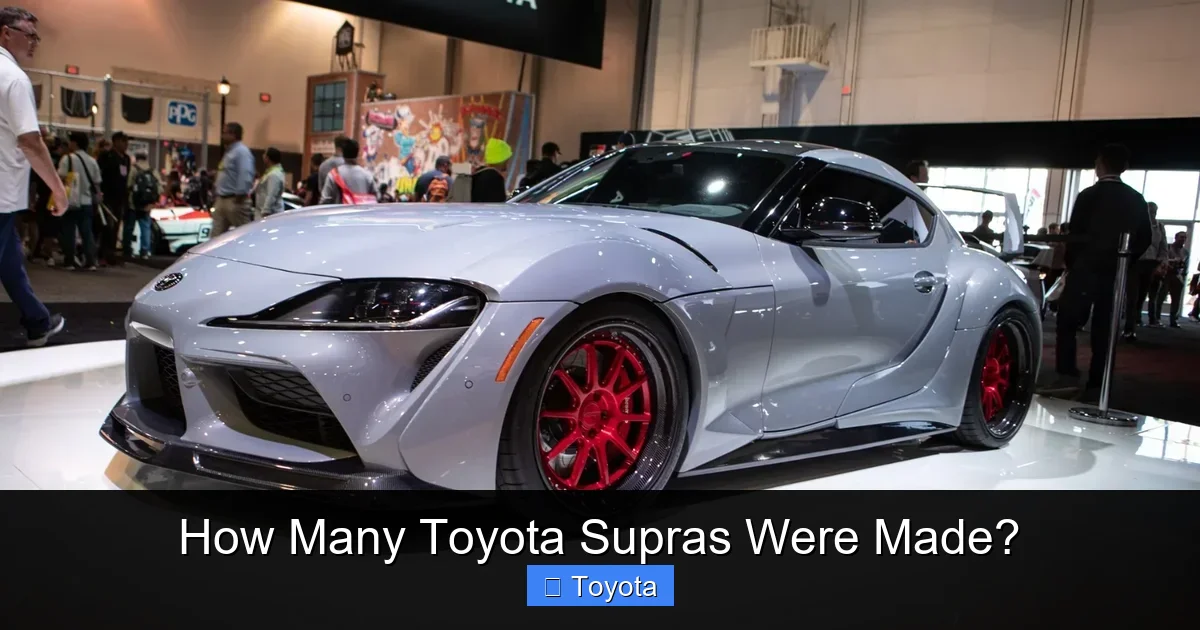
The Toyota Supra has been produced in multiple generations, with total production exceeding 1 million units. The MKI and MKII models dominate production numbers, while the MKV (2019+) has limited output. Each generation’s legacy reflects its unique performance and cultural impact.
Key Takeaways
- Total Production: Over 1 million Toyota Supras have been manufactured since its debut in 1978.
- Most Produced: The MKI (1978–1981) and MKII (1982–1986) generations account for the majority of Supras, with 114,000 and 141,000 units respectively.
- Modern Era: The MKV (2019–present) has produced approximately 30,000 units, reflecting its niche market focus.
- Performance Legacy: The MKIV (1993–2002) is iconic for its 2JZ engine and racing heritage, despite lower production of around 43,000 units.
- Collaboration: The MKV was co-developed with BMW, marking a shift in design and engineering philosophy.
- Collector Value: Early generations like the MKI and MKII are more affordable, while the MKIV and MKV command higher prices due to rarity and demand.
📑 Table of Contents
- Introduction: The Legend of the Toyota Supra
- The First Generation (MKI): Laying the Foundation
- The Second Generation (MKII): Refinement and Growth
- The Third Generation (MKIII): A New Era
- The Fourth Generation (MKIV): The Iconic 2JZ
- The Fifth Generation (MKV): A Modern Revival
- Understanding Production Trends and Value Factors
- Conclusion: The Supra’s Lasting Legacy
Introduction: The Legend of the Toyota Supra
The Toyota Supra isn’t just a car—it’s a legend. From its humble beginnings in the late 1970s to its modern reboot, the Supra has captivated enthusiasts with its blend of performance, style, and cultural relevance. One question that often pops up among fans is: How many Toyota Supras were made? The answer isn’t straightforward, as it spans decades, generations, and evolving automotive trends. Whether you’re a collector, a tuner, or just curious, understanding Supra production numbers can help you appreciate its legacy—and maybe even its value.
In this article, we’ll break down the production figures for every Supra generation, from the early MKI to the latest MKV. We’ll also explore why certain models are rarer than others and what makes the Supra such a sought-after machine. So buckle up, and let’s dive into the numbers behind one of the most iconic sports cars in history.
The First Generation (MKI): Laying the Foundation
Production Numbers and Timeline
The first-generation Toyota Supra (MKI) was produced from 1978 to 1981. It was Toyota’s response to the growing demand for affordable sports cars in the late 1970s. During its four-year run, Toyota manufactured approximately 114,000 units, making it the most produced Supra generation. The MKI was built alongside the Toyota Celica, sharing many components but offering a more powerful inline-six engine.
Design and Performance
Under the hood, the MKI featured a 2.0L or 2.4L inline-six engine, delivering up to 125 horsepower. While modest by today’s standards, it was a significant upgrade over the Celica. The car’s sleek, fastback design and rear-wheel-drive layout quickly won over enthusiasts, setting the stage for future Supras. Today, MKI models are relatively affordable, with prices ranging from $5,000 to $15,000 depending on condition and modifications.
The Second Generation (MKII): Refinement and Growth
Production Numbers and Timeline
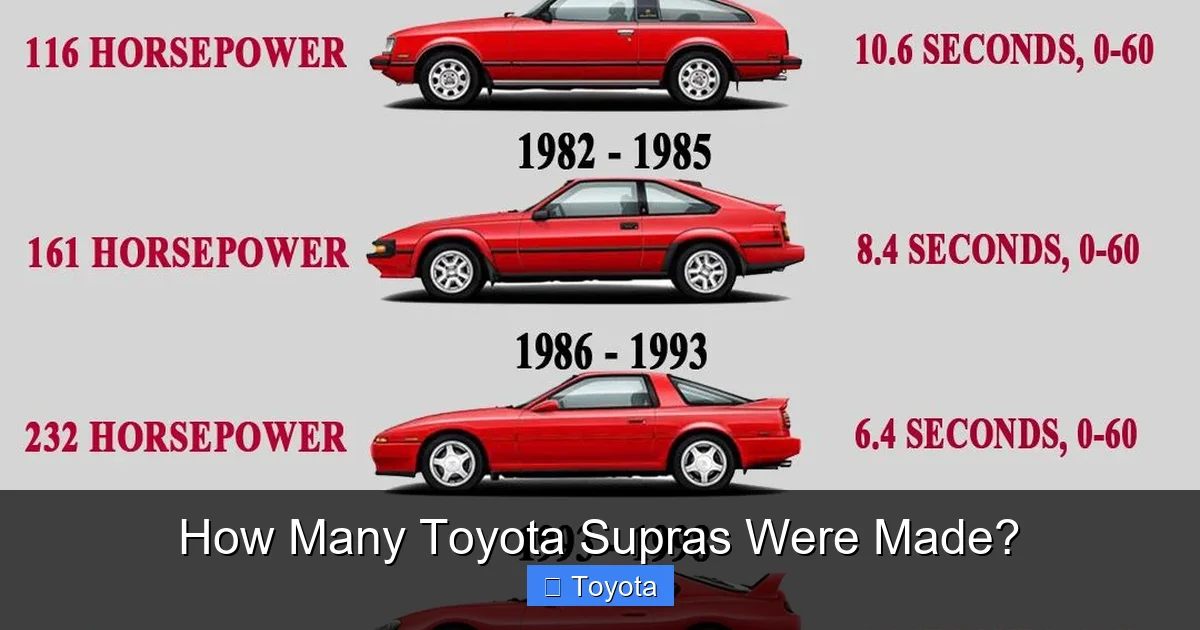
The MKII Supra (1982–1986) saw a boost in production, with Toyota churning out around 141,000 units. This generation marked a transition toward more refined performance and comfort. The MKII was notable for its improved aerodynamics and the introduction of the 5-speed manual transmission, which became a favorite among gearheads.
Visual guide about How Many Toyota Supras Were Made?
Image source: i.pinimg.com
Engine Innovations
The MKII retained the inline-six engine but introduced fuel injection, increasing output to 145 horsepower. Later models also featured the 5-speed manual, a feature that would become synonymous with the Supra’s performance-oriented identity. The MKII’s popularity in the 1980s helped solidify the Supra’s reputation as a serious sports car.
The Third Generation (MKIII): A New Era
Production Numbers and Timeline
From 1987 to 1992, the MKIII Supra (1986–1992) was produced in greater numbers, with Toyota building approximately 159,000 units. This generation was the first to be designed entirely in-house by Toyota, rather than sharing a platform with the Celica. The MKIII also introduced the turbocharged 1JZ-GTE engine, which became a legend in its own right.
Turbo Power and Racing Heritage
The MKIII’s turbocharged engine delivered 230 horsepower, a massive leap from previous generations. It also laid the groundwork for the Supra’s dominance in motorsports, including victories in the All Japan Grand Touring Championship. The MKIII’s aggressive styling and raw performance made it a cult favorite, especially among tuners.
The Fourth Generation (MKIV): The Iconic 2JZ
Production Numbers and Timeline
The MKIV Supra (1993–2002) is perhaps the most revered generation, despite producing only around 43,000 units. This generation is celebrated for its 2JZ-GTE engine, a 3.0L twin-turbo inline-six that could produce over 300 horsepower in stock form—and much more with modifications. The MKIV’s legacy is closely tied to its role in the Fast & Furious franchise, which introduced the car to a global audience.
Why the MKIV is So Sought-After
The MKIV’s 2JZ engine is known for its incredible tunability and durability, making it a favorite in the drag racing and drifting communities. Its low production numbers, combined with its pop culture status, have driven up prices significantly. A well-maintained MKIV can cost anywhere from $20,000 to $100,000+, depending on the model and condition.
The Fifth Generation (MKV): A Modern Revival
Production Numbers and Timeline
The MKV Supra (2019–present) represents a fresh start for the nameplate. Developed in collaboration with BMW, the MKV is based on the BMW Z4 platform and features a 3.0L turbocharged inline-six engine. As of 2023, Toyota has produced approximately 30,000 units, with production continuing at a modest pace. The MKV’s limited output reflects its position as a premium sports car rather than a mass-market vehicle.
BMW Collaboration and Design
The MKV marks a significant shift in design philosophy, with a more refined and luxurious interior compared to earlier generations. While some purists argue that it lacks the raw character of the MKIV, the MKV has been praised for its handling, build quality, and modern amenities. Its price point—starting around $43,000—positions it as a more accessible alternative to European supercars.
Understanding Production Trends and Value Factors
Why Production Numbers Matter
Production numbers play a crucial role in determining a car’s value and desirability. Generations with lower output, like the MKIV and MKV, tend to appreciate faster due to their scarcity. Conversely, earlier generations like the MKI and MKII are more affordable but still hold strong appeal for enthusiasts looking to restore or modify a classic.
How to Identify Your Supra’s Generation
If you’re unsure which generation your Supra belongs to, check the VIN (Vehicle Identification Number). The 10th digit of the VIN typically indicates the model year, while other identifiers like engine type and body style can help narrow down the generation. For example, the MKIV’s 2JZ engine is a dead giveaway, while the MKV’s BMW-derived chassis is unique to the fifth generation.
Conclusion: The Supra’s Lasting Legacy
The Toyota Supra’s journey from the MKI to the MKV is a testament to Toyota’s commitment to performance and innovation. With over 1 million units produced across five generations, the Supra remains a symbol of automotive excellence. Whether you’re drawn to the raw power of the MKIV or the modern sophistication of the MKV, there’s a Supra for every enthusiast.
As production numbers continue to evolve, one thing is certain: the Supra’s legacy will endure. For those interested in learning more about the car’s market value or the latest models, resources like this guide on Supra pricing can provide valuable insights. Meanwhile, owners of newer models might want to check out tips for breaking in a new Toyota to ensure optimal performance. And for those curious about the broader Toyota lineup, this article on Toyota pricing offers a comprehensive overview.
So whether you’re a seasoned collector or a first-time buyer, the Supra’s rich history and impressive production numbers make it a car worth celebrating—and owning.
Frequently Asked Questions
Which Supra generation had the highest production numbers?
The MKIII (1987–1992) holds the record with approximately 159,000 units produced. The MKII (141,000) and MKI (114,000) follow closely behind.
How many MKV Supras have been made?
As of 2023, Toyota has produced around 30,000 MKV Supras since its 2019 launch. Production is ongoing but limited to maintain exclusivity.
Why are MKIV Supras so expensive?
The MKIV’s 2JZ engine, pop culture fame, and low production numbers (43,000 units) have made it highly sought-after. Prices range from $20,000 to over $100,000 depending on condition.
What’s the difference between the MKV and MKIV?
The MKV is co-developed with BMW and features a more modern, refined design. The MKIV is turbocharged and has a stronger racing heritage, while the MKV focuses on luxury and precision.
Can I still buy a new Supra today?
Yes, the MKV Supra is still in production. Visit a Toyota dealership to explore current models and pricing. For cost details, check this guide on Supra prices.
Are early Supras (MKI/MKII) good investments?
Generally, yes. MKI and MKII models are affordable to purchase and restore, making them attractive to enthusiasts. Their values are stable and often appreciate in well-maintained condition.