How Many Miles per Gallon Does a Toyota Venza Get?
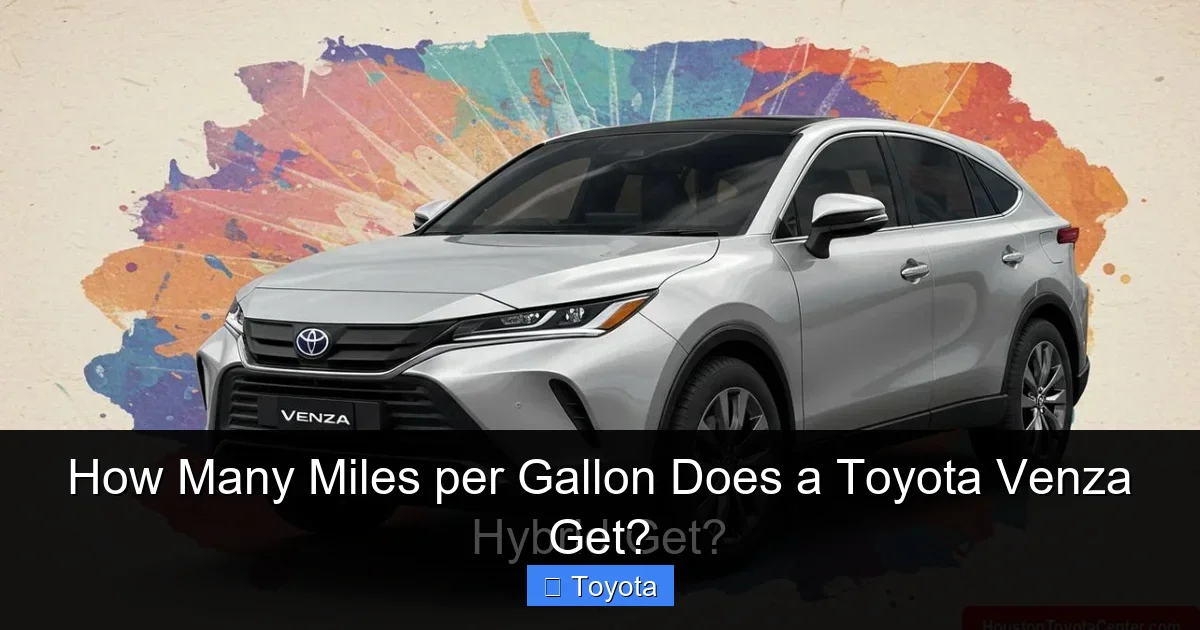
The Toyota Venza delivers impressive fuel economy for a midsize crossover, with EPA ratings ranging from 37 to 40 MPG combined depending on the model year. Real-world driving typically yields 35-38 MPG, making it one of the most efficient vehicles in its class without sacrificing comfort or capability.
If you’re shopping for a midsize crossover and fuel economy sits at the top of your priority list, the Toyota Venza deserves a serious look. This stylish two-row SUV returned to the market in 2021 after a brief hiatus, and it came back with a mission: deliver exceptional miles per gallon without forcing you into a compact vehicle. The Venza occupies a sweet spot between the smaller RAV4 Hybrid and the larger Highlander Hybrid, offering a right-sized package for families who want space and efficiency in equal measure.
But EPA window sticker numbers only tell part of the story. Real-world fuel economy depends on your driving habits, local climate, terrain, and even which trim level you choose. In this comprehensive guide, we’ll break down the official ratings for every model year, explore what actual owners experience at the pump, examine the factors that influence your personal results, and share practical tips to squeeze every possible mile from each gallon. Whether you’re cross-shopping against the competition or already own a Venza and want to improve your numbers, you’ll find everything you need right here.
Key Takeaways
- Hybrid-only powertrain: Every Venza since 2021 uses a 2.5-liter four-cylinder hybrid system that prioritizes efficiency
- EPA combined ratings: 2021-2024 models achieve 39 MPG combined (40 city/37 highway) for LE and XLE trims
- Limited trim difference: The Limited trim with larger wheels drops slightly to 37 MPG combined (38 city/35 highway)
- Real-world performance: Most owners report 35-38 MPG in mixed driving conditions
- All-wheel drive standard: The electronic on-demand AWD system doesn’t significantly impact fuel economy
- Class-leading efficiency: The Venza outperforms most gas-powered competitors like the Honda Passport and Ford Edge
- Driving habits matter: Gentle acceleration, proper tire pressure, and regular maintenance can boost your actual MPG
📑 Table of Contents
Understanding the Toyota Venza Fuel Economy
The Hybrid-Only Advantage
Unlike many competitors that offer a choice between gas and hybrid powertrains, Toyota made a bold decision with the Venza: every single model is a hybrid. There’s no traditional gasoline-only version. This means you get the benefits of electric assist from day one, without paying a premium over a non-existent base engine. The system pairs a 2.5-liter four-cylinder gasoline engine with three electric motors—two up front and one powering the rear axle for all-wheel drive capability.
Total system output reaches 219 horsepower, which provides adequate acceleration for daily driving and highway merging. More importantly, the hybrid architecture allows the Venza to operate on electric power alone at low speeds, recapture energy through regenerative braking, and shut off the gas engine whenever possible. This seamless dance between power sources is what delivers those impressive MPG numbers.
Standard All-Wheel Drive Without the Penalty
Here’s something that might surprise you: every Toyota Venza comes with all-wheel drive as standard equipment. Usually, AWD adds weight and mechanical drag that hurts fuel economy. But Toyota’s electronic on-demand system (called E-Four) uses a dedicated rear electric motor rather than a driveshaft and mechanical differential. This setup adds minimal weight and only engages the rear wheels when the front tires slip or during hard acceleration. The result? You get the traction benefits of AWD in rain, snow, or gravel without the typical 1-3 MPG penalty you’d see in conventional systems.
EPA Ratings by Model Year
2021-2024 Venza LE and XLE Trims
The volume-selling LE and XLE trims share identical EPA ratings across all model years so far. These models ride on 19-inch wheels with lower rolling resistance tires, which helps them achieve the highest numbers in the lineup:
Visual guide about How Many Miles per Gallon Does a Toyota Venza Get?
Image source: aautomotives.com
- City: 40 MPG
- Highway: 37 MPG
- Combined: 39 MPG
These figures remain consistent from the 2021 debut through the current 2024 model year. Toyota hasn’t needed to tweak the powertrain because it already hits a remarkable balance of performance and efficiency. For context, that 39 MPG combined rating beats almost every non-hybrid midsize crossover on the market by 10-15 MPG.
2021-2024 Venza Limited Trim
The Limited trim upgrades to 20-inch wheels with wider, grippier tires. While they look great and improve handling, the increased rolling resistance and rotational mass take a small toll on efficiency:
- City: 38 MPG
- Highway: 35 MPG
- Combined: 37 MPG
That’s a 2 MPG combined difference compared to the LE and XLE. In practical terms, if you drive 15,000 miles per year, the Limited would use about 23 more gallons of fuel annually. At $3.50 per gallon, that’s roughly $80 per year—not a dealbreaker for most buyers who prefer the Limited’s premium features and larger wheels.
What About the Original 2009-2015 Venza?
The first-generation Venza (2009-2015) used conventional gasoline engines—a 2.7-liter four-cylinder or 3.5-liter V6—with optional all-wheel drive. Those models are a different beast entirely. The four-cylinder front-wheel drive version earned 19 city/26 highway/21 combined MPG, while the V6 AWD dropped to 17 city/23 highway/19 combined. If you’re looking at used models from that era, expect real-world averages in the 18-22 MPG range. The hybrid-only second generation represents a massive leap forward in efficiency.
Real-World MPG vs EPA Estimates
What Owners Actually Experience
EPA tests follow standardized cycles that don’t perfectly match real driving. Based on data from Fuelly, owner forums, and long-term test reviews, here’s what Venza drivers typically report:
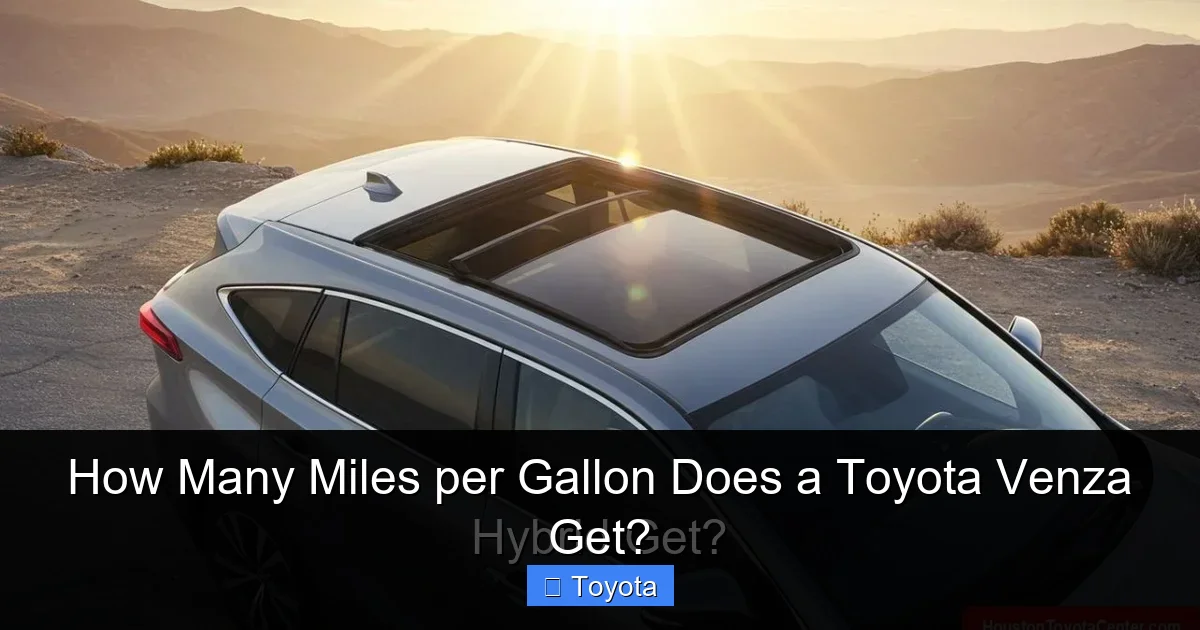
Visual guide about How Many Miles per Gallon Does a Toyota Venza Get?
Image source: aautomotives.com
- Mixed driving (average commute): 35-38 MPG
- Mostly city/suburban: 37-40 MPG
- Mostly highway at 70+ mph: 33-36 MPG
- Cold weather (below freezing): 30-34 MPG
- Ideal conditions (60-70°F, flat terrain): 39-42 MPG
Notice that city driving often exceeds the EPA city rating. That’s because hybrid systems excel in stop-and-go traffic where regenerative braking recaptures energy constantly. Highway driving at modern speeds (75-80 mph) typically falls short of the EPA highway number due to aerodynamic drag increasing exponentially with speed.
Seasonal Variations
Temperature has a noticeable impact on hybrid fuel economy. In winter, several factors conspire to lower MPG: the engine runs more to heat the cabin, battery chemistry is less efficient in cold, winter gasoline blends have slightly less energy content, and tires lose pressure. Many Venza owners in northern states see a 15-20% drop from summer to winter. The good news? The Venza’s standard heated seats and steering wheel (on XLE and Limited) let you stay comfortable at lower cabin temperatures, reducing the engine runtime needed for heat.
Break-In Period Effects
New Venza owners sometimes report lower MPG during the first 2,000-3,000 miles. This is normal for any vehicle. Engine components haven’t fully seated, transmission programming is still adapting, and tires have maximum rolling resistance when new. If you just drove yours off the lot, give it time. Most owners see a 1-3 MPG improvement after the break-in period. For more on this topic, check out our guide on how to break in a new Toyota for optimal long-term efficiency.
Factors That Affect Your Venza’s Fuel Economy
Driving Style: The Biggest Variable
Your right foot controls the single largest factor in real-world MPG. Aggressive acceleration forces the gas engine to work harder and reduces the time spent in EV mode. Hard braking wastes the kinetic energy that regenerative braking could have captured. Smooth, anticipatory driving—accelerating gradually, coasting to stops, maintaining steady speeds—can improve your fuel economy by 20-30% compared to an aggressive style. Try pretending there’s an egg under your gas pedal and a cup of coffee on your dash.
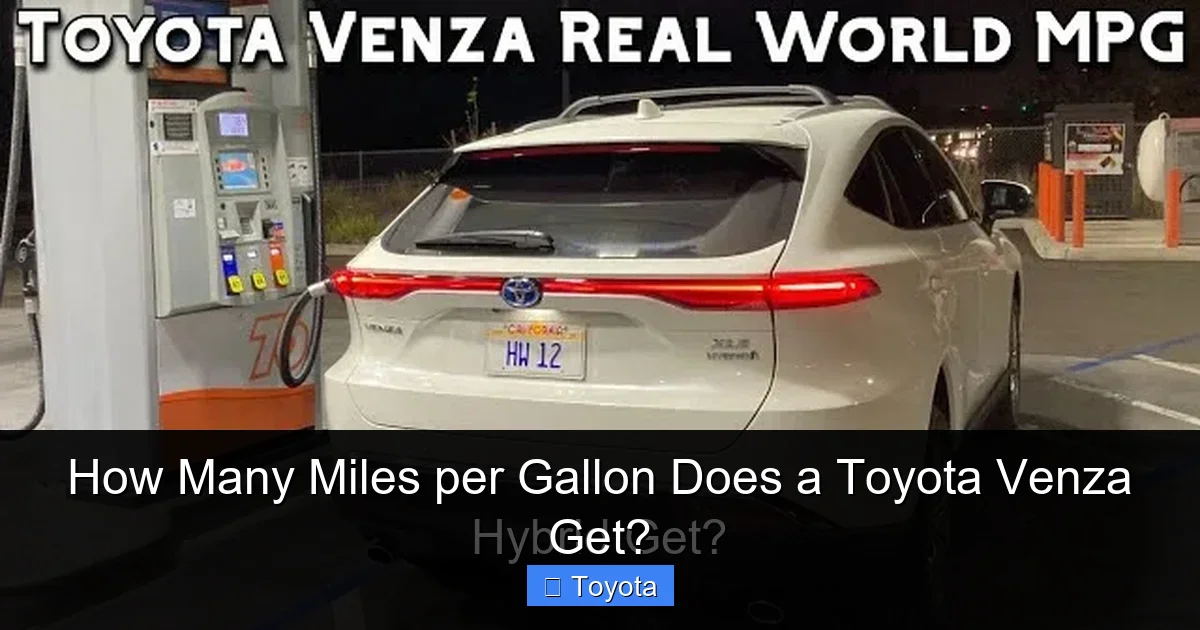
Visual guide about How Many Miles per Gallon Does a Toyota Venza Get?
Image source: aautomotives.com
Speed and Aerodynamics
The Venza’s sleek roofline helps, but physics still applies. Every 5 mph over 60 mph costs roughly 7% in fuel economy due to aerodynamic drag. At 80 mph, you’re fighting significantly more air resistance than at 65 mph. If your commute includes long highway stretches, setting cruise control at 65-70 mph instead of 75-80 can net you 2-4 extra MPG. Roof rails and crossbars (standard on Limited, optional on others) add drag even when empty. Remove crossbars when not in use for a small but measurable gain.
Tire Pressure and Selection
Underinflated tires increase rolling resistance and hurt MPG. Check pressure monthly and before long trips. The door jamb sticker lists the correct pressure—typically 35-36 PSI for the Venza. Don’t exceed this; overinflation reduces traction and wears tires unevenly. When replacement time comes, stick with low rolling resistance tires similar to the OEM specification. Performance-oriented all-season or summer tires can drop fuel economy by 1-3 MPG due to stickier compounds and stiffer sidewalls.
Weight and Cargo
The Venza carries its hybrid battery under the rear seats, giving it a lower center of gravity but also a higher curb weight (around 3,900-4,100 pounds depending on trim). Every extra 100 pounds reduces fuel economy by roughly 1%. Clean out unnecessary cargo. That bag of mulch from three weekends ago? The roof box you only use twice a year? They’re costing you money at every fill-up. If you’re comparing vehicle weights across classes, you might find our article on Toyota Camry weight interesting for perspective on how the Venza’s platform relates to its sedan sibling.
Climate Control Usage
Running the air conditioning compressor draws power from the hybrid system, forcing the gas engine to run more often. In summer, use the recirculate mode and set the temperature a few degrees higher. In winter, the heater uses engine waste heat (free energy essentially), but the engine must run to generate that heat. Heated seats and steering wheel use far less energy than cabin heating. Use them to stay comfortable while keeping the climate control temperature lower.
Tips to Maximize Your Venza’s MPG
Master the Hybrid Driving Techniques
The Venza’s power meter (on the instrument cluster or head-up display) is your best coaching tool. Keep the needle in the ECO zone during acceleration. Aim for the CHG (charge) zone when decelerating by lifting off the accelerator early and letting regenerative braking do the work. Avoid the PWR zone unless merging or passing. Some owners practice “pulse and glide”—accelerating gently to a target speed, then coasting in EV mode until speed drops, then repeating. This works best on flat, low-traffic roads.
Use EV Mode Strategically
The Venza has an EV mode button that forces electric-only operation at low speeds (up to about 25 mph) as long as the battery has sufficient charge. Use it in parking lots, drive-throughs, and slow neighborhood streets. Just remember: EV mode depletes the battery faster, so the engine will run longer later to recharge it. It’s a tool for specific situations, not a full-time setting.
Plan Your Routes
A slightly longer route with fewer stops often uses less fuel than a shorter route with multiple traffic lights. Navigation apps with real-time traffic can help you avoid stop-and-go congestion. Combine errands into one trip so the engine stays warm—cold starts are efficiency killers. If you have a garage, park inside to keep the battery and fluids warmer in winter.
Maintain Your Venza Properly
Follow the maintenance schedule in your owner’s manual. Clean air filters, fresh spark plugs (at 120,000 miles), and proper fluid levels all contribute to optimal combustion efficiency. The hybrid system doesn’t need transmission fluid changes on the same schedule as conventional automatics, but the inverter coolant and brake fluid have specific intervals. Don’t skip them. A well-maintained hybrid can easily surpass 200,000 miles with original battery and engine.
Fuel Quality Matters
The Venza’s engine is designed for regular 87 octane gasoline. Using premium provides no benefit and wastes money. However, avoid stations with suspiciously low prices or old pumps—stale or contaminated fuel can cause carbon buildup and reduce efficiency over time. Top Tier certified gasoline (available at most major brands) contains detergent additives that keep injectors and valves clean.
How the Venza Compares to Competitors
Vs. Toyota RAV4 Hybrid
The RAV4 Hybrid is the Venza’s platform mate and closest rival. It shares the same powertrain but weighs less and has a boxier shape. EPA ratings: 41 city/38 highway/40 combined. The RAV4 Hybrid edges out the Venza by 1-2 MPG combined. However, the Venza offers a quieter cabin, more premium interior materials, standard AWD (optional on RAV4), and a distinct style. If maximum MPG is your only metric, the RAV4 Hybrid wins. If you value the Venza’s upscale feel and standard features, the small efficiency gap is a reasonable trade-off.
Vs. Honda CR-V Hybrid
The CR-V Hybrid rates 43 city/36 highway/40 combined—similar to the RAV4. It uses a different hybrid architecture (series-parallel with a dedicated generator motor) that feels more like an EV in city driving. Real-world numbers are comparable. The CR-V offers more cargo space and a lower starting price, but the Venza counters with standard AWD, a more refined ride, and available ventilated seats.
Vs. Ford Escape Hybrid
The Escape Hybrid achieves 44 city/37 highway/41 combined—the segment leader on paper. Its 2.5-liter hybrid system is well-tuned, but the Escape’s interior feels less premium, and AWD is optional. The Venza’s standard AWD and quieter cabin make it a stronger all-weather, all-season choice despite the slight MPG deficit.
Vs. Non-Hybrid Midsize Crossovers
This is where the Venza shines. The Honda Passport (20 combined), Ford Edge (23 combined), Chevrolet Blazer (22 combined), and Nissan Murano (23 combined) all trail by 15-17 MPG combined. Over 15,000 annual miles at $3.50/gallon, the Venza saves $1,000-$1,300 per year in fuel costs compared to these rivals. That difference alone can offset a higher purchase price within a few years. If you’re researching Toyota pricing more broadly, our guide on how much a Toyota costs provides helpful context across the lineup.
Vs. Toyota Highlander Hybrid
The Highlander Hybrid offers three rows and rates 36 city/35 highway/36 combined. It’s larger, heavier, and less efficient—but it carries seven or eight passengers. If you need the third row occasionally, the Venza plus a roof box might serve you better than a Highlander you’ll drive half-empty most days. The Venza’s 39 MPG combined vs. the Highlander’s 36 MPG adds up over time.
Long-Term Ownership Considerations
Battery Life and Replacement Costs
Toyota’s hybrid batteries are famously durable. Most last 150,000-200,000 miles or 10-15 years. The Venza carries a 10-year/150,000-mile hybrid battery warranty (15 years/150,000 miles in CARB states). Replacement cost out of warranty runs $2,000-$3,500 for a remanufactured pack. However, many owners never face this expense. The battery management system carefully controls temperature and charge cycles to maximize longevity.
Resale Value and Efficiency
Fuel-efficient vehicles hold value better when gas prices spike. The Venza’s hybrid powertrain and Toyota reliability reputation give it strong residual values. A well-maintained Venza with documented service history and good tires will command a premium at trade-in or private sale. Keep your maintenance records—they prove the hybrid system received proper care.
Total Cost of Ownership
When calculating true cost, factor in fuel savings, lower brake wear (regenerative braking extends pad life to 60,000-80,000 miles), no alternator/starter replacements, and fewer fluid changes. Insurance costs are comparable to gas-powered rivals. Over a 5-year/75,000-mile ownership period, the Venza’s total cost of ownership often beats less efficient competitors despite a sometimes higher MSRP. For a look at another popular Toyota SUV’s value proposition, see our piece on how much a Toyota RAV costs.
Conclusion
The Toyota Venza delivers on its promise of exceptional fuel economy in a stylish, comfortable midsize crossover package. With EPA combined ratings of 37-39 MPG depending on trim, and real-world results typically landing in the 35-38 MPG range, it stands among the most efficient vehicles in its class—hybrid or not. The standard all-wheel drive system adds capability without the traditional efficiency penalty, and the hybrid powertrain’s smooth operation makes daily driving a pleasure rather than a compromise.
Your personal MPG will vary based on where and how you drive, but the Venza’s high floor means even in worst-case scenarios (winter, short trips, high speeds), you’ll likely exceed 30 MPG. In ideal conditions, 40+ MPG is achievable. By adopting smooth driving habits, maintaining proper tire pressure, minimizing unnecessary weight, and using climate control strategically, you can consistently hit the upper end of the range.
Whether you’re cross-shopping against the RAV4 Hybrid, CR-V Hybrid, or gas-powered midsize crossovers, the Venza makes a compelling case: you don’t have to sacrifice style, comfort, or all-weather confidence to achieve outstanding fuel economy. It’s a rare vehicle that checks almost every box for the modern family—efficient, capable, and genuinely enjoyable to drive. Take one for a test drive, watch the power meter dance between EV and hybrid modes, and you’ll understand why so many owners call it the perfect daily driver.
Frequently Asked Questions
What is the MPG for a 2024 Toyota Venza?
The 2024 Toyota Venza LE and XLE trims achieve 40 MPG city, 37 MPG highway, and 39 MPG combined. The Limited trim with 20-inch wheels rates 38 MPG city, 35 MPG highway, and 37 MPG combined. All models use the same 2.5-liter hybrid powertrain with standard all-wheel drive.
Does the Toyota Venza get good gas mileage?
Yes, the Toyota Venza gets excellent gas mileage for a midsize crossover. Its 39 MPG combined rating (LE/XLE) leads the segment among non-plug-in hybrids and beats most gas-powered competitors by 15+ MPG. Real-world averages of 35-38 MPG make it one of the most efficient vehicles in its class.
Why is my Toyota Venza getting less than 30 MPG?
Several factors can cause low MPG: cold weather (winter blends, heater use, battery efficiency), short trips with cold starts, aggressive driving, underinflated tires, roof cargo, or a need for maintenance. New vehicles also need 2,000-3,000 miles to break in. If MPG stays low after addressing these, have a dealer check for error codes.
Does the Venza Limited get worse gas mileage than the LE?
Yes, the Venza Limited gets 2 MPG less combined (37 vs 39) due to its 20-inch wheels and wider tires, which increase rolling resistance and rotational mass. City drops from 40 to 38 MPG, highway from 37 to 35 MPG. The difference equals roughly $80/year in fuel at 15,000 miles.
Can you put regular gas in a Toyota Venza?
Yes, the Toyota Venza is designed to run on regular 87 octane gasoline. Using premium fuel provides no performance or efficiency benefit. Toyota recommends Top Tier certified gasoline for its detergent additives that keep the fuel system clean over time.
How many miles can a Toyota Venza go on a full tank?
With a 14.5-gallon fuel tank and 39 MPG combined rating, the Venza LE/XLE has a theoretical range of about 565 miles. Real-world range typically falls between 500-550 miles depending on driving conditions. The Limited trim’s 37 MPG combined yields roughly 535 miles theoretical range.