What Is Auto Lsd on a Toyota Tacoma?
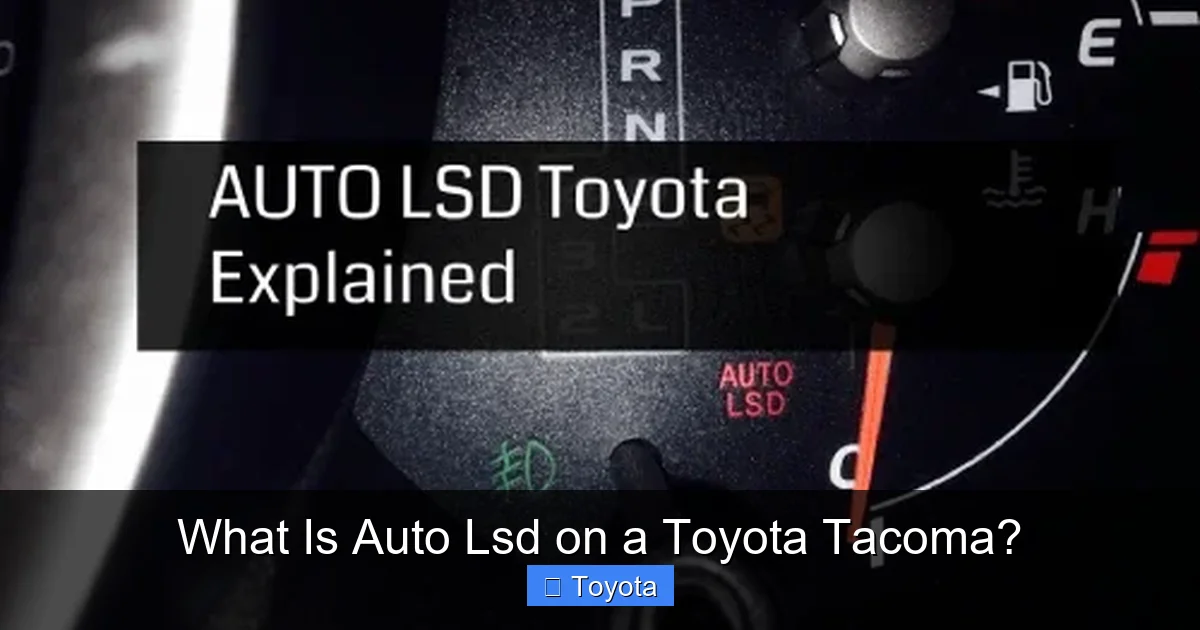
Auto LSD (Automatic Limited-Slip Differential) is a feature found on Toyota Tacoma trucks that helps improve traction by automatically distributing power between the wheels when one starts to spin. Unlike a locking differential, Auto LSD operates seamlessly without driver input, making it ideal for everyday driving and light off-road conditions.
Key Takeaways
- Point 1: Auto LSD stands for Automatic Limited-Slip Differential, a system that helps distribute engine power between driven wheels to prevent wheel spin.
- Point 2: Auto LSD works automatically without driver input, adjusting torque distribution in real-time based on traction conditions.
- Point 3: Unlike a locking differential, Auto LSD does not fully lock the axles but limits the speed difference between wheels for better control.
- Point 4: Auto LSD is standard or optional on many Toyota Tacoma trims, particularly those geared toward light off-roading and daily driving.
- Point 5: Auto LSD improves acceleration, cornering stability, and traction on slippery or uneven surfaces without compromising ride comfort.
- Point 6: Maintenance of Auto LSD involves regular differential fluid checks and changes, similar to other differential types.
- Point 7: Auto LSD is most effective in mild off-road scenarios and should not be confused with more aggressive off-road systems like TRAC or locking differentials.
📑 Table of Contents
What Is Auto LSD on a Toyota Tacoma?
If you’re shopping for a new Toyota Tacoma, you’ve probably seen the term “Auto LSD” mentioned somewhere in the specs or features list. But what exactly does it mean, and why should you care? Auto LSD stands for Automatic Limited-Slip Differential, and it’s a clever piece of engineering designed to help your truck put power down more effectively, especially when one wheel starts to lose grip. Whether you’re cruising down a snowy road or crawling over a rocky trail, Auto LSD can make a noticeable difference in how your Tacoma handles tricky situations.
At its core, Auto LSD is part of the differential system in your Tacoma’s drivetrain. The differential allows the driven wheels to rotate at different speeds, which is essential when turning — the inside wheel travels a shorter distance than the outside wheel. Without a differential, the tires would scrub and wear unevenly, making turns difficult and potentially damaging the drivetrain. However, in low-traction situations, an open differential can send most of the power to the wheel with the least grip, leaving the other wheel spinning uselessly. Auto LSD steps in to limit this behavior, redistributing torque to the wheel that actually has grip.
This feature is particularly useful in the mid-size truck segment, where vehicles like the Tacoma often serve dual roles as daily drivers and weekend adventurers. Auto LSD bridges the gap between full-on off-road lockers and basic open differentials, offering improved traction without requiring the driver to manually engage or disengage the system. For many Tacoma owners, it’s a subtle yet valuable upgrade that enhances both safety and capability.
How Does Auto LSD Work?
Auto LSD operates through a combination of mechanical and hydraulic components built into the differential itself. When the system detects a significant speed difference between the two driven wheels — typically caused by one wheel spinning freely while the other has grip — it automatically applies resistance to the spinning wheel. This resistance effectively transfers more torque to the wheel with traction, helping the vehicle move forward even in less-than-ideal conditions.
The mechanism usually involves clutch packs or gears that respond to torque loads. In a clutch-type limited-slip differential, spring-loaded clutches create friction that resists wheel speed differences. In a gear-based system, such as a Torsen differential, helical gears redirect torque mechanically. Both approaches achieve the same goal: keeping the wheels turning together as much as possible while still allowing for necessary speed differences during turns.
One of the key advantages of Auto LSD is that it requires no driver input. It’s always active, constantly monitoring wheel speeds and adjusting torque distribution as needed. This makes it especially useful in dynamic driving situations where conditions change rapidly, such as transitioning from pavement to gravel or encountering patches of ice on the road.
Auto LSD vs. Locking Differentials
While Auto LSD and locking differentials both aim to improve traction, they do so in very different ways. A locking differential mechanically locks both wheels on an axle together, forcing them to rotate at the same speed regardless of traction. This can be extremely effective in deep mud, sand, or rock crawling, where maximum traction is needed at all times. However, it also makes turning more difficult and can lead to drivetrain stress if used on high-grip surfaces.
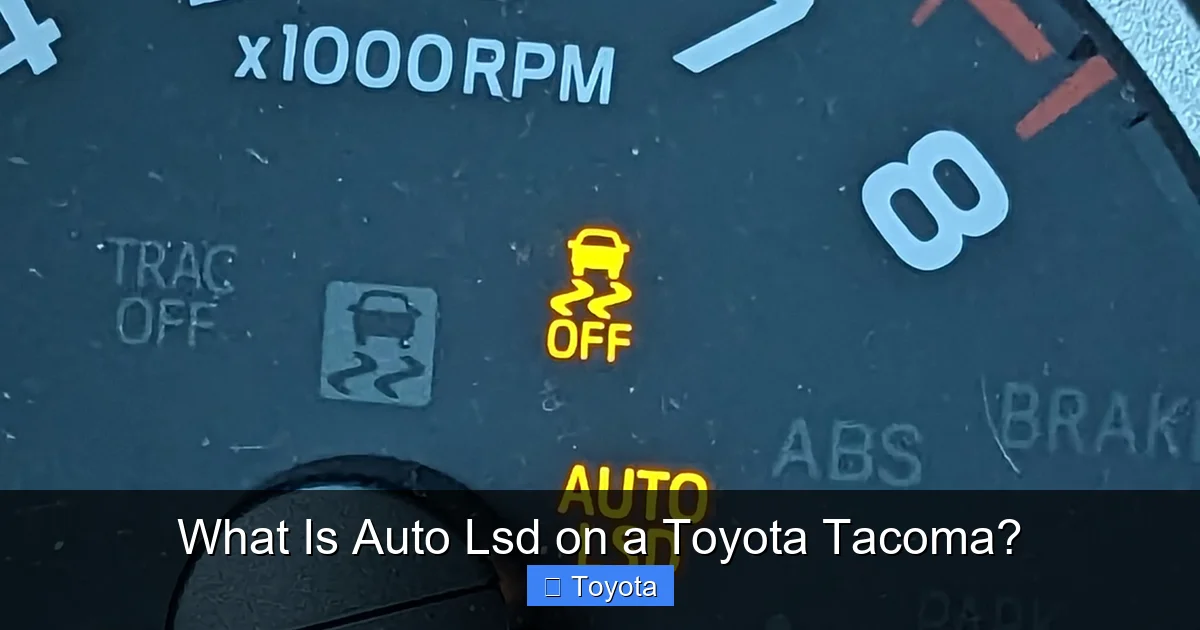
Visual guide about What Is Auto Lsd on a Toyota Tacoma?
Image source: i.redd.it
Auto LSD, on the other hand, never fully locks the differential. Instead, it limits the amount of slip allowed between the wheels. This means that while it can send more power to the wheel with grip, it still permits some speed difference, which helps maintain handling and reduces wear on the drivetrain. For everyday driving and moderate off-road use, Auto LSD is often the sweet spot between performance and practicality.
Toyota Tacomas that come with a more serious off-road focus, such as the TRD Pro or TRD Off-Road trims, may offer additional systems like a rear locking differential or Crawl Control. These are better suited for extreme off-road conditions. Auto LSD, by contrast, is more about enhancing everyday capability and confidence in a variety of driving conditions.
When Should You Use Auto LSD?
Auto LSD is always active, so technically you don’t need to “use” it — it’s working behind the scenes. However, understanding when it’s most beneficial can help you appreciate its value. On snowy or icy roads, for instance, Auto LSD can prevent the inside wheel from spinning uselessly during acceleration, giving you better grip and control. Similarly, on wet pavement or gravel roads, it helps maintain forward momentum when one wheel encounters a slippery patch.
In light off-road situations, such as driving on dirt trails or sandy paths, Auto LSD can make a big difference. It helps keep the Tacoma moving even when one wheel lifts slightly or loses contact with the ground. For more demanding terrain, though, you might want to consider engaging a locking differential or using low-range 4WD, depending on your Tacoma’s trim level.
Which Toyota Tacoma Trims Come With Auto LSD?
Toyota offers Auto LSD across various Tacoma trims, though availability can vary by model year and configuration. Generally speaking, Auto LSD is standard on most 4WD models, especially those with automatic transmissions. It’s commonly found on trims like the SR5, TRD Off-Road, and Limited, where Toyota aims to balance comfort with capability.
Visual guide about What Is Auto Lsd on a Toyota Tacoma?
Image source: richsautobodyshop.com
For example, the SR5 trim typically includes Auto LSD as part of its 4WD system, making it a solid choice for drivers who want reliable traction without venturing into full off-road territory. The TRD Off-Road trim takes things a step further with additional off-road features like a locking rear differential, but Auto LSD still plays an important role in everyday driving scenarios.
It’s worth noting that Auto LSD is not always standard on 2WD models. If you’re considering a 2WD Tacoma, you may need to check the specific trim details or opt for a higher trim level that includes the feature. For most buyers, especially those who plan to use their truck in varied conditions, a 4WD model with Auto LSD is the recommended choice.
Is Auto LSD Worth It?
For the majority of Tacoma buyers, Auto LSD is a worthwhile feature. It adds a layer of safety and capability without any extra effort on the driver’s part. Whether you’re dealing with inclement weather, towing a trailer, or simply navigating a steep driveway, Auto LSD can help prevent wheel spin and improve traction.
If you’re primarily using your Tacoma for highway driving and rarely encounter challenging road conditions, you might not notice a dramatic difference. But for those who live in areas with snow, rain, or unpaved roads, Auto LSD is a small investment that pays dividends in confidence and control.
Maintaining Your Auto LSD System
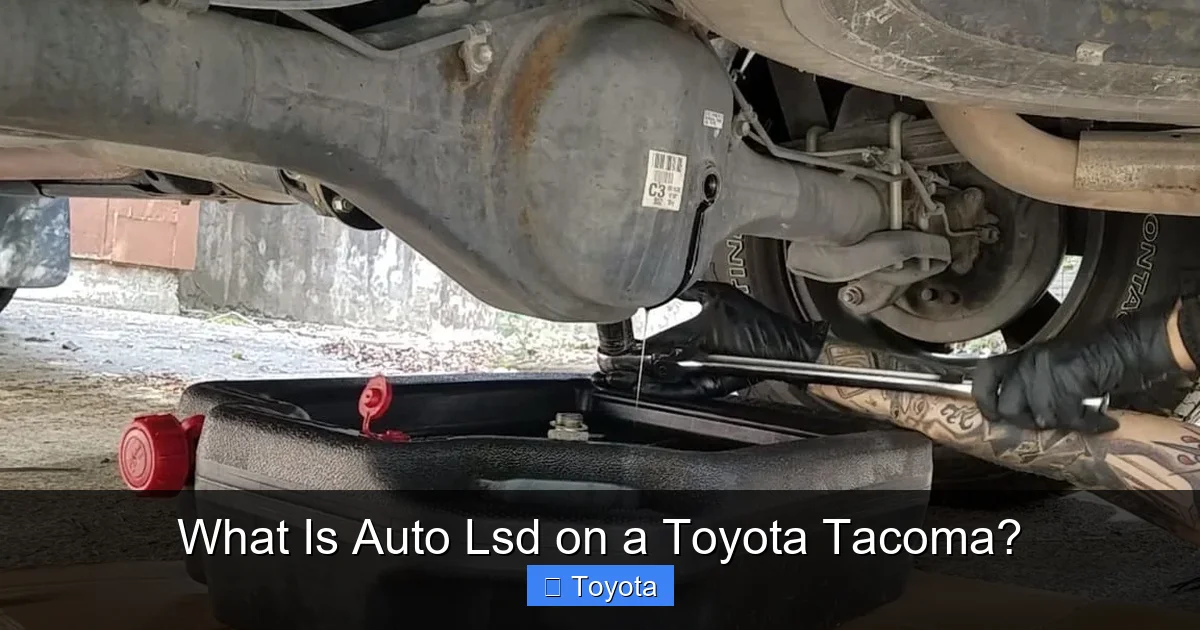
Like any differential, the Auto LSD system requires periodic maintenance to function properly. The most important task is keeping the differential fluid clean and at the correct level. Over time, the fluid can break down, lose viscosity, or become contaminated with debris, which can reduce the effectiveness of the limited-slip mechanism.
Toyota recommends changing the differential fluid every 30,000 to 60,000 miles, depending on driving conditions. If you frequently drive in dusty, muddy, or wet environments, you may want to err on the side of caution and change it sooner. Always use the type of fluid specified in your owner’s manual — using the wrong viscosity or formulation can cause the system to malfunction.
During routine maintenance, your mechanic should inspect the differential for leaks, unusual noises, or excessive play. Any of these signs could indicate internal wear or damage that may affect the performance of the Auto LSD system. Catching problems early can save you from costly repairs down the road.
Common Issues and Troubleshooting
While Auto LSD systems are generally reliable, there are a few common issues that Tacoma owners may encounter. One of the most frequent complaints is a noticeable clunk or chirp when accelerating from a stop, especially on turns. This can be caused by worn clutch packs or excessive backlash in the gears. In most cases, replacing the differential fluid or rebuilding the unit will resolve the issue.
Another potential problem is reduced effectiveness over time. If your Tacoma starts to spin its wheels more easily in conditions where Auto LSD used to help, it may be a sign that the internal components are worn. Regular maintenance and timely fluid changes can go a long way in preventing these problems.
If you suspect a problem with your Auto LSD system, don’t ignore it. Continuing to drive with a failing differential can lead to more serious damage and expensive repairs. Have your vehicle inspected by a qualified technician who is familiar with Toyota’s limited-slip technology.
Conclusion: Should You Choose Auto LSD for Your Tacoma?
Auto LSD is one of those features that quietly enhances your driving experience without demanding attention. It’s not flashy or exotic, but it delivers real-world benefits in terms of traction, safety, and capability. Whether you’re navigating a snowy commute or taking a weekend trip down a dirt road, Auto LSD helps your Tacoma adapt to changing conditions with minimal fuss.
For most Tacoma buyers, especially those who value versatility and peace of mind, Auto LSD is a smart investment. It complements the truck’s already impressive capability and makes it even more suitable for a wide range of driving scenarios. When shopping for your next Tacoma, consider prioritizing models that include this feature — you’ll likely be glad you did.
Frequently Asked Questions
What is the difference between Auto LSD and a locking differential?
Auto LSD automatically limits wheel spin by redistributing torque, while a locking differential mechanically locks both wheels together for maximum traction. Auto LSD is always active and requires no input, whereas a locking differential must be manually engaged and is best suited for extreme off-road conditions.
Can I engage or disable Auto LSD manually?
No, Auto LSD operates automatically and cannot be manually engaged or disabled. It continuously monitors wheel speeds and adjusts torque distribution as needed. Unlike some off-road features, there is no switch or button to control it.
Is Auto LSD available on 2WD Tacoma models?
Auto LSD is typically found on 4WD models and may not be available on most 2WD trims. If you want this feature, it’s best to look at 4WD configurations, especially in trims like the SR5 or TRD Off-Road.
How often should I service my Auto LSD system?
Toyota recommends changing the differential fluid every 30,000 to 60,000 miles, depending on driving conditions. Regular inspections during routine maintenance can help identify potential issues before they become serious problems.
Does Auto LSD improve towing capacity?
While Auto LSD doesn’t directly increase towing capacity, it can improve traction and stability when towing, especially on slippery or uneven surfaces. It helps distribute power more effectively to the wheels with grip, which can be beneficial when pulling heavy loads.
Will Auto LSD help in snow or mud?
Yes, Auto LSD can be very helpful in snow or mud by limiting wheel spin and sending more power to the wheel with traction. However, for deep snow or thick mud, a locking differential or dedicated off-road mode may provide even better performance.