What Does H4f Mean on a Toyota 4runner
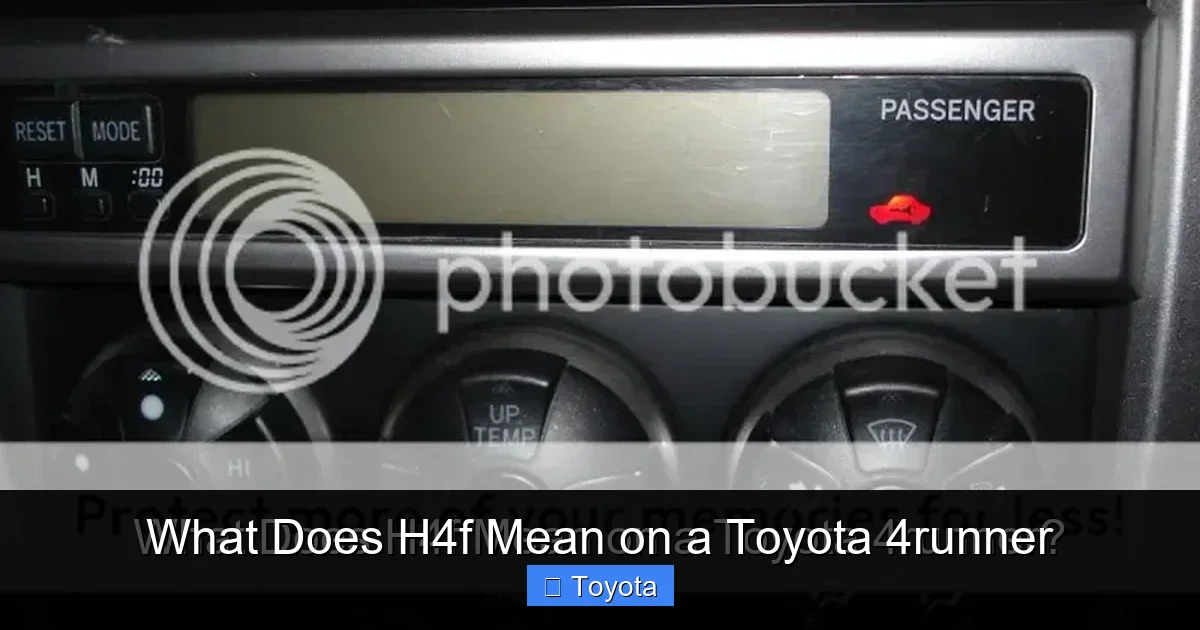
H4f is a hidden code on the Toyota 4Runner that signals a specific four‑wheel‑drive mode. Understanding what H4f does, why it matters, and how to troubleshoot it can save you time and money.
Key Takeaways
- H4f refers to the four‑wheel‑drive mode that engages the transfer case for low‑range traction. It is used for tough off‑road conditions.
- When H4f malfunctions, you may see warning lights, unusual noises, or loss of power. Prompt diagnosis prevents further damage.
- Common causes include sensor failures, wiring issues, or ECU glitches. Most are fixable without a full transmission rebuild.
- Regular maintenance and tire checks help keep the H4f system reliable. See our guide on the Best All Terrain Tires For Toyota 4Runner Reviews for optimal performance.
- Repair costs vary; knowing How Much Does A Toyota Cost can help you budget for parts and labor. Compare prices before committing.
- If your 4Runner is new, follow the break‑in steps from How To Break In A New Car Toyota to let the H4f system settle properly. This reduces early‑life issues.
- Proper use of the H4f mode extends the life of your drivetrain and improves off‑road capability. Always engage it on suitable terrain.
Key Takeaways
- Understanding What Does H4F Mean on a Toyota 4Runner: Provides essential knowledge
📑 Table of Contents
Understanding H4f: What It Is and Where It Appears
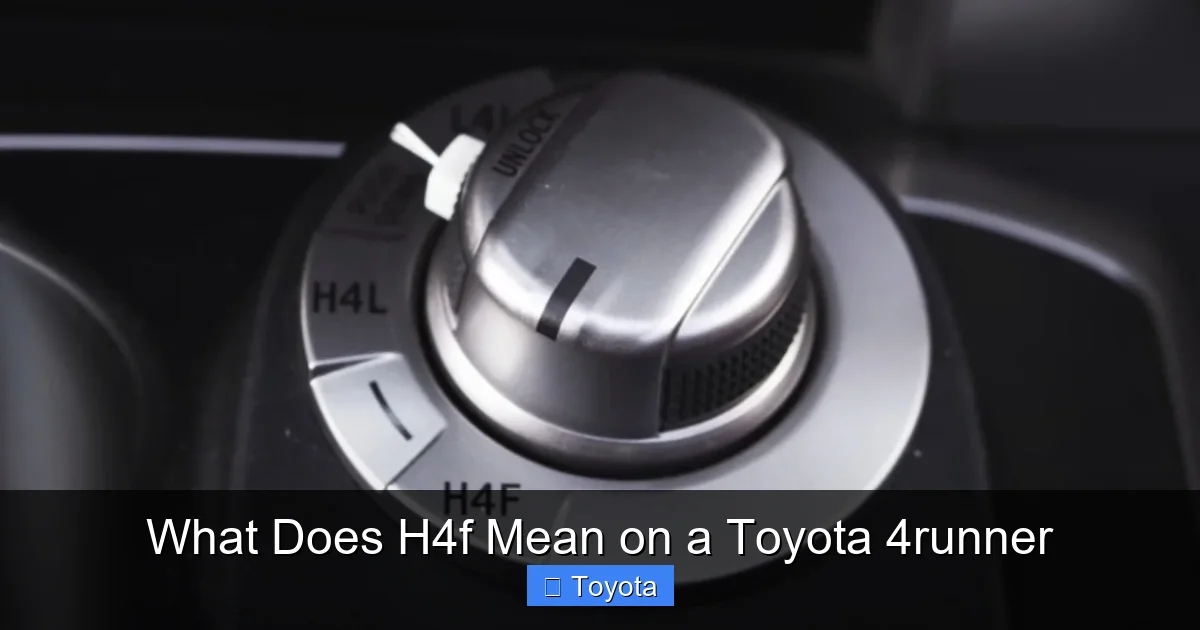
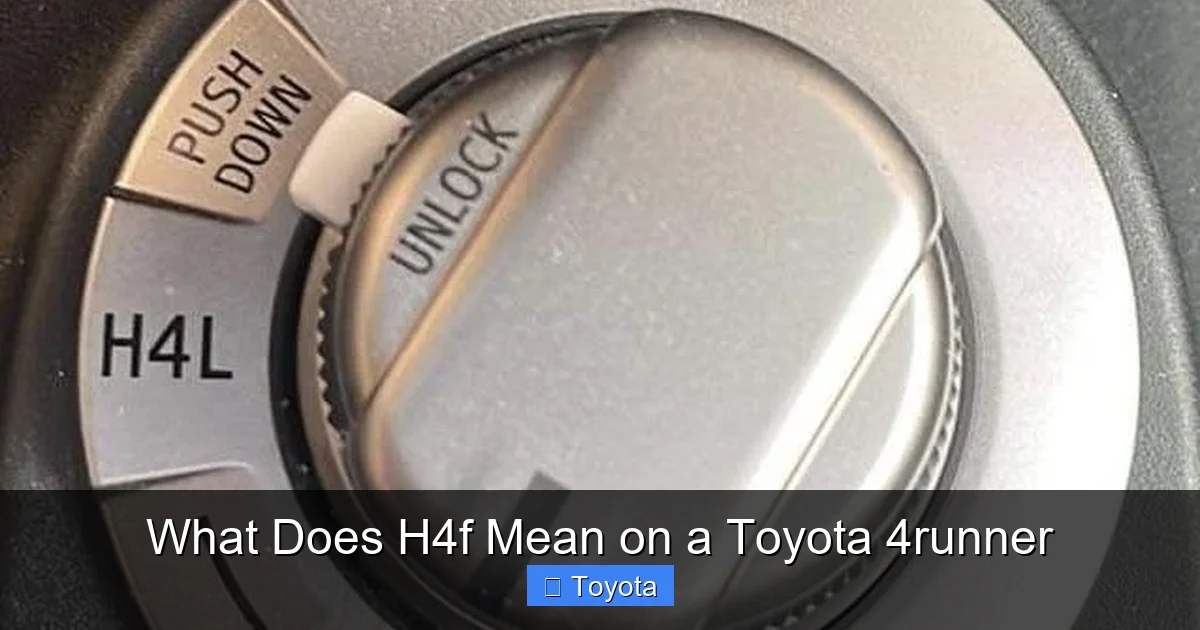
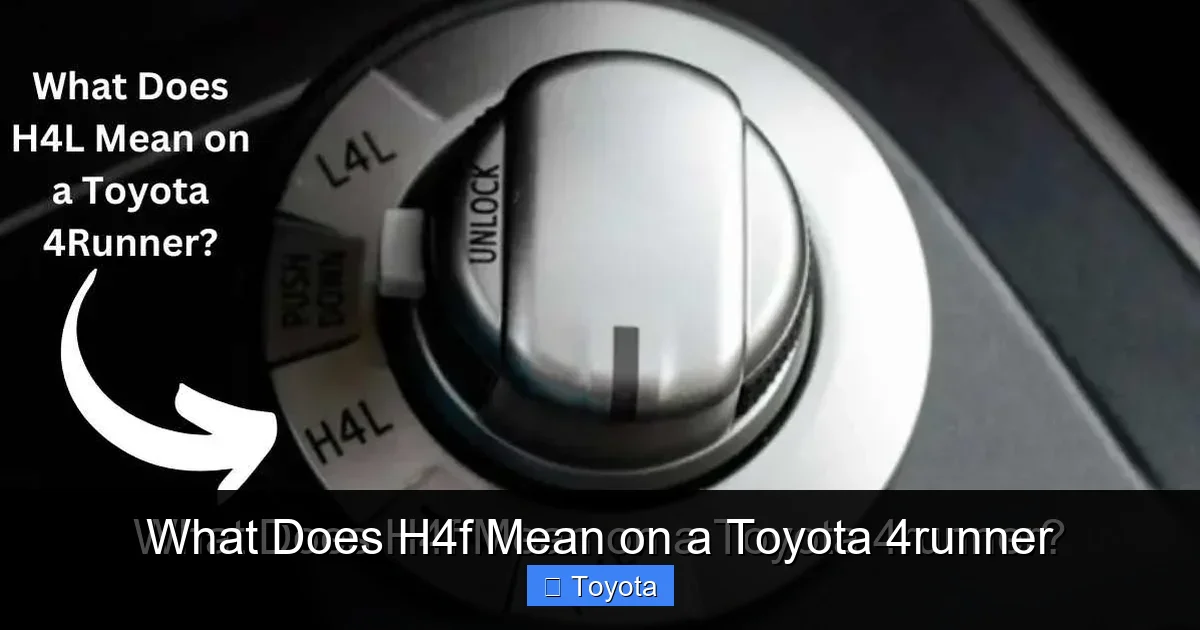
When you look at the dashboard of a Toyota 4Runner, you might notice a button labeled “H4”. That setting is part of the four‑wheel‑drive system, but the hidden code “H4f” often shows up in service manuals and diagnostic tools. H4f stands for the low‑range four‑wheel‑drive mode that provides extra torque for steep climbs, mud, sand, or snow. It is not a separate feature; it simply tells the vehicle’s computer that the driver wants maximum traction.
Definition of H4f
H4f means the transfer case is locked in a lower gear ratio, delivering more torque to each wheel. This mode is usually engaged by pulling a lever or pressing a button, and the vehicle’s ECU monitors the condition to prevent damage.
Common Locations on the 4Runner
The H4f setting is accessed through the center console or the steering‑wheel controls, depending on the model year. When activated, the instrument cluster may display “4LO” or a similar indicator. The system works in conjunction with the front and rear differentials, the transmission, and the wheel speed sensors.
How H4f Impacts 4Runner Performance
Using H4f changes the way the 4Runner handles power delivery. Because the transfer case reduces the gear ratio, the engine feels more responsive at low speeds, which is ideal for rock crawling or deep snow. However, the trade‑off is higher engine RPM and increased wear if the mode is left on for long highway stretches.
Visual guide about What Does H4f Mean on a Toyota 4runner
Image source: slashgear.com
Engine Power Delivery
When H4f is engaged, the engine’s torque is multiplied before it reaches the wheels. This means you can pull heavy loads or climb steep grades without downshifting. The downside is that the engine works harder, so fuel economy drops and the engine may overheat if cooling is insufficient.
Transmission Shifts
The transmission also adjusts its shift points. In H4f, the computer may hold gears longer to keep the engine in its power band. This can feel like a slight lag when you accelerate, but it protects the drivetrain from excessive strain.
Typical Symptoms of H4f Issues
If the H4f system is not working correctly, you’ll notice several warning signs. Recognizing them early can prevent costly repairs.
Visual guide about What Does H4f Mean on a Toyota 4runner
Image source: i.redd.it
Warning Lights and Codes
The dashboard may illuminate a “4WD” or “Service 4WD” light. Diagnostic scanners often read codes such as P0606 or P0700, which point to sensor or module problems related to the transfer case.
Unusual Noises or Vibrations
Drivers report grinding, whining, or clunking sounds when H4f is engaged. Vibration felt through the floorboard can indicate a failing coupling or a damaged differential gear.
Causes of H4f Malfunctions
Several factors can cause the H4f mode to fail. Understanding the root cause helps you choose the right fix.
Visual guide about What Does H4f Mean on a Toyota 4runner
Image source: aautomotives.com
Sensor Failures
The vehicle relies on wheel speed sensors, a transfer case position sensor, and sometimes a differential speed sensor. If any of these sensors give incorrect data, the ECU may disable H4f to protect the drivetrain.
Wiring Problems
Corroded or broken wiring harnesses that connect the control switch to the ECU can interrupt the signal. Water intrusion, especially in off‑road use, is a common culprit.
Software/ECU Glitches
Like any electronic system, the 4Runner’s computer can experience glitches. A software update from the dealer may resolve intermittent H4f activation issues.
Diagnosing and Fixing H4f Problems
Diagnosing H4f issues is a step‑by‑step process that you can do yourself or leave to a professional.
Step‑by‑Step Diagnosis
1. Check the dashboard for any 4WD warning lights. 2. Use an OBD‑II scanner to read any stored codes. 3. Inspect the wiring around the transfer case switch for damage or corrosion. 4. Test the wheel speed sensors with a multimeter. 5. Verify that the transfer case fluid level is correct and that the fluid is clean.
Repair Options and Costs
If a sensor is bad, replacing it usually costs between $50 and $150 for the part plus labor. Wiring repairs can range from $100 to $300 depending on the extent of damage. Software updates are often free at the dealership, but a full ECU replacement can be pricey. Knowing How Much Does A Toyota Cost helps you plan for these expenses.
Preventive Maintenance Tips
Keeping the H4f system healthy is mostly about regular care and smart driving habits.
Regular Inspections
Every 12,000 miles, inspect the transfer case switch, wiring harnesses, and fluid level. Look for cracks, rust, or leaks. A quick visual check can catch problems before they become serious.
Fluid Checks and Replacements
The transfer case uses a special gear oil. Toyota recommends changing it every 30,000 miles or sooner if you frequently use H4f off‑road. Fresh fluid ensures smooth operation and reduces wear on the internal gears.
Tire and Wheel Considerations
Using the right tires is crucial. The Best All Terrain Tires For Toyota 4Runner Reviews article explains which tread patterns give the best grip for H4f conditions. Proper tire pressure also prevents extra strain on the drivetrain.
Conclusion
Understanding what H4f means on a Toyota 4Runner is essential for anyone who loves off‑road adventures or simply wants a reliable vehicle. The mode itself is a low‑range four‑wheel‑drive setting that boosts torque for tough terrain, but it can develop issues with sensors, wiring, or software. By watching for warning lights, unusual noises, and fluid conditions, you can diagnose problems early. Regular maintenance, proper tire selection, and using the mode only when needed will keep your 4Runner’s H4f system running smoothly. If you need more detailed cost information, check out How Much Does A Toyota Cost for budgeting tips, and remember to follow the break‑in steps from How To Break In A New Car Toyota if your vehicle is new. With the right care, your 4Runner will deliver reliable power and durability for many miles to come.
FAQs
Question?
Answer: H4f is the code used by Toyota’s computer to indicate that the low‑range four‑wheel‑drive mode is active. It tells the system to lock the transfer case for maximum torque.
Question?
Answer: Common signs of a faulty H4f system include a persistent 4WD warning light, grinding or whining noises when engaging the mode, and a noticeable loss of power or uneven shifting.
Question?
Answer: In many cases, a simple sensor replacement or wiring repair can restore H4f functionality, so you may not need a major overhaul.
Question?
Answer: Yes, you can often reset the H4f system by disconnecting the battery for a few minutes or using the vehicle’s reset procedure described in the owner’s manual.
Question?
Answer: If the H4f mode fails while driving, it’s safest to pull over, turn off the vehicle, and avoid further off‑road use until the issue is inspected.
Question?
Answer: Repair costs vary; a sensor replacement is usually under $200, while a full transfer case service can exceed $800, so checking How Much Does A Toyota Cost can give you a realistic budget range.
Frequently Asked Questions
What is What Does H4F Mean on a Toyota 4Runner?
What Does H4F Mean on a Toyota 4Runner is an important topic with many practical applications.