What Does H4l Mean on a Toyota 4runner?
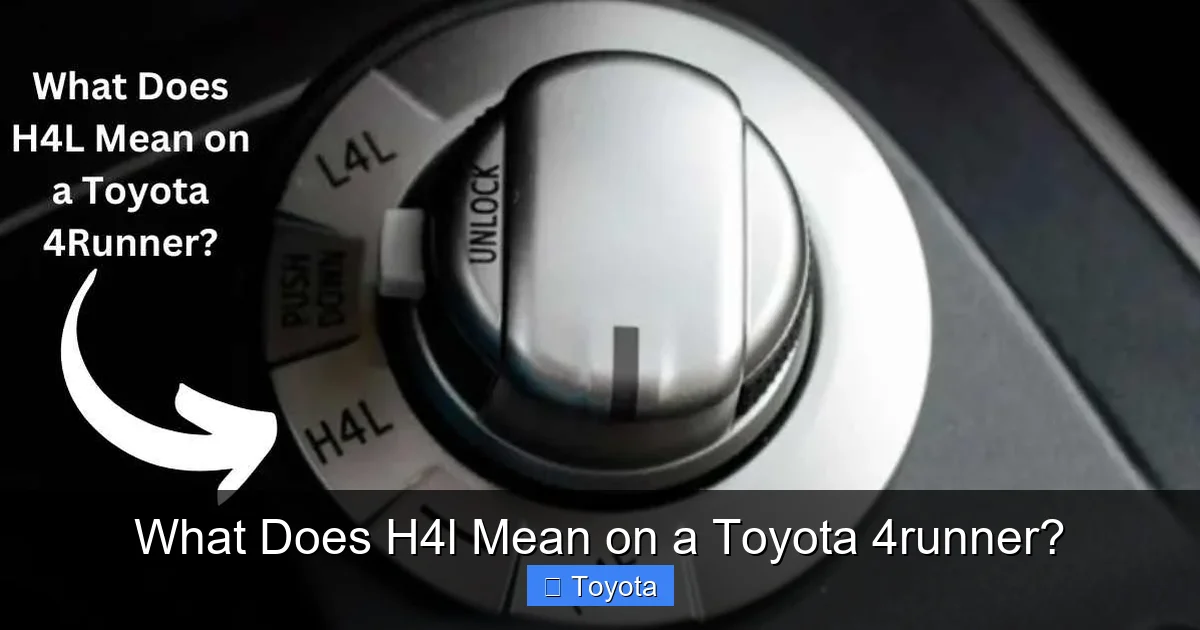
H4L on a Toyota 4Runner stands for High‑range Four‑wheel drive Low, a setting that gives you extra torque for tough terrain while keeping speeds moderate. Learn how this mode differs from H2 and H4L, when to engage it, and what maintenance tips keep your 4Runner ready for adventure.
Key Takeaways
- H4L definition: High‑range Four‑wheel drive Low provides increased torque at lower speeds for off‑road conditions.
- When to use: Ideal for steep inclines, deep sand, mud, snow, or rocky trails where you need power without high speed.
- How it differs: Unlike H2 (two‑wheel drive) and H4 (high‑range four‑wheel drive), H4L locks the front and rear axles together in a low‑gear ratio.
- Engagement tips: Stop the vehicle, shift to neutral, then select H4L; avoid using it on dry pavement to prevent drivetrain wear.
- Maintenance: Regularly check transfer case fluid and inspect the front differential for leaks after off‑road use.
- Fuel impact: Expect higher fuel consumption in H4L due to increased engine load and lower gearing.
- Common myth: H4L is not for everyday driving; it’s strictly for low‑traction, low‑speed situations.
📑 Table of Contents
Understanding the 4Runner’s Drive Modes
The Toyota 4Runner is famous for its rugged capability. Part of that reputation comes from its selectable four‑wheel drive system. Drivers can choose between several modes depending on the terrain and conditions. Knowing what each setting does helps you get the most out of your SUV without damaging the drivetrain.
Most 4Runner models offer these primary modes:
- H2 – High‑range two‑wheel drive (rear wheels only)
- H4 – High‑range four‑wheel drive (front and rear wheels engaged, normal gearing)
- H4L – High‑range Four‑wheel drive Low (front and rear wheels engaged, low‑gear ratio)
- L4 – Low‑range four‑wheel drive (used in some older models; similar to H4L but with different gearing)
Among these, H4L often raises questions. What does H4L mean on a Toyota 4Runner? Let’s break it down in plain language.
What H4L Stands For and How It Works
The acronym H4L is simple when you know the parts:
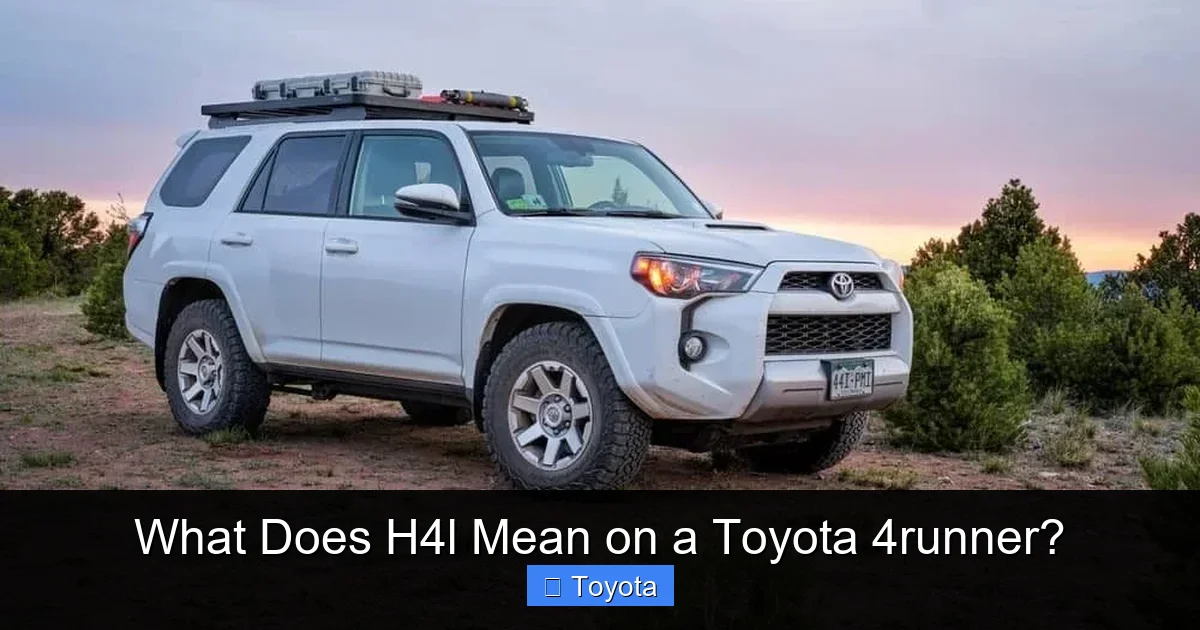
Visual guide about What Does H4l Mean on a Toyota 4runner?
Image source: aautomotives.com
- H = High‑range (the transfer case is in its high gear set)
- 4 = Four‑wheel drive (both front and rear axles receive power)
- L = Low (a lower gear ratio inside the transfer case)
When you select H4L, the transfer case sends power to all four wheels, just like H4. The difference is that the internal gears are set to a lower ratio. This means the engine turns the wheels more slowly but with far more torque.
Think of riding a bicycle in a low gear: you pedal faster but the bike moves slower, making it easier to climb a steep hill. H4L works the same way for your 4Runner. It gives you the ability to crawl over obstacles without needing high speed.
This mode is especially useful when you need maximum pulling power but want to keep the vehicle under control. It is not meant for high‑speed highway driving.
When to Use H4L: Off‑Road Scenarios
Knowing the right moment to engage H4L can make a big difference in safety and enjoyment. Here are common situations where H4L shines:
Steep Inclines and Declines
On a steep uphill, the engine may struggle to maintain speed in H4. Switching to H4L multiplies torque, letting you climb without over‑revving the engine. On a steep downhill, H4L provides engine braking, helping you control speed without riding the brakes.
Deep Sand, Mud, or Snow
Soft surfaces reduce traction. H4L’s extra torque helps the tires push through the material without spinning. The lower speed also reduces the chance of digging in.
Rock Crawling
When navigating large rocks, you need precise throttle control and steady power. H4L lets you inch over each obstacle with confidence.
Towing Heavy Loads Off‑Road
If you’re pulling a trailer or a heavy load on uneven ground, H4L gives the extra pulling power needed to keep everything moving smoothly.
Remember, H4L is for low‑speed situations. If you find yourself needing to go faster than about 25 mph (40 km/h), it’s time to shift back to H4 or H2.
H4L vs Other Modes: What’s the Difference?
Understanding how H4L compares to the other settings helps you choose the right one quickly.
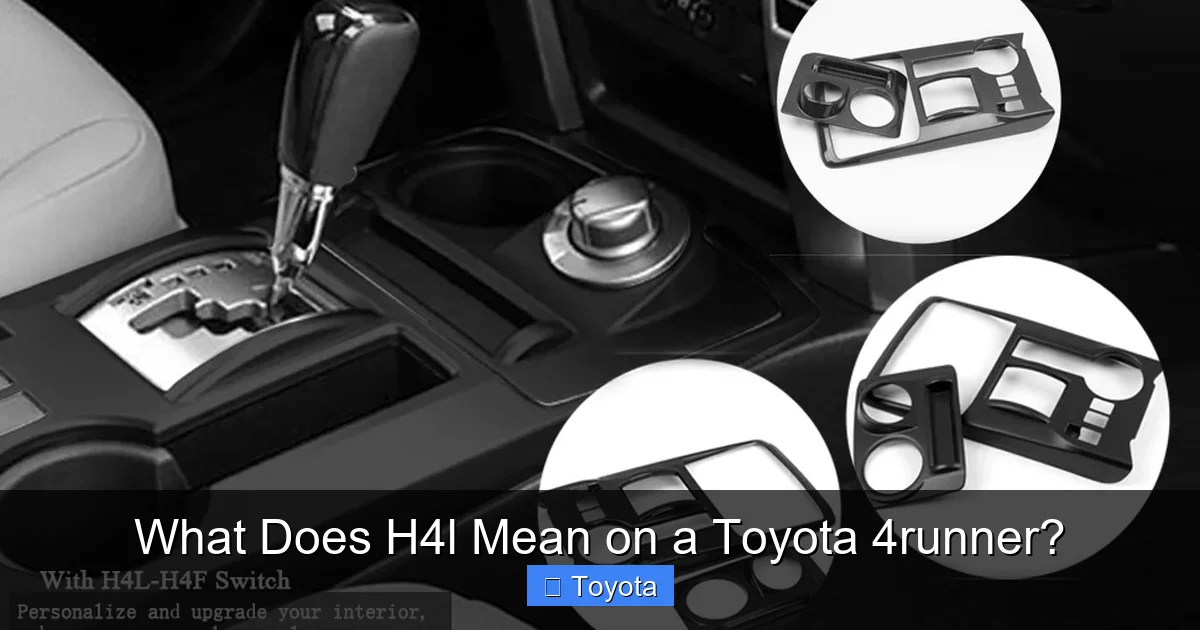
Visual guide about What Does H4l Mean on a Toyota 4runner?
Image source: m.media-amazon.com
H2 (High‑range Two‑wheel Drive)
Only the rear wheels are powered. This is the most fuel‑efficient setting for normal pavement. Use it when roads are dry and you don’t need extra traction.
H4 (High‑range Four‑wheel Drive)
All four wheels receive power, but the gear ratio stays the same as H2. It’s good for slippery pavement, light snow, or gravel roads where you want more grip but still want to maintain highway speeds.
H4L (High‑range Four‑wheel drive Low)
All four wheels are powered with a lower gear ratio. Torque is multiplied, speed is reduced. Ideal for tough off‑road terrain where you need power more than speed.
L4 (Low‑range Four‑wheel Drive – older models)
Functionally similar to H4L but may have a different internal gear ratio. The principle is the same: maximum torque at low speed.
If you ever feel uncertain, think of the ladder: H2 is the bottom rung (least torque, highest speed), H4 is the middle, and H4L/L4 are the top rungs (most torque, lowest speed).
Tips for Engaging and Maintaining H4L
Using H4L correctly keeps your 4Runner’s drivetrain healthy and ensures you get the performance you expect.
How to Engage H4L
- Bring the vehicle to a complete stop.
- Shift the transmission into Neutral (N).
- Turn the four‑wheel drive selector to H4L.
- Wait for the indicator light to confirm the mode is engaged.
- Shift the transmission back into Drive (D) or Reverse (R) as needed.
Never try to shift into H4L while moving. Doing so can cause gear clash and damage the transfer case.
When to Disengage
Return to H2 or H4 as soon as you’re back on firm, dry pavement. Prolonged use of H4L on high‑traction surfaces can cause:
- Increased tire wear
- Drivetrain binding
- Reduced fuel efficiency
Maintenance Checks
After a day of off‑roading in H4L, give your 4Runner a quick look‑over:
- Check the transfer case fluid level and look for leaks.
- Inspect the front differential and axle seals.
- Look at the tires for uneven wear or damage.
- Listen for any unusual noises when you shift back to H2 or H4.
Regular service intervals outlined in your owner’s manual will keep the transfer case in good shape. If you frequently use H4L, consider shortening the fluid change interval by a few thousand miles.
Common Myths and FAQs About H4L
Even seasoned owners sometimes hear misinformation about H4L. Let’s clear up a few of the most common ones.
Myth 1: H4L Can Be Used on the Highway
Fact: H4L is designed for low‑speed, low‑traction conditions. Using it at highway speeds can overheat the transfer case and cause premature wear.
Myth 2: H4L Gives You More Horsepower
Fact: H4L does not increase engine horsepower. It changes the gear ratio to deliver more torque at the wheels, which feels like more power but is actually a mechanical advantage.
Myth 3: You Can Shift Between H4L and H4 While Driving
Fact: Shifting between these modes requires the transmission to be in Neutral and the vehicle to be stopped. Attempting to shift while rolling can damage components.
FAQ: Does H4L Affect Fuel Economy?
Answer: Yes. Because the engine works harder to turn the wheels at a lower gear, fuel consumption rises. Expect a noticeable drop in MPG when you stay in H4L for extended periods.
FAQ: Can I Use H4L for Everyday City Driving?
Answer: It’s not recommended. The low gearing makes acceleration jerky and can cause the engine to rev higher than needed at low speeds, leading to unnecessary wear.
FAQ: What If the H4L Light Doesn’t Come On?
Answer: First, make sure the vehicle is stopped and in Neutral. If the light still doesn’t illuminate, there may be an issue with the transfer case shift motor or the selector switch. Have a qualified technician inspect it.
Real‑World Example: A Weekend Trail Run
Imagine you’re heading to a forest service road that climbs steeply, crosses a muddy creek, and ends at a rocky overlook. You start in H2 on the pavement. As you hit the dirt, you shift to H4 for better grip on the loose gravel. When the ascent becomes steep and the surface turns to slick mud, you stop, shift to Neutral, and select H4L. The 4Runner crawls up the hill with steady power, the tires biting into the mud without spinning. At the creek, you maintain H4L to crawl through the water‑logged section, using engine braking to control descent on the other side. Once you reach the overlook and the trail flattens onto hard packed dirt, you shift back to H4, then to H2 for the return trip to the pavement. This sequence shows how H4L fits naturally into a varied off‑road adventure.
Conclusion
Understanding what H4L means on a Toyota 4Runner unlocks a key part of its off‑road personality. H4L gives you the torque and control needed for challenging terrain while keeping speeds manageable. By knowing when to engage it, how to shift properly, and how to maintain the system, you’ll enjoy safer, more capable adventures. Remember, H4L is a tool for low‑speed, low‑traction situations—not a setting for daily commuting. Use it wisely, and your 4Runner will stay ready for whatever the trail throws at you.
Frequently Asked Questions
What does H4L stand for on a Toyota 4Runner?
H4L stands for High‑range Four‑wheel drive Low. It provides power to all four wheels with a lower gear ratio for increased torque at reduced speeds.
Is it safe to drive in H4L on dry pavement?
No. Driving in H4L on high‑traction surfaces can cause drivetrain binding, tire wear, and unnecessary stress on the transfer case. Switch back to H2 or H4 as soon as you return to firm pavement.
How do I engage H4L safely?
Bring the vehicle to a complete stop, shift the transmission into Neutral, turn the four‑wheel drive selector to H4L, wait for the indicator light, then shift back into Drive or Reverse as needed.
Will using H4L hurt my fuel economy?
Yes. Because the engine operates in a lower gear, it burns more fuel. Expect lower MPG when you spend extended time in H4L.
Can I shift from H4L to H4 while moving?
No. Shifting between these ranges requires the transmission to be in Neutral and the vehicle to be stopped to avoid damaging the transfer case.
What maintenance should I do after using H4L off‑road?
Check transfer case fluid level, inspect the front differential and axle seals for leaks, look at tires for uneven wear, and listen for any unusual noises when shifting back to other modes.