How to Fix Ac Light Blinking on Toyota Camry
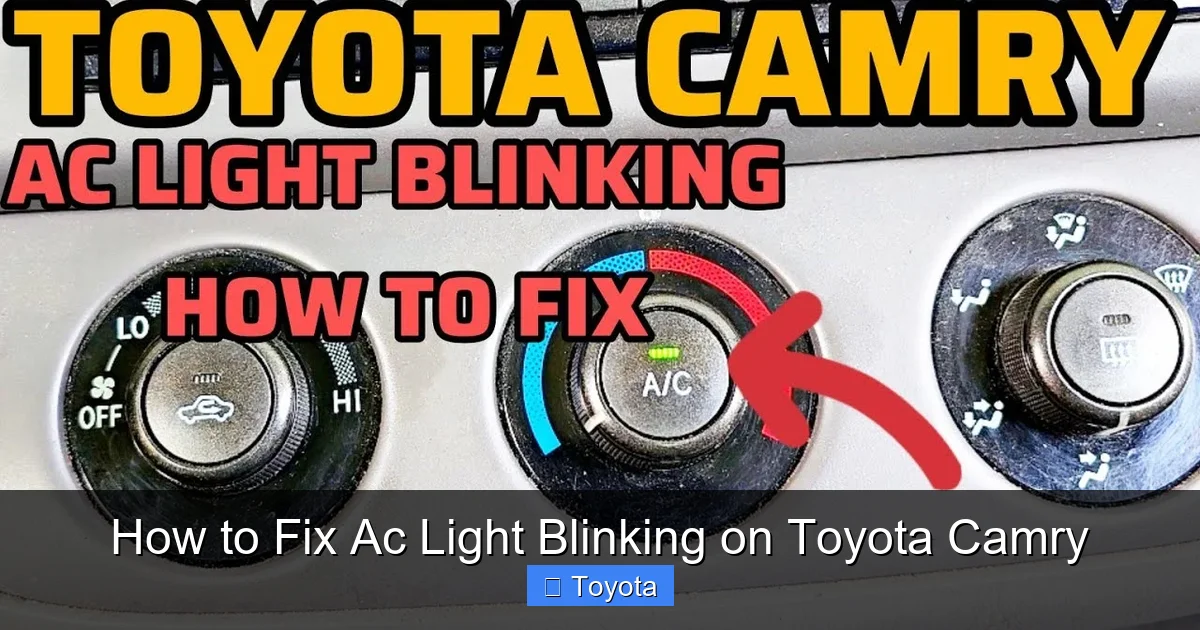
The AC light blinking on Toyota Camry is a warning from the climate system. It often points to low refrigerant, a bad sensor, or an electrical fault. Most fixes are simple and cheap.
Have you ever sat in your car on a hot day and noticed the AC button flashing? It can be scary. The AC light blinking on Toyota Camry models is a common issue. Many owners face this problem at some point. The blink is not just annoying. It means the car turned off the AC to protect itself. You might be driving to work or picking up kids. Suddenly warm air blows. Then you see the dash light blink. This guide will help you stay calm.
The good news is that you can often fix it yourself. In this article, we will walk you through the causes and the steps to solve it. By the end, you will feel confident to tackle the AC light blinking on Toyota Camry without stress. You do not need to be a master mechanic. You just need a little time and some simple tools. Most fixes cost less than a dinner out. Let’s get started and bring back the cold air.
Key Takeaways
- Warning Sign: The blinking AC light shows the system locked out the compressor to prevent damage.
- Low Refrigerant: A common cause is low Freon, which drops pressure and triggers the blink.
- Sensor Faults: Bad ambient or pressure sensors can fake a problem and blink the light.
- DIY Checks: You can test fuses, clutch, and codes at home with basic tools.
- Simple Fixes: Recharging gas or replacing a relay often stops the AC light blinking on Toyota Camry.
- Reset Needed: After repair, reset the ECU so the light stays off for good.
📑 Table of Contents
What Does the Blinking AC Light Mean?
Your Toyota Camry has a smart climate system. It watches many sensors. When it sees a problem, it blinks the AC light. This is a fail-safe. The car stops the compressor to avoid damage. The AC light blinking on Toyota Camry is like a check engine light for the cooling system. It is the car’s way of saying, “Stop and look at me.”
The Built-In Protection Mode
Toyota designed the system to lock out the compressor. If pressure is too low or too high, the clutch will not engage. The light blinks to tell you the mode is active. You will feel warm air from the vents. This protects the compressor from burning out. A new compressor can cost over five hundred dollars. So the blink saves you money in the long run.
How the Blink Code Works
On many Camry models, the blink pattern is a code. For example, two blinks then pause may mean low pressure. Three blinks can point to a sensor fault. The AC light blinking on Toyota Camry may follow a rhythm. Count the blinks with a timer. This gives you a head start before tools come out. Your owner manual may list the pattern. If not, online forums have charts.
Which Model Years Are Affected?
Many Camry years have this feature. From the 2002 up to 2020 models, the blink code is similar. The AC light blinking on Toyota Camry from 2007 to 2015 is most reported. Still, newer ones do it too. The fix steps are close across years. Hybrid models use the same basic logic. So this guide fits almost any Camry with automatic climate control.
Top Reasons for AC Light Blinking on Toyota Camry
There are a few usual suspects. We will list the most common ones. Knowing these helps you find the fault fast. Always start with the cheapest check first. That saves time and cash.
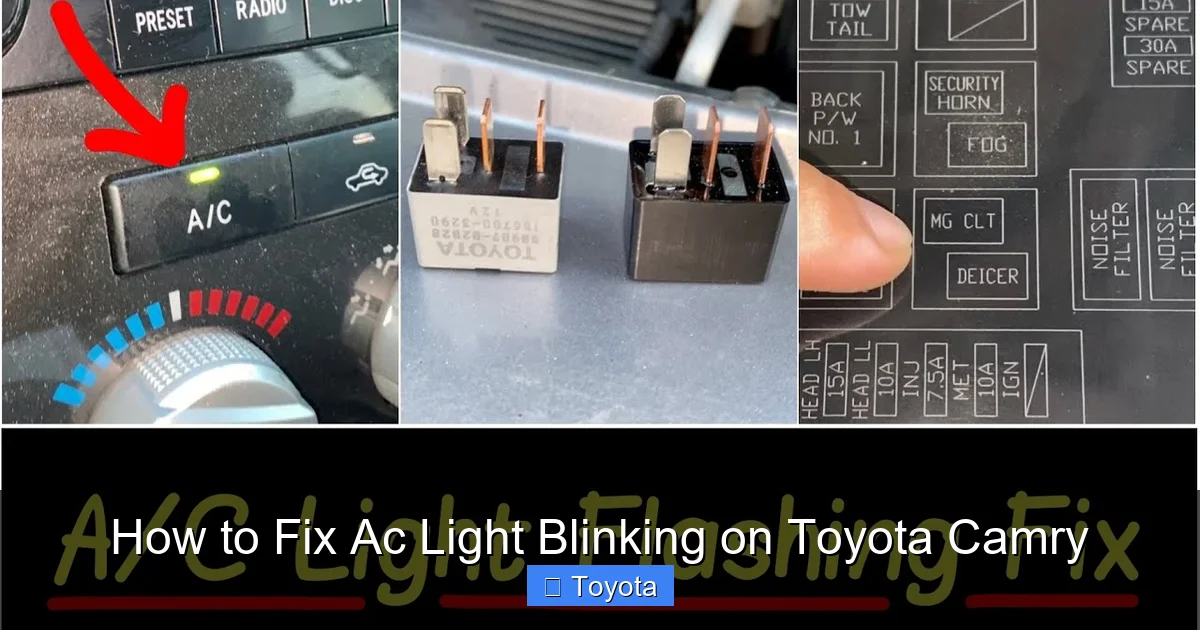
Visual guide about How to Fix Ac Light Blinking on Toyota Camry
Image source: toyotanation.id
Low Refrigerant Pressure
The most common cause is low Freon. Leaks happen slowly at o-rings or hoses. When the pressure drops, the sensor tells the ECU. Then the AC light blinking on Toyota Camry starts. You may also notice weak cooling before the blink. A small leak can take a year to empty the system. Use UV dye to spot leaks if you refill and it returns.
Faulty AC Compressor Clutch
The clutch engages the compressor. If it sticks or fails, the system sees no spin. It blinks the light. A worn clutch is a frequent fix on older cars. Listen for a click when you press AC. No click can mean clutch issue. The coil may have open circuit. A multi-meter check can confirm. Replacing the clutch plate is a weekend job.
Bad Ambient Temperature Sensor
This sensor sits near the grill. It tells the car the outside temp. If it fails, the car may think it is freezing outside. Then it blocks AC. The AC light blinking on Toyota Camry may be due to this small part. You can test it with a multimeter for resistance change with temperature. A new sensor is cheap and clips in place.
Faulty Pressure Switch
The high/low pressure switch sits on the dryer. It opens if numbers fall out of range. A stuck switch will fake a fault. Then the light blinks even with good gas. Tap it lightly with a wrench handle. If blink stops, the switch is bad. This is a ten minute swap.
Electrical Issues and Fuses
A blown fuse or weak relay can cut power. The system logs a fault. The light blinks. Check the fuse box first. It is cheap and easy. Also, corroded wires near the compressor can cause shorts. Look for green crust on connectors. Clean with electrical contact spray. This often ends the AC light blinking on Toyota Camry for good.
How to Diagnose the Problem at Home
You do not need a shop. Follow these steps to find the cause of the AC light blinking on Toyota Camry. A calm approach wins. Gather a flashlight, gauge, and scanner.
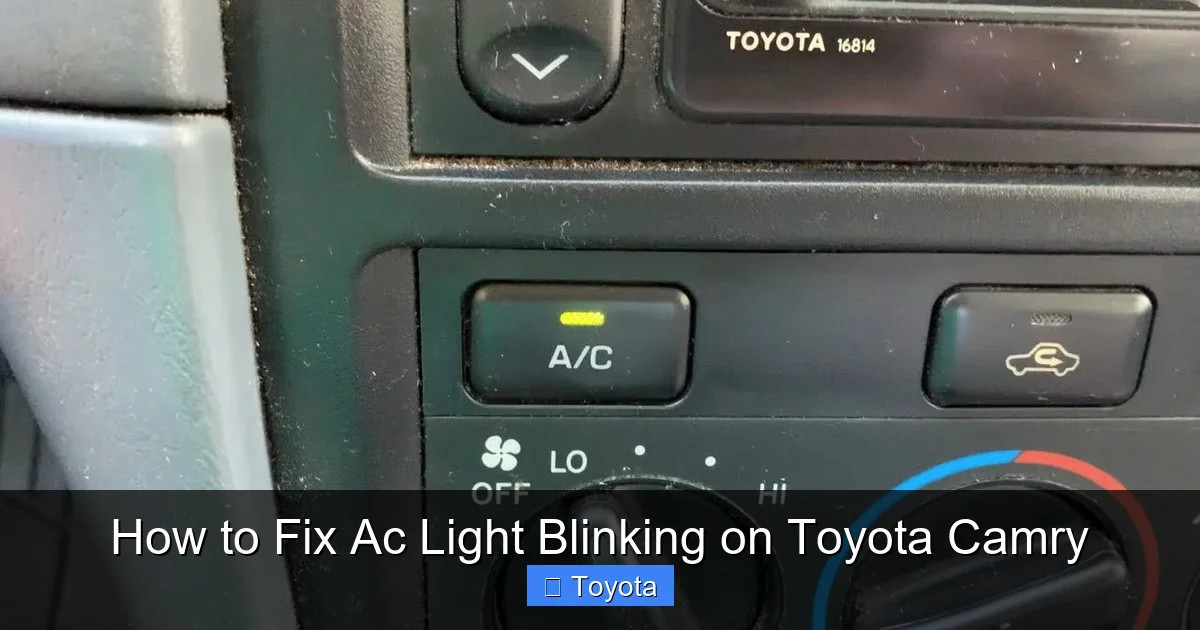
Visual guide about How to Fix Ac Light Blinking on Toyota Camry
Image source: i.ytimg.com
Check the Refrigerant Level
Buy a gauge from auto store. Hook it to the low port. The reading should be in the green. If it is low, you found the issue. Always wear glasses when handling refrigerant. The low port has a black cap marked L. Do not confuse with high port. If gauge is red, you have bigger problems.
Inspect the Compressor Clutch
Open the hood. Turn on the car and AC. Look at the compressor. The front plate should spin. If it does not, the clutch is bad. This is a clear sign of the AC light blinking on Toyota Camry caused by hardware. Ask a friend to press the button while you watch. Safety first, keep hands away from belt.
Listen for Unusual Sounds
A failing compressor may squeal or rattle. These sounds precede the blink. Use a long screwdriver as a stethoscope. Touch the compressor body and ear to handle. A grinding noise means internal wear. Then the AC light blinking on Toyota Camry is a warning you should not ignore. Plan for a new unit soon.
Scan for Trouble Codes
Use an OBD2 scanner. Some Camry codes are specific to HVAC. A code like B1421 points to sensor. The scanner helps you avoid guesswork. Many local stores lend scanners free. Plug in under dash, turn key on. Read the HVAC section. This tells you exactly why the AC light blinking on Toyota Camry appeared.
Practical Fixes You Can Do Yourself
Now let’s fix it. These steps are safe for most DIYers. Always disconnect battery negative first when working on wires. Keep rags handy for spills.
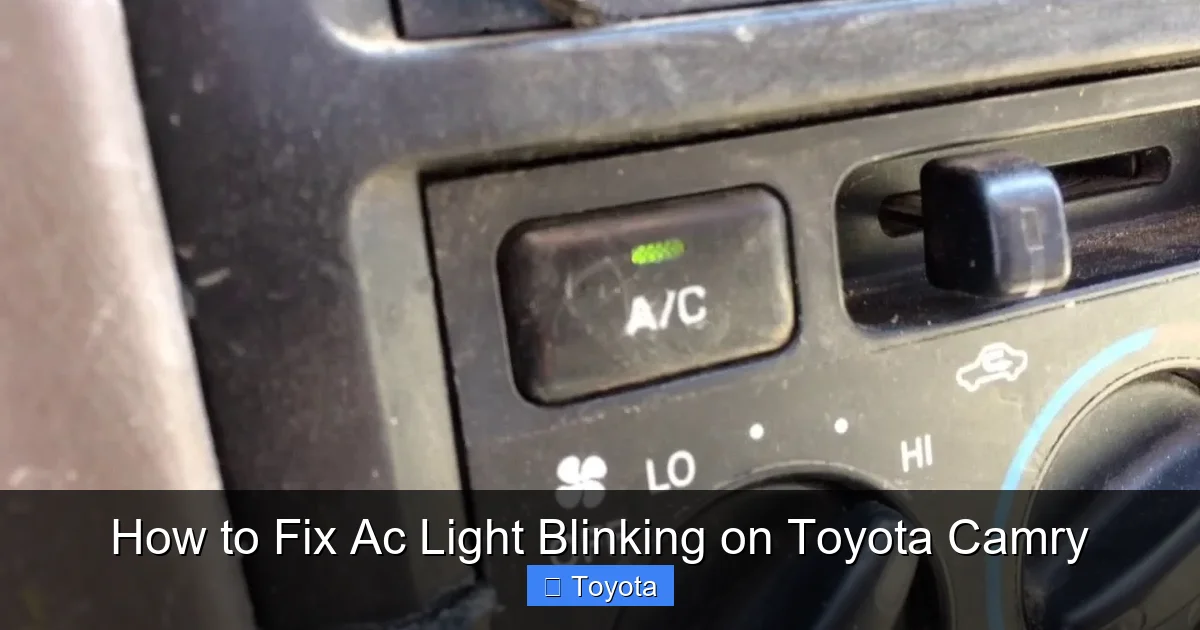
Visual guide about How to Fix Ac Light Blinking on Toyota Camry
Image source: i.ytimg.com
Recharge the AC System
If pressure is low, add Freon. Follow the can instructions. Do not overfill. Overfill can also trigger the AC light blinking on Toyota Camry. Stop when gauge is in green. This often solves the blink at once. Use a can with gauge built in. It is foolproof for beginners.
Replace the Compressor or Clutch
If clutch is bad, you can replace just the clutch. It costs less than full compressor. Yet if compressor is noisy, swap the whole unit. Use OEM parts for best life. This ends the blink for good. Remember to lubricate the new seal with fresh oil. That prevents early leak.
Address Sensor Problems
A bad ambient sensor is cheap to replace. Unplug the old one. Screw in the new. If you want to test before buying, you can read about how to bypass ambient air temperature sensor to confirm the fault. This saves money on parts you do not need. The same idea applies to the pressure switch. Bypass for test only, never drive long that way.
Deal with Blower Motor Relay
The blower relay feeds the fan. A weak relay can cause weird AC behavior. You can learn how to bypass blower motor relay as a quick test. If the blink stops during the bypass, replace the relay. It is a ten-dollar fix. The relay sits in the under-hood box. Pull it out and slot the new one.
Remove Excess Oil from AC System
Sometimes a repair adds too much oil. Thick oil slows the refrigerant. Pressure reads wrong. Then the AC light blinking on Toyota Camry will not stop. Our guide on how to remove excess oil from car ac system shows the proper flush steps. This restores correct function. Only attempt flush with proper catch can. Wear gloves.
Check the Wiring Harness
Wires near the radiator get hot and brittle. A broken wire can blink the light. Wiggle the harness while AC is on. If blink changes, you found a break. Solder and heat shrink the spot. This simple repair ends many mystery cases of AC light blinking on Toyota Camry.
Resetting the System After Repairs
After you fix the root cause, the light may still blink. The ECU remembers the fault. You must clear it. Two easy ways exist.
Disconnect Battery Method
Remove negative terminal for 15 minutes. This resets the climate module. Reconnect and start car. Press AC. The AC light blinking on Toyota Camry should be gone. This is the easiest reset. Make sure you have radio code if needed. Some Camrys lose settings.
Using OBD2 Scanner
Some codes need a scanner to clear. Plug in, select HVAC, erase codes. The light stops. This is clean and fast. It also confirms no other faults remain. After clear, run the car ten minutes with AC on. This teaches the system new values.
Drive Cycle Tip
Take a short drive after reset. Smooth road, mild speed. The ECU learns sensor ranges. This prevents the AC light blinking on Toyota Camry from returning same day. It is like a reboot for the car brain.
Keeping Your Camry AC Healthy
Prevention is better than repair. A few habits keep the system happy. Then you rarely see the AC light blinking on Toyota Camry. Spend five minutes each month.
Regular Maintenance
Check refrigerant each spring. Listen for odd noises. Change cabin filter yearly. These small steps avoid big bills. A healthy system cools fast and quiet. Also run AC in winter once a week. This keeps seals soft. That stops slow leaks that cause the AC light blinking on Toyota Camry later.
Monitor Cabin Air Filter
A clogged filter strains the blower. It can cause odd electrical load. That may trigger faults. Slide the filter out and hold to light. If no light passes, replace it. This costs little and helps a lot. A fresh filter also cuts allergy dust.
Park in Shade
Heat builds pressure in the system when parked in sun. Over years, seals dry. Then leaks start. Use a windshield shade. This simple step reduces stress on AC parts. It lowers the odds of the AC light blinking on Toyota Camry in summer.
We have covered the full path. The AC light blinking on Toyota Camry is a clear message. It tells you to check the cooling system. With the steps above, you can find and fix the issue. You will save money and stay cool. Always work safe and take your time. Your Camry will thank you with cold air. If the blink returns after all fixes, visit a trusted shop. But most owners fix it at home with pride.
Frequently Asked Questions
Why is my AC light blinking on Toyota Camry?
The blink means the system disabled the compressor due to a fault. Common causes include low refrigerant, bad sensors, or electrical issues.
Can I drive with the AC light blinking?
Yes, you can drive, but the AC will not cool. Fix it soon to avoid compressor damage and discomfort.
How do I reset the AC light on a Camry?
Disconnect the battery for 15 minutes or use an OBD2 scanner to clear HVAC codes. After repair, the reset stops the blink.
Will low refrigerant cause the AC light to blink?
Absolutely. Low pressure triggers the safety lockout, which makes the AC light blink on Toyota Camry. Recharging solves it.
How much does it cost to fix a blinking AC light?
DIY recharge costs about $30. Sensor or relay swaps are under $50. A full compressor job can reach $600 at a shop.
Can a bad fuse cause the AC light to blink?
Yes. A blown AC fuse or weak relay cuts power and logs a fault. Checking the fuse box is the first easy step.