How to Get Toyota Tacoma Out of 4 Wheel Drive
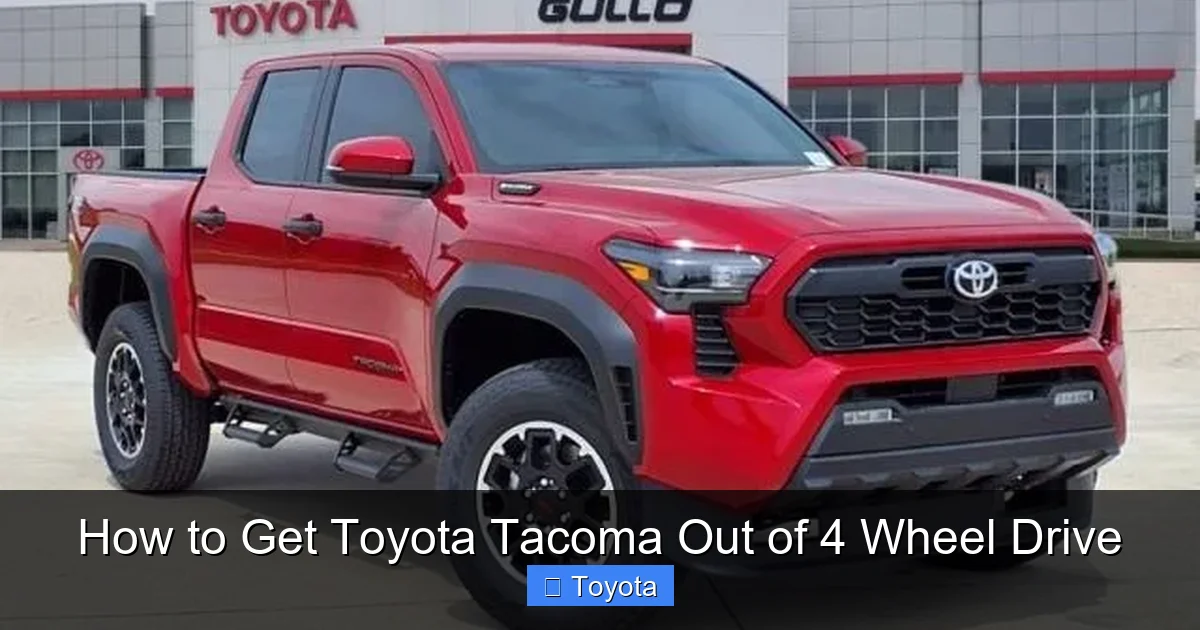
Getting your Toyota Tacoma out of 4-wheel drive is a simple process that varies slightly depending on the model year and transfer case type. Whether you have a manual shift-on-the-fly system or an electronic 4WD switch, following the correct steps prevents drivetrain damage and ensures smooth operation. This guide walks you through the procedure, safety tips, and common troubleshooting steps to get back to 2WD mode quickly.
Key Takeaways
- Know Your System: Identify whether your Tacoma uses a manual shift lever or electronic push‑button for 4WD before attempting to disengage.
- Stop and Shift to Neutral: Always bring the vehicle to a complete stop (or very low speed) and shift the transmission to neutral to relieve torque on the transfer case.
- Follow the Correct Sequence: Move the selector to 2H (two‑wheel high) and wait for the indicator light to confirm disengagement before driving.
- Troubleshoot Stuck 4WD: Check for stuck linkage, low transfer case fluid, or a faulty actuator; simple fixes include lubricating the linkage or topping off fluid.
- Maintain for Longevity: Regular fluid changes, seal inspections, and keeping the shift mechanism clean will prevent future engagement issues.
- Use 4WD Wisely: Engage only when needed (off‑road, slippery surfaces) and disengage promptly on dry pavement to avoid drivetrain bind.
- Protect Your Interior: After off‑road trips, use floor liners and seat covers to protect your truck’s interior from scratches and dirt.
📑 Table of Contents
- Introduction
- Understanding Your Tacoma’s 4WD System
- Preparing to Disengage 4WD
- Step-by-Step Guide to Exit 4WD (Manual Transfer Case)
- Step-by-Step Guide to Exit 4WD (Electronic Push-Button)
- Troubleshooting When 4WD Won’t Disengage
- Maintenance Tips to Keep Your 4WD System Healthy
- Best Practices for Using 4WD On and Off Road
- Conclusion
Introduction
Owning a Toyota Tacoma means you have a versatile truck ready for both daily commutes and rugged off‑road adventures. Part of that versatility comes from the four‑wheel drive (4WD) system, which can send power to all four wheels when traction is low. While engaging 4WD is straightforward, knowing how to get Toyota Tacoma out of 4 wheel drive is just as important to avoid unnecessary wear on the drivetrain and to maintain fuel efficiency.
Many Tacoma owners wonder if the process differs between model years or between the manual shift lever and the electronic push‑button versions. The good news is that the core steps are similar: stop the vehicle, reduce torque on the transfer case, move the selector to 2H, and verify the indicator. This article breaks down each step, offers troubleshooting tips for when 4WD won’t disengage, and shares maintenance practices to keep your system healthy for years to come.
Whether you’re a new Tacoma owner curious about the price of a new Toyota Tacoma or a seasoned driver looking to refresh your knowledge, this guide provides clear, actionable advice. Let’s dive into the specifics of your Tacoma’s 4WD system and learn how to switch back to two‑wheel drive safely and confidently.
Understanding Your Tacoma’s 4WD System
Before you can disengage 4WD, it helps to know what type of transfer case your Tacoma has. Toyota has used both part‑time and full‑time systems over the years, and the method of shifting varies slightly.
Visual guide about How to Get Toyota Tacoma Out of 4 Wheel Drive
Image source: i.pinimg.com
Part‑Time vs Full‑Time 4WD
Most Tacoma models equipped with 4WD use a part‑time system. In this setup, the front and rear axles are mechanically locked together when 4WD is engaged, which is ideal for off‑road or slippery conditions but can cause drivetrain bind on dry pavement. Full‑time systems, found on some limited trims, allow a center differential to absorb speed differences, making them safe for all‑surface use. Knowing which you have informs when you should disengage.
Electronic Shift vs Manual Lever
Older Tacomas (pre‑2016) often feature a manual shift‑on‑the‑fly lever located on the floor or steering column. Newer models (2016‑present) typically use an electronic dial or push‑button switch on the dashboard. Both achieve the same result, but the electronic version may require a brief pause for the actuator to move the internal collar.
Preparing to Disengage 4WD
Proper preparation reduces stress on the transfer case and ensures a smooth shift back to 2WD.
Visual guide about How to Get Toyota Tacoma Out of 4 Wheel Drive
Image source: di-sitebuilder-assets.dealerinspire.com
Bring Vehicle to a Complete Stop
Always stop the Tacoma completely before attempting to change the transfer case position. If you’re moving slowly (under 5 mph) you can sometimes shift, but a full stop is the safest practice, especially if you suspect the system is under load.
Reduce Speed and Shift to Neutral (if needed)
For manual shift‑on‑the‑fly systems, shift the transmission into neutral (N) to relieve torque on the transfer case. Electronic systems often handle this internally, but placing the transmission in neutral still helps and is recommended as a precaution.
Check for Indicator Lights
Look at the instrument cluster: the 4WD indicator should be illuminated when engaged. After you move the selector, the light should either turn off or change to a 2WD symbol. If the light doesn’t respond, you may have a mechanical or electrical issue that needs attention.
Step-by-Step Guide to Exit 4WD (Manual Transfer Case)
If your Tacoma has a physical lever, follow these steps.
Locate the 4WD Shift Lever
The lever is usually found on the lower left side of the steering column or on the floor console. It will have positions marked 2H (two‑wheel high), 4H (four‑wheel high), N (neutral), and 4L (four‑wheel low).
Move Lever to 2H Position
With the brake pedal depressed and the transmission in neutral, firmly pull or push the lever from 4H (or 4L) straight into 2H. You should feel a positive detent as the internal collar slides.
Verify Indicator and Test Drive
Release the brake, shift the transmission back into drive, and drive slowly forward. The 4WD indicator should be off. If you hear any grinding or the light stays on, repeat the process, ensuring the vehicle is completely stopped and the transmission is in neutral.
Step-by-Step Guide to Exit 4WD (Electronic Push-Button)
For Tacomas equipped with the electronic dial or buttons, the process is slightly different.
Press the 2WD Button
Locate the 4WD control dial (often labeled with icons for 2H, 4H, 4L) or the dedicated 2WD button. With the vehicle stopped and the transmission in neutral, press the 2H setting or button.
Wait for Indicator to Change
The system will send a signal to the transfer case actuator. You may hear a soft whirring as the collar moves. Wait a few seconds for the 4WD indicator to turn off and the 2WD indicator to illuminate.
Confirm Disengagement by Driving Straight
Shift the transmission into drive and drive straight for a short distance. If the indicator stays off and the truck feels normal, the disengagement was successful. Should the light remain on, try turning the steering wheel slightly left and right while moving to help release any binding.
Troubleshooting When 4WD Won’t Disengage
Sometimes the transfer case refuses to shift out of 4WD. Below are common causes and what you can do.
Common Causes (Stuck Shift Linkage, Faulty Actuator, Low Fluid)
A manual lever may feel stuck due to rust, dirt, or a bent linkage. Electronic systems can fail if the actuator motor is weak or if there’s a blown fuse. Low transfer case fluid increases friction, making it harder for the internal collar to slide.
Simple Fixes You Can Try
First, ensure the vehicle is on a level surface and the transmission is in neutral. For manual levers, spray a penetrating lubricant (like WD‑40 Specialist) at the base of the lever and work it back and forth gently. For electronic systems, check the fuse related to the transfer case (consult your owner’s manual) and replace if blown. If you suspect low fluid, locate the transfer case fill plug (usually on the rear of the case) and check the level; top off with the recommended Toyota gear oil if needed.
When to See a Mechanic
If the lever remains immobile, the electronic switch shows no response, or you hear grinding noises after attempting to shift, it’s time to visit a qualified technician. Continuing to force the shift can damage the transfer case fork or the actuator motor, leading to costly repairs.
Maintenance Tips to Keep Your 4WD System Healthy
Preventive care goes a long way toward avoiding disengagement problems.
Regular Fluid Checks and Changes
Toyota recommends changing the transfer case fluid every 30,000 miles or as indicated in your maintenance schedule. Use the specified GL‑5 gear oil. Drain and refill procedure is similar to a differential service—remove the drain plug, let the old fluid out, replace the plug, then fill through the fill plug until it reaches the bottom of the hole.
Lubricating Shift Linkage
For manual shift‑on‑the‑fly models, periodically spray silicone‑based lubricant on the linkage pivot points and the lever base. This prevents rust buildup and ensures smooth movement.
Inspecting Transfer Case Seals
Check the seals around the input and output shafts for signs of leakage. A small seep can lead to low fluid levels over time. Replace any worn seals promptly to maintain proper lubrication.
Best Practices for Using 4WD On and Off Road
Knowing when to engage and disengage 4WD protects both your truck’s drivetrain and your comfort.
When to Engage 4WD
Engage 4H when you encounter loose gravel, snow, mud, or steep inclines where extra traction is needed. Use 4L only for low‑speed, high‑torque situations like rock crawling or pulling a heavy trailer up a steep grade.
Avoiding Drivetrain Bind on Pavement
Part‑time 4WD locks the front and rear axles together. Driving on dry, high‑traction surfaces in 4H can cause drivetrain bind, leading to vibration, hard shifting, and potential component damage. Always disengage to 2H as soon as you return to paved roads.
Protecting Your Truck’s Interior After Off-Roading
After a day on the trails, mud, sand, and debris can find their way inside. It’s wise to protect your truck’s interior from scratches by using all‑weather floor liners, seat covers, and a cargo tray. A quick vacuum and wipe‑down will keep the cabin fresh and prevent abrasive particles from wearing down upholstery.
Conclusion
Understanding how to get Toyota Tacoma out of 4 wheel drive is essential for maintaining your truck’s performance and longevity. By knowing your specific system, following the proper disengagement steps, and staying on top of maintenance, you can enjoy the benefits of 4WD without the drawbacks of unnecessary wear. Remember to stop, relieve torque, move the selector to 2H, and verify the indicator before driving away. If anything feels off, don’t hesitate to troubleshoot or seek professional help. Safe travels, whether you’re navigating city streets or conquering backcountry trails.
Frequently Asked Questions
Do I need to shift the transmission into neutral before exiting 4WD?
For manual shift‑on‑the‑fly Tacomas, placing the transmission in neutral helps relieve torque on the transfer case and makes the shift smoother. Electronic systems often handle this internally, but selecting neutral is still a good precaution.
Can I damage my Tacoma by driving in 4WD on dry pavement?
Yes. In part‑time 4WD systems, the front and rear axles are locked together, which can cause drivetrain bind, vibration, and premature wear on tires and components when traction is high. Always switch back to 2H on paved roads.
What does it mean if the 4WD indicator light stays on after I move the lever to 2H?
It indicates that the transfer case has not fully disengaged. This could be due to a stuck linkage, low fluid, or a faulty actuator. Try the troubleshooting steps outlined above, and if the light persists, have a mechanic inspect the system.
How often should I check or change the transfer case fluid?
Toyota typically recommends inspecting the fluid level every 15,000 miles and changing it every 30,000 miles, or sooner if you frequently use 4WD in severe conditions. Refer to your owner’s manual for the exact interval.
Is it safe to use 4L (four‑wheel low) for regular driving?
No. 4L is designed for low‑speed, high‑torque situations such as off‑road crawling or pulling heavy loads. Using it at higher speeds can overheat the transfer case and cause damage.
After off‑roading, what’s the best way to clean my Tacoma’s interior?
Remove loose debris with a vacuum, wipe down surfaces with a mild interior cleaner, and consider using protective liners to prevent future buildup. Keeping the interior clean helps avoid scratches and maintains resale value.