How Much Is a 2004 Toyota Tundra Worth?
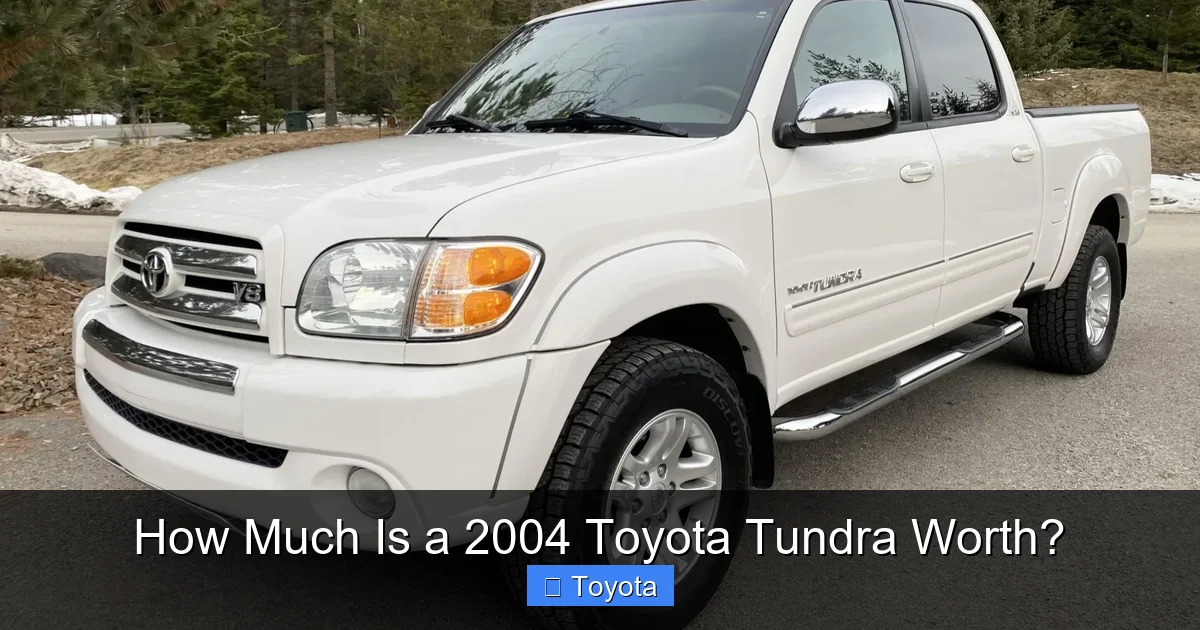
The 2004 Toyota Tundra’s value depends heavily on its condition, mileage, and regional demand. Factors like rust, modifications, and title status significantly impact pricing, with clean, low-mileage models commanding premiums. Use tools like KBB or Edmunds to get accurate estimates tailored to your truck’s specifics.
When you’re trying to figure out how much is a 2004 Toyota Tundra worth, it’s like solving a puzzle—one where every piece (condition, mileage, location) matters. The Tundra, Toyota’s first full-size pickup, gained a solid reputation for durability, but its value in 2024 depends on more than just age. Whether you’re selling, buying, or just curious, understanding the factors that influence its price is key. Let’s break it down.
### Understanding the 2004 Toyota Tundra’s Market Position and Value Trends
The 2004 Toyota Tundra launched as a strong competitor in the full-size truck market, offering reliability and off-road capability. Over two decades later, it’s considered a classic workhorse, especially among buyers seeking a rugged, affordable truck. However, its value has evolved with time.
Depreciation is steep for older models, but a well-maintained Tundra can still fetch a decent price. According to industry data, trucks from the early 2000s often retain 15-25% of their original value if kept in good shape. For a 2004 model, this translates to roughly $5,000 to $15,000, depending on specifics.
The rise of vintage truck culture has also impacted pricing. Enthusiasts and DIYers seek older Toyotas for their simplicity and repairability, creating a niche market. Meanwhile, commercial buyers prioritize dependability, favoring trucks with proven track records.
### Factors That Influence the Value of a 2004 Tundra
Not all 2004 Tundras are created equal. Here’s what drives their value:
#### Mileage and Usage History
A Tundra with 80,000 miles will always be worth more than one with 200,000 miles. Low mileage suggests less wear on the engine, transmission, and suspension. However, high-mileage trucks with meticulous maintenance records can still appeal to buyers.
#### Physical Condition
Body rust, dents, and interior damage significantly reduce value. The 2004 Tundra’s frame is prone to corrosion in humid climates, so a rust-free truck commands a premium. Check for signs of wear in the cabin, under the hood, and in the bed.
#### Modifications and Upgrades
Performance upgrades like lifted suspensions or exhaust systems can attract off-road enthusiasts. However, overly modified trucks may deter buyers who prefer stock configurations. Cosmetic changes (e.g., custom paint) have mixed effects—some love them, others see them as red flags.
#### Title Status
A clean title is a must for maximizing value. Salvage or rebuilt titles result in 30-50% lower offers. Always verify the title’s history before negotiating.
#### Regional Demand
Tundras in the Midwest or South may face higher rust risks, lowering prices. Conversely, trucks in drier regions like the Southwest or West Coast often fetch better deals.
### How to Accurately Determine the Current Value of Your Tundra
To get a realistic estimate, start with professional tools like Kelley Blue Book (KBB) or Edmunds. Input your truck’s details—mileage, condition, ZIP code—and let the algorithm work its magic. For example, a 2004 Tundra with 120,000 miles in “good” condition might appraise at $9,500 in Texas, while the same truck in Michigan (rust-prone) could drop to $7,800.
Next, browse classifieds like Craigslist or Facebook Marketplace to compare listings. Look for similar models in your area. If one nearby is listed for $12,000 with 90,000 miles, you know your truck’s value hinges on its condition.
For a deeper dive, consider a pre-purchase inspection. A mechanic can uncover hidden issues (e.g., transmission leaks, frame damage) that affect pricing. This step is crucial for sellers aiming to negotiate confidently.
### Regional and Market Considerations for 2004 Tundra Pricing
Where you live matters. In regions with harsh winters, salt corrosion can slash a Tundra’s value by up to 25%. Buyers in these areas might offer 15-20% less than those in drier climates.
Market trends also play a role. For instance, demand for diesel trucks surged in 2023, temporarily boosting prices for older gas models. Similarly, a shortage of new trucks can inflate used prices, as seen during supply chain disruptions.
### Tips for Maximising Your Tundra’s Resale Value
Want to get the most for your rig? Here’s how:
#### Maintain It Religiously
Regular oil changes, tire rotations, and brake inspections keep your Tundra in top shape. A clean engine bay and bed liner also make it more appealing.
#### Address Minor Repairs
Fixing a cracked dashboard, replacing worn seat covers, or polishing the paint can add $1,000-$2,000 to your asking price. Buyers notice these details.
#### Document Everything
Keep receipts for repairs and upgrades. A detailed service history builds trust with potential buyers.
#### Time Your Sale Right
Sell during spring or summer when truck demand peaks. Avoid winter, when buyers focus on fuel efficiency over utility.
#### Use Professional Photos
Good lighting and angles make your Tundra look showroom-ready. Include shots of the engine, cab, and bed.
### Common Mistakes to Avoid When Assessing Your Tundra’s Worth
Don’t fall into these traps:
#### Overestimating Value
Assuming your truck is “one of a kind” can backfire. Stick to market data for a fair price.
#### Ignoring Wear and Tear
Hidden issues like a faulty fuel pump or worn tires can derail a sale. Be honest about flaws upfront.
#### Skipping the Title Check
Buyers will verify the title anyway—don’t hide a salvage history. Transparency prevents last-minute deal collapses.
#### Underestimating Location Impact
A truck in California might be worth $12,000, but the same model in Ohio could fetch $9,000 due to rust risks. Research local market conditions.
Key Takeaways
- Market Value: A 2004 Tundra’s worth ranges from $5,000 to $15,000 depending on condition and mileage.
- Condition Matters: Rust, interior wear, and engine health heavily influence resale value.
- Mileage Impact: Lower-mileage models (under 100,000 miles) retain 20-30% more value than high-mileage counterparts.
- Regional Variations: Trucks in colder climates may depreciate faster due to rust concerns.
- Title Status: Clean titles boost value, while salvage titles significantly reduce it.
- Modification Effects: Performance upgrades can add value, but cosmetic changes may deter buyers.
- Appraisal Tools: Use online calculators like How Much Is My Car Worth Calculator for precise estimates.
Frequently Asked Questions
What’s the average value of a 2004 Toyota Tundra?
The average price ranges from $5,000 to $15,000, depending on condition, mileage, and location. Clean, low-mileage models in good regions can reach the higher end, while rust-prone or high-mileage trucks may sell for much less.
How does mileage affect a 2004 Tundra’s worth?
Lower mileage (under 100,000 miles) increases value by 20-30% compared to high-mileage trucks. However, a well-maintained 150,000-mile Tundra can still command a fair price if its history is transparent.
Can modifications increase my Tundra’s value?
Some upgrades, like lifted suspensions or performance exhausts, appeal to off-road buyers and add value. However, overly customized trucks may deter mainstream buyers, so balance modifications with practicality.
How do I check my Tundra’s market value?
Use tools like How Much Is A Toyota Tundra on iOwnCars.com or KBB to input your truck’s details and get a precise estimate based on current trends.
Does rust significantly lower my Tundra’s value?
Yes, especially in humid or salt-heavy regions. Rust on the frame or body can reduce value by 30-50%. Always inspect thoroughly before selling or buying.
What’s the best time to sell a 2004 Tundra?
Spring and summer are ideal, as truck demand peaks during these seasons. Avoid winter, when buyers prioritize fuel efficiency over utility.