How Many Catalytic Converters Are in a Toyota Tacoma?
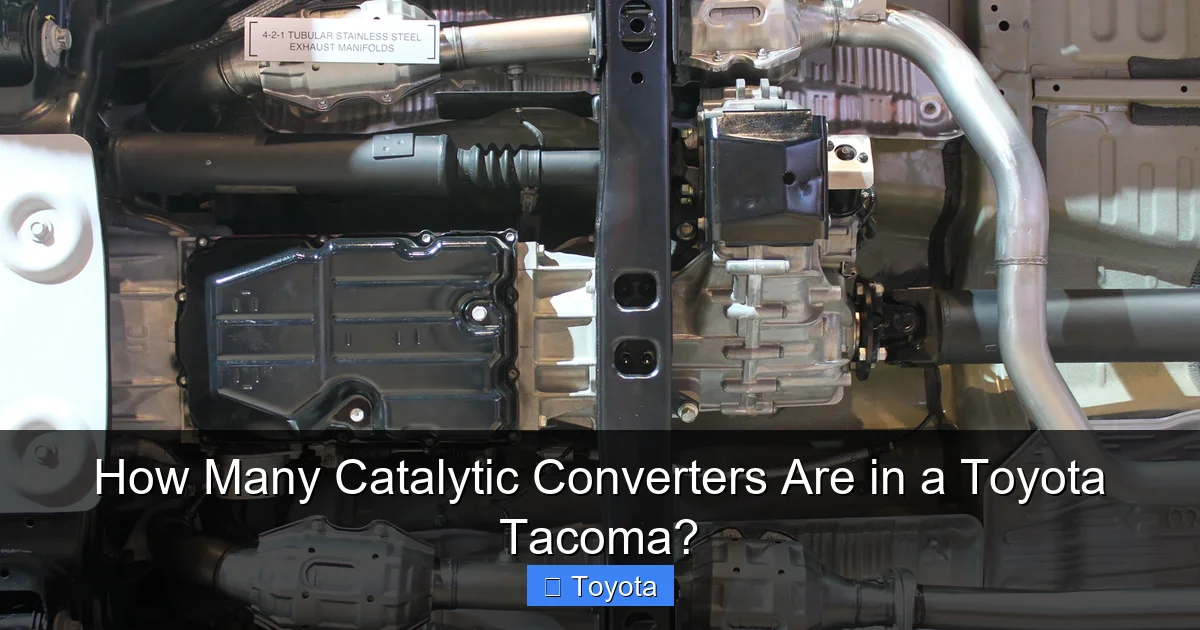
The Toyota Tacoma typically houses two catalytic converters – one for the engine and one for the exhaust system. Understanding this layout helps owners keep their trucks running clean and passing emissions tests. Knowing the exact number can save time and money when repairs are needed. This guide breaks down why multiple converters exist, signs of failure, and easy maintenance tips. It also links to useful resources like the new Toyota Tacoma pricing guide and the California smog check guide for deeper insight.
Key Takeaways
- Two Converters Standard: Most Tacoma models use one front and one rear catalytic converter.
- Model Year Differences: Early models (1995‑2004) often have a single converter, while newer trucks add a second for stricter emissions.
- Why Two? Dual converters improve flow, reduce backpressure, and help meet EPA standards.
- Warning Signs: Rattling noises, reduced power, and failed emissions tests hint at converter trouble.
- Replacement Cost: Expect $200‑$600 per converter, including labor.
- Maintenance Tips: Regular oil changes and using quality fuel protect converters.
- DIY vs. Pro: Replacing converters is doable at home, but professional tune‑ups ensure proper fit.
📑 Table of Contents
- Introduction: Why Knowing Your Tacoma’s Converters Matters
- Understanding Catalytic Converters in a Tacoma
- How Many Catalytic Converters Are in a Toyota Tacoma? Model Year Variations
- Why Does the Tacoma Use Two Converters?
- Signs Your Tacoma’s Catalytic Converters Are Failing
- Replacement Tips and Cost Savings
- Maintenance and Longevity Tips
- Conclusion: Keep Your Tacoma Running Clean
Introduction: Why Knowing Your Tacoma’s Converters Matters
When you own a Toyota Tacoma, you quickly learn that this midsize truck is built for durability and performance. Yet beneath the sturdy frame lies a critical component that keeps your engine clean and the environment happy: the catalytic converter. Many drivers wonder, “How many catalytic converters are in a Toyota Tacoma?” The answer isn’t always straightforward, because Toyota has tweaked the design over the years to meet changing emissions rules.
Understanding the number and placement of these converters helps you stay ahead of costly repairs. It also guides you in routine maintenance, ensuring your Tacoma runs smoothly and passes any smog check with flying colors. In this article, we’ll walk through the history, function, and signs of converter issues, plus give you practical tips for replacement and care.
First, let’s explore the basics of what a catalytic converter does and why a truck like the Tacoma might need more than one.
Understanding Catalytic Converters in a Tacoma
What a Catalytic Converter Does
A catalytic converter transforms harmful exhaust gases into less dangerous substances before they leave the tailpipe. It uses precious metals like platinum and rhodium to spark chemical reactions that turn carbon monoxide into carbon dioxide, and nitrogen oxides into nitrogen and oxygen.
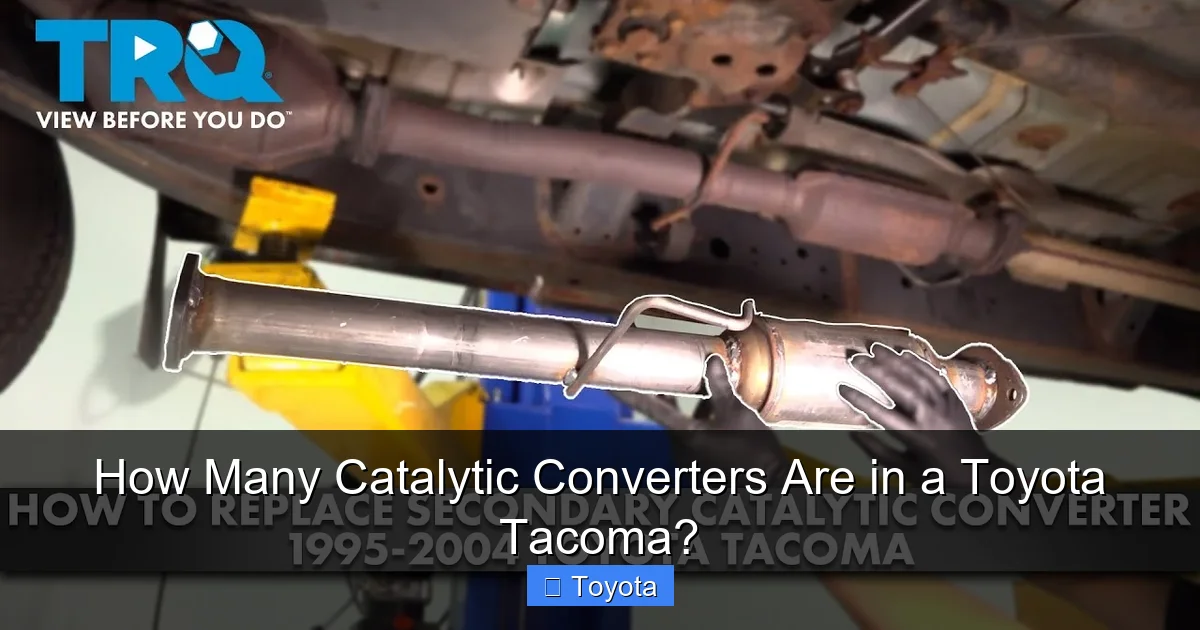
Visual guide about How Many Catalytic Converters Are in a Toyota Tacoma?
Image source: i.ytimg.com
In a diesel‑powered or gasoline‑powered engine, the converter sits in the exhaust stream. It must withstand extreme heat, corrosion, and pressure. When it fails, the truck’s performance drops, and emissions spike.
Why a Truck Might Need More Than One
Toyota designed the Tacoma with dual exhaust systems on many models. This design separates the engine’s primary exhaust flow from a secondary path. Each side benefits from its own catalytic converter, which improves exhaust gas flow and reduces backpressure.
Having two converters also spreads the workload. One can handle the bulk of the conversion while the second fine‑tunes the remaining gases. This setup helps the Tacoma meet stricter EPA standards without sacrificing power.
How Many Catalytic Converters Are in a Toyota Tacoma? Model Year Variations
1995‑2004 Generation
Early fourth‑generation Tacomas (1995‑2004) typically featured a single catalytic converter located near the engine. This design was sufficient for the emissions rules of the time.
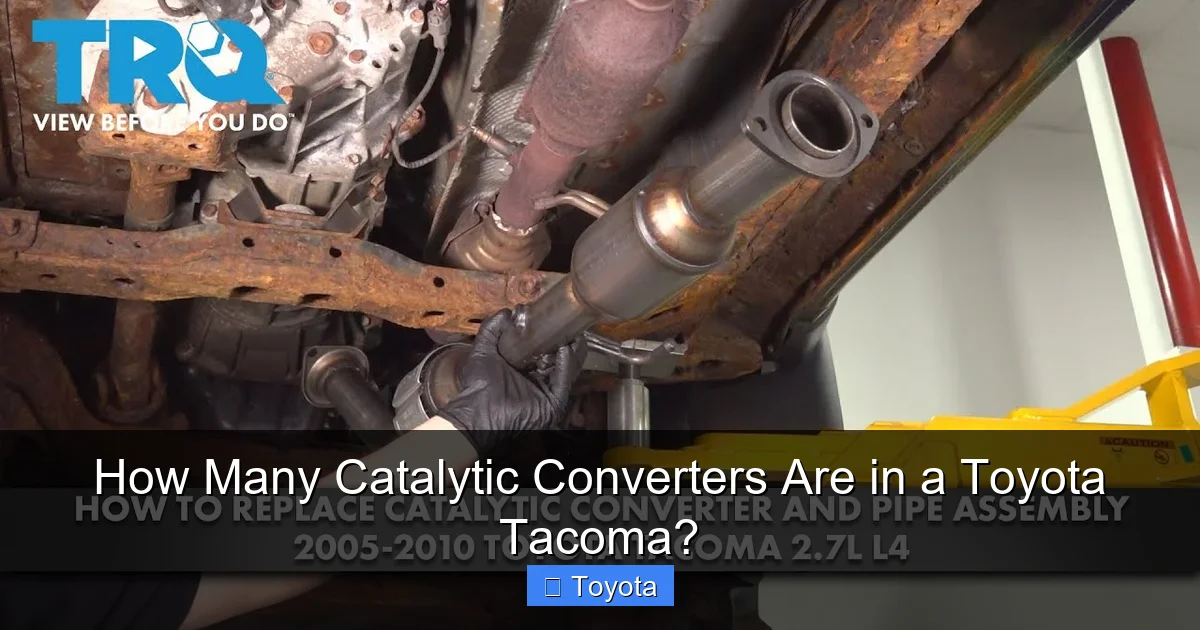
Visual guide about How Many Catalytic Converters Are in a Toyota Tacoma?
Image source: i.ytimg.com
Owners of these older trucks often find one converter under the cab or near the exhaust manifold. If you’re wondering “how many catalytic converters are in a Toyota Tacoma” for a model in this range, the answer is usually one.
2005‑2015 Generation
When Toyota introduced the fifth generation (2005‑2015), they upgraded to a dual‑converter system on most trims. The front converter sits close to the engine, while the rear converter is positioned just before the muffler.
This change was driven by new federal emissions standards that required lower nitrogen oxide output. The dual setup also improved fuel efficiency by reducing exhaust restriction.
2016‑Present Generation
The current sixth‑generation Tacoma (2016‑present) continues the dual‑converter layout across nearly all models. Some off‑road packages may add a third catalytic converter in the rear bumper area, but that’s rare and usually for specialty markets.
Therefore, for most modern Tacomas, you’ll find two catalytic converters: one for the main exhaust stream and one for the secondary path.
Why Does the Tacoma Use Two Converters?
Improved Emissions Control
Two converters allow for staged reduction of pollutants. The first converter tackles the majority of carbon monoxide and hydrocarbons, while the second refines the remaining nitrogen oxides. This two‑step process meets the stricter limits set by states like California.
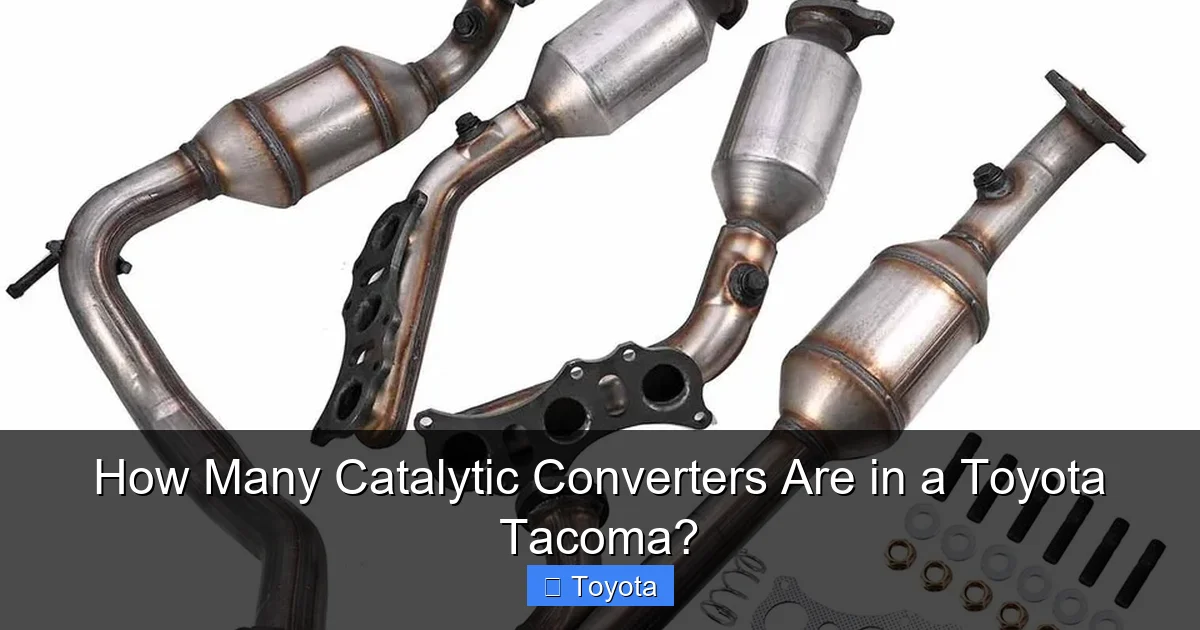
Visual guide about How Many Catalytic Converters Are in a Toyota Tacoma?
Image source: i.ebayimg.com
Better Exhaust Flow
Having separate converters reduces backpressure compared to a single large unit. Lower backpressure means the engine can breathe easier, which often translates to a small boost in horsepower and better fuel economy.
Redundancy and Reliability
If one converter fails, the other can still provide some level of emissions control, giving drivers more time to address the issue before a complete failure occurs. This redundancy is especially helpful for those who drive long distances or frequently travel to high‑altitude areas where engines work harder.
Signs Your Tacoma’s Catalytic Converters Are Failing
Check Engine Light
When the engine control unit detects abnormal oxygen levels, it triggers the check engine light. This could signal a clogged or failing converter.
Rattling or Bouncing Sounds
A rattling noise from under the truck often means the ceramic honeycomb inside the converter has broken apart. This is a clear sign the converter needs replacement.
Reduced Power and Acceleration
A failing converter can block exhaust flow, causing the engine to lose power. You may notice sluggish acceleration, especially when climbing hills.
Unusual Smells
If you smell strong exhaust odors inside the cab or notice a rotten egg smell (sulfur), the converters may be leaking or overheating.
Failed Emissions Test
In states with strict emissions testing, a Tacoma that fails the smog check often points directly to a bad catalytic converter.
Replacement Tips and Cost Savings
How Much Does a Replacement Cost?
Expect to pay between $200 and $600 per converter, depending on the brand and whether you choose OEM or aftermarket parts. Labor costs usually run $100‑$200 if you have a mechanic do the job.
Some owners find that purchasing a set of two converters online can save a few dollars compared to buying them individually at a dealership.
DIY Replacement vs. Professional Service
Replacing a catalytic converter is a doable project for a DIY enthusiast with basic tools. You’ll need a jack, jack stands, wrenches, and safety gloves. The process involves lifting the truck, disconnecting the exhaust pipes, and swapping the old unit for a new one.
However, proper alignment of the exhaust system is crucial. If you’re not comfortable working under a vehicle, hiring a certified technician ensures the job is done right and prevents future leaks.
Where to Buy Quality Converters
OEM parts from Toyota are the safest choice, but they come at a premium price. Aftermarket options from reputable brands like Duralast or Walker can offer comparable performance at a lower cost.
Always check that the converter meets or exceeds federal emissions standards. Using a non‑compliant unit could cause your Tacoma to fail emissions inspections.
Maintenance and Longevity Tips
Regular Oil Changes
Clean oil reduces carbon buildup, which can otherwise overwhelm the catalytic converter. Stick to the manufacturer’s recommended oil change interval, usually every 5,000‑7,500 miles.
Use High‑Quality Fuel
Premium fuel with the correct octane rating helps the engine run efficiently, reducing unburned hydrocarbons that the converter must process.
Avoid Idling Too Long
Extended idling lets raw fuel enter the exhaust, stressing the converter. Turn off your engine if you expect to be stopped for more than a minute.
Regular Inspection
During routine service visits, ask your mechanic to inspect the exhaust system. Early detection of cracks or rust can prevent costly converter failure.
Conclusion: Keep Your Tacoma Running Clean
Knowing how many catalytic converters are in a Toyota Tacoma helps you stay on top of maintenance and avoid surprise repairs. Most modern Tacomas feature two converters—one up front and one behind—designed to meet strict emissions rules while preserving performance.
By keeping an eye out for warning signs, following a regular maintenance schedule, and choosing the right replacement parts, you can extend the life of your converters and keep your truck running smoothly. For more detailed guidance, you can reference the new Toyota Tacoma pricing guide to understand the cost of ownership, explore the Toyota break‑in guide for optimal early‑life care, and check the California smog check guide to ensure compliance.
Take care of those converters, and your Tacoma will continue to deliver reliable power, great fuel economy, and clean exhaust for years to come.
Frequently Asked Questions
What is the typical number of catalytic converters in a Toyota Tacoma?
Most modern Toyota Tacomas (2005‑present) have two catalytic converters – one for the front exhaust and one for the rear. Earlier models (1995‑2004) usually had a single converter.
Why does the Tacoma sometimes have a single converter?
Older model years before stricter emissions standards often used a single converter to meet the less demanding requirements of the time.
How do I know if a catalytic converter is failing?
Watch for the check engine light, rattling noises under the vehicle, reduced power or acceleration, strong exhaust odors, and failed emissions tests.
What is the average cost to replace a catalytic converter in a Tacoma?
Replacement typically costs $200‑$600 per converter for parts, plus $100‑$200 for labor if you use a professional mechanic.
Can I replace a catalytic converter myself?
Yes, with basic tools and some mechanical experience you can replace a converter at home. Proper alignment of the exhaust system is crucial, so be thorough or consider a professional if you’re unsure.
Do I need to replace both converters if one fails?
Not always, but it’s often recommended to replace both at the same time to maintain balanced exhaust flow and avoid future issues.