How to Calibrate a Throttle Position Sensor
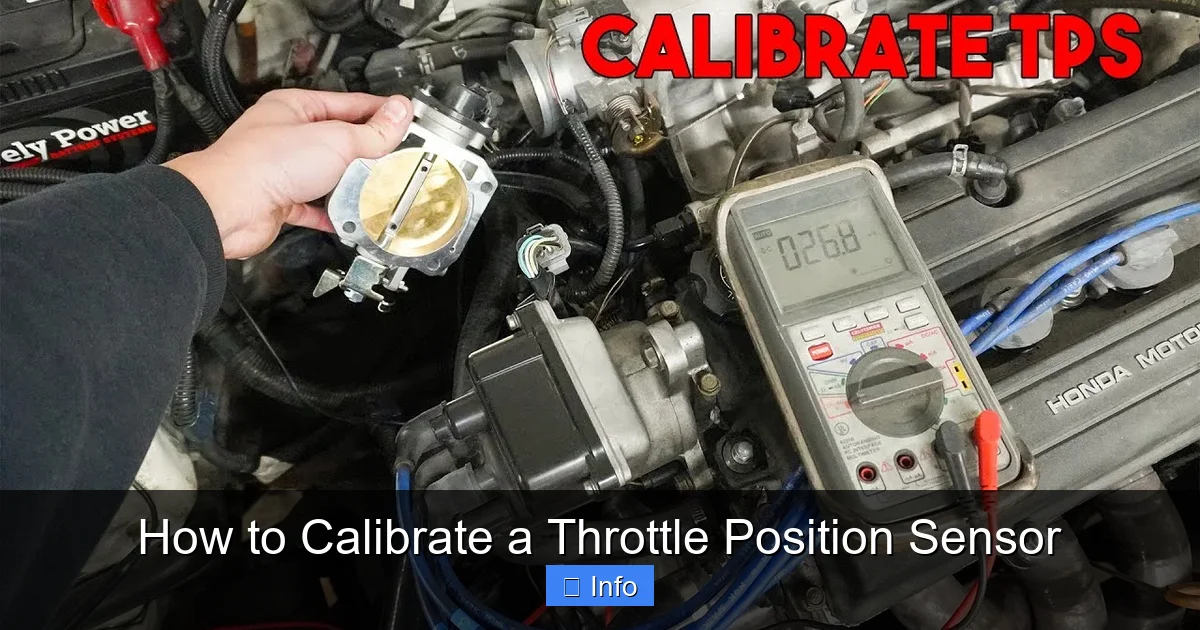
Calibrating a throttle position sensor (TPS) restores smooth acceleration, improves fuel efficiency, and clears error codes. Follow this friendly, detailed guide to test, adjust, and verify your TPS without pricey shop visits.
Key Takeaways
- Understand TPS function: It tells the ECU how far the throttle is open, influencing fuel and spark.
- Safety first: Disconnect the battery and relieve fuel pressure before touching any wiring.
- Testing is simple: A multimeter can reveal voltage range problems in seconds.
- Adjustment points vary: Some TPS units have a screw, others need a new sensor.
- Re‑learn procedure: After adjustment, the ECU must be taught the new idle and throttle positions.
- Tools you need: Basic hand tools, a digital multimeter, and optionally a scan tool.
- When to call a pro: Persistent codes or erratic readings indicate deeper engine‑management issues.
📑 Table of Contents
Introduction: Why the Throttle Position Sensor Matters
Imagine pressing the gas pedal and feeling a hesitation or a sudden surge. That “guess‑work” is often the fault of a mis‑calibrated throttle position sensor, or TPS. The TPS sits on the throttle body and sends a voltage signal to the engine control unit (ECU) telling it exactly how open the throttle is. The ECU then decides how much fuel and spark to deliver.
If the sensor is out of sync, the ECU receives the wrong information. The result? Rough idle, poor fuel economy, stumble on acceleration, and the dreaded check‑engine light. The good news is that most TPS problems are fixable at home with a few tools and a little patience.
What Is a Throttle Position Sensor?
Location and basic operation
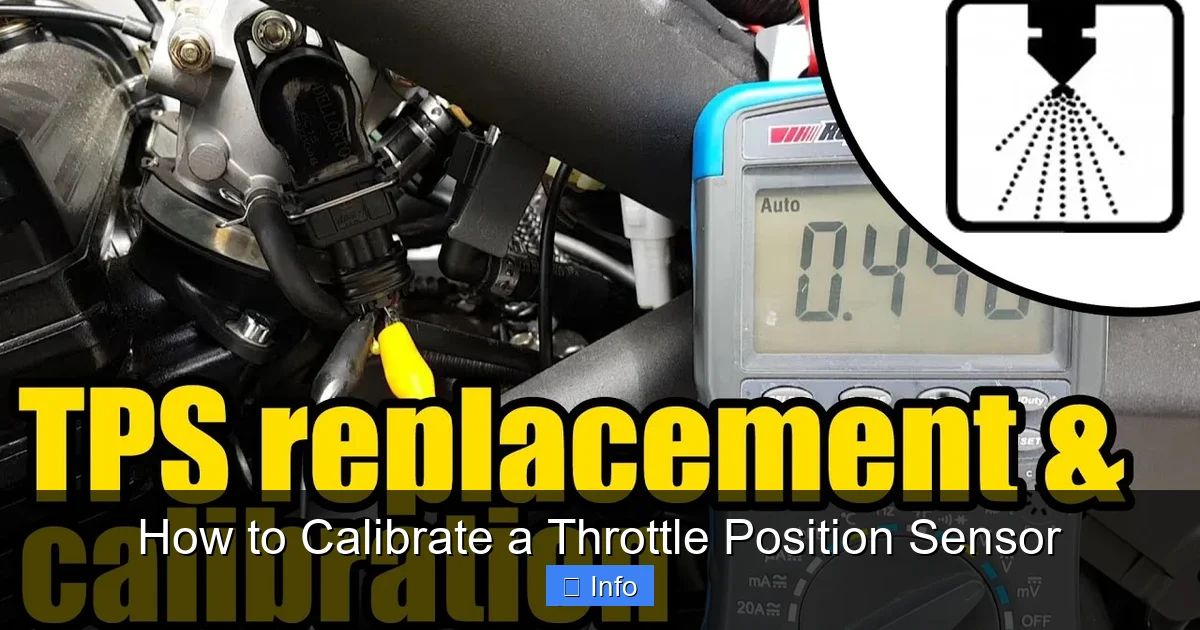
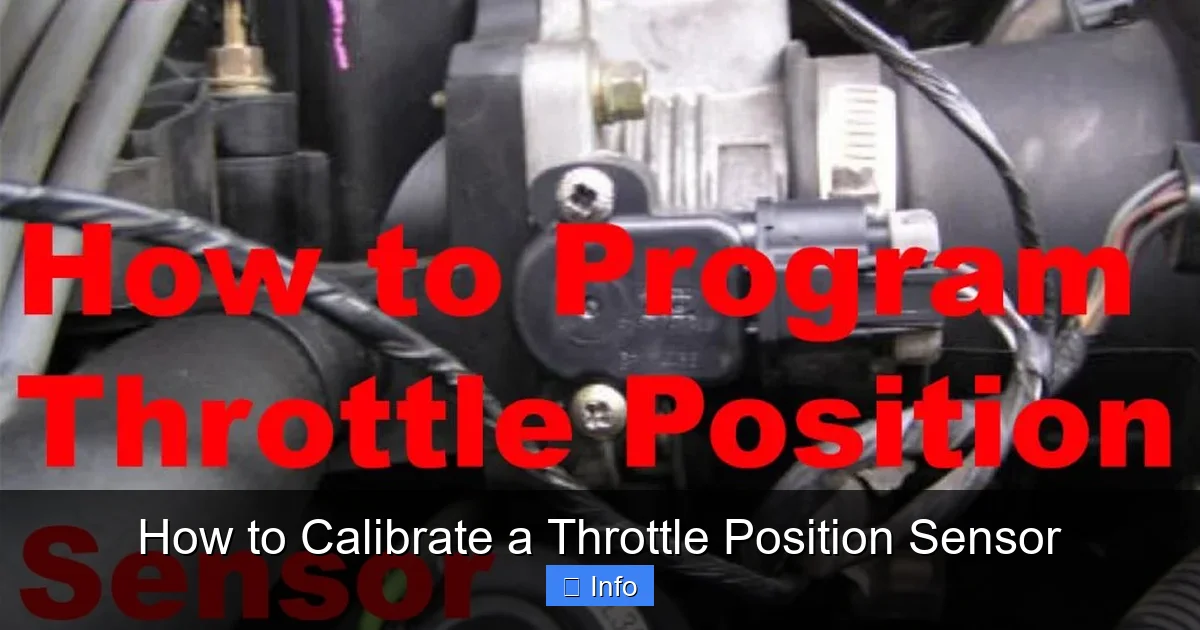
The TPS is a small, usually rectangular, component mounted on the throttle body. It contains a potentiometer that changes resistance as the throttle plate rotates. This resistance is converted to a voltage (typically 0.5 V at closed throttle to 4.5 V at wide open).
Visual guide about How to Calibrate a Throttle Position Sensor
Image source: i.ytimg.com
Types of TPS units
- Adjustable (screw‑type): A tiny set screw lets you fine‑tune the voltage range.
- Fixed (non‑adjustable): The sensor is calibrated at the factory; if it drifts, you replace it.
- Integrated throttle body sensor: Some modern cars combine the TPS with the idle air‑control valve.
Preparing for Calibration
Gather your tools
Before you start, make sure you have:
Visual guide about How to Calibrate a Throttle Position Sensor
Image source: autovfix.com
- Digital multimeter (DMM) – 0.01 V accuracy is ideal.
- Wrench or socket set – usually 10 mm for the throttle body bolts.
- Screwdriver – flat‑head for the adjustment screw.
- OBD‑II scan tool (optional) – to clear codes and watch live data.
- Safety gear – gloves and safety glasses.
Safety first
1. Park the car on level ground, engage the parking brake.
2. Disconnect the negative battery cable to avoid accidental shorts.
3. Relieve fuel pressure by removing the fuel pump fuse and running the engine until it stalls, or use a proper fuel‑pressure release tool.
Step‑by‑Step Calibration Process
1. Locate and inspect the TPS
Open the hood and find the throttle body – it sits between the air filter box and the intake manifold. The TPS is bolted to the side of the throttle body and has an electrical connector. Check the connector for corrosion or loose pins.
2. Test the voltage range
Reconnect the battery (or keep it disconnected if you prefer to test with the key off). Plug the multimeter leads into the TPS terminals:
- Terminal 1 – Ground (usually black wire).
- Terminal 2 – Signal (usually a colored wire, often green or brown).
- Terminal 3 – Power (often 5 V reference).
Turn the ignition to “ON” (engine off). Measure the signal voltage with the throttle fully closed. It should read around 0.5 V. Gently wiggle the throttle pedal (or manually open the throttle plate with a screwdriver) and watch the voltage rise smoothly to about 4.5 V at wide open. Any jumps, drops, or a narrow range indicate a problem.
3. Adjust the screw (if applicable)
If your TPS has a small adjustment screw:
- Loosen the lock nut gently.
- Turn the screw clockwise to raise the voltage, counter‑clockwise to lower it.
- Goal: 0.5 V at closed throttle and 4.5 V at wide open, with a steady increase in between.
- Retighten the lock nut once the correct range is achieved.
Make tiny adjustments – a quarter turn can shift the voltage by 0.2 V. Re‑check the voltage after each tweak.
4. Reset the ECU (re‑learn)
After adjusting, the ECU still remembers the old values. To teach it the new sensor position:
- Turn the key to “ON” and let the car sit for about 30 seconds.
- Start the engine and let it idle for 2–3 minutes with the foot off the pedal.
- Turn the engine off, wait 10 seconds, then restart. The ECU should now have a fresh baseline.
If you have a scan tool, you can also perform a “Throttle Position Re‑learn” procedure from the diagnostics menu.
5. Verify the fix
Take the car for a short drive. Pay attention to idle stability, acceleration smoothness, and any lingering warning lights. Use the scan tool to read live TPS data – it should move linearly with pedal input. If codes reappear, double‑check wiring and consider replacing the sensor.
Common Issues and Troubleshooting Tips
Erratic voltage or dead sensor
A TPS that jumps from 0.5 V to 4.5 V instantly is likely damaged. Clean the connector, but if the readings stay erratic, replace the sensor.
Dead battery after calibration
Sometimes a loose ground can cause the ECU to draw excess current. Verify that the ground strap to the engine block is tight and free of corrosion.
Check‑engine light persists
Clear the codes with an OBD‑II scanner. If the same code (e.g., P0122 – Throttle Position Sensor “Low Input”) returns after a short drive, the TPS may be beyond adjustment.
When to Replace the Throttle Position Sensor
Even after careful calibration, a sensor can fail due to wear, heat, or internal corrosion. Replace the TPS if you notice any of the following:
- Voltage never reaches the full 4.5 V range.
- Physical damage – cracked housing or broken pins.
- Consistent codes after multiple recalibrations.
- Vehicle’s fuel economy drops dramatically.
Replacement is straightforward: disconnect the electrical plug, remove the mounting bolts, swap in the new unit, and repeat the calibration steps.
Related Maintenance Tasks
While you have the throttle body exposed, it’s a great time to give it a quick clean. A dirty throttle body can cause the TPS to give false readings. Follow our guide on how to clean a car engine bay for safe cleaning methods.
If the idle still feels rough after TPS work, you might need to adjust the throttle body itself. Our article on how to adjust throttle body walks you through that fine‑tuning process.
Conclusion
Calibrating a throttle position sensor is one of the most rewarding DIY jobs you can tackle. With a multimeter, a little patience, and the steps outlined above, you can restore smooth acceleration, improve fuel economy, and silence that annoying check‑engine light. Remember to always work safely, double‑check your voltage readings, and give the ECU a chance to re‑learn the new sensor position. If the sensor is beyond repair, a replacement is inexpensive and easy. Happy driving!
Frequently Asked Questions
What voltage should a properly functioning TPS show at idle?
A healthy TPS typically reads around 0.5 V when the throttle is fully closed (idle) and rises smoothly to about 4.5 V at wide open throttle.
Can I calibrate a TPS without a scan tool?
Yes. A digital multimeter is enough to measure voltage and adjust the screw. A scan tool is only needed to clear codes or run a formal re‑learn routine.
Why does my car’s idle fluctuate after TPS adjustment?
The ECU may still be using old sensor data. Perform the idle re‑learn procedure (let the engine sit, idle, shut off, and restart) or use a scan tool to reset the throttle position learning.
Is it normal for the TPS connector to look corroded?
Some surface oxidation is common, but heavy corrosion can cause intermittent signals. Clean the pins with contact cleaner and, if needed, replace the connector.
How often should I check the TPS?
Inspect the TPS during regular service intervals, especially if you notice rough idle, reduced fuel economy, or a check‑engine light with TPS‑related codes.
Will cleaning the throttle body affect TPS calibration?
Yes. Carbon buildup can cause the throttle plate to stick, giving the TPS inaccurate readings. Clean the throttle body first, then re‑calibrate the sensor for the best results.