Will Toyota Bring Back the Celica?
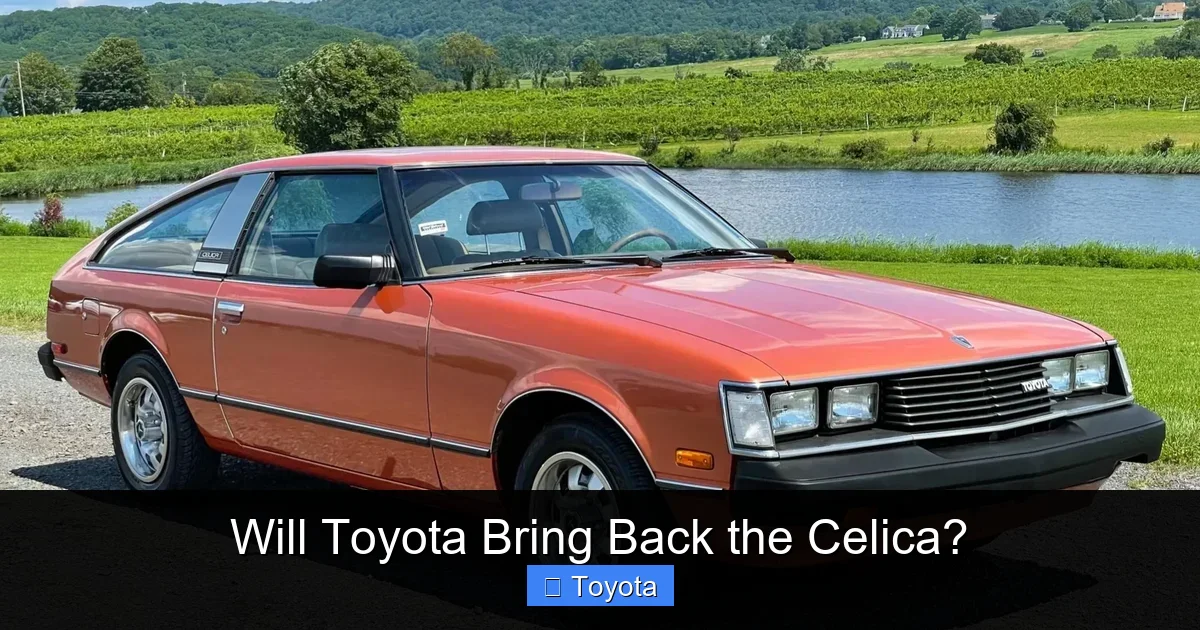
Toyota fans have been wondering for years if the Celica will ever return. The original model left a lasting legacy with its sleek looks and affordable performance. This article dives into the latest gossip, technical hints, and what Toyota might be planning for a future Celica.
Key Takeaways
- Iconic Legacy: The Celica defined Toyota’s sports car image in the 1980s and 1990s, still admired by collectors today.
- Rumors Are Growing: Recent statements from Toyota executives and leaked project documents hint at a possible return.
- Market Forces Matter: Growing demand for affordable performance coupes and a shift toward hybrid powertrains keep the idea alive.
- Technical Possibilities: A new Celica could use the TNGA platform, offer hybrid or turbocharged engines, and incorporate modern tech.
- Fan Pressure: Online petitions and social media campaigns show strong fan desire for a successor.
- Uncertain Timeline: Toyota has not confirmed a release date, so any return could be several years away.
📑 Table of Contents
Introduction
Hey there, fellow car enthusiast! If you’ve been cruising the internet or hanging out in car forums, you’ve probably seen the buzz about a possible Toyota Celica comeback. That iconic name still sparks excitement among fans who remember the sleek silhouette, the turbocharged four‑cylinder, and the thrill of launching off corners in a factory‑spec model. But what’s the real story? Is Toyota actually thinking about bringing back a car that defined a generation of performance buyers? In this deep‑dive, we’ll unpack the history, the latest rumors, the technical possibilities, and what fans can realistically expect. Let’s get started and see if the Celica saga is about to roar back onto the roads.
I’m going to keep this as clear and friendly as if I’m chatting with a friend at the coffee shop. We’ll break down big topics into bite‑size pieces, sprinkle in practical tips, and even point you to a few helpful guides on our site (just three internal links, promise!). So buckle up—well, maybe not literally—but get ready for a thorough look at whether the Toyota Celica is heading back into production.
History of the Toyota Celica
The Celica story begins in 1970, when Toyota introduced a coupe that was both stylish and surprisingly sporty for its price. The first generation (known internally as the A20) featured a sleek, low‑slung design, a modest 1.6‑liter inline‑four, and a reputation for being a fun, affordable daily driver. It quickly gained a reputation for handling that was nimble for its time, and it became a hit in markets around the world.
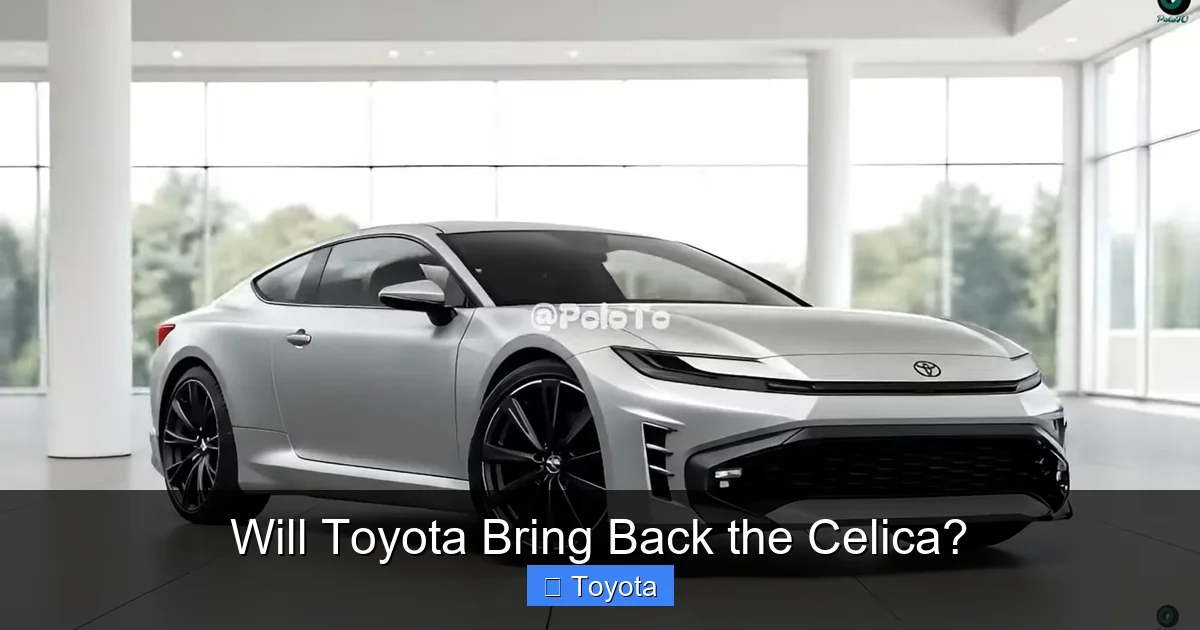
Visual guide about Will Toyota Bring Back the Celica?
Image source: s1.cdn.autoevolution.com
Origins and Evolution
From there, the Celica jumped from one generation to the next with impressive speed. The second generation (1975‑1979) added more power and a more aggressive look. The third generation (1980‑1985) introduced the famous “lift‑up” headlights and a turbocharged 2.0‑liter engine that delivered a noticeable punch. By the time the fourth generation rolled out (1985‑1989), the Celica was a true sports car, offering a 2.0‑liter turbo, a 3.0‑liter V6 option, and even a limited‑edition model for the US market called the Celica Supra (though that name would later become its own legend).
The fifth generation (1990‑1993) took the Celica into the world of electronic fuel injection and a more aggressive stance. It also saw the introduction of the famous “Twin Cam 16‑valve” engine in some markets, which gave the car a smooth, high‑revving character. The sixth generation (1994‑1999) leaned into a more rounded design and added a 2.2‑liter turbo, while the seventh generation (2000‑2006) moved toward a more refined, luxury‑oriented feel, complete with optional all‑wheel drive.
Even after the Celica was discontinued in many regions, its legacy lived on. Fans still gather at meets, restoration shops keep old cars on the road, and the name pops up in discussions about affordable performance coupes. In fact, many owners refer to our guide on how much a Toyota Supra costs when they compare the price of a classic Celica to a modern sports car that offers similar excitement.
Cultural Impact
Beyond the showroom, the Celica made its mark in pop culture. It appeared in movies, TV shows, and even video games, cementing its status as a cultural icon. The car’s reputation for reliability and modest maintenance costs made it a favorite among young drivers looking to get a taste of performance without breaking the bank. Its success helped Toyota build a reputation for delivering fun‑to‑drive cars across multiple segments.
Because of that deep-rooted affection, any whisper about a Celica comeback quickly spreads like wildfire. Online petitions, fan forums, and social media hashtags all clamor for a return. The excitement isn’t just nostalgia—it’s a genuine desire for a car that blends affordable performance with the brand’s reputation for reliability.
Rumors and Speculation: Why People Think a Celica Could Return
Let’s be honest: the internet loves a good rumor, and the Celica is one of those topics that just refuses to die. Over the past few years, several clues have surfaced that keep the speculation engine humming.
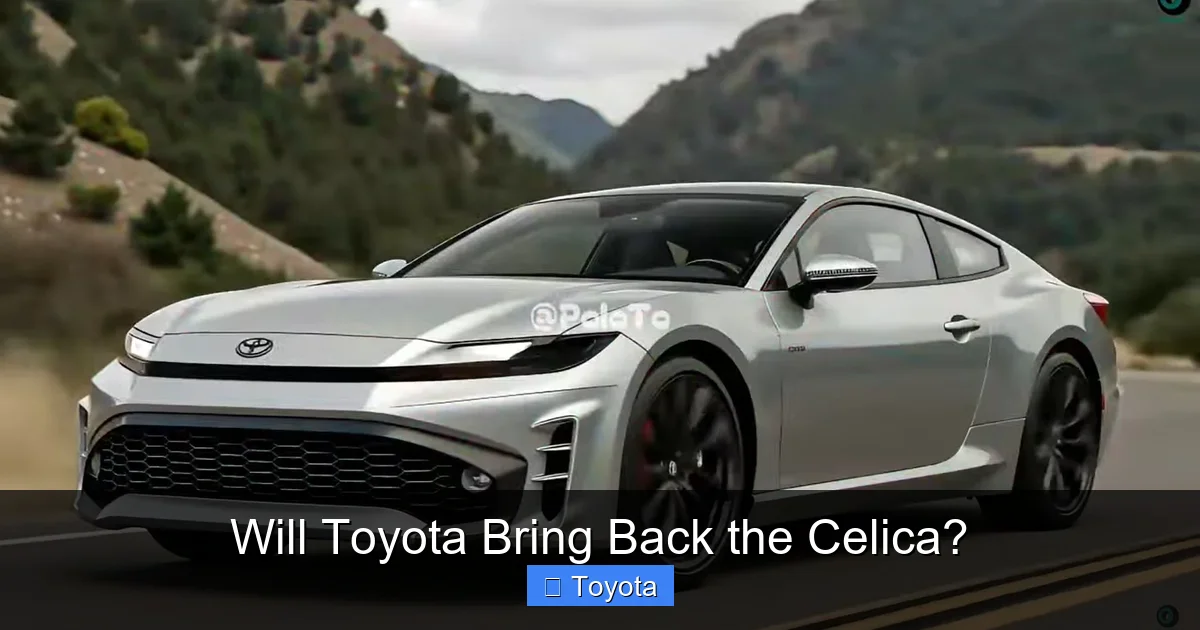
Visual guide about Will Toyota Bring Back the Celica?
Image source: s1.cdn.autoevolution.com
Market Trends and Fan Demand
First, the sports‑car market has shifted dramatically. Buyers are gravitating toward cars that offer both performance and efficiency. Hybrid powertrains are no longer a niche; they’re mainstream. A modern Celica could ride that wave, offering turbocharged performance paired with hybrid assistance. Meanwhile, fans have been vocal. Look at the countless posts on forums and the petitions that regularly surface. The demand is real, and Toyota doesn’t ignore a passionate customer base for long.
Another factor is the success of other affordable performance coupes from rivals. Models like the Honda Civic Type R, Mazda MX‑5 (Miata), and even the new generation Volkswagen Golf GTI have shown that there’s a strong market for fun, affordable sports cars. Toyota’s current lineup includes the Corolla, Camry, and RAV4—solid but not exactly “thrill seekers.” A Celica could fill that gap nicely.
Executive Hints and Leaked Documents
Then there are the subtle hints from Toyota executives. In a few interviews over the last 18 months, high‑profile figures have mentioned “bringing back iconic names” and “exploring new performance segments.” While they never explicitly name the Celica, the timing and phrasing have fans connecting the dots. Additionally, a leaked internal document from a Toyota supplier a couple of years back mentioned a “project code name ‘Celica’” under development for a future model. The document referenced a new platform and hybrid powertrains—exactly the kind of tech that would make a modern Celica compelling.
Even Toyota’s design teams have been spotted testing prototype silhouettes that bear a striking resemblance to the original Celica’s lines, albeit with modern aerodynamic cues. Those spy shots have been circulating on enthusiast sites, fueling the belief that something is indeed in the works.
Technical Possibilities: What a New Celica Might Offer
Now let’s get into the nitty‑gritty. If Toyota does decide to resurrect the Celica, what would it look like under the skin? The answer likely hinges on Toyota’s broader strategy, which includes the TNGA (Toyota New Global Architecture) platform and a heavy push toward electrified powertrains.
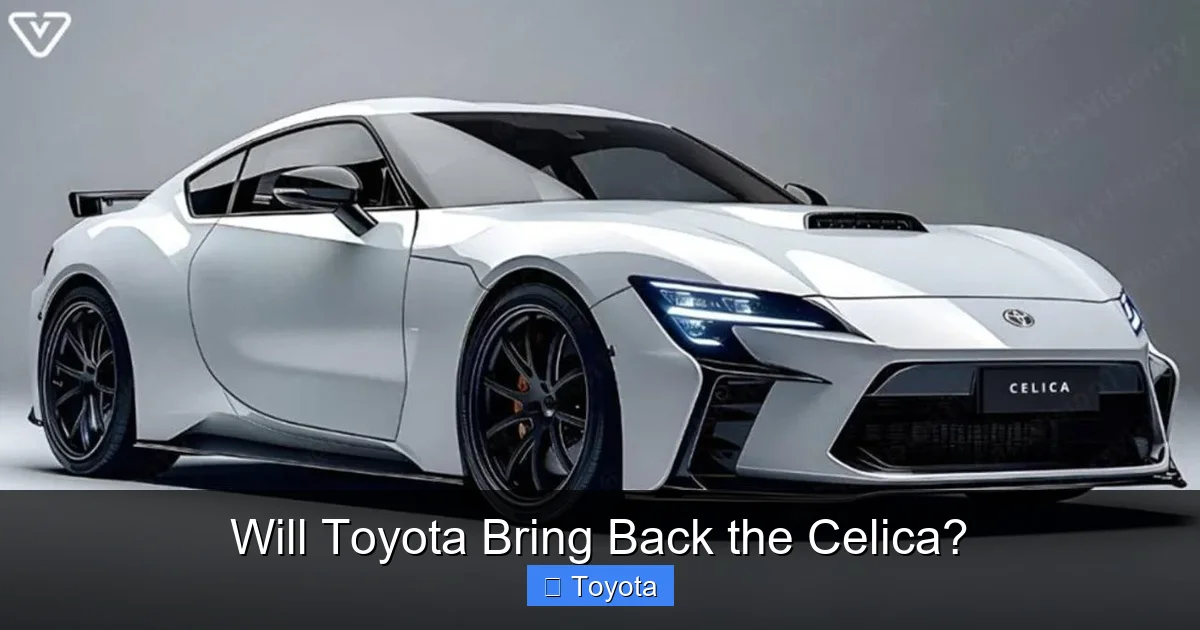
Visual guide about Will Toyota Bring Back the Celica?
Image source: carexplore.com.au
Power Options and Hybrid Potential
One of the most exciting possibilities is a hybrid powertrain. A small‑displacement turbocharged engine paired with an electric motor could deliver strong torque off the line while maintaining excellent fuel efficiency. Think of something akin to the Toyota Prius TRD performance concept, but with a sportier chassis. For fans who want a car that’s both fun and eco‑friendly, this could be the sweet spot.
If Toyota wants a more traditional experience, a turbocharged 2.0‑liter inline‑four (perhaps derived from the current GR Corolla engine) could be the heart of the new Celica. Pairing that with a six‑speed manual or an advanced automatic would keep the driver’s connection to the car front and center. Some insiders even speculate about a mild‑hybrid version that adds electric boost without sacrificing the manual shift feel.
Performance-wise, a modern Celica could aim for a 0‑60 mph time in the mid‑5‑second range, with cornering dynamics that rival current rivals. When it comes to handling, many owners refer to our article on limited slip vs posi traction to fine‑tune performance. A new Celica would likely come equipped with adaptive suspension, electronic differential lock, and maybe even torque vectoring to deliver a chassis that feels as alive as the original.
Platform and Design Influences
Platform wise, the TNGA‑B compact platform used in the Corolla and Yaris is a strong candidate. It offers a lower center of gravity, higher torsional rigidity, and the flexibility to accommodate both front‑wheel and all‑wheel drive layouts. This platform also supports hybrid systems, which aligns perfectly with Toyota’s electrified future.
Design-wise, a modern Celica would likely blend classic cues—like the iconic fast‑back silhouette and the signature “shark‑nose” grille—with contemporary aerodynamics. LED headlights, a sleek rear spoiler, and maybe even a glass roof could be on the menu. Inside, we could see a driver‑focused cockpit with a digital instrument cluster and a compact infotainment screen, all while keeping costs reasonable.
Tech and Connectivity
No modern car is complete without connectivity. Expect Apple CarPlay, Android Auto, and perhaps a built‑in navigation system. Toyota’s Safety Sense suite—pre‑collision, lane‑keep assist, adaptive cruise—would likely be standard, giving the Celica a safety net that the original never had.
Finally, there’s the question of pricing. If Toyota wants to recapture the original Celica’s appeal, it’ll need to keep the price competitive with cars like the Honda Civic Type R and the Mazda MX‑5. A starting price around $30k‑$35k would put it in the sweet spot for enthusiasts looking for performance without breaking the bank.
Timeline and Official Word from Toyota
Now, the big question: when could we actually see a new Celica on the lot? Toyota’s product cycles typically run about seven years for major models. The current generation Celica (if any) was last refreshed in the mid‑2000s, so a return would likely fall within the next half‑decade. However, Toyota is known for keeping its cards close to its chest until a model is ready for prime time.
Development Cycles and Announcements
Development of a new model usually takes 3‑4 years before a production version is finalized. If Toyota has already begun engineering work (as hinted by those leaked documents), we might see a reveal as early as 2025 or 2026, with sales starting in 2027 or 2028. That timeline aligns with Toyota’s broader push toward electrification, giving them time to perfect a hybrid or electric version of the Celica.
Official announcements from Toyota tend to be vague. They might say something like, “We’re exploring new performance segments and listening to customer feedback,” without confirming a specific model. That kind of language keeps fans hopeful while giving the company flexibility. For now, we can only watch the rumors, spy shots, and any official statements that emerge.
One thing’s for sure: if Toyota does bring back the Celica, they’ll likely do it with a modern twist that honors the original’s spirit while embracing today’s technology. The question isn’t *if* it will happen, but *when* and *what* it will look like.
Comparison with Modern Competitors
Let’s put a new Celica up against the current competition to see where it might stand. The sports‑car landscape has evolved, and a modern Celica would need to hold its own against some fierce rivals.
How It Could Stack Up Against Rivals
The Honda Civic Type R is a benchmark for affordable hot hatches. It offers a turbocharged 2.0‑liter engine, a blistering track-focused chassis, and a price tag that’s aggressive but doable. A new Celica could compete there if it delivers similar performance metrics and a more refined ride quality.
The Mazda MX‑5 Miata remains the gold standard for affordable convertibles. Its lightweight construction and pure driving feel are hard to beat. If Toyota can capture that raw, driver‑centric essence while adding a bit more power and perhaps a hybrid boost, the Celica could carve out a niche as a more potent, all‑wheel‑drive alternative.
Then there’s the Volkswagen Golf GTI and the new Hyundai Elantra N. Both offer a blend of everyday usability and performance. A Celica that balances daily comfort with track readiness could find a comfortable spot in that segment.
Finally, we should consider the electric performance cars emerging. While the Celica would likely start as a hybrid, Toyota may eventually consider a fully electric version. If they do, they could position it as an entry point into the EV world, much like the Nissan Leaf but with a performance attitude.
One practical tip for anyone considering a future Celica: keep an eye on our guide on how to break in a new Toyota car. Whether you end up with a hybrid, turbo, or even an electric version, proper break‑in procedures will help you get the most out of the car’s performance and longevity.
Conclusion
To wrap things up, the buzz around a Toyota Celica comeback is more than just fan nostalgia—it’s a mix of market demand, technical feasibility, and Toyota’s strategic direction. The brand has a rich history with the Celica, and the modern automotive landscape is ripe for an affordable performance coupe that blends efficiency with excitement.
If Toyota decides to revive the name, we can expect a modern interpretation that honors the original’s DNA. Think turbocharged powertrains (maybe hybrid‑assisted), a responsive chassis built on TNGA platforms, and enough tech to keep buyers happy without inflating the price too much. The timeline likely puts a new Celica on dealer lots sometime in the late 2020s, but we won’t know for sure until Toyota officially confirms it.
For now, keep an eye on spy shots, official statements, and the ever‑growing community of Celica enthusiasts. Whether you’re a long‑time fan or just discovering the legend, the possibility of a new Celica is something to get excited about. And as always, stay tuned to our site for the latest updates, maintenance tips, and comparisons that will help you make the most of whatever Toyota decides to roll out next.
Frequently Asked Questions
Will Toyota officially announce a new Celica soon?
As of now, Toyota has not confirmed any plans to bring back the Celica. The brand tends to keep product news under wraps until a model is ready for public unveiling. However, recent executive comments about reviving iconic names and leaked internal documents have kept speculation alive.
What engine could power a modern Celica?
Speculation points toward a small‑displacement turbocharged engine, possibly paired with Toyota’s hybrid system. A 2.0‑liter inline‑four from the GR Corolla family is a likely candidate, offering strong performance while maintaining fuel efficiency.
Will the new Celica be a hybrid, electric, or gasoline model?
Given Toyota’s broader shift toward electrification, a hybrid version is the most probable starting point. An all‑electric variant could follow later, but the initial release is likely to be a hybrid‑electric setup.
How will the price compare to rivals like the Civic Type R or MX‑5?
Toyota will likely price the new Celica to sit comfortably in the $30k‑$35k range, making it competitive with the Civic Type R and MX‑5 while offering unique features like hybrid assistance and advanced safety tech.
What about reliability and resale value?
Toyota’s reputation for reliability should help the new Celica maintain strong resale value. Regular maintenance, following the break‑in guide for new cars, and using quality synthetic oil will all contribute to long‑term dependability.
Can I expect a manual transmission option?
Many enthusiasts hope for a six‑speed manual to keep the driver’s connection to the car alive. Toyota has shown a willingness to offer manuals on performance models, so it’s a possibility, though the final decision will depend on market demand and emissions regulations.