Toyota Camry Won’t Start but Has Power
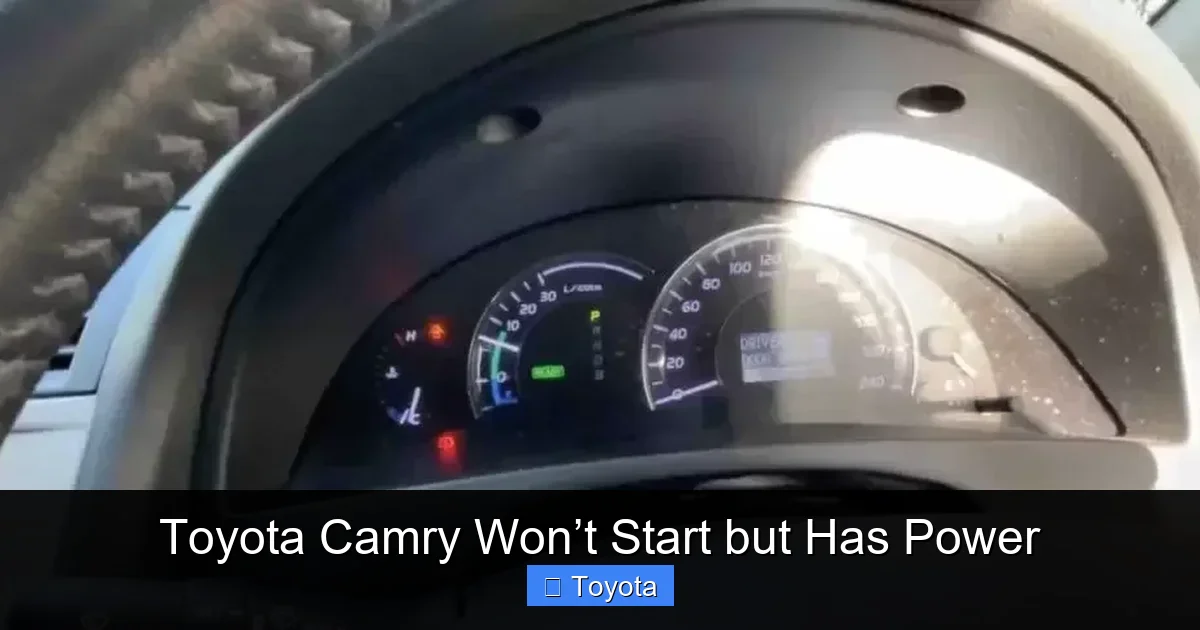
When your Toyota Camry has power but won’t start, the issue is usually electrical or fuel‑related, not a dead battery. Start by checking the battery terminals, then the fuel pump and ignition switch. If the problem persists, a professional diagnostic can save you time and money.
Welcome to a friendly guide where we break down the frustrating situation where your Toyota Camry has power—lights, radio, maybe even a glow on the dash—but the engine just won’t turn over. We’ll walk you through the most common reasons, give you step‑by‑step DIY checks, and tell you when it’s time to call a pro. By the end of this post, you’ll know exactly what to look for and how to get your Camry back on the road without a huge repair bill.
Key Takeaways
- Check the battery first: Loose or corroded terminals are the top reason a Camry has power but won’t start.
- Inspect the fuel pump: No start with lights on often means the pump isn’t sending fuel to the engine.
- Test the starter: A clicking sound or complete silence can point to a failing starter motor.
- Examine the ignition switch: If the key won’t turn or stays in one position, the switch may need replacement.
- Look at the security system: A malfunctioning immobilizer can block the engine even when power is present.
- Know when to call a pro: Persistent no‑start after basic checks usually requires a scanner and expert diagnosis.
- Prevent future issues: Regular battery cleaning and fuel system maintenance keep your Camry reliable.
📑 Table of Contents
Why a Toyota Camry May Not Start When It Has Power
When you turn the key or press the start button, you expect instant engine roar. If the dash lights are bright and the headlights work, the vehicle has power. Yet the engine stays silent. This pattern points to a problem that stops the combustion process after the electrical system is already alive. Common culprits include a weak battery that can’t deliver the cranking amps needed, a fuel pump that has stopped pushing gasoline, a starter that refuses to engage, an ignition switch that isn’t sending the proper signal, or even a faulty security immobilizer. Understanding which system is failing helps you focus your troubleshooting and avoid unnecessary part replacements.
Typical Symptoms You’ll Notice
You might hear a rapid clicking from the starter, a complete lack of sound, or a grinding noise. The dash may show warning lights like “Check Engine” or “Security.” Sometimes the engine cranks slowly, which usually means the battery is on its last legs. If the fuel pump is dead, you may notice a brief hesitation before the engine attempts to start, then silence. Each symptom gives a clue about where to look first, saving time and money.
Battery Problems: The First Thing to Check
The battery is often the first suspect in a “has power but won’t start” scenario. Even though the lights work, those lights draw very little current compared to what the starter needs. A battery that is weak, sulfated, or simply old may not hold enough voltage under load. Start by turning off all accessories, then grab a multimeter. A healthy 12‑volt battery should read between 12.4 and 12.7 volts at rest. If it’s below 12.2 volts, it’s likely discharged. Next, inspect the terminals for corrosion or looseness. A clean, tight connection can restore cranking power instantly.
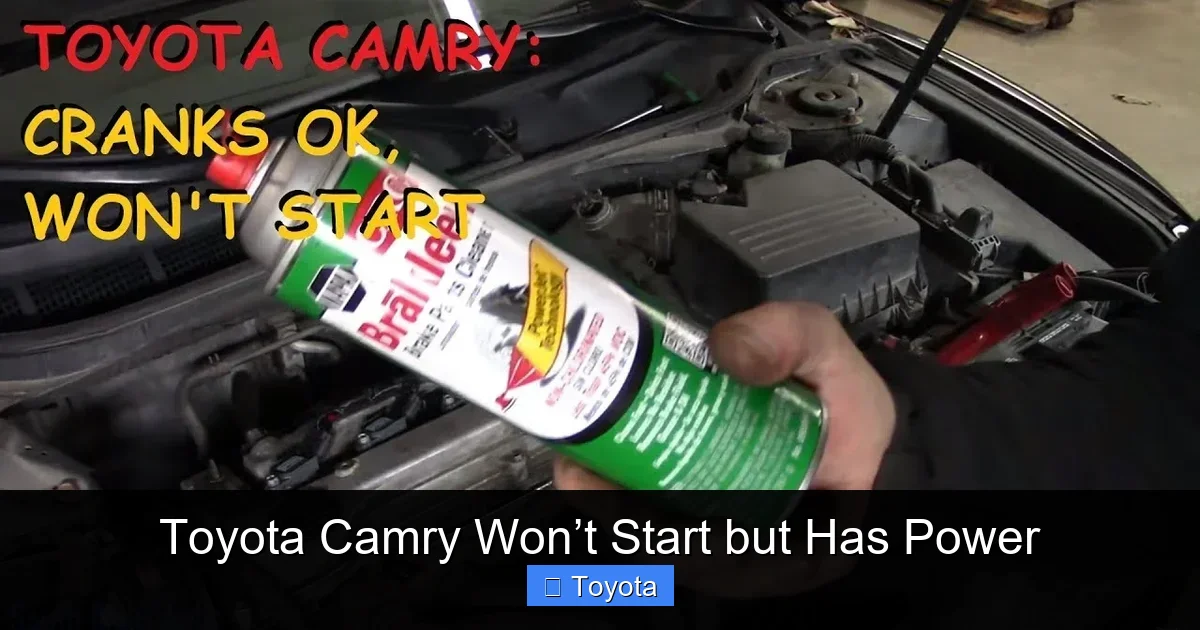
Visual guide about Toyota Camry Won’t Start but Has Power
Image source: aautomotives.com
DIY Battery Test Steps
- Turn off everything. Lights, radio, and any accessory draws should be off.
- Measure voltage. A multimeter shows the state of charge.
- Check terminals. Use a wrench to tighten any loose posts.
- Clean corrosion. A baking soda solution and a brush can revive corroded posts.
- Load test. A simple load tester or starting assistant can confirm if the battery can crank the engine.
If the battery fails any of these checks, consider a replacement. For those who want a reliable upgrade, our article on the best batteries for a 2009 Toyota Camry offers detailed picks that match most owners’ needs.
Fuel System Issues: When Power Is Present but Gas Isn’t Getting Through
Another frequent cause is a failing fuel pump. The pump’s job is to push gasoline from the tank to the engine at high pressure. If it dies, the engine receives no fuel, even though the ignition is working. A dead pump often results in a brief humming noise when you turn the key, then total silence. You may also notice the fuel gauge reading normally, which can be misleading. A quick way to test the pump is to listen for a faint humming sound near the fuel tank when you turn the ignition on. If you hear nothing, the pump may be dead.
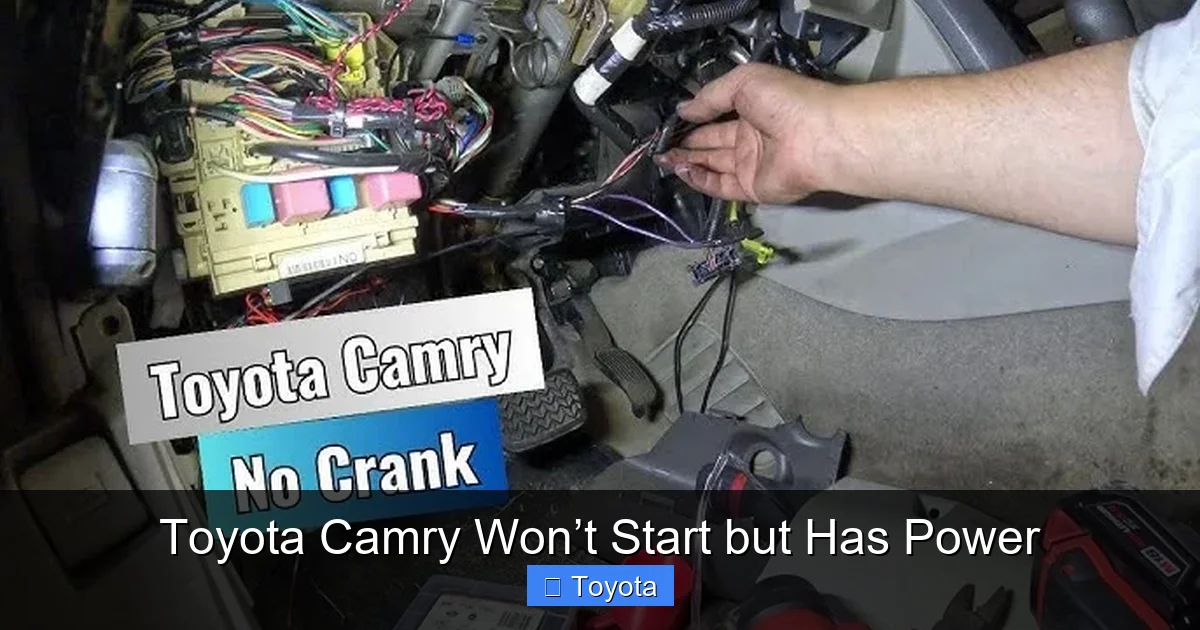
Visual guide about Toyota Camry Won’t Start but Has Power
Image source: automotivian.com
Simple Fuel Pump Checks
- Listen for the pump’s hum. Turn the key to the “on” position (engine off) and note any sound.
- Check fuel pressure. A fuel pressure gauge can tell you if the pump is building pressure.
- Inspect fuses. A blown fuse will stop power to the pump.
- Examine relay. The fuel pump relay can fail, cutting power to the pump.
If you suspect a pump issue, our guide on how to start a car after replacing the fuel pump walks you through the replacement process and helps you avoid common pitfalls.
Starter and Ignition Switch Troubles
The starter motor is the mechanical heart that turns the engine over. A bad starter often makes a clicking noise when you turn the key. Sometimes the starter will not engage at all, producing a silent crank. The ignition switch plays a role by sending voltage to the starter and the fuel system. If the switch is worn, it may only work intermittently, causing the “has power but won’t start” pattern. Testing the starter usually requires a multimeter to check for voltage at the starter terminals when the key is turned.
Visual guide about Toyota Camry Won’t Start but Has Power
Image source: autoreviewnest.com
Starter Diagnosis Tips
- Listen closely. A single click often points to a bad starter solenoid.
- Check voltage. With the key on, measure voltage at the starter’s “B” terminal.
- Inspect the flywheel. A worn ring gear can prevent the starter from turning the engine.
- Test the solenoid. A quick tap on the starter may temporarily revive a faulty solenoid.
If the starter is failing, replacing it is usually the quickest fix. However, if the ignition switch is the culprit, you’ll need to replace that component, which is a slightly more involved job.
Electrical and Security System Snags
Modern Camrys include an immobilizer that prevents the engine from starting unless the correct key transponder is detected. If the chip is missing or the antenna ring is faulty, the car will have power but refuse to start. You may notice the security light flashing on the dash. Another electrical issue is a blown fuse for the ECU or the ignition relay. A quick fuse check can reveal a simple fix.
Security System Checks
- Observe the security light. Flashing indicates an immobilizer fault.
- Try a second key. If the engine starts with a different key, the original transponder may be worn.
- Inspect the antenna ring. Corrosion can block the signal.
- Check fuses. Replace any blown fuses related to the security system.
For more on intermittent starting problems that involve the security system, check out our article on car shakes when you start it in the morning. It covers similar diagnostic steps and offers tips for resetting the immobilizer.
When to Seek Professional Help and Final Tips
DIY troubleshooting can solve many “has power but won’t start” issues, but some problems need a professional touch. If you have checked the battery, fuel pump, starter, ignition switch, and security system and still have no start, a qualified mechanic can run a diagnostic scan. This scan reads fault codes stored in the ECU, revealing hidden issues like a faulty camshaft sensor or a communication error between modules.
Professional Diagnostic Steps
- Scan for codes. A scanner will reveal any stored error codes.
- Check module communication. Faulty wiring can cause intermittent failures.
- Test control modules. The ECU or BCM may need replacement.
- Perform a power balance test. This helps identify misfires caused by fuel or ignition problems.
Preventing future no‑start events is simple. Keep battery terminals clean, replace the battery every 3‑5 years, and use fuel system cleaner periodically. A regular maintenance schedule, such as oil changes and spark plug checks, also reduces the chance of unexpected failures.
In summary, when your Toyota Camry has power but won’t start, start with the battery, move to fuel delivery, then test the starter and ignition switch. Don’t overlook the security immobilizer. Use the internal resources we linked for deeper guidance on batteries and fuel pump replacement. With these steps, you’ll be able to diagnose the issue quickly and get back on the road with confidence.
Frequently Asked Questions
What are the most common reasons a Toyota Camry has power but won’t start?
The top culprits are a weak or corroded battery, a dead fuel pump, a failing starter motor, a faulty ignition switch, or a malfunctioning security immobilizer. Each component can be checked with simple tools, and identifying the right one saves time and money.
How can I test my Camry’s battery if the lights work?
Turn off all accessories, then use a multimeter to measure voltage. A healthy battery reads 12.4‑12.7 volts at rest. Check the terminals for corrosion or looseness, and perform a load test to see if it can deliver the required cranking amps.
Why would the fuel pump stop working while the car has power?
The fuel pump receives power from a relay and fuse. If either fails, or if the pump’s motor wears out, it will stop pushing fuel. You may hear a brief hum when you turn the key, then silence. A fuel pressure gauge or listening for the pump’s sound can confirm the issue.
What does a clicking noise mean when I try to start my Camry?
A single quick click usually indicates a bad starter solenoid. Multiple clicks often point to a weak battery or a starter that cannot engage fully. Check battery voltage first, then inspect the starter and solenoid for wear.
Can a security system prevent a Camry from starting even when the key is turned?
Yes. The immobilizer requires a working transponder chip in the key. If the chip is damaged or the antenna ring is faulty, the security light will flash and the engine will not start. Trying a second key or resetting the system can sometimes resolve the issue.
When should I take my Camry to a mechanic for a no‑start condition?
If you have checked the battery, fuel pump, starter, ignition switch, and security system without success, a professional diagnostic is the next step. A mechanic can scan for error codes, test control modules, and identify less obvious problems that DIY methods miss.