How to Reset Ignition Coil
Learn how to reset an ignition coil, why it matters, and the simple steps to restore proper engine performance without needing a mechanic. This guide covers tools, safety, testing, and maintenance tips to keep your vehicle running smoothly.
Your car’s ignition coil is a small but mighty component that sits between the battery and the spark plugs. When it works correctly, you barely notice it; when it falters, the engine can misfire, stall, or refuse to start. Many drivers assume a faulty coil always means a costly replacement, but sometimes a simple reset can clear temporary glitches and restore normal operation. In this guide we’ll walk you through exactly how to reset ignition coil systems, explain when a reset is appropriate, and show you how to test the results.
We’ll keep the language straightforward, avoid jargon where possible, and include practical tips you can apply in your own garage. Whether you drive a modern coil‑on‑plug (COP) setup, an older distributor‑based system, or a waste‑spark design, the steps below will help you get back on the road safely and confidently.
Key Takeaways
- Understand the function: The ignition coil transforms low battery voltage into the high voltage needed to spark the plugs.
- Know when to reset: A reset can clear minor glitches or error codes, but persistent issues may require replacement.
- Follow safety first: Disconnect the battery, wear gloves, and work in a well‑ventilated area before touching any coil.
- Use the right procedure: Reset methods differ for coil‑on‑plug, distributor, and waste‑spark systems.
- Test after resetting: Verify spark, check for codes, and take a short road test to confirm smooth operation.
- Choose quality parts: If replacement is needed, opt for reputable coils (see links below) to avoid repeat problems.
- Maintain regularly: Inspect connectors, keep the engine bay clean, and schedule periodic coil checks.
📑 Table of Contents
Understanding the Ignition Coil and Its Role
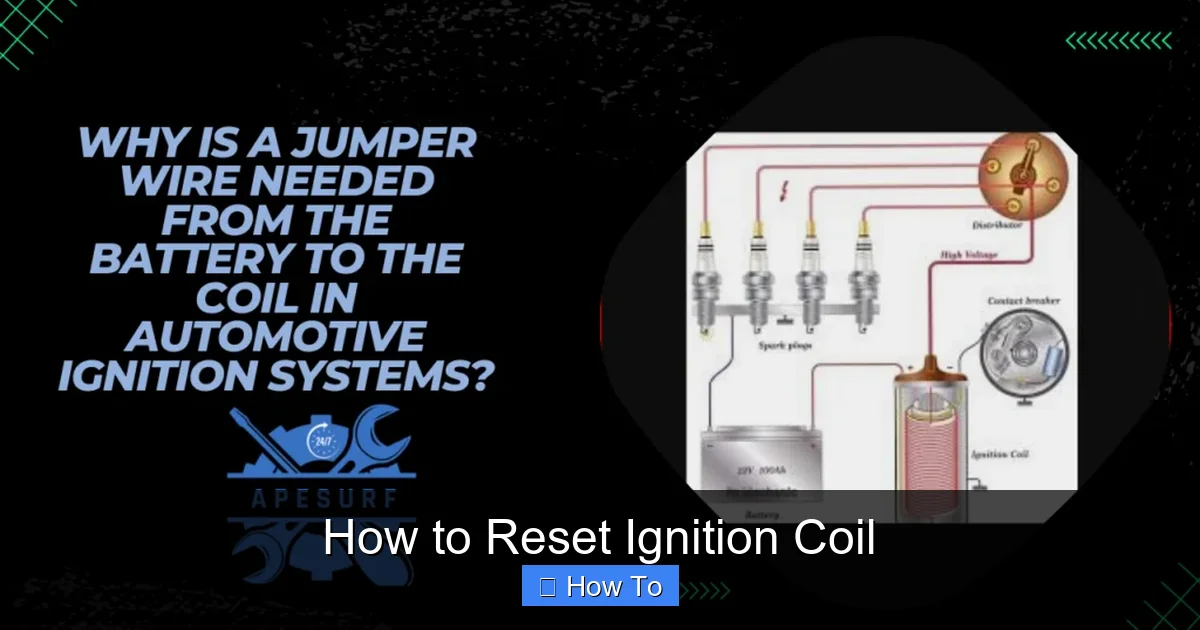
Before diving into the reset process, it helps to know what the ignition coil actually does. Think of it as a transformer that steps up the 12‑volt battery supply to anywhere from 20,000 to 50,000 volts. That high voltage jumps across the spark plug gap, igniting the air‑fuel mixture in each cylinder. Without a strong, consistent spark, combustion is incomplete, leading to power loss, rough idle, and increased emissions.
What Is an Ignition Coil?
An ignition coil consists of two windings of copper wire wrapped around an iron core. The primary winding receives low voltage from the battery; the secondary winding, with many more turns, outputs the high voltage needed for the spark. Modern vehicles often use a coil‑on‑plug (COP) design, where each spark plug has its own coil mounted directly on top. Older cars may use a single coil feeding a distributor, while some engines employ a waste‑spark system that fires two plugs simultaneously.
Symptoms of a Faulty Ignition Coil
Common signs that your coil might be struggling include:
- Engine misfires, especially under acceleration
- Rough idle or stalling
- Difficulty starting, particularly when cold
- Check Engine Light with codes such as P0300‑P0306 (random or cylinder‑specific misfire)
- Noticeable drop in fuel economy
If you notice any of these symptoms, a reset is worth trying before you rush to buy a new coil.
When to Consider Resetting the Ignition Coil
Not every coil problem calls for a replacement. Sometimes the coil’s internal circuitry or the engine control unit (ECU) stores a temporary fault that can be cleared by resetting the coil’s power or the ECU’s adaptive memory.
Visual guide about How to Reset Ignition Coil
Image source: grwinding.com
Reset vs Replace
A reset is appropriate when:
- The misfire is intermittent and not tied to a specific cylinder consistently.
- You’ve recently cleared a code and the problem returns quickly.
- The coil shows no physical damage (no cracks, burns, or corrosion).
If the coil is visibly damaged, has high resistance readings, or the same cylinder misfires repeatedly after a reset, replacement is the safer route.
Safety Precautions
Always disconnect the negative battery terminal before working on any ignition component. Wear insulated gloves, keep flammable materials away, and ensure the engine is cool. If you’re unsure about any step, consult a professional mechanic.
Step‑by‑Step Guide: How To Reset Ignition Coil
The exact method varies by ignition system type. Below are the three most common configurations you’ll encounter.
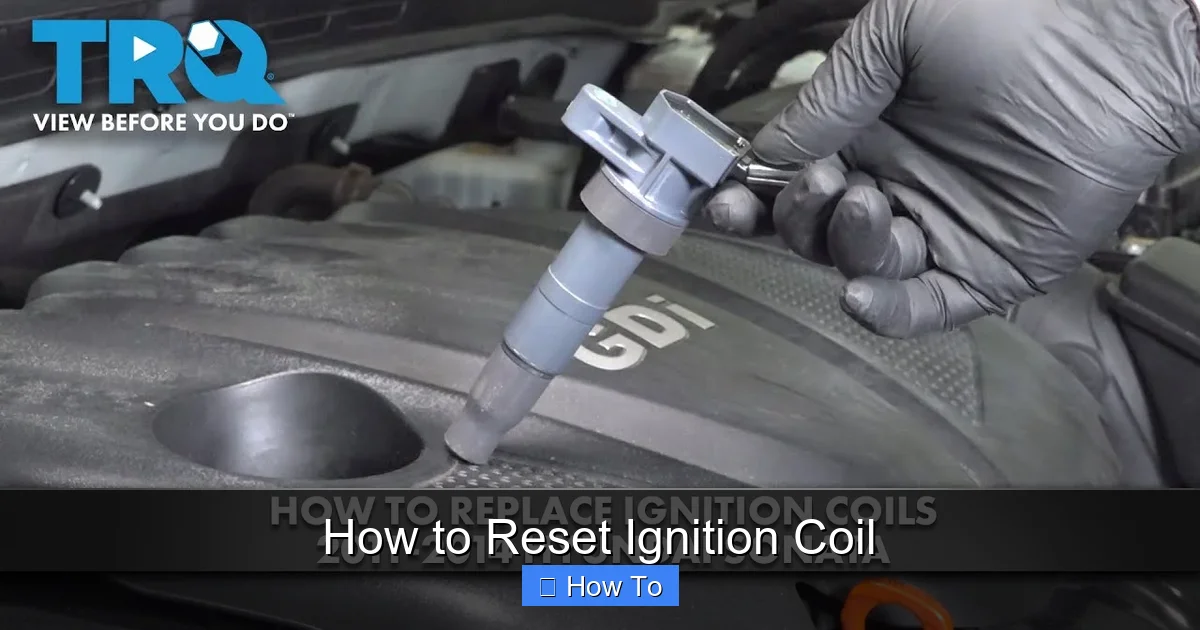
Visual guide about How to Reset Ignition Coil
Image source: i.ytimg.com
Tools You’ll Need
- Socket set or wrenches (usually 8 mm‑10 mm for coil bolts)
- Screwdrivers (flat and Phillips)
- Multimeter (for optional resistance check)
- Battery terminal puller or wrench
- Safety glasses and gloves
Procedure for Coil‑On‑Plug (COP) Systems
- Turn off the engine and remove the key.
- Disconnect the negative battery cable and wait at least five minutes to let the ECU capacitors discharge.
- Locate the coil(s) on top of each spark plug. They are usually held by a single bolt or a small clip.
- Unplug the electrical connector from the coil. Press the release tab and pull gently.
- Remove the mounting bolt and lift the coil straight up.
- Leave the coil out for about 30 seconds. This allows any residual charge to dissipate and can reset the coil’s internal circuitry.
- Reinstall the coil, reconnect the electrical connector, and torque the bolt to the manufacturer’s specification (usually 8‑12 Nm).
- Reconnect the battery negative terminal.
- Start the engine and let it idle for a minute. Observe for smooth operation.
Procedure for Distributor‑Based Systems
- Disconnect the negative battery cable and wait five minutes.
- Locate the ignition coil, usually mounted on the engine block or firewall.
- Unplug the primary and secondary connectors. Mark their positions if they look identical.
- Remove the mounting bolts and set the coil aside.
- Wait 30‑60 seconds with the coil disconnected.
- Reinstall the coil, reconnect the connectors exactly as they were, and secure the bolts.
- Reconnect the battery and start the engine.
- Check for smooth idle and listen for any abnormal noises.
Procedure for Waste Spark Systems
- Follow the same battery‑disconnect wait as above.
- Identify the coil pack; it often looks like a rectangular block with multiple towers.
- Unplug the electrical connector(s) from the coil pack.
- Remove the mounting bolts and gently lift the pack away.
- Leave the pack disconnected for 45 seconds.
- Reinstall the pack, reconnect the connectors, and torque the bolts.
- Reconnect the battery and start the engine.
- Monitor for misfires or warning lights.
Testing After the Reset
Resetting the coil is only half the job; you need to verify that the spark is strong and the engine runs correctly.
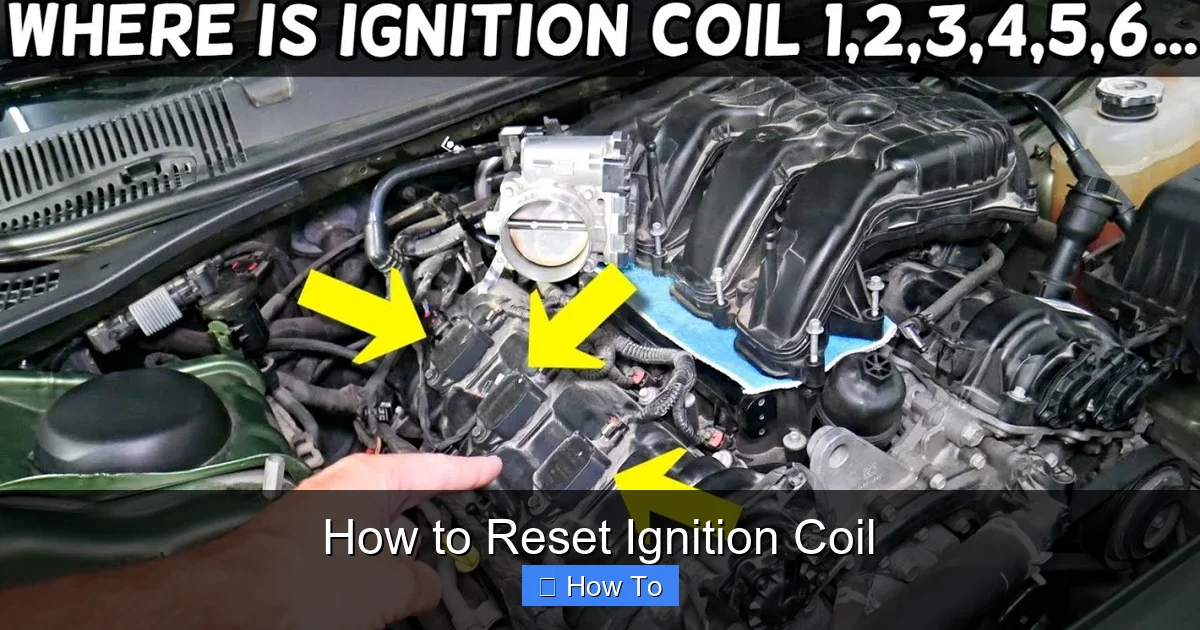
Visual guide about How to Reset Ignition Coil
Image source: i.ytimg.com
Using a Multimeter
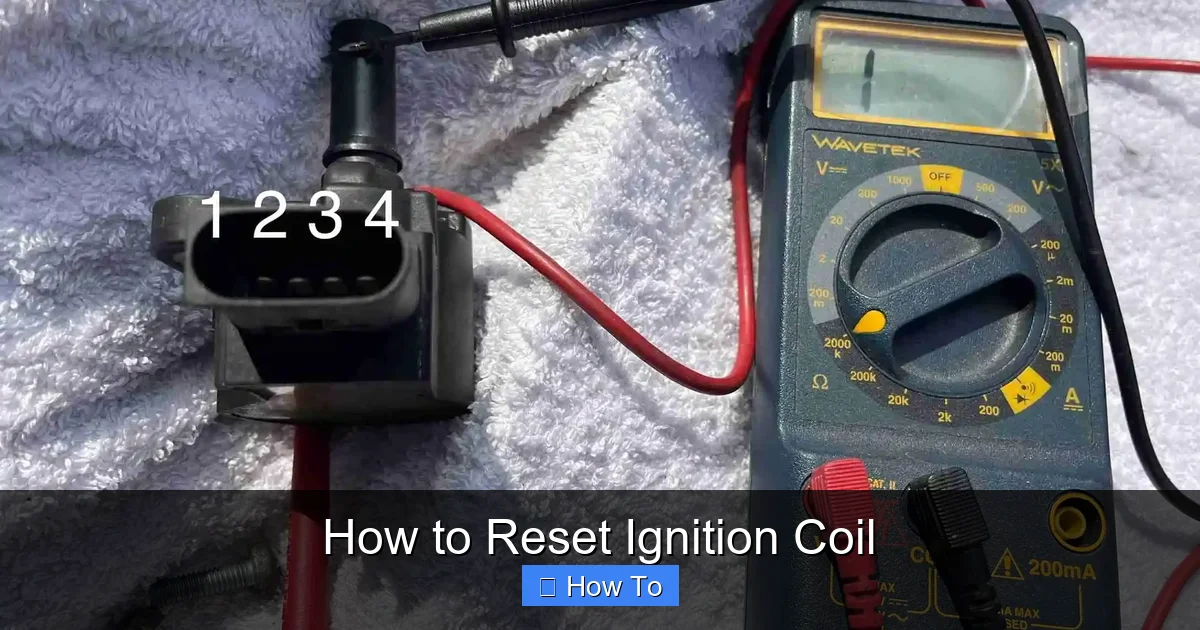
Set your multimeter to the ohms (Ω) setting. Measure the primary resistance between the two low‑voltage terminals (usually 0.4‑2 Ω). Then measure the secondary resistance between the high‑voltage terminal and each low‑voltage terminal (typically 6 000‑15 000 Ω). Compare the readings to the service manual specifications. Values far outside the range suggest a faulty coil that may need replacement.
Using an OBD‑II Scanner
Plug an OBD‑II scanner into the DLC (usually under the dash). Clear any existing codes, then start the engine and let it run for a few minutes. Re‑scan for codes. If misfire codes (P0300‑P0306) do not return, the reset was effective. If they reappear, further investigation is needed.
Road Test Tips
After the engine idles smoothly, take the vehicle for a short drive:
- Accelerate gently from a stop; listen for hesitation.
- Drive at steady highway speeds (55‑65 mph) for 5‑10 minutes; note any roughness.
- Perform a few hard accelerations; the engine should respond promptly without sputtering.
If the car feels normal across these tests, the reset likely solved the issue.
Common Mistakes and Troubleshooting
Even a straightforward reset can go awry if you overlook certain details.
Misinterpreting Codes
Sometimes a stored code persists after a reset because it’s not coil‑related (e.g., a faulty camshaft position sensor). Always verify the code definition before assuming the coil is at fault.
Loose Connections
A common post‑reset problem is a connector that wasn’t seated fully. Double‑check that each plug clicks into place and that there’s no corrosion on the pins.
When Reset Doesn’t Help
If the engine still misfires, the coil may have an internal short or open winding. In that case, replace the coil. Consider upgrading to a high‑performance unit if you frequently push the engine hard.
Maintaining Your Ignition System for Longevity
Preventive care reduces the likelihood of needing frequent resets or replacements.
Regular Inspection
Every 12 000 miles or once a year, visually inspect the coils for cracks, oil contamination, or loose bolts. Check the spark plugs at the same interval; worn plugs increase the load on the coil.
Choosing Quality Replacement Coils
When a coil must be replaced, picking a reputable brand makes a big difference. For example, if you drive a GMC Yukon Denali, you might look at the best ignition coil for GMC Yukon Denali guide. Owners of a Chrysler Pacifica can refer to the best ignition coil for Chrysler Pacifica article, while Cadillac Escalade drivers may benefit from the best ignition coil for Cadillac Escalade resource. These guides highlight coils that meet OEM specifications and offer reliable performance.
Keeping Connectors Clean
Use electrical contact cleaner on the coil plugs and harness connectors every few months. Dielectric grease can help prevent moisture ingress, but apply it sparingly to the rubber seals, not the metal pins.
By following the reset procedure, testing thoroughly, and maintaining your ignition components, you’ll keep your engine firing on all cylinders and avoid unnecessary trips to the shop. Remember, a reset is a useful first step, but always listen to what your car is telling you—if problems persist, a deeper diagnostic or replacement is the right move.
Frequently Asked Questions
What does it mean to “reset” an ignition coil?
Resetting an ignition coil usually involves disconnecting its power source for a short period to clear any temporary fault memory in the coil’s internal circuitry or the engine control unit. This can eliminate intermittent misfires caused by minor glitches.
How long should I leave the coil disconnected during a reset?
For most systems, 30 seconds to 2 minutes is sufficient. This allows any stored charge to dissipate and lets the ECU reset its adaptive learning related to the coil’s performance.
Can I reset the ignition coil without disconnecting the battery?
It’s not recommended. Disconnecting the battery ensures the coil and ECU are completely depowered, which is necessary for a true reset. Skipping this step may leave residual voltage that prevents the memory from clearing.
Will resetting the ignition coil fix a permanently damaged coil?
No. If the coil has internal winding damage, cracks, or excessive resistance, a reset will not restore proper function. In those cases, replacement is the only reliable solution.
How often should I check or reset my ignition coil?
There’s no set interval for resetting; do it only when you notice symptoms like misfires or a check‑engine light related to the coil. Regular visual inspections every 12 000 miles help catch issues before they require a reset.
Is it safe to drive the car immediately after resetting the coil?
Yes, as long as the engine starts smoothly and runs without misfires or warning lights. If you notice any roughness, stop and re‑check connections or consider further diagnostics.