How to Recharge Toyota Sienna Ac
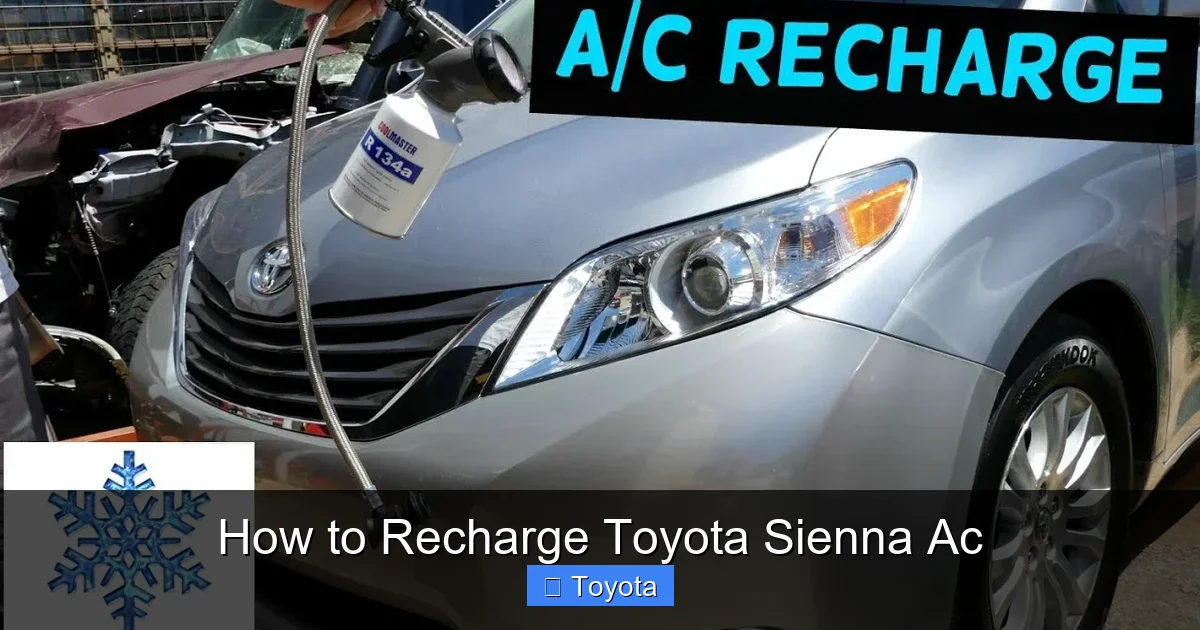
Recharging your Toyota Sienna’s AC is straightforward with the right tools and steps. This guide covers everything from diagnosing low refrigerant to safely adding refrigerant, ensuring your vehicle stays cool during summer.
Key Takeaways
- Refrigerant Type: Always use R134a refrigerant specifically designed for Toyota Sienna AC systems.
- Safety First: Wear protective gear and ensure proper ventilation when handling refrigerant.
- Check Oil Levels: Incorrect oil-to-refrigerant ratios can damage your AC system.
- Use a Gauge Set: Properly connect gauges to monitor system pressure during recharge.
- Avoid Overcharging: Excess refrigerant can harm the compressor and reduce efficiency.
- Professional Help: Complex repairs or persistent issues require a certified mechanic.
- Regular Maintenance: Inspect seals and hoses to prevent future refrigerant loss.
📑 Table of Contents
Understanding Your Toyota Sienna AC System
When your Toyota Sienna’s air conditioning stops blowing cold air, it can be frustrating, especially during scorching summer days. The first step in troubleshooting is understanding how the AC system works. Your Sienna’s AC relies on a refrigerant cycle that transfers heat from inside the cabin to the outside. If the system isn’t cooling properly, it’s often due to low refrigerant levels, a clogged filter, or a malfunctioning component.
Components of the AC System
The Toyota Sienna AC system includes several key parts: the compressor, condenser, expansion valve, evaporator, and refrigerant lines. The compressor pressurizes the refrigerant, which then flows through the condenser to release heat. The refrigerant, now a liquid, moves to the evaporator, where it absorbs heat from the cabin air. Finally, it returns to the compressor to repeat the cycle.
How the AC System Works
When you turn on the AC, the compressor compresses the refrigerant, increasing its temperature and pressure. This high-pressure gas flows through the condenser, where it releases heat to the outside air. The liquid refrigerant then passes through the expansion valve, which reduces its pressure and temperature. Finally, it enters the evaporator, where it absorbs heat from the cabin air, cooling the interior.
Tools and Materials Needed
Before starting the recharge process, gather all necessary tools and materials. Having everything on hand will save time and prevent interruptions during the procedure.
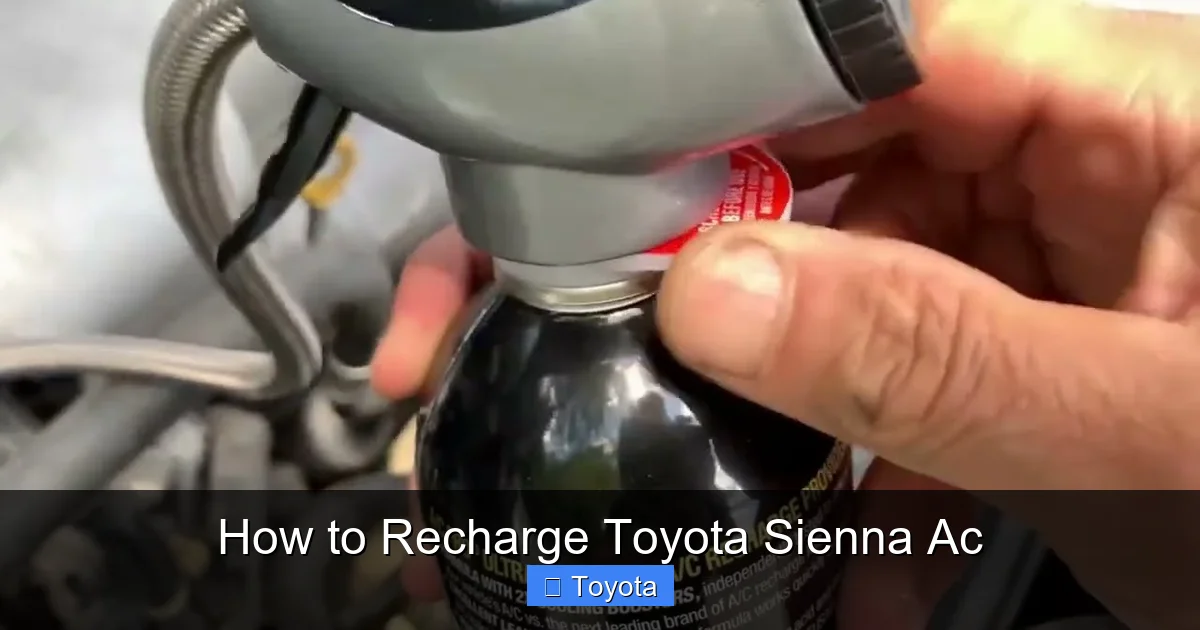
Visual guide about How to Recharge Toyota Sienna Ac
Image source: i.ytimg.com
Refrigerant
Use only R134a refrigerant, which is compatible with Toyota Sienna AC systems. Avoid using generic refrigerants, as they may contain incompatible additives that can damage the system. Purchase a quality brand like DuraMax or Arctic Fox for reliable results.
Gauge Set
A manifold gauge set is essential for monitoring system pressures. These sets typically include high-side, low-side, and vacuum gauges. Connect them to the service ports to check refrigerant levels and ensure proper charging.
Safety Equipment
Always wear safety glasses and gloves when handling refrigerant. Never inhale refrigerant vapors, as they can cause dizziness or respiratory issues. Work in a well-ventilated area to avoid buildup of gases.
Adapter Hoses
Ensure you have the correct adapter hoses for your Toyota Sienna’s service ports. Most vehicles use standard Schrader valve ports, but double-check before purchasing.
Step-by-Step Recharge Process
Follow these steps carefully to recharge your Sienna’s AC system. Take your time and avoid rushing to prevent mistakes.

Visual guide about How to Recharge Toyota Sienna Ac
Image source: i.ytimg.com
Preparing Your Vehicle
Start by parking your Sienna in a shaded area and turning off the engine. Let the engine cool for at least 30 minutes to avoid burns from hot components. Remove the AC system’s service port caps, usually located near the compressor or condenser.
Connecting the Gauge Set
Attach the vacuum hose to the center port of your gauge set. Connect the low-side hose to the low-pressure port (usually marked with a blue cap) and the high-side hose to the high-pressure port (red cap). Ensure all connections are secure before proceeding.
Adding Refrigerant
Start the engine and set the AC to maximum cooling. Open the refrigerant can and slowly attach it to the low-side port. Begin charging by opening the can valve. Monitor the low-side gauge; once it reaches 30 psi, switch to the high-side port to add more refrigerant until the system reaches the recommended pressure (typically 45-55 psi).
Checking the System
After charging, turn off the engine and disconnect the gauge set. Replace the service port caps and test the AC by starting the engine. If the airflow remains warm, you may have a refrigerant leak or other mechanical issue.
Common Mistakes to Avoid
Many DIY recharges fail due to common errors. Avoid these pitfalls to ensure a successful repair.
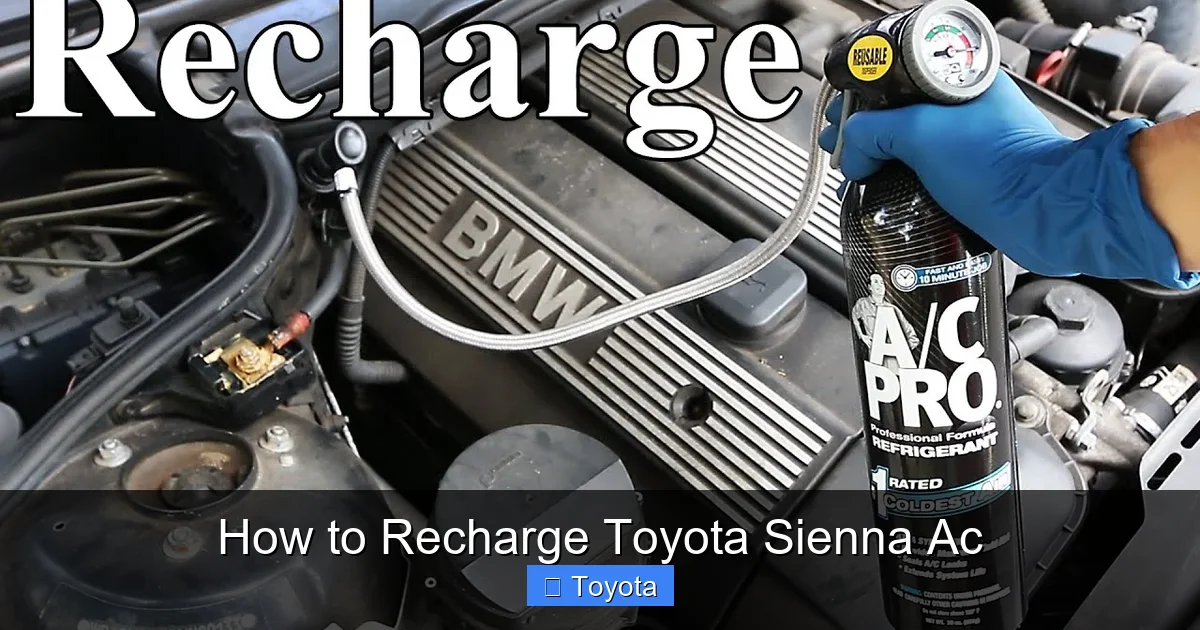
Visual guide about How to Recharge Toyota Sienna Ac
Image source: i.ytimg.com
Overcharging the System
Adding too much refrigerant can damage the compressor and reduce efficiency. Always follow the manufacturer’s recommended pressure levels. If unsure, err on the side of undercharging rather than overfilling.
Ignoring Oil Levels
Refrigerant and oil are both critical to AC performance. If you replace a component, you may need to add oil. Improper oil levels can lead to compressor failure. For guidance on managing oil in your AC system, refer to How To Remove Excess Oil From Car Ac System.
Forgetting to Evacuate Air
Before charging, the system must be evacuated of air and moisture using a vacuum pump. Trapped air can reduce cooling efficiency and cause component damage. If you lack a vacuum pump, consider hiring a professional.
When to Seek Professional Help
While recharging your Sienna’s AC is a manageable DIY task, some situations require expert assistance. Knowing when to call a mechanic can save time and money.
Complex Repairs
If you suspect a major leak or component failure, professional diagnostics are necessary. Issues like a damaged condenser, faulty compressor, or electrical problems require specialized tools and knowledge.
Legal Considerations
In some regions, handling refrigerant requires EPA certification. Check local regulations to ensure compliance. Using unlicensed service providers may void warranties or lead to penalties.
Maintenance Tips for Longevity
Regular maintenance can extend your AC system’s lifespan. Follow these tips to keep your Sienna’s AC running smoothly year-round.
Regular Inspections
Inspect AC components annually for signs of wear, such as cracks in hoses or loose connections. Clean condenser fins to ensure optimal airflow. If you notice unusual noises or smells, investigate promptly.
Keeping the System Clean
Replace cabin air filters every 12,000 to 15,000 miles to maintain airflow. A clogged filter forces the system to work harder, increasing energy consumption and wear. For tips on maintaining car interiors, check out How To Protect Car Interior From Scratches.
Monitor for Leaks
Use UV dye to detect refrigerant leaks. Add a few drops to the system and inspect components with a UV light. If you find a leak, seal it or replace the affected part before recharging.
Conclusion
Learning how to recharge your Toyota Sienna’s AC system empowers you to handle common issues confidently. By following proper procedures and avoiding mistakes, you can restore cooling performance and enjoy a comfortable ride. However, don’t hesitate to consult a professional for complex problems or if you’re unsure about any step. Regular maintenance and timely repairs will keep your AC system in top shape for years to come.
Frequently Asked Questions
How often should I recharge my Toyota Sienna’s AC?
Most Toyota Sienna owners can go 2-3 years between recharges, but this varies based on usage, climate, and system health. If you notice reduced cooling, schedule a recharge sooner. Regular inspections can help identify issues early.
Can I use any refrigerant for my Toyota Sienna AC?
Always use R134a refrigerant specifically labeled for Toyota vehicles. Using incorrect refrigerants can damage seals and components. Mixing different types may cause system failure or safety hazards.
What should I do if my AC blows warm air after recharging?
Check for refrigerant leaks, a faulty compressor, or a clogged expansion valve. If the system was properly charged and still isn’t cooling, professional diagnosis is necessary to identify underlying issues.
Is it safe to recharge my AC myself?
Yes, if you follow proper safety procedures and use the correct tools. However, if you’re uncomfortable handling refrigerants or diagnosing complex problems, seek help from a certified mechanic to avoid risks.
How much does it cost to recharge a Toyota Sienna AC?
DIY recharge kits cost $50-$150, including refrigerant and tools. Professional services range from $100-$300, depending on labor and additional repairs. Compare prices and warranties before choosing a service provider.
Can I bypass the ambient air temperature sensor for my AC?
While possible in some cases, bypassing sensors like the ambient air temperature sensor can lead to improper AC operation. Refer to How To Bypass Ambient Air Temperature Sensor for detailed guidance, but exercise caution and consult a professional if unsure.