How to Put a Prius in Neutral
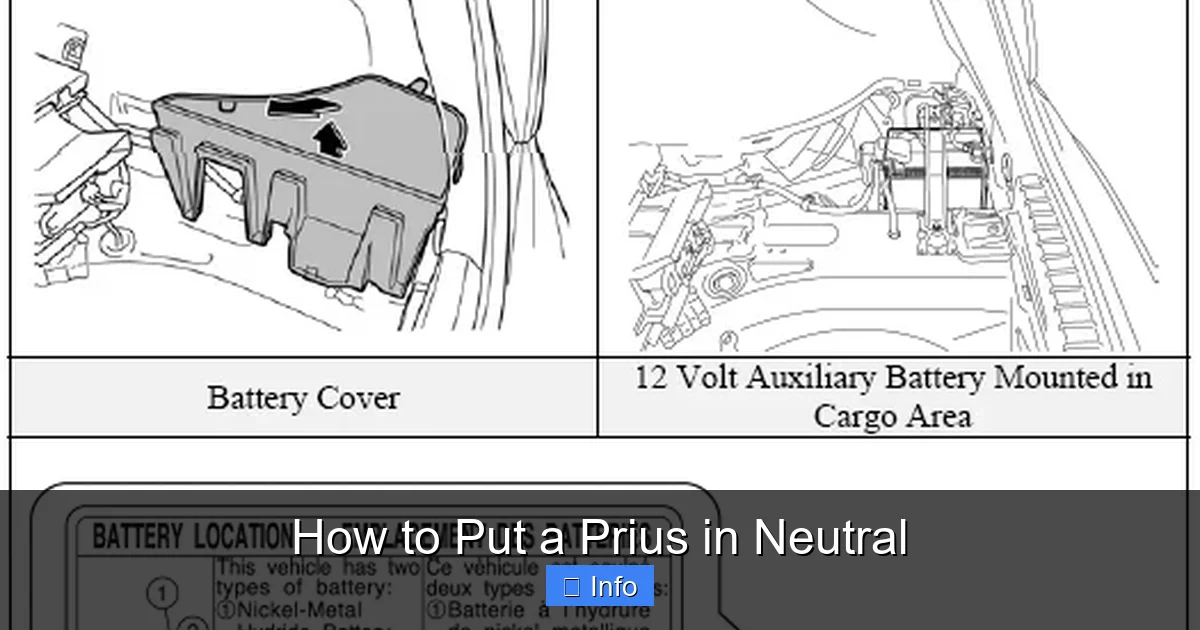
If your Prius won’t shift out of Park, you can release it to Neutral quickly using the brake and shift lever or the hybrid’s brake‑hold button. Follow safety steps, check battery status, and use the emergency release if needed. Regular brake checks and hybrid battery care keep the system reliable. This guide walks you through every method, common issues, and best practices so you can handle the situation confidently.
Putting a Toyota Prius in Neutral isn’t a mystery once you know the right steps. Whether you need to move the car for parking, avoid a tow, or simply want to understand how your hybrid works, this guide will walk you through the process with clear, easy‑to‑follow instructions. We’ll cover the basics of the Prius shift system, safety preparations, step‑by‑step methods, common problems, and maintenance tips. By the end of this article, you’ll feel confident handling any neutral‑shift situation, and you’ll know where to find extra help if you need it.
Key Takeaways
- Always apply the brake fully before attempting to shift. This is the universal safety rule for any Prius.
- Use the shift lever when the electronic system is working. It’s the most reliable method for normal driving.
- The brake‑hold button can also put the car in neutral on hybrid models. It’s handy when the engine is off.
- Emergency neutral release is a physical lever under the dashboard. Use it only if the electronic shift fails.
- Check the 12‑V battery and key‑fob status before shifting. Low power can prevent the shift actuator from engaging.
- Regular brake system checks prevent stuck shifts. Keep pads, fluid, and sensors in good shape.
- Maintain the hybrid battery for smooth neutral operations. Healthy battery power supports all electronic shift functions.
📑 Table of Contents
Introduction
Driving a Prius is a pleasant experience. The quiet hybrid powertrain, excellent fuel economy, and sleek design make it a favorite among commuters and eco‑enthusiasts. Yet, even the best cars sometimes require a manual intervention, like putting the vehicle in Neutral. This might happen when you need to flat‑tire‑replace, jump‑start the battery, or simply want to move the car without engine power. Knowing how to shift a Prius into Neutral safely can save you time, money, and frustration.
In this article, we’ll break down the process into simple, actionable steps. We’ll explain why the Prius behaves differently from a conventional car, show you how to prepare, and give you troubleshooting tips for common issues. We’ll also sprinkle in maintenance advice so you can keep your Prius running smoothly for years to come. Let’s get started with a solid foundation on how the Prius neutral mechanism works.
Understanding the Prius Neutral Mechanism
How the Brake‑Trans Brake Switch Works
The Prius uses a combination of electronic and mechanical systems to control gear selection. The most critical component is the Brake‑Trans Brake Switch (BTBS). This sensor tells the Transmission Control Module (TCM) that the driver has pressed the brake pedal. When the switch detects brake pressure, the TCM allows the shift lever to move out of Park and into Neutral, Drive, or Reverse.
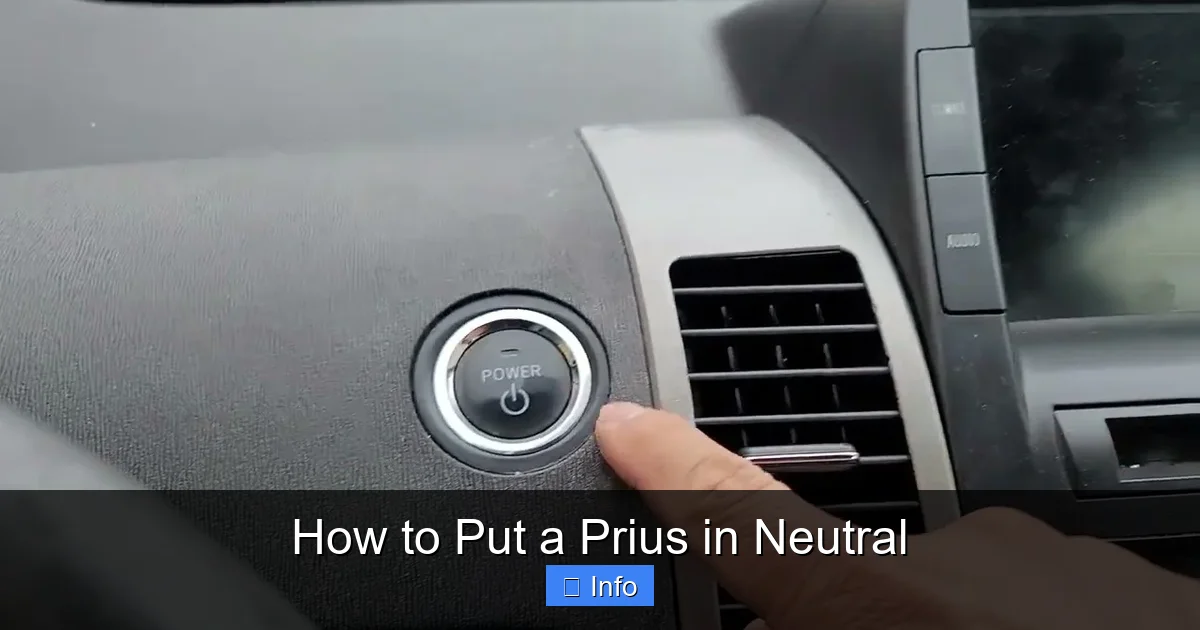
Visual guide about How to Put a Prius in Neutral
Image source: i.ytimg.com
The BTBS is located under the dashboard on the driver’s side. It monitors a small electrical circuit that closes when the brake pedal is fully depressed. If the circuit is open—meaning the brake isn’t fully pressed—the shift lever will stay locked in Park. This is why you must press the brake all the way down before trying to shift.
Modern Priuses also have a “Brake‑Hold” feature that mimics this behavior electronically. When the brake is pressed and held, the vehicle can be placed in Neutral without fully depressing the accelerator. This adds another method for putting the Prius in Neutral, especially useful in stop‑and‑go traffic.
Why You Might Need to Put the Prius in Neutral
There are several practical reasons to shift a Prius into Neutral. You might need to:
- Move the car short distances, such as when parking in a tight spot.
- Avoid rolling when the battery is dead and you can’t start the engine.
- Transport the vehicle on a flatbed without engaging the drivetrain.
- Perform maintenance that requires the wheels to be free‑spinning.
Understanding these scenarios helps you decide which method to use. For example, a quick neutral shift for parking is different from an emergency release when the electronic system fails. Knowing the reason guides you to the safest approach.
Preparing Your Prius for Neutral Release
Safety First: Check Your Surroundings
Before you touch any pedals or levers, take a quick look around. Make sure no pedestrians are nearby, the area is well‑lit, and you have enough space to move the car safely. If you’re on a slope, engage the parking brake as an extra precaution. This step might seem obvious, but it’s the foundation of any safe vehicle operation.
Locate the Brake and Accelerator Pedals
The Prius has a unique pedal layout. The brake pedal is the larger, left‑hand pedal, while the accelerator is the right‑hand one. Some drivers confuse the two because the Prius lacks a distinct “clutch” pedal. Remember: always press the brake first. If you accidentally step on the accelerator, the car will accelerate, not shift.
Verify Battery and Key Fob Status
The Prius relies on its 12‑volt auxiliary battery to power the electronic shift system. If the battery is dead or weak, the shift actuator may not respond. Check the key‑fob indicator light; if the car won’t start, the battery likely needs a jump‑start. For a quick reference on keeping the hybrid battery healthy, see our guide on How to Charge a Toyota Hybrid Battery. A healthy 12‑V battery ensures the shift system works every time.
Step‑by‑Step Guide to Putting the Prius in Neutral
Method 1: Using the Shift Lever (Standard Procedure)
This is the most common method for putting a Prius in Neutral when everything is working normally. Follow these steps:
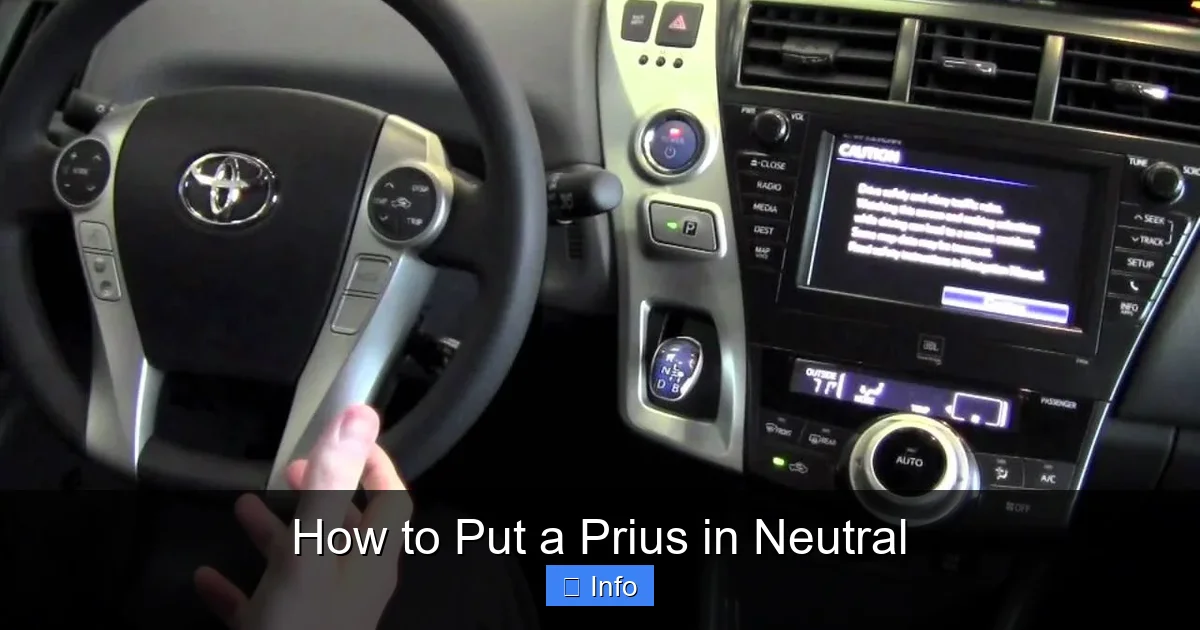
Visual guide about How to Put a Prius in Neutral
Image source: i.ytimg.com
- Seat Belt On. Ensure you have your seat belt fastened. Safety is always priority.
- Press the Brake Pedal Fully. Push the brake pedal all the way to the floor. You’ll hear a soft click as the BTBS closes.
- Turn the Key to On. Turn the ignition key to the “On” position (do not start the engine). The dashboard lights should illuminate.
- Press the Brake Again. While holding the brake, press it one more time to confirm the system registers the pressure.
- Move the Shift Lever. Locate the shift lever (it’s on the center console). Pull it toward you to release the lock, then move it left or right to the “N” (Neutral) position. You’ll feel a slight resistance as the lever clicks into place.
- Release the Brake. You can now release the brake pedal. The car should remain in Neutral.
- Verify with the Dashboard. Look at the gear indicator on the instrument cluster. It should display “N”.
This method works on both older Priuses (2010‑2015) and newer models (2016‑present). If the gear indicator doesn’t change, move to the troubleshooting section.
Method 2: Using the Brake‑Hold Button (Hybrid Model)
If you own a newer Prius with the Brake‑Hold feature, you can use the button on the center console to shift into Neutral without fully depressing the accelerator. This is handy when you want to let the engine idle but keep the wheels free.
- Press the Brake Pedal. Depress the brake fully.
- Press the Brake‑Hold Button. The button is usually marked with a “B” symbol. Press it once to engage Brake‑Hold.
- Shift to Neutral. With Brake‑Hold active, you can now move the shift lever to “N” as described in Method 1. The system will allow the shift because Brake‑Hold essentially mimics a fully pressed brake.
- Release the Brake‑Hold. Press the Brake‑Hold button again to deactivate it. The car will return to normal driving mode once the brake is released.
This method is especially useful in city traffic where you need to keep the car stationary without stalling the engine. For more details on hybrid battery care that supports Brake‑Hold, check out our article on How to Reset MPG on a Toyota Highlander. Maintaining optimal fuel efficiency often goes hand‑in‑hand with proper brake‑hold usage.
Method 3: Emergency Neutral Release (If Electronic System Fails)
Sometimes the electronic shift system can fail due to a dead battery, a faulty sensor, or a software glitch. In those cases, you have a mechanical emergency release lever. This lever is hidden under the dashboard on the driver’s side, near the BTBS.
- Turn Off the Engine. Make sure the engine is off and the key is out of the ignition.
- Locate the Release Lever. Open the driver’s side door and look under the dashboard. You’ll see a small cover with a label “Emergency Release.”
- Pull the Lever. Use a small tool (like a screwdriver) if needed. Pull the lever upward until you feel resistance. This releases the shift mechanism from the Park position.
- Shift to Neutral. With the lever pulled, you can now move the shift lever manually to Neutral. You may need to apply a bit of force, but it should move freely.
- Replace the Cover. Push the lever back down and replace the cover. The emergency release should only be used in true emergencies.
Always treat the emergency release as a last resort. It can be rough on the internal shift components if used frequently. If you find yourself relying on it often, there may be a deeper electrical issue that needs professional attention.
Common Issues and Troubleshooting
Pedal Not Moving
If the brake pedal feels soft or doesn’t go to the floor, the brake system may have air in the lines or a leak. Check the brake fluid reservoir under the hood. If the fluid level is low, top it up with the correct type (usually Toyota DOT 3). If the pedal remains spongy after topping up, you may need to bleed the brakes. This is a simple DIY task that can be done with a helper and a bleed kit.
Another cause could be a faulty Brake‑Trans Brake Switch. If the switch is bad, the TCM won’t know the brake is pressed, and the shift will stay locked. Replacing the switch usually requires removing the dashboard panel, which is best left to a certified technician. However, you can test the switch with a multimeter if you have experience. For a quick overview of basic brake maintenance, see our article on How to Open the Hood of a Toyota Rav4. Accessing the brake components is easier when you know how to open the hood safely.
Shift Stuck in Park
When the shift lever won’t move out of Park, the first thing to check is the brake pedal. Ensure it’s fully depressed. If the brake is okay, listen for a clicking sound when you press the lever. A click indicates the shift lock is releasing. If there’s no click, the shift lock may be mechanically jammed or the electronic system is not communicating.
Check the 12‑V battery voltage with a multimeter. A healthy battery should read around 12.6 volts. If it’s below 11.5 volts, the battery is weak and may need a jump‑start. After jumping the battery, try shifting again. If the problem persists, the shift actuator motor could be faulty. This is a component that usually requires professional diagnosis and replacement.
Battery Warning Light On
If the battery warning light (a red battery symbol) illuminates on the dashboard, the hybrid battery system may be experiencing an issue. This can affect the shift system because the hybrid battery provides power to the electric motor and control modules. If the warning light stays on, avoid driving the car for long distances. Instead, have the vehicle inspected by a Toyota service center.
Sometimes the warning light appears briefly when starting the car and then goes out. This is normal. If it stays on, check the battery terminals for corrosion. Clean them with a wire brush and apply dielectric grease. Also, ensure the hybrid battery cooling system isn’t blocked. For more detailed steps on maintaining the hybrid battery, revisit our article on How to Charge a Toyota Hybrid Battery. Keeping the battery in good condition reduces the chance of unexpected neutral‑shift issues.
Maintenance Tips and Best Practices
Regular Brake System Checks
Preventive maintenance is the key to avoiding neutral‑shift problems. Inspect the brake pads every 10,000 miles or sooner if you notice squealing. Worn pads can cause the brake pedal to feel soft, which tricks the BTBS. Also, check brake fluid levels monthly. If the fluid is dark or contaminated, flush the system.
Listen for any unusual noises when you press the brake. A grinding sound may indicate a damaged rotor, while a hissing sound could signal a leak. Catching these issues early saves you from costly repairs and keeps the shift system reliable.
Keeping the Hybrid Battery Healthy
The hybrid battery is the heart of the Prius’s electric system. To extend its life, avoid frequent deep discharges. If you park the car for an extended period, consider using a battery maintainer. Also, keep the battery cooling vents clear of debris. A blocked vent can cause overheating, which may trigger warning lights and affect shift operation.
Regular software updates from Toyota also help the battery management system operate efficiently. When you bring your Prius in for service, ask the technician to check the battery health status. Many dealerships can run a diagnostic that shows the battery’s remaining capacity. For a quick guide on maintaining the hybrid battery, revisit our article on How to Charge a Toyota Hybrid Battery. Proper charging habits not only protect the battery but also ensure the shift system has clean power.
When to Seek Professional Help
Some issues are best left to professionals. If you’ve tried all the methods above and the shift still won’t move, or if you hear strange noises from the transmission area, it’s time to call a certified Toyota technician. They have specialized tools to read the TCM codes and can diagnose problems that aren’t obvious to the average owner.
Additionally, if the emergency release lever needs frequent use, there may be an underlying electrical fault. Technicians can run a full system scan, check the BTBS, and verify the shift actuator’s operation. Remember, attempting to fix complex electronic issues without proper training can cause more damage and void warranties.
Conclusion
Putting a Prius in Neutral is a straightforward process once you understand the brake‑trans brake switch, the shift lever, and the optional Brake‑Hold feature. By following the step‑by‑step guide, preparing your car correctly, and performing regular maintenance, you can keep your Prius ready for any situation. Whether you need to move the car for parking, perform maintenance, or deal with an emergency, the methods outlined here will give you the confidence to handle the task safely.
Remember to check your surroundings, verify battery health, and use the emergency release only as a last resort. For additional reading on hybrid battery care and other Toyota maintenance topics, explore our related articles, such as How to Charge a Toyota Hybrid Battery and How to Reset MPG on a Toyota Highlander. These resources can help you keep your Prius running smoothly for many miles to come.
With the knowledge and tips provided in this guide, you’re now equipped to handle any neutral‑shift situation with ease. Drive safely, stay proactive with maintenance, and enjoy the reliable performance that makes the Prius a standout in its class.
Frequently Asked Questions
How do I put a Prius in neutral without starting the engine?
First, press the brake pedal fully to the floor. Then turn the ignition key to the “On” position (but do not start the engine). Once the dashboard lights come on, press the brake again and move the shift lever to “N.” The car will remain in Neutral without the engine running.
Can I shift a Prius into neutral while the engine is off?
Yes, as long as the brake pedal is fully depressed, you can shift into Neutral even with the engine off. The Brake‑Trans Brake Switch registers the brake pressure, allowing the Transmission Control Module to unlock the shift lever.
What does the emergency neutral release do?
The emergency neutral release is a mechanical lever under the dashboard that bypasses the electronic shift lock. Pulling it releases the Park lock, letting you manually move the shift lever to Neutral. Use this only if the electronic system fails.
Why won’t my Prius shift out of Park?
Common reasons include a soft brake pedal, low 12‑V battery voltage, a faulty Brake‑Trans Brake Switch, or a jammed shift lock. Check the brake, jump‑start the battery if needed, and listen for a click when moving the lever. If problems persist, have a technician diagnose the system.
Do I need to press the brake every time I shift?
Yes. The Prius requires full brake pedal depression before any shift movement. This safety feature protects against accidental shifts and ensures the Transmission Control Module receives the correct signal.
How often should I check the brake system on my Prius?
Inspect brake pads every 10,000 miles and check brake fluid monthly. If you notice any unusual noises, leaks, or a soft pedal, address the issue promptly to keep the shift system reliable.