How Many Passengers Allowed in Private Car in Delhi
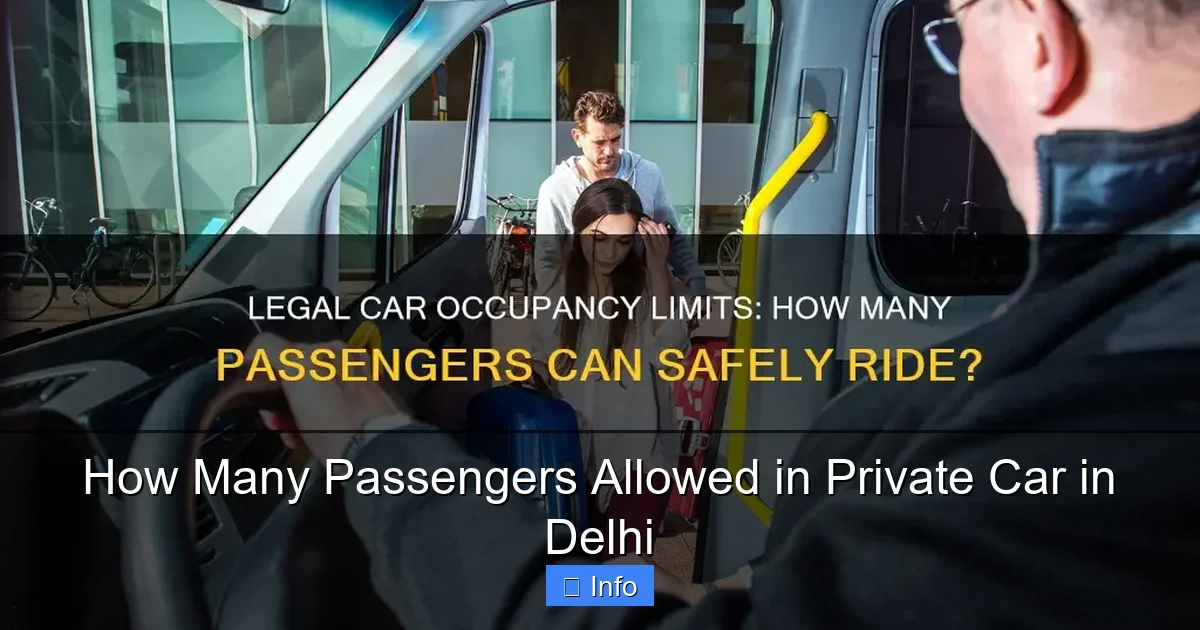
Delhi strictly enforces passenger limits in private cars to ensure road safety and reduce congestion, with rules varying by vehicle type and occupancy. Violating these norms can lead to heavy fines, penalty points, or even vehicle impoundment, making it essential for drivers to stay informed before hitting the road.
Delhi’s roads are buzzing, and if you’ve recently found yourself asking how many passengers allowed in private car in Delhi, you’re not alone. With the city’s growing population, strict traffic enforcement, and frequent updates to municipal rules, it’s easy to feel confused about what’s legal and what isn’t. Some drivers assume the rule is simply based on the number of seatbelts, while others think it’s about the vehicle’s registered seating capacity. The reality is a mix of national laws, state-specific amendments, and practical enforcement tactics that can catch even cautious drivers off guard. In this comprehensive guide, we’ll walk you through exactly what the law says, what the penalties are, and how you can ensure you’re always on the right side of the traffic police. Whether you’re a daily commuter, a parent ferrying kids, or someone planning a weekend road trip, understanding these norms not only saves you money but also keeps everyone in the car safer. So, let’s dive in and clear up the confusion once and for all.
Key Takeaways
- Point 1: Delhi’s Motor Vehicles Act sets a maximum of four passengers (including the driver) in private cars, but actual limits depend on vehicle type and seating capacity.
- Point 2: Overloading a private car in Delhi can attract fines ranging from ₹500 to ₹5,000, plus possible imprisonment for repeat offenses.
- Point 3: Exceptions exist for women, children, and emergency services, but must be documented and follow strict guidelines.
- Point 4: Always check the manufacturer’s RTO-registered seating capacity; exceeding it voids insurance and violates traffic laws.
- Point 5: Carpooling for work or school must coordinate with Delhi’s even-odd rationing system and designated passenger limits.
- Point 6: Safety is paramount; overcrowding increases accident risk and reduces airbag effectiveness.
📑 Table of Contents
- Delhi’s Passenger Car Regulations: What the Law Actually Says
- Seating Capacity vs. Passenger Count: Understanding the Difference
- Consequences of Overloading: Fines, Penalties, and Legal Risks
- Exceptions, Special Cases, and Recent Amendments
- Practical Tips for Delhi Drivers: Staying Compliant
- Myths and Misconceptions About Car Passenger Limits
Delhi’s Passenger Car Regulations: What the Law Actually Says
The legal framework governing how many passengers allowed in private car in Delhi rests primarily on the Motor Vehicles Act, 1988, which sets the baseline for passenger limits across India. However, the Delhi Traffic Police and the Transport Department have added their own layers of interpretation and enforcement. At the core, the law states that a private car cannot carry more occupants than its manufacturer-declared seating capacity, as recorded with the Regional Transport Office (RTO). This means if your car is registered for five people—including the driver—carrying six is a violation, regardless of whether everyone has a seatbelt. Additionally, Delhi has introduced specific guidelines aimed at reducing congestion and pollution, such as the even-odd rationing scheme, which indirectly affects carpooling decisions. Understanding these nuances is crucial, because a seemingly harmless extra passenger can result in a traffic challan, fines, or in extreme cases, the vehicle being detained at the spot. Throughout this section, we’ll break down exactly how these rules apply in everyday driving scenarios.
The Motor Vehicles Act, 1988 and Delhi Amendments
Under the Motor Vehicles Act, the concept of “overloading” is clearly defined. For private cars, the act mandates that the total number of persons in the vehicle must not exceed the seating capacity endorsed on the registration certificate. Delhi’s transport department has, in recent years, stepped up patrols and used technology such as CCTV and speed-cum-violation cameras to catch overloading. The amendments also empower traffic officers to impose on-the-spot fines, and in cases where the overloading is significant, the vehicle may be required to reduce its load before being allowed to proceed. It’s important to note that the law doesn’t just count adult passengers; children and infants in appropriate seats are also factored into the total occupancy count. This strict interpretation means that even if you have an extra child seat that wasn’t originally part of the RTO registration, you could technically be violating the rule.
Official Seating Capacity vs. Practical Limits
Many drivers confuse the physical number of seatbelts with the legal seating capacity. While it’s true that every passenger should have a functional seatbelt, the RTO-registered capacity is the definitive limit. Manufacturers specify capacity based on crash-test standards, airbag deployment zones, and overall vehicle dynamics. In Delhi, traffic officers are trained to check the registration certificate rather than merely counting seatbelts. If a car has five seatbelts but is registered for four, carrying a fifth person is still an offense. Conversely, some older vehicles might have had seatbelts added after registration, which does not increase the legal limit. This distinction is vital for anyone asking how many passengers allowed in private car in Delhi, as the registered number on your RC (Registration Certificate) is what holds up in court, not the physical setup of the interior.
Seating Capacity vs. Passenger Count: Understanding the Difference
When most people ask how many passengers allowed in private car in Delhi, they’re usually trying to figure out if their family of five can squeeze into a four-seater or if a friend group of six can travel together comfortably. The answer isn’t always straightforward because it hinges on two different metrics: the RTO-registered seating capacity and the actual number of seatbelts installed. In practice, the RTO capacity is the legal ceiling, but real-world comfort and safety often dictate a lower practical limit. For instance, a car registered for five might physically fit six people if they squeeze, but doing so violates traffic norms and dramatically increases the risk of injury in a collision. Moreover, the distribution of weight matters; overloading one side of the vehicle can affect handling, braking, and tire wear. In this section, we’ll explore how to determine your car’s true capacity, why the distinction matters for insurance and legal purposes, and how to make informed decisions without compromising on safety or comfort.
Visual guide about How Many Passengers Allowed in Private Car in Delhi
Image source: shunauto.com
How Manufacturers Define Capacity
Automakers determine seating capacity through rigorous testing that simulates real-world crash scenarios. The figures published in the owner’s manual and recorded with the RTO take into account the space required for proper seatbelt engagement, airbag deployment zones, and the structural integrity of the passenger compartment. In Delhi, these manufacturer specifications are what traffic officers reference during inspections. If your vehicle’s RC shows a capacity of four, that’s the legal maximum, regardless of aftermarket modifications or perceived extra space. Understanding this helps demystify how many passengers allowed in private car in Delhi from a technical standpoint, ensuring you’re never caught off guard by a traffic stop.
RTO Registration and Real-World Limits
The Regional Transport Office maintains the official record of each vehicle’s passenger limit, and this number is what appears on your registration certificate. Many Delhi drivers mistakenly believe that as long as everyone has a seatbelt, they’re within their rights. However, the RTO’s capacity is based on engineering standards, not just the presence of belts. Additionally, if you’ve modified your vehicle—such as installing a custom bench seat or removing a seat to create more legroom—those changes don’t automatically update your RC. Doing so without RTO approval can lead to complications during insurance claims or legal disputes after an accident. This section aims to clarify the often-blurred line between what’s physically possible and what’s legally permissible on Delhi’s bustling streets.
If you’re planning a trip with luggage, you might wonder how much space you actually have; check out this guide on how many suitcases fit in a Toyota Camry to get a better sense of interior practicality.
Consequences of Overloading: Fines, Penalties, and Legal Risks
One of the most immediate reasons to respect passenger limits is the financial and legal repercussions that follow a violation. Delhi traffic police are notoriously strict when it comes to overloading, and the penalties can range from moderate fines to substantial sums, especially for repeat offenders. Beyond the monetary hit, overloading can void your vehicle insurance, leave you liable for enhanced damages in an accident, and in some cases, result in the vehicle being impounded until the passenger count is brought within legal limits. In this section, we’ll detail the exact fine structure, how points are added to your driving record, and the long-term implications of treating passenger limits as mere suggestions rather than enforceable laws. If you’ve ever wondered how many passengers allowed in private car in Delhi in the context of cost and consequences, this is the section you’ve been waiting for.

Visual guide about How Many Passengers Allowed in Private Car in Delhi
Image source: motorbiscuit.com
Monetary Fines and Traffic Challans
The fine structure for overloading a private car in Delhi is tiered based on how much the capacity is exceeded. For minor exceedances—carrying one or two extra passengers—the challan typically starts at ₹500 and can go up to ₹1,000. However, if the vehicle is significantly overloaded—say, a four-seater carrying six or more passengers—the fine can escalate to ₹2,000 or higher, and the traffic officer may issue additional penalties for endangering public safety. Repeat violations within a year often lead to doubled fines, and in extreme cases, the traffic police can impose penalties under Section 194 of the Motor Vehicles Act, which deals with overloading and can include imprisonment for up to three months, though this is rare for first-time private car owners. It’s also worth noting that the challan is issued to the driver, not the owner, unless the owner is present and responsible for the vehicle’s operation at the time of the violation.
Insurance and Liability Implications
Perhaps more costly than the immediate fine is the impact on your car insurance policy. Most comprehensive and third-party insurance contracts contain clauses that void coverage if the vehicle was operated in violation of traffic laws, including overloading. If you’re involved in an accident and it’s discovered that you exceeded the passenger limit, the insurance company may reject the claim, leaving you personally responsible for all damages, medical bills, and third-party liabilities. This risk is particularly high in Delhi, where traffic density makes accidents more frequent, and the legal scrutiny post-collision is thorough. We always recommend keeping your passenger count well within the RTO-registered limit, not just to avoid fines, but to ensure that your insurance remains a safety net rather than a source of financial strain. Additionally, if you’re transporting passengers for hire—even informally—different commercial licensing rules may apply, further complicating the liability landscape.
Safety doesn’t end at seatbelts; ensuring your brakes are in top condition is crucial when the car is full. Learn how to check brake pads in your car to keep your vehicle safe for every passenger.
Exceptions, Special Cases, and Recent Amendments
While the general rule is strict, Delhi’s traffic regulations do include a few notable exceptions and special considerations that are important to understand. For instance, certain categories of vehicles and specific passenger demographics are treated differently under the law, and recent amendments have sought to clarify these gray areas. Additionally, the rise of ride-sharing and carpooling platforms has prompted regulators to outline what constitutes a private car versus a commercial vehicle, especially when money changes hands. In this section, we’ll explore who qualifies for exceptions, what the recent policy shifts mean for everyday drivers, and how you can legally transport more people in specific scenarios without falling foul of the law. Understanding these nuances is key to mastering how many passengers allowed in private car in Delhi without overstepping boundaries.

Visual guide about How Many Passengers Allowed in Private Car in Delhi
Image source: shunauto.com
Women, Children, and Emergency Vehicles
Delhi’s traffic code has historically provided certain relaxations for women traveling alone or with children, particularly during nighttime hours, though these are more about safety advisories than passenger-limit exemptions. The law still requires that the total number of occupants does not exceed the vehicle’s registered seating capacity, regardless of gender or age. However, emergency vehicles such as ambulances, fire trucks, and police carriers are, by definition, exempt from standard passenger limits due to their operational requirements. For private car owners, any attempt to invoke “emergency exceptions” for regular commuting can backfire if challenged by traffic authorities. The key takeaway is that while sympathy exists for vulnerable travelers, the quantitative limit remains consistent across the board.
Carpooling, Ride-Sharing, and the Even-Odd Rule
Delhi’s even-odd rationing scheme, introduced to combat air pollution, indirectly affects how many passengers you can carry and when. The rule restricts private vehicles from operating on certain days based on their registration number’s last digit, but it doesn’t alter the fundamental passenger limit based on seating capacity. However, for those using app-based ride-sharing services, the vehicles are commercially registered and operate under different permits and passenger ceilings. If you’re carpooling with colleagues or neighbors for work or school, you’re still bound by your car’s RTO-registered capacity. The good news is that coordinating trips on allowed days and ensuring everyone has a seat can actually help you bypass the rationing system entirely, as your vehicle might not be subject to the daily restriction if the trip purpose or vehicle type falls outside the scheme. This section clarifies how these intersecting rules work together, helping you plan compliant and efficient journeys.
Practical Tips for Delhi Drivers: Staying Compliant
Now that we’ve covered the legalities, penalties, and exceptions, it’s time to focus on actionable steps you can take to ensure you’re always driving within the law. Whether you’re a new Delhi driver or someone who’s been navigating the city’s roads for years, these practical tips will help you master how many passengers allowed in private car in Delhi without second-guessing. From checking your documents to planning trips with friends, a little preparation goes a long way in avoiding fines and keeping your passengers safe.
How to Check Your Vehicle’s Registered Capacity
The first and most reliable step is to look at your Registration Certificate (RC). The seating capacity is clearly mentioned in the document, and it’s the only number that legally matters during a traffic stop. Make it a habit to verify this number whenever you buy a used car or after any major vehicle modification. If the RC says four, treat it as four, regardless of how many seatbelts you see. Additionally, you can visit your nearest RTO office or use the Parivahan portal online to cross-check your vehicle’s registered specifications. This simple habit can save you from unexpected challans and ensure that every trip starts on a compliant note.
Planning Trips Within Legal Limits
When organizing a group outing, start by counting the total number of people, including the driver, and compare it against your car’s registered capacity. If you frequently need to transport more people than your vehicle allows, consider pooling resources with neighbors or using Delhi’s extensive public transport network for the excess. For those who carpool regularly, scheduling trips on days when your vehicle isn’t restricted by the even-odd rationing scheme can provide extra flexibility. Moreover, always ensure that every passenger, including children in booster seats, is properly secured with a functional seatbelt. This not only keeps you legal but also maximizes safety in the event of a sudden stop or collision. By integrating these habits into your routine, you’ll find that staying within limits becomes second nature, and you’ll rarely have to worry about the question of how many passengers allowed in private car in Delhi cropping up during a traffic stop.
For those planning road trips with friends, it’s good to know your fuel range. Discover how many miles you can drive when the gas light comes on in a Toyota Camry to keep your journey smooth and uninterrupted.
Myths and Misconceptions About Car Passenger Limits
Over the years, several myths have circulated among Delhi drivers about passenger limits, often leading to confusion or inadvertent violations. One of the most persistent beliefs is that if all passengers have seatbelts, the car is legally good to go. As we’ve established, the RTO-registered capacity is the true benchmark, not the number of belts. Another common myth is that temporary additions, such as folding down a seat or using the trunk area for sitting, are permissible as long as the car “looks” fine. In reality, any configuration that exceeds the registered limit is a violation, and insurance companies are quick to deny claims involving such setups. Some drivers also believe that short trips or slow-speed driving exempt them from overloading rules, but traffic officers can and do issue challans regardless of journey distance or speed. In this final section, we’ll debunk these and other myths, providing you with clear, evidence-based facts so you can navigate Delhi’s roads with confidence and clarity.
Common Myths Debunked
Myth: “My car has five seatbelts, so I can carry five passengers plus the driver.” Fact: The legal limit is based on the RTO-registered seating capacity, which may be four or fewer, irrespective of belt count. Adding aftermarket belts does not increase the legal limit. Myth: “A quick trip to the market doesn’t count as overloading.” Fact: Traffic laws apply at all times, and a short distance does not grant immunity from overloading penalties. Myth: “If I fold the rear seats flat, I can fit more people.” Fact: Folding seats changes the interior configuration but does not update your RC. Carrying passengers beyond the registered capacity is still an offense, and doing so can compromise airbag effectiveness and seatbelt functionality. By clearing up these misconceptions, we hope to empower you with the knowledge needed to make informed decisions and avoid the pitfalls that many Delhi drivers unknowingly fall into.
The Truth About Airbag and Seatbelt Effectiveness
Beyond the legal consequences, overloading has direct implications for passenger safety that are often underestimated. Airbags are engineered to deploy within a specific occupant range; if a vehicle is overloaded, the physics of crash energy absorption change, potentially rendering airbags less effective or even hazardous. Seatbelts, too, are designed for a certain number of occupants; excessive passengers can lead to improper belt routing, increasing the risk of injury during a sudden stop. Delhi’s road conditions, with frequent stops, potholes, and unpredictable traffic flow, make these safety factors even more critical. The bottom line is that the question of how many passengers allowed in private car in Delhi isn’t just about avoiding a fine—it’s about ensuring that every person in your vehicle has the best possible protection in case of an emergency.
Frequently Asked Questions
What is the maximum number of passengers allowed in a private car in Delhi?
The limit is based on the vehicle’s RTO-registered seating capacity, which typically ranges from 4 to 5 occupants including the driver. Exceeding this number can result in a traffic challan and fine.
Can I carry more passengers if everyone has a seatbelt?
No, having seatbelts for all occupants does not override the RTO-registered seating capacity. The legal limit is the registered number, not the physical count of belts.
What happens if I’m caught overloading my car in Delhi?
You may receive a fine ranging from ₹500 to ₹2,000 depending on the extent of the overload, and repeat offenses can lead to higher penalties or even vehicle impoundment in severe cases.
Are there exceptions for women or children regarding passenger limits?
While safety advisories exist for women and children, the quantitative passenger limit based on seating capacity applies to all occupants regardless of age or gender.
Does carpooling affect the passenger limit in Delhi?
Carpooling does not change the legal limit; you still cannot exceed your vehicle’s RTO-registered seating capacity, even if passengers are sharing the ride for work or school.
How can I check my car’s official passenger capacity?
You can find the registered seating capacity on your vehicle’s Registration Certificate (RC) or by checking the Parivahan portal online using your registration number.