Cerakote Vs Powder Coat
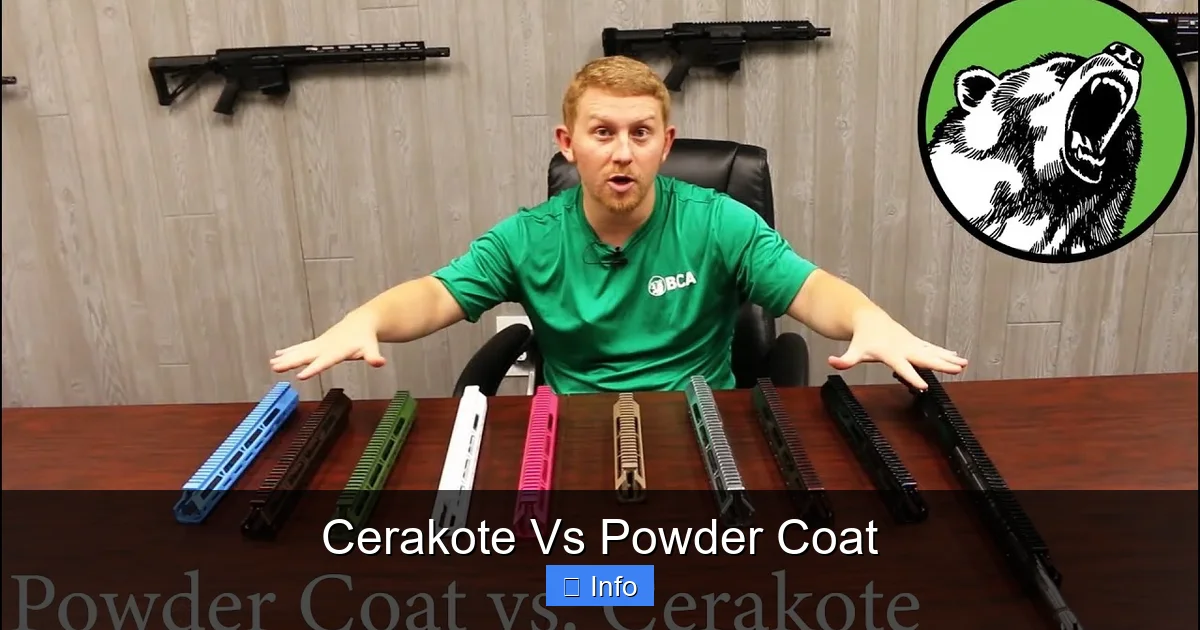
Choosing between Cerakote and powder coat depends on durability, finish options, and budget. This guide explains the key differences so you can select the best coating for your needs.
Choosing the right finish for a metal surface can feel like a never‑ending debate. Whether you’re refinishing a set of wheels, coating a firearm, or protecting a custom automotive part, the conversation often narrows down to two heavyweights: Cerakote and powder coat. In this post we’ll break down every major factor, from durability to cost, so you can decide which option truly wins the **Cerakote Vs Powder Coat** showdown.
Key Takeaways
- Point 1: Cerakote offers a wider range of colors and textures, while powder coat is limited to standard shades.
- Point 2: Powder coat requires high heat curing, making it less suitable for heat‑sensitive parts, whereas Cerakote can be air‑cured.
- Point 3: Cerakote provides superior abrasion resistance, ideal for high‑wear applications like firearms.
- Point 4: Powder coat generally has a lower upfront cost but may need more maintenance over time.
- Point 5: Application thickness differs; Cerakote can be applied thinner yet still protect effectively.
- Point 6: Environmental impact varies; powder coat emits volatile organic compounds during curing, while Cerakote is more eco‑friendly.
📑 Table of Contents
What Is Cerakote?
Cerakote is a family of high‑performance ceramic coatings that are applied as a thin film and then cured at relatively low temperatures. Unlike traditional paints, Cerakote bonds chemically with the substrate, creating a hard, abrasion‑resistant layer. It’s popular for firearms, engine components, and custom automotive parts because it offers a huge palette of colors, textures, and finishes — from matte to high gloss.
Key Features of Cerakote
Here are the standout attributes that set Cerakote apart:
- Color variety: Over 150 hues and many specialty effects.
- Thin application: Typically 0.5‑2 mils, preserving tight tolerances.
- Low‑temperature cure: Can be air‑cured or baked at 250‑350°F, protecting heat‑sensitive parts.
- Chemical resistance: Withstands oils, solvents, and UV exposure.
What Is Powder Coat?
Powder coating is a dry finishing process where finely ground particles of polymer resin are electrostatically charged and sprayed onto a surface. The coated piece is then heated in an oven, causing the powder to melt, flow, and cure into a smooth, durable finish. Powder coat is the go‑to for automotive wheels, aluminum extrusions, and outdoor furniture because of its thick, uniform coverage and excellent durability.
Visual guide about Cerakote Vs Powder Coat
Image source: muellercoatings.com
Key Features of Powder Coat
Powder coat brings its own set of strengths:
- Thickness: Typically 2‑5 mils, providing robust protection.
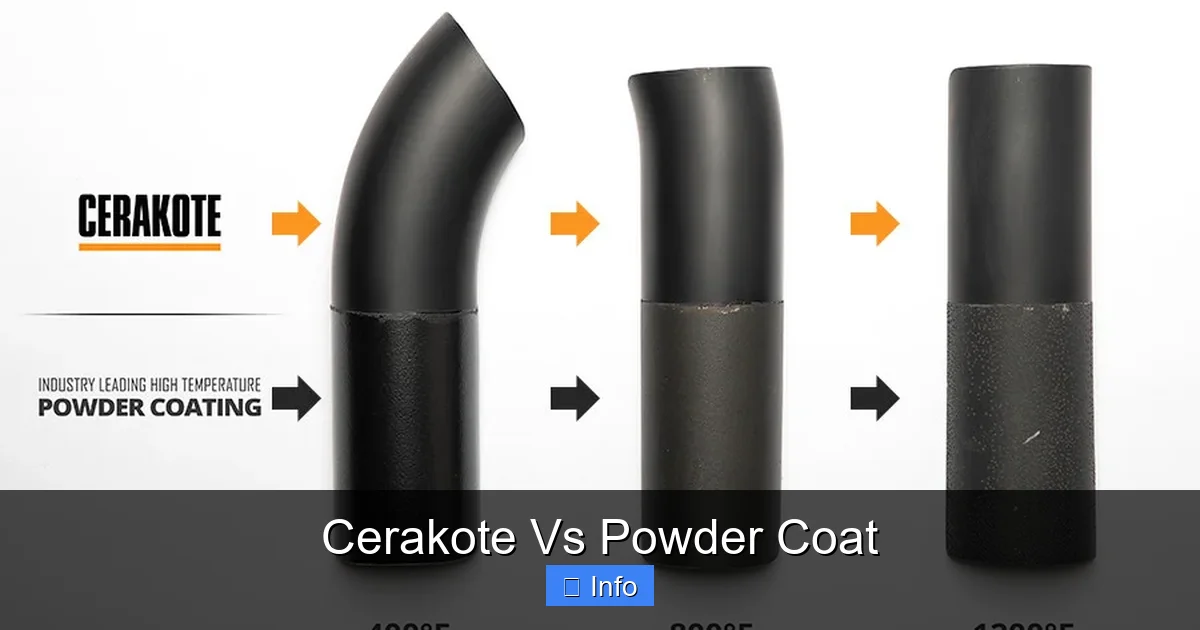
- High heat cure: Requires oven curing at 350‑400°F.
- Uniform finish: Excellent for large, flat surfaces.
- Cost‑effective: Generally cheaper per square foot than Cerakote.
Cerakote Vs Powder Coat: Durability Comparison
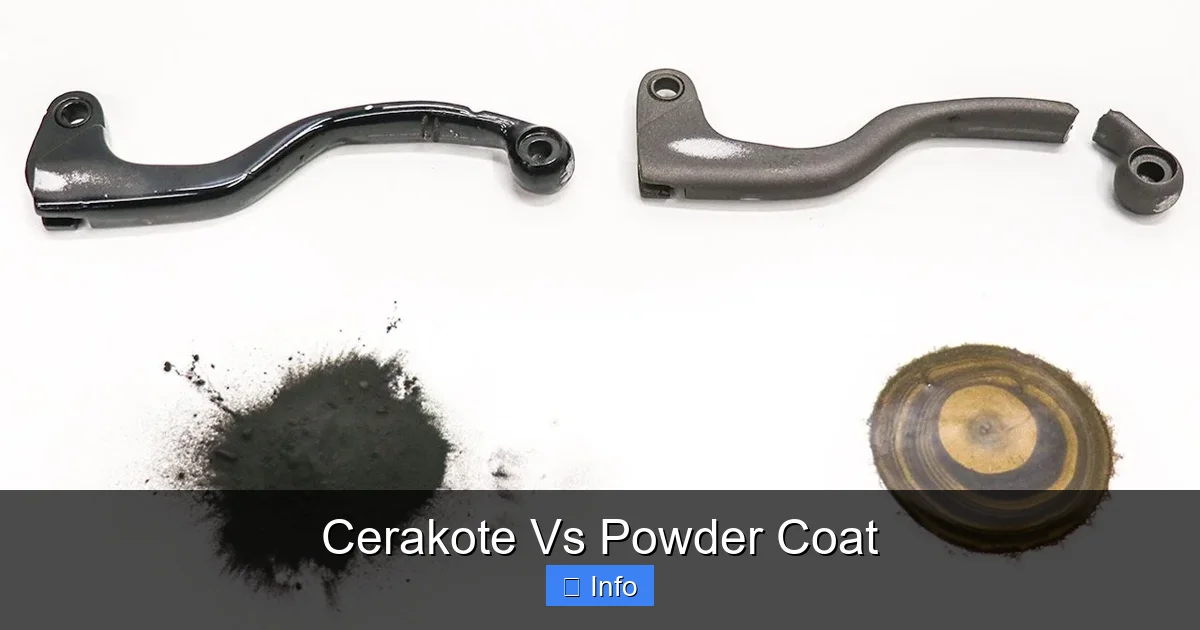
When it comes to wear and tear, both finishes have pros and cons. If you need a coating that can survive scratches, impact, and harsh chemicals, Cerakote often edges out powder coat, especially on high‑stress items like gun barrels or engine components. Powder coat, however, offers superior resistance to chipping and UV fading on large, exposed surfaces such as wheel rims.
Visual guide about Cerakote Vs Powder Coat
Image source: i.ytimg.com
Real‑World Test Scenarios
To illustrate the difference, consider these scenarios:
- Firearm finishing: Cerakote’s abrasion resistance makes it ideal for repeated handling.
- Wheel rims: Powder coat’s thicker layer handles stone chips better.
- Outdoor furniture: Both perform well, but powder coat’s UV stability shines in sunny climates.
Cerakote Vs Powder Coat: Application Process
The way each coating is applied dramatically influences the final result. Cerakote can be sprayed, brushed, or even dip‑applied, and it cures without a furnace. Powder coat, by contrast, demands an electrostatic spray system and a curing oven. This difference affects both labor cost and the types of items you can treat.
Visual guide about Cerakote Vs Powder Coat
Image source: static.wixstatic.com
Step‑by‑Step Overview
Here’s a quick walkthrough of the two processes:
- Surface prep: Both require thorough cleaning and sometimes sandblasting.
- Application: Cerakote is sprayed directly; powder coat uses an electrostatic sprayer.
- Curing: Cerakote air‑cures or low‑temp bakes; powder coat needs a 350°F oven.
- Inspection: Check for uniformity, adhesion, and thickness.
Cerakote Vs Powder Coat: Cost And Environmental Impact
Budget constraints and eco‑friendliness are increasingly important. Powder coat usually wins on upfront cost, especially for large batches. Cerakote may cost more per gallon, but its low‑temperature cure can save energy and reduce VOC emissions. If you’re looking for a greener option, Cerakote’s water‑based formulations are often more sustainable.
Linking to Related Content
If you’re also interested in protective finishes for other parts of your vehicle, check out our ceramic coating vs wax guide for a deep dive into alternative protection methods.
When upgrading your car’s exterior, you might also want to explore how ceramic coating stacks up against wax for long‑term shine.
Finally, for a broader look at protective coatings, see our comprehensive ceramic vs wax comparison.
Which One Should You Choose?
There’s no one‑size‑fits‑all answer. Your decision hinges on three core questions:
- What material are you coating? Heat‑sensitive parts favor Cerakote.
- How will the part be used? High‑abrasion applications benefit from Cerakote’s hardness.
- What’s your budget? Powder coat is typically cheaper for large, simple surfaces.
By weighing these factors, you can confidently pick the finish that delivers the best performance and value for your specific project.
Practical Tips And Common Mistakes
Even seasoned DIYers can slip up. Here are some tried‑and‑true tips:
- Prep is everything: Any oil or rust will compromise adhesion.
- Mind the thickness: Over‑application can lead to runs and uneven curing.
- Temperature control: Follow the manufacturer’s cure schedule precisely.
- Test a small area: Always trial the coating on a hidden spot first.
One frequent error is using a powder coat oven for Cerakote. The higher temperature can damage the ceramic polymer, resulting in a brittle finish. Conversely, applying powder coat on a part that needs a thin, intricate coating can cause buildup and loss of detail.
Conclusion
In the ultimate Cerakote Vs Powder Coat face‑off, the winner depends on your unique needs. If you prioritize color variety, thin‑film durability, and low‑temperature curing, Cerakote is likely the better choice. If you need a thick, cost‑effective finish for large, flat surfaces and can accommodate oven curing, powder coat will serve you well. Evaluate the material, usage, and budget, and you’ll walk away with a coating that protects and impresses for years to come.
Frequently Asked Questions
What is the main difference between Cerakote and powder coat?
Cerakote is a ceramic-based coating that cures at lower temperatures and offers a broader range of colors and textures, while powder coat is a polymer powder that requires high‑heat curing and provides a thicker, uniform finish.
Can I apply Cerakote over a powder‑coated surface?
It’s not recommended because the two finishes have different chemical compositions and curing processes, which can lead to poor adhesion and premature failure.
How long does each coating last under heavy use?
Cerakote typically lasts longer in high‑abrasion applications, often exceeding 5‑10 years, whereas powder coat can last 3‑7 years depending on thickness and environmental exposure.
Is Cerakote more expensive than powder coat?
Generally, Cerakote has a higher material cost per gallon, but the overall project cost can be comparable when factoring in labor, curing requirements, and the value of added color options.
Do these coatings affect the weight of the coated part?
Both coatings add minimal weight; Cerakote adds about 0.5‑2 mils, while powder coat adds 2‑5 mils, which is usually negligible for most applications.
Which coating is more environmentally friendly?
Cerakote’s low‑temperature cure and water‑based options generally produce fewer VOC emissions compared to the high‑heat curing process of powder coat, making it the greener choice in many scenarios.