Can a Toyota Tundra Pull a Fifth Wheel?
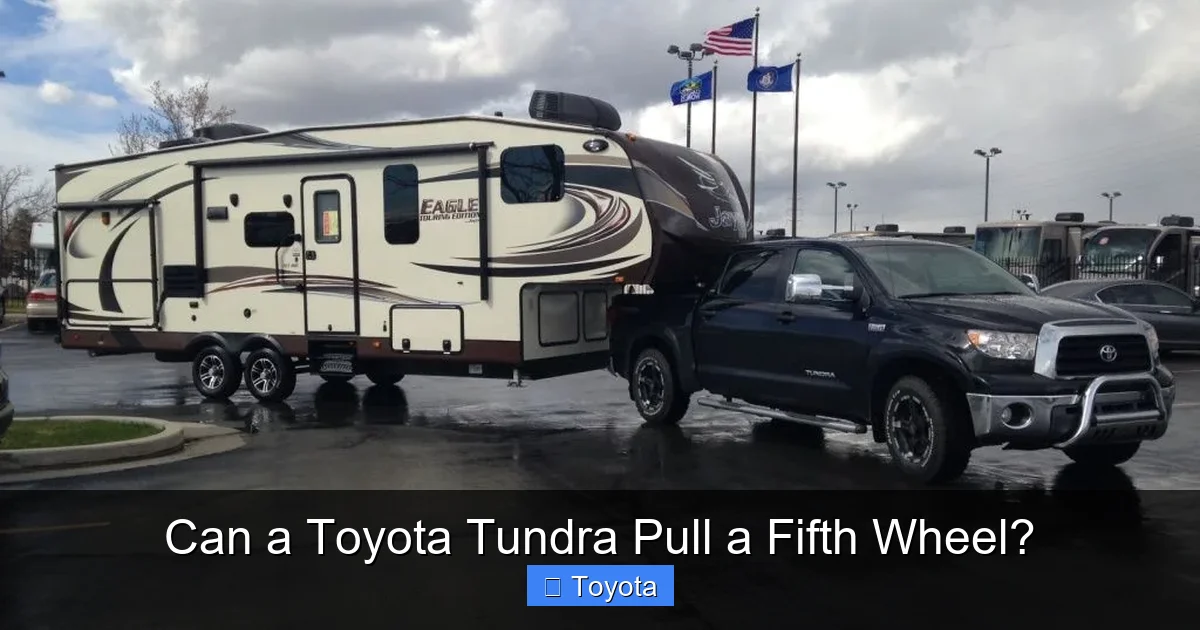
Yes, a Toyota Tundra can pull a fifth wheel, but it depends on the truck’s configuration, the trailer’s weight, and proper setup. Understanding the Tundra’s towing limits is key to a safe and successful trip.
Key Takeaways
- Towing capacity matters: The Tundra’s towing capacity varies by model, but most trims can handle 10,000–14,000 lbs, which is often enough for a fifth wheel.
- Weight limits are critical: Exceeding the Tundra’s Gross Combined Weight Rating (GCWR) can cause mechanical failure and safety risks.
- Proper equipment is non-negotiable: A heavy-duty trailer hitch, weight distribution hitch, and safety chains are essential for fifth-wheel towing.
- Tire and suspension prep: Ensure your Tundra’s tires and suspension are rated for heavy loads to avoid blowouts or sagging.
- Know your fifth wheel’s specs: Match the trailer’s weight and dimensions to your Tundra’s capabilities for a balanced load.
📑 Table of Contents
Can a Toyota Tundra Pull a Fifth Wheel?
If you’re planning a road trip with a fifth-wheel trailer, you might be wondering if your Toyota Tundra is up to the task. The answer is a resounding *yes*—but with important caveats. The Tundra is one of the most capable trucks on the road, but pulling a fifth wheel isn’t as simple as throwing a trailer in the back. It requires careful planning, the right equipment, and a solid understanding of your truck’s capabilities. In this article, we’ll break down everything you need to know to determine if your Tundra can handle a fifth-wheel adventure.
Understanding Fifth-Wheel Towing Basics
Fifth-wheel towing involves connecting a trailer to the truck via a specialized hitch mounted in the truck’s bed. Unlike a trailer hitch, which attaches to the rear of the truck, a fifth-wheel hitch sits in the bed and connects to a coupler on the trailer. This setup distributes the trailer’s weight more evenly, reducing stress on the truck’s suspension and improving stability. However, it also demands more from the truck’s engine, brakes, and frame.
The key to success here is matching the trailer’s weight to the Tundra’s towing capacity. A fifth-wheel trailer can range from 10,000 to 20,000+ pounds, depending on its size and features. The Tundra’s maximum towing capacity varies by model and configuration. For example, a base model Tundra might handle up to 10,000 lbs, while a high-end TRD Pro or SR5 could tow 14,000 lbs or more. If your trailer exceeds this limit, you’ll need to reconsider your setup.
Toyota Tundra Towing Specifications: What You Need to Know
The Toyota Tundra’s towing capacity isn’t a one-size-fits-all number. It depends on factors like engine size, transmission type, and drivetrain. For instance, a 5.7L V8 engine with a 5-speed automatic transmission might offer a lower towing capacity than a 6.7L V8 with a 10-speed automatic. Additionally, the truck’s GVWR (Gross Vehicle Weight Rating) plays a role. If the Tundra itself is heavily loaded with passengers or cargo, that reduces the available weight for the trailer.
To get the most accurate numbers, check your Tundra’s owner’s manual or the manufacturer’s specifications. As a general rule, most Tundra models can handle fifth-wheel trailers between 10,000 and 14,000 lbs. However, if you’re looking at a larger trailer, you may need to opt for a heavier-duty model like the Tundra’s SR5 or TRD Pro variants. These trims are built for towing and often come with upgraded brakes, cooling systems, and suspension components.
Preparing Your Toyota Tundra for Fifth-Wheel Towing
Before hitting the road, there are several steps you should take to ensure your Tundra is ready for the task. First, **check your truck’s towing package**. Some Tundra models come with factory-installed towing equipment, while others require aftermarket upgrades. If your truck doesn’t have a heavy-duty hitch, you’ll need to install one. A fifth-wheel hitch is a must-have, but you’ll also need a weight distribution hitch to balance the trailer’s weight properly.
Next, **inspect your truck’s components**. The tires, brakes, and suspension should all be in top condition. Fifth-wheel towing puts extra strain on these systems, so worn parts can lead to dangerous situations. For example, underinflated tires or worn brake pads can compromise safety. Consider upgrading to high-performance tires rated for heavy loads.
Another critical step is **calibrating your truck’s systems**. Some Tundra models have electronic stability control (ESC) or trailer brake controllers that need to be configured for fifth-wheel towing. Consult your manual or a professional mechanic to ensure everything is set up correctly.
Key Considerations for Fifth-Wheel Trailers
Not all fifth-wheel trailers are created equal. The weight, size, and design of the trailer will directly impact your Tundra’s performance. For instance, a lightweight travel trailer might be easy to pull, but a heavy recreational vehicle with a large living space could push the Tundra’s limits.
When selecting a trailer, **match its specifications to your Tundra’s capabilities**. Look for trailers that are rated for the Tundra’s GCWR (Gross Combination Weight Rating). This rating includes the weight of the truck, trailer, and any cargo. Exceeding this limit can cause the truck to overheat, strain the engine, or even lead to a breakdown.
Also, consider the **trailer’s weight distribution**. A fifth-wheel trailer’s weight should be evenly spread across the truck’s axle. If the trailer is too heavy in the front or back, it can cause swaying or fishtailing. A weight distribution hitch helps mitigate this issue by transferring some of the weight to the truck’s front axle.
Tips for a Safe and Successful Fifth-Wheel Trip
Once your Tundra and trailer are ready, there are additional tips to keep in mind for a smooth journey. **Practice driving with the trailer** before your trip. Get used to how the trailer behaves when turning, braking, and accelerating. This helps you build confidence and avoid unexpected movements.
**Maintain a safe following distance**. Fifth-wheel trailers are larger and heavier, so you’ll need more space to stop or maneuver. Avoid tailgating and leave ample room between you and other vehicles.
**Monitor your truck’s gauges**. Pay attention to the engine temperature, brake pressure, and fuel level. Fifth-wheel towing can cause the engine to work harder, so overheating is a real concern. If you notice any warning lights, stop and address the issue immediately.
**Plan your routes carefully**. Avoid narrow roads, steep hills, or areas with low clearance. Some fifth-wheel trailers are tall or wide, which can limit your options. Check the trailer’s height and width against local regulations and road conditions.
Common Mistakes to Avoid
Even with the right setup, mistakes can happen. One of the most common errors is **underestimating the trailer’s weight**. Always double-check the trailer’s specifications and compare them to your Tundra’s towing capacity. Another mistake is **ignoring maintenance**. Regularly inspect your truck’s brakes, tires, and hitch system to ensure everything is functioning properly.
Another pitfall is **not accounting for cargo weight**. If you’re carrying heavy items in the Tundra’s bed or cab, that reduces the available weight for the trailer. Always factor in the total load when calculating your towing limits.
Conclusion
The Toyota Tundra is a versatile and powerful truck that can absolutely pull a fifth wheel—**but only if you do your homework**. By understanding your truck’s towing capacity, selecting the right trailer, and preparing your equipment, you can enjoy a safe and enjoyable trip. Whether you’re heading to the mountains or the beach, the Tundra’s towing prowess makes it a great choice for fifth-wheel adventurers. Just remember: preparation is key, and safety should always come first.
FAQs
Can a Toyota Tundra pull a fifth wheel without a weight distribution hitch?
While it’s possible to tow a fifth wheel without a weight distribution hitch, it’s not recommended. A weight distribution hitch helps balance the trailer’s weight, reducing strain on the Tundra’s suspension and improving stability. Without it, you risk uneven weight distribution, which can lead to swaying or difficulty controlling the truck.
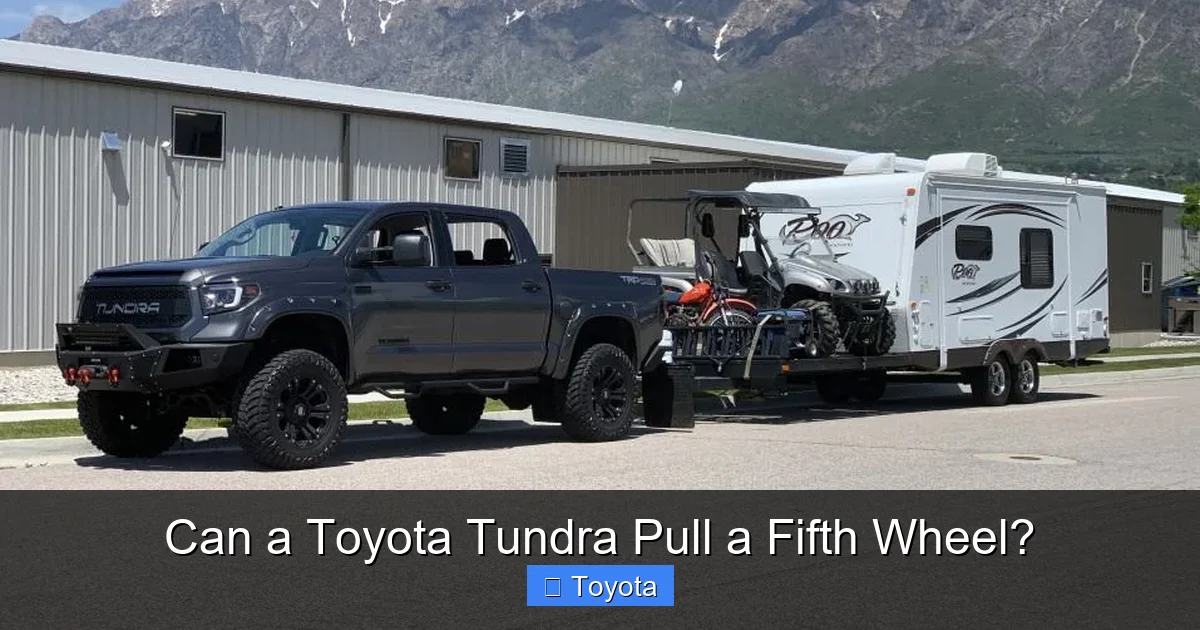
Visual guide about Can a Toyota Tundra Pull a Fifth Wheel?
Image source: fourwheeltrends.com
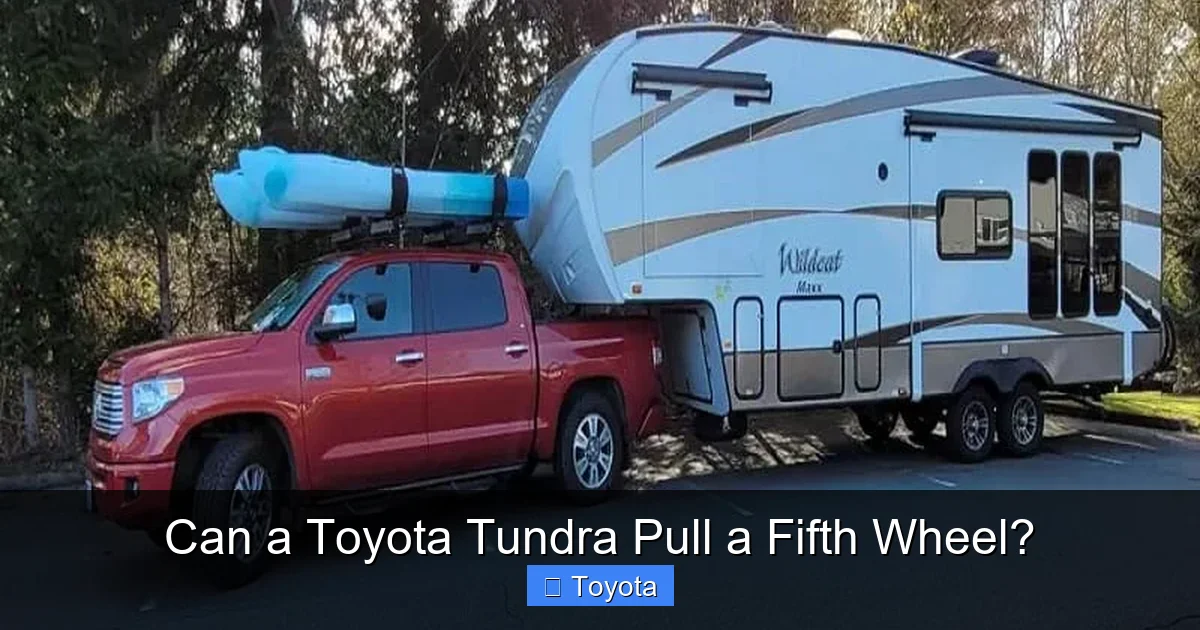
Visual guide about Can a Toyota Tundra Pull a Fifth Wheel?
Image source: rvlibary.com
What is the maximum weight a Toyota Tundra can pull with a fifth wheel?
The maximum weight depends on the Tundra’s model and configuration. Most trims can handle up to 14,000 lbs, but some high-end versions may tow more. Always check your specific Tundra’s GCWR and towing capacity to ensure you don’t exceed limits.
Do I need special tires for fifth-wheel towing?
Yes, it’s advisable to use tires rated for heavy loads. Underinflated or worn tires can fail under the stress of fifth-wheel towing. Consider upgrading to high-performance tires with a higher load index for added safety.
Can a base model Toyota Tundra pull a fifth wheel?
A base model Tundra might struggle with heavier fifth-wheel trailers. It typically has a lower towing capacity, so it’s better suited for smaller trailers. If you’re planning to pull a larger trailer, opt for a higher trim like the TRD Pro or SR5.
How do I check my Tundra’s towing capacity?
You can find your Tundra’s towing capacity in the owner’s manual or by contacting a Toyota dealership. The information is usually listed under the vehicle’s specifications or towing section. Online resources and third-party calculators can also help.
What are the risks of overloading my Tundra for fifth-wheel towing?
Overloading can cause the engine to overheat, strain the brakes, and lead to mechanical failure. It can also reduce fuel efficiency and make the truck harder to control. Always stay within the recommended weight limits to avoid these risks.
Frequently Asked Questions
What is Can a Toyota Tundra Pull a Fifth Wheel??
Can a Toyota Tundra Pull a Fifth Wheel? is an important topic with many practical applications.