Do We Need Pollution Certificate for New Car
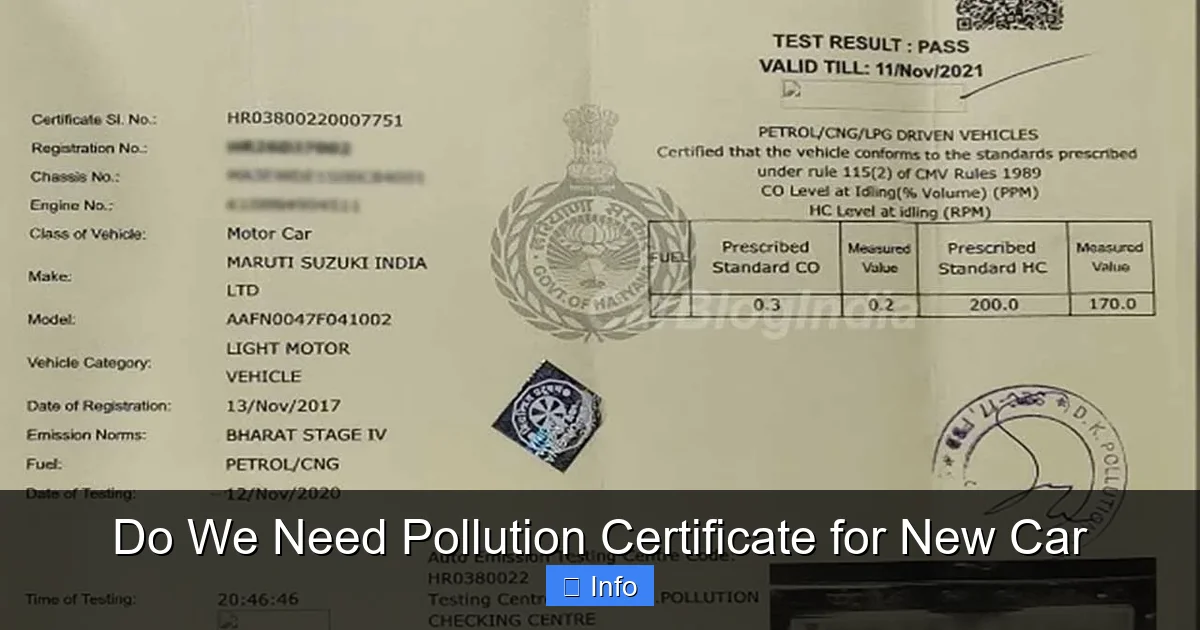
If you just bought a new car, you might wonder whether you need a pollution certificate. In most regions, a valid PUC is required for all vehicles, but new cars often get a temporary exemption for the first few months. This article explains the rules, how to obtain a certificate, and what to do if you miss the deadline.
Buying a new car is exciting, but it also comes with a list of responsibilities. One of the first things you might hear about is the need for a pollution certificate. This document may seem like a small detail, yet it plays a big role in keeping our air clean and ensuring your vehicle meets legal standards.
In this guide we will walk you through everything you need to know about the pollution certificate for a new car. From what it is and when it is required, to how you can obtain it and what happens if you ignore the rule, we cover all the essential points. By the end you will feel confident about handling this requirement.
Key Takeaways
- Point 1: Most new cars must obtain a pollution certificate after a short grace period.
- Point 2: The certificate is often called a PUC or emissions certificate.
- Point 3: You can get tested at authorized centers or through online services.
- Point 4: Some vehicles, like electric cars, may be exempt from the requirement.
- Point 5: Driving without a valid certificate can result in fines and legal trouble.
- Point 6: Regular maintenance helps keep emissions low and ensures easy renewal.
📑 Table of Contents
What Is a Pollution Certificate?
Definition
A pollution certificate, often referred to as a PUC or emissions certificate, is an official document that confirms a vehicle meets the emission standards set by the government. It indicates that the car releases a limited amount of pollutants such as carbon monoxide, hydrocarbons, and nitrogen oxides. The certificate is usually valid for a specific period, after which it must be renewed.
Why It Matters
The primary purpose of a pollution certificate is to protect public health and the environment. When too many vehicles emit high levels of harmful gases, air quality deteriorates, leading to respiratory issues and other health problems. By requiring a certificate, authorities encourage car owners to maintain their vehicles properly, which in turn reduces overall emissions.
Alternative Names
In different regions, the document may be called an emissions test, vehicle inspection report, or simply a PUC. Regardless of the name, the concept is the same: it verifies that your car meets the local emission limits.
Renewal Requirement
Most jurisdictions require the certificate to be renewed every six to twelve months. Failure to renew can result in the same penalties as never obtaining the certificate.
Testing Procedure
The actual test involves a brief drive on a dynamometer or a simple idle check. The vehicle’s exhaust is analyzed for carbon monoxide, hydrocarbons, and other gases. If the levels are below the threshold, the technician issues the certificate on the spot.
Certification Validity
The certificate is usually valid for a fixed period, often six months to one year. After expiration, you must undergo testing again to confirm that your vehicle still meets the emission standards.
Common Misconceptions
Some new car owners believe that a brand‑new vehicle automatically qualifies for a permanent exemption, but this is false. All vehicles, regardless of age, must eventually demonstrate compliance with emission standards.
When Is It Required for a New Car?
Registration Timeline
After you register a new car, you are typically given a short window of time to obtain a pollution certificate. This period can range from 30 days to six months, depending on the state or country. During this grace period, you can legally drive the vehicle without the certificate, but you must acquire it before the deadline.
Grace Periods
Some regions offer extended grace periods for brand‑new vehicles, especially if they are purchased from a dealer that handles the paperwork on your behalf. It is important to check with your local Department of Motor Vehicles or equivalent agency to know the exact duration. Missing the deadline can result in fines or even suspension of your registration.
Dealer Assistance
Many dealerships offer to handle the pollution certificate process as part of the purchase. They will schedule the test and provide the certificate before you take delivery. This can save you time and ensure compliance with the law.
State Variations
State laws differ; for example, California requires a certificate within 30 days, while Texas allows up to 90 days. Always check your state’s specific timeline to avoid penalties.
Renewal Timeline
Once you receive the certificate, note the expiration date. Most regions require renewal every six months to a year. Setting a calendar reminder can help you avoid missing the deadline and incurring penalties.
Grace Period Exceptions
In certain situations, such as when a vehicle is used for emergency services, the grace period may be extended. However, these exceptions are rare and require official documentation.
Proof of Insurance
When you go for the test, bring proof of insurance. Some testing centers require it to verify that the vehicle is legally registered before they will perform the inspection.
How to Obtain a Pollution Certificate
Testing Centers
You can get a pollution certificate at any authorized emission testing center. These centers are often located at gas stations, repair shops, or dedicated inspection stations. The test itself is quick, usually taking 15 to 30 minutes, and involves connecting a device to your car’s exhaust system to measure emissions.
Online Services
In many areas, you can schedule an appointment online and even receive the certificate electronically. This service is convenient for busy individuals who prefer to avoid long wait times. Make sure to verify that the online platform is recognized by your local government.
Cost and Documentation
The cost of a pollution certificate varies, but it is generally affordable, often between $10 and $50. You will need to bring your vehicle registration and proof of insurance to the testing center. Some states may also require a valid driver’s license.
What to Expect During Test
During the test, a technician will connect a diagnostic tool to your car’s onboard computer. The tool reads the engine’s performance and emission levels. If the readings are within limits, you will receive the certificate immediately.
Renewal Process
Typically, you need to renew the certificate every six to twelve months. Some states may require annual renewal for older vehicles. Keeping track of the expiration date helps avoid a lapse in compliance.
Out‑of‑State Considerations
If you move to a different state, you may need to obtain a new pollution certificate that meets that state’s standards. Some states accept certificates from other jurisdictions, but it is best to verify with the local DMV.
Test Failure
If your vehicle fails the emissions test, you will receive a report indicating the problem. You can then make the necessary repairs and retest within a specified timeframe.
Payment Options
Most testing centers accept cash, credit cards, or digital payments. It is wise to check the accepted methods in advance to avoid any inconvenience during your visit.
Exemptions and Special Cases
Electric and Hybrid Vehicles
Electric vehicles produce zero tailpipe emissions, so they are often exempt from the pollution certificate requirement. However, you may still need to provide proof of registration and insurance. Hybrid vehicles may also qualify for reduced testing frequency, depending on local regulations.
Classic and Vintage Cars
Older vehicles that are used only for exhibitions, parades, or limited driving may be exempt. The rules vary, so it is best to consult your local transportation department for the exact criteria. In some places, classic cars must still pass a visual inspection to ensure they are not modified in a way that increases emissions.
Government and Military Vehicles
Official vehicles used by government agencies or military forces are usually exempt from the pollution certificate process. These vehicles are often maintained under separate standards, but it is advisable to confirm with the appropriate authorities.
Modified Vehicles
If you have modified your car, such as adding a performance exhaust, you may need to undergo additional testing. Modifications can affect emissions and might cause the vehicle to fail the test.
Temporary Exemptions
In some cases, a vehicle may receive a temporary exemption, for example, if it is being repaired and cannot be driven. This exemption is usually short‑term and requires documentation.
Electric Vehicle Incentives
Many regions offer incentives for electric vehicle owners, such as reduced registration fees or waived testing requirements. These incentives are designed to encourage cleaner transportation options.
Military Exemptions
Active‑duty military personnel may qualify for exemptions from the pollution certificate process, especially when stationed overseas or in remote areas with limited testing facilities.
Government Fleet
Government-owned vehicles are typically exempt, but they must still undergo periodic inspections to ensure they meet operational and environmental standards.
Consequences of Not Having a Certificate
Fines and Penalties
Driving without a valid pollution certificate can lead to monetary fines. The amount depends on the jurisdiction, but it can range from a few hundred dollars to over a thousand. Repeated offenses may result in the suspension of your driver’s license or vehicle registration.
Impact on Insurance and Registration
Insurance companies might view a missing certificate as a sign of neglect, which could affect your premium or even lead to policy cancellation. Additionally, failing to produce the certificate during a traffic stop can result in a citation and further penalties.
Legal Implications
Beyond fines, you could be cited for operating an unregistered vehicle, which carries its own set of penalties. In extreme cases, your vehicle may be impounded.
Environmental Impact
Not having a certificate often means your car is emitting more pollutants, contributing to smog and health issues. This can affect not only you but also the community.
Community Health Effects
When vehicles exceed emission limits, the surrounding air quality declines. This can lead to increased asthma attacks, cardiovascular problems, and other health concerns for nearby residents.
Insurance Implications
Some insurance providers may increase premiums or deny coverage if they discover a vehicle lacks a valid pollution certificate, viewing it as a higher risk.
Legal Defenses
If you are cited for lacking a certificate, you may present evidence that you had an appointment scheduled or that the testing center was closed. Documentation can help mitigate penalties.
Tips for Maintaining Emissions Compliance
Routine Maintenance
Keeping your car well‑maintained is the easiest way to stay compliant. Change the oil on schedule, replace the air filter, and have the exhaust system inspected regularly. A well‑tuned engine emits fewer pollutants, making it easier to pass the emissions test.
Driving Habits
Smooth acceleration and avoiding rapid stops can reduce emissions. Idling for long periods also increases pollution, so try to turn off the engine when you are stopped for more than a minute. Using cruise control on highways can help maintain a steady speed and lower fuel consumption.
Upgrade and Accessories
Installing a high‑quality air filter or a catalytic converter can improve your vehicle’s emission profile. For a clean interior, you might enjoy using one of the best car air fresheners for new car scent to keep your cabin smelling fresh. When it comes to washing your vehicle, a good soap like the best car wash soap for ceramic coated cars can help protect the finish and reduce environmental impact. If you have children, ensuring they are safely secured in a proper car seat is crucial; check out the best car seat for 4 year old 5 point harness for added safety.
Scheduled Maintenance
Following the manufacturer’s maintenance schedule is key. This includes regular oil changes, filter replacements, and spark plug checks. A well‑maintained engine runs efficiently and produces fewer emissions.
Fuel Quality
Using high‑quality fuel can also help reduce emissions. Some fuels contain additives that clean the engine and improve combustion, leading to cleaner exhaust.
Aftermarket Parts
Choosing aftermarket parts that are certified for low emissions can keep your vehicle compliant. Look for parts labeled as ‘EPA approved’ or ‘CARB certified’ to ensure they meet environmental standards.
Technology and Apps
Several mobile apps can help you track maintenance schedules, find nearby testing centers, and receive reminders for certificate renewal. Using these tools can simplify the compliance process.
Eco‑friendly Driving
Adopting eco‑friendly driving habits, such as gentle acceleration and maintaining proper tire pressure, can further reduce emissions and improve fuel efficiency.
Professional Inspection
Having a certified mechanic inspect your vehicle before the official test can identify potential issues, such as a faulty oxygen sensor, that might cause a failure.
Conclusion
In summary, most new cars do need a pollution certificate after a short grace period. Understanding the local rules, obtaining the certificate on time, and maintaining your vehicle will help you avoid fines and contribute to cleaner air. Stay informed, act early, and enjoy the road with peace of mind.
Frequently Asked Questions
Is a pollution certificate required for a brand new car?
Yes, in most regions a new car must obtain a pollution certificate within a specified grace period after registration. The exact timeframe varies by state or country, but it is generally required.
How long is the grace period for new cars?
The grace period can range from 30 days to six months, depending on local regulations. Some states may offer longer periods for certain vehicle types or if the dealer handles the process.
Where can I get a pollution certificate?
You can get a pollution certificate at authorized emission testing centers, which are often located at gas stations, repair shops, or dedicated inspection stations. Many areas also offer online scheduling and electronic certificates.
Are electric vehicles exempt from needing a pollution certificate?
Electric vehicles are usually exempt because they produce zero tailpipe emissions. However, you may still need to provide proof of registration and insurance, and some regions require a brief inspection.
What happens if I drive without a valid pollution certificate?
Driving without a valid certificate can result in monetary fines, citations, and in some cases suspension of your driver’s license or vehicle registration. Repeat offenses may lead to higher penalties.
How often do I need to renew the pollution certificate?
Typically, the certificate must be renewed every six to twelve months. Some states may require annual renewal for older vehicles, so it’s important to keep track of the expiration date.