How Many Passengers Allowed in Private Car in Maharashtra
In Maharashtra, a private car can legally carry only as many passengers as its registered seating capacity. Most sedans and hatchbacks allow 5 people including the driver, while larger SUVs may permit 7 or 8. Exceeding this limit attracts fines under the Motor Vehicles Act.
Planning a family trip to Lonavala or a weekend getaway to Alibaug? You pack the snacks, load the playlist, and herd everyone into the car. But wait — do you actually know how many passengers allowed in private car in Maharashtra before you hit the Mumbai-Pune Expressway? It is a simple question with a surprisingly specific answer. Most of us assume “if they fit, they sit.” That mindset can cost you a hefty fine or worse, put lives at risk.
The rule is not based on how many seat belts you have or how small your passengers are. It is based on one official document: your Registration Certificate. The RC lists the seating capacity of your vehicle. That number is the law. Whether you drive a Maruti Swift, a Hyundai Creta, or a Toyota Innova, the limit is printed right there. Let us break down exactly what that means for you, your family, and your wallet.
Key Takeaways
- Seating capacity is fixed: The number of passengers allowed equals the seating capacity mentioned in the vehicle’s Registration Certificate (RC).
- Standard cars allow 5 people: Most hatchbacks, sedans, and compact SUVs in Maharashtra are registered for 5 occupants including the driver.
- Larger SUVs may allow 7-8: Vehicles like the Toyota Fortuner, Mahindra XUV700, or Innova Crysta often have 7 or 8 seat registration.
- Overloading attracts heavy fines: Carrying extra passengers beyond the RC limit can lead to a ₹1,000 fine per extra person under Section 194A of the MV Act.
- Children count as passengers: Kids, infants, and babies all count toward the total limit — no exemptions for age or size.
- Seat belts are mandatory for all: Every passenger must wear a seat belt where fitted; failure invites a ₹1,000 fine per person.
- No COVID restrictions remain: Earlier pandemic-era limits (like 50% capacity) have been fully lifted across Maharashtra.
📑 Table of Contents
- Understanding The Legal Limit: Your RC Is The Rulebook
- Typical Seating Capacities For Popular Car Types In Maharashtra
- Penalties For Overloading: What The Motor Vehicles Act Says
- Child Passengers: No Special Exemptions
- Seat Belt Rules: Every Seat, Every Passenger
- Luggage Vs Passengers: Don’t Confuse Capacity
- Special Cases: Tourist Vehicles, Contract Carriages, And EVs
- Practical Tips To Stay Legal And Safe
- Conclusion
Understanding The Legal Limit: Your RC Is The Rulebook
Every private vehicle registered in Maharashtra — or anywhere in India — has a Registration Certificate issued by the RTO. This document contains critical details: engine number, chassis number, fuel type, and seating capacity. That last field is your legal passenger limit. It includes the driver. So if your RC says “5,” you can carry four passengers plus yourself. No more.
Where To Find Your Seating Capacity
Open your RC book or smart card. Look for the field labeled “Seating Capacity” or “No. of Persons.” It is usually near the vehicle class and fuel type. On the newer PVC smart cards, it is printed clearly on the front. On the old paper RC books, check the inner pages. If you use the mParivahan or DigiLocker app, the digital RC shows the same data. Always verify this number before you plan a group outing.
Why The Manufacturer’s Brochure Does Not Matter
You might see a car advertised as a “7-seater” in a brochure. But if the RTO registered it as a 6-seater — maybe because the third row lacks proper seat belts or headrests — then 6 is your legal limit. The RC overrides the brochure. This happens often with imported SUVs or modified vehicles. Always trust the RC, not the marketing material.
Typical Seating Capacities For Popular Car Types In Maharashtra
Maharashtra roads host every kind of private vehicle. Here is a quick reference for common categories. Remember, these are typical values. Your specific variant may differ.
Hatchbacks And Compact Sedans (5 Seats)
Cars like the Maruti Suzuki Swift, Baleno, Hyundai Grand i10, Tata Tiago, Honda Amaze, and Volkswagen Polo almost always register as 5-seaters. That means driver + 4 passengers. This covers 80% of private cars on Maharashtra roads. If you have a family of five, you are at the limit. A sixth person — even a toddler on a lap — makes you an offender.
Mid-Size SUVs And Sedans (5 Or 7 Seats)
This segment is tricky. The Hyundai Creta, Kia Seltos, Tata Harrier, MG Hector, and Honda City are mostly 5-seaters. But some three-row versions like the Mahindra XUV700 (7-seater variant), Tata Safari, or MG Hector Plus register as 7-seaters. Check your variant. The 7-seat version usually costs more and has different rear AC vents, seat belts, and ISOFIX points.
Full-Size MPVs And SUVs (7 Or 8 Seats)
The Toyota Innova Crysta, Innova Hycross, Kia Carnival, Toyota Fortuner, and Mercedes-Benz GLS often come with 7 or 8 seat registration. The Innova Crysta typically registers as 7 or 8 depending on the bench vs captain seat configuration in the middle row. The Kia Carnival is usually a 7 or 8-seater. These are the only private cars that legally carry large groups.
Modified Or Converted Vehicles
Some owners add jump seats or aftermarket third rows in vehicles like the Mahindra Bolero, Thar, or Force Gurkha. These modifications do not increase legal capacity unless the RTO endorses the change on the RC. Without endorsement, the original seating capacity stands. Police can impound the vehicle for unauthorized structural changes.
Penalties For Overloading: What The Motor Vehicles Act Says
The Motor Vehicles (Amendment) Act, 2019, tightened rules nationwide. Maharashtra enforces these strictly, especially on highways and during festival seasons. Here is what overloading costs you.
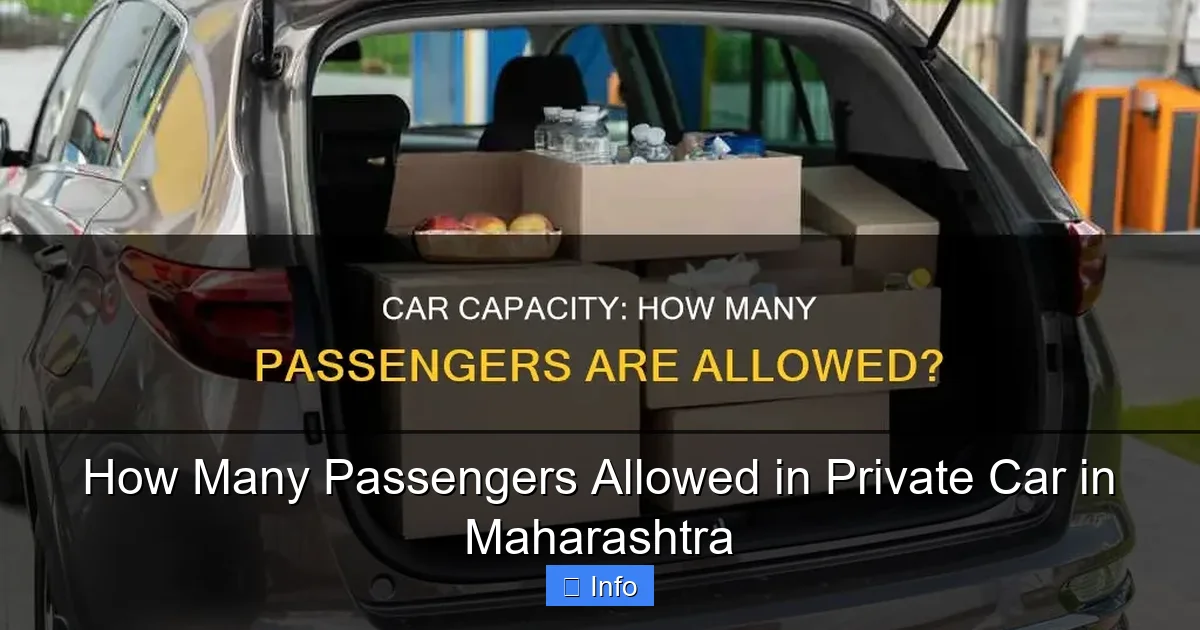
Visual guide about How Many Passengers Allowed in Private Car in Maharashtra
Image source: shunauto.com
Fine Structure Under Section 194A
Section 194A of the MV Act penalizes carrying passengers in excess of the permitted capacity. The fine is ₹1,000 per extra passenger. If your 5-seater carries 7 people, that is two extra passengers. The fine: ₹2,000. The driver pays. This is a compoundable offence — you pay on the spot or at a court. Repeat offences can attract higher penalties or licence suspension.
Additional Risks: Insurance And Liability
If an overloaded car meets with an accident, your insurance claim can be rejected. The policy covers only the declared seating capacity. Injuries to extra passengers become your personal liability. In fatal cases, you may face criminal charges under Section 304A IPC (causing death by negligence). The savings of skipping a second car are not worth the risk.
Enforcement In Maharashtra: What To Expect
Traffic police in Mumbai, Pune, Nagpur, Nashik, and on major highways like the Samruddhi Mahamarg conduct regular nakabandis. They check RC, PUC, insurance, and visually count occupants. At night, they use torches. During Ganpati, Diwali, or summer vacations, checks intensify. E-challans are issued via ANPR cameras too. You may not even be stopped — the challan arrives on your phone.
Child Passengers: No Special Exemptions
A common myth: “Kids don’t count.” False. Every human being counts as one passenger. A newborn in arms, a toddler on a lap, a child in a booster — each occupies one seat in the eyes of the law. If your 5-seater has two adults, two kids, and a baby, that is 5 people. You are legal. Add one more child? You are overloaded.
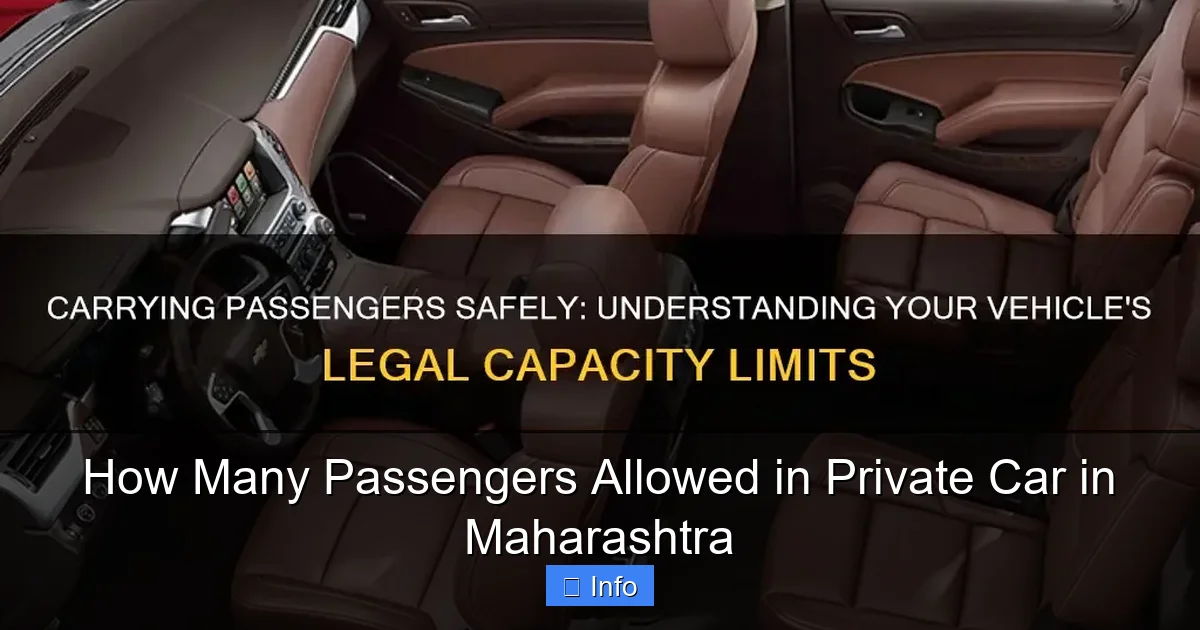
Visual guide about How Many Passengers Allowed in Private Car in Maharashtra
Image source: shunauto.com
Child Restraint Systems: The Law And Best Practice
India does not yet have a nationwide mandatory child seat law for private cars. But Maharashtra traffic police strongly recommend ISOFIX child seats for kids under 12. The Best 4 In 1 Car Seats For Safety And Comfort adapt from infant to booster mode and fit most Indian cars. Using one does not increase your passenger limit — it just makes the occupied seat safer. Always install it on the rear seat. Front passenger airbag + rear-facing child seat = deadly combination.
School Runs And Carpooling
Many parents carpool for school. If your sedan is a 5-seater, you can take three kids + you + one more adult. That is it. Do not squeeze four kids in the back. It is illegal and unsafe. In a crash, unrestrained children become projectiles. Plan multiple trips or use a certified 7-seater if you regularly transport more than four children.
Seat Belt Rules: Every Seat, Every Passenger
Since November 2022, the Central Motor Vehicles Rules mandate seat belts for all passengers, including rear seats. Maharashtra enforces this rigorously. The fine: ₹1,000 per unbuckled person. The driver is responsible for ensuring compliance. If your car has 5 seat belts, you can carry 5 people — but only if all 5 wear belts. If the middle rear belt is a lap-only type, it still counts. Use it.
What If Your Car Has Fewer Belts Than Seats?
Older cars (pre-2002) may lack rear seat belts. The RC seating capacity still applies. But you cannot legally carry passengers in seats without belts on highways. In cities, police may allow it but can still challan under “unsafe carriage.” Best practice: retrofit seat belts at an authorized workshop. It costs little and saves lives.
Pregnant Women And Medical Cases
No exemption exists for pregnancy or medical conditions. A pregnant woman counts as one passenger. She must wear the seat belt correctly — lap belt below the bump, shoulder belt across the chest. If a doctor certifies a medical exemption from seat belts, carry the certificate. But the passenger count limit remains unchanged.
Luggage Vs Passengers: Don’t Confuse Capacity
People often stuff the boot and roof, then squeeze extra passengers inside. Two separate limits apply: seating capacity (people) and gross vehicle weight (total load). Exceeding either is an offence. Overloading luggage affects braking, stability, and tyre life. If you carry 5 people + heavy luggage + roof box, you may exceed GVW. Check your owner’s manual for max payload.
Roof Carriers And Boot Space
Roof carriers are legal if within dimensions (max 2.5m width, 4.2m height from ground) and do not obstruct lights or number plate. But they do not increase passenger capacity. If you need to move 6 people + luggage, rent a 7-seater or take two cars. It is cheaper than a challan, a denied claim, or a tragedy. For reference on luggage space in popular sedans, see how many suitcases fit in a Toyota Camry — it helps plan boot usage for long trips.
Towing And Trailers
Private cars in Maharashtra rarely have tow hitches approved. If you tow a trailer, the combined weight must not exceed GVW. Passengers still limited to RC seating. Trailers cannot carry people. Ever.
Special Cases: Tourist Vehicles, Contract Carriages, And EVs
Rules differ if your car has a yellow number plate (commercial) or a tourist permit. Private white-plate cars follow the rules above. But some edge cases confuse owners.
Electric Vehicles: Same Rules Apply
EVs like the Tata Nexon EV, MG ZS EV, or BYD Atto 3 follow identical seating capacity rules. The RC shows the limit. Battery weight does not change passenger count. Some EVs have a “frunk” (front trunk) — it is for luggage only. No passengers there.
Vintage And Classic Cars
Vintage vehicles (registered as such with VA/VP series plates) have restrictions. They cannot be used for daily commute. Passenger limit is per RC. Usually 2 or 4. Police may allow occasional rally use with prior permission. Do not assume exemptions.
Diplomatic And Government Vehicles
CD/CC/UN plates follow the same MV Act. Seating capacity on RC applies. No special passenger allowance. The only difference: challan process may route through the Ministry of External Affairs. But the fine amount is identical.
Practical Tips To Stay Legal And Safe
Knowing the rule is half the battle. Applying it daily is where most slip. Here are actionable habits.
Check Your RC Today
Take 30 seconds. Open your glove box. Pull out the RC. Note the seating capacity. Save a photo on your phone. Share it with family members who drive the car. No guesswork later.
Count Before You Start
Make it a ritual: engine off, count heads. Driver + passengers = total. Compare to RC number. If over, someone stays or takes a cab. No exceptions for “short distance” or “slow speed.” Accidents happen near home.
Use Technology Reminders
Set a phone reminder for school pickup days: “Max 4 kids today.” Use WhatsApp groups for carpool coordination. Assign a “capacity captain” each week. Peer enforcement works better than self-policing.
Keep Spare Seat Belt Extenders
If you often carry three adults in the back, the middle belt can be tight. Seat belt extenders (approved type) help comfort without defeating safety. They do not increase legal capacity — just make the existing seat usable.
Plan Group Trips With The Right Vehicle
For family functions, weddings, or office outings, book a certified 7/8-seater (Innova, Ertiga, Carnival) or a tempo traveller (12+ seats, commercial permit). Split the cost. It is safer, legal, and often cheaper per head than multiple small cars + fuel + parking + stress. Before a long drive, also check your brake pads — a loaded car needs more stopping power.
Conclusion
The answer to how many passengers allowed in private car in Maharashtra is refreshingly simple: exactly what your Registration Certificate says. Not what the seats suggest. Not what the salesman promised. Not what “everyone else does.” The RC number is your shield against fines, insurance denial, and legal trouble. It is also your guide to keeping loved ones safe.
Maharashtra roads are unpredictable — potholes, sudden braking, erratic two-wheelers. A car within its designed capacity handles better, stops shorter, and protects occupants as engineered. Overloading defeats crumple zones, airbag timing, and seat belt geometry. The ₹1,000 fine is the least of your worries.
So next time you plan a trip to Mahabaleshwar or a dinner in Bandra, count heads. Match the RC. If the numbers don’t add up, book that second car or call a cab. The peace of mind is priceless. Drive safe. Drive legal. Let the RC be your co-pilot.
Frequently Asked Questions
Can I carry 6 people in a 5-seater car if one is a baby?
No. Every person counts as one passenger regardless of age. A baby in arms occupies a seat legally. Your 5-seater allows 5 total occupants including the driver. Six people means a ₹1,000 fine for the extra passenger.
Does Maharashtra have different rules than other states for private car passenger limits?
No. The Motor Vehicles Act is a central law. Seating capacity rules are uniform across India. Maharashtra enforces them strictly but the limit comes from your RC, which is valid nationwide.
What if my car has 7 seat belts but RC says 5?
The RC seating capacity is the legal limit. Extra seat belts do not authorize extra passengers. The RTO certifies the vehicle structure for a specific number. Carrying more is overloading even if belts exist.
Are there any exemptions for medical emergencies?
No statutory exemption exists for passenger count during emergencies. However, police may exercise discretion in genuine life-threatening situations. But you risk a challan and insurance issues. Always call an ambulance for medical transport.
Can I increase my car’s seating capacity legally?
Only through RTO approval. You must apply for alteration endorsement under Section 52 of the MV Act. The vehicle must pass inspection for structural safety, seat belts, and emissions. Unauthorized modifications are illegal and void insurance.
Do pets count as passengers in Maharashtra?
No. Animals are not counted as passengers for seating capacity. But they must be secured safely — not on driver’s lap or loose in the car. Unrestrained pets can distract driving and become hazards in crashes.