Why Is My Toyota Not Starting?
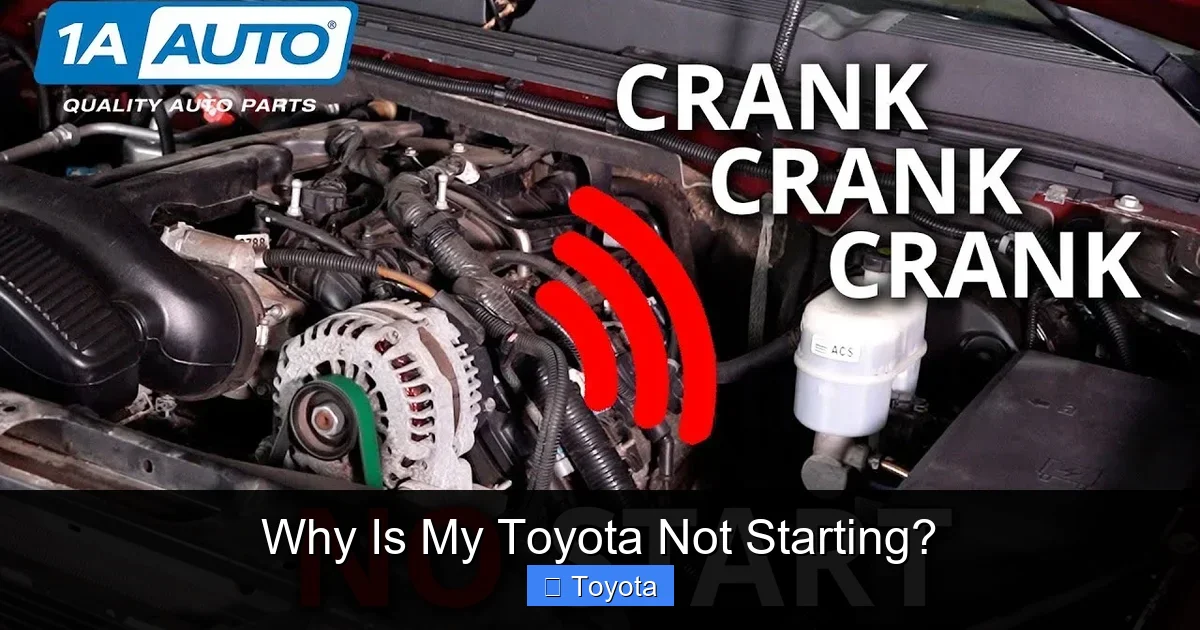
When your Toyota refuses to start, it can feel overwhelming, but most problems are simple to diagnose. This guide walks you through the top reasons—dead battery, fuel issues, ignition failures, and sensor glitches—and shows you quick at‑home checks. With a few tools and some patience, you can often get your car back on the road without a pricey shop visit.
When your trusted Toyota suddenly remains silent, it can feel like a mystery. This guide breaks down the most common reasons “Why Is My Toyota Not Starting?” and gives you simple, at‑home checks. You’ll learn to spot a dead battery, a failing fuel pump, or a faulty sensor. With a few tools and some patience, you can often diagnose the problem yourself and avoid an expensive shop visit. By the end you’ll have a clear plan to get your car back on the road.
Key Takeaways
- Battery health is the first place to check. A dead or weak battery is the most common reason a Toyota won’t start.
- Fuel delivery problems can mimic a dead battery. If the pump isn’t pushing gas, you’ll hear a click but the engine won’t fire.
- Ignition components wear out. Worn spark plugs or a failing starter often need replacement.
- Electrical sensors and safety systems matter. Faulty immobilizers or brake switches can lock the car out.
- Basic troubleshooting saves time and money. Simple checks like listening for clicks or checking voltage can pinpoint the issue.
- Regular maintenance prevents surprises. Keeping batteries, fuel, and ignition parts in shape keeps your Toyota starting every time.
📑 Table of Contents
Understanding Why Your Toyota Might Not Start
Modern Toyotas rely on a mix of mechanical, electrical, and electronic systems to start. The battery powers the starter, the fuel pump sends gas to the engine, and the ignition creates a spark. Sensors check brake position, gear selection, and key authenticity. If any of these parts fails, the engine may stay silent.
Listening for clues helps. A click, a grind, or total silence each point to a different issue. By learning to read these sounds, you can narrow down the cause and decide whether a quick fix or a professional repair is needed.
Common Reasons Your Toyota Won’t Start
Battery Issues
A dead or weak battery is the top suspect. Dim lights or a slow crank usually mean the battery can’t deliver enough voltage. Use a voltmeter; 12.6V is healthy, below 12.2V means it’s discharged.
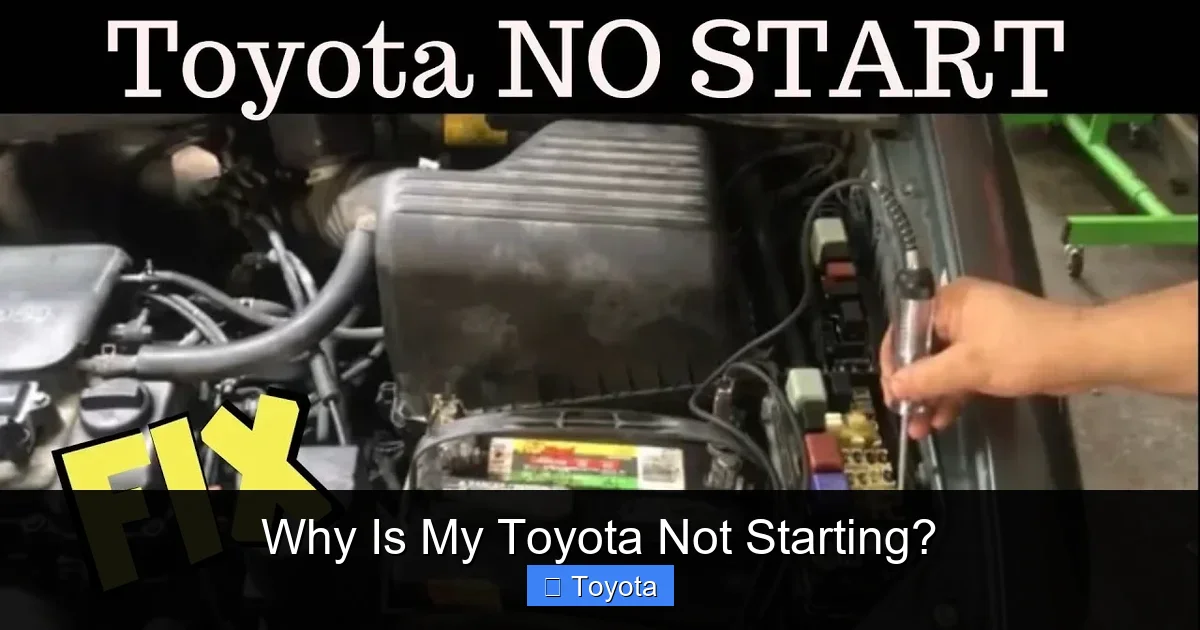
Visual guide about Why Is My Toyota Not Starting?
Image source: aautomotives.com
Corroded or loose terminals also block power. Clean the terminals with baking soda and water, then tighten connections. If the battery is old, replace it to avoid future surprises.
Fuel System Problems
When the battery is fine, check the fuel system. A failing fuel pump may cause a click but no start. Listen for a faint hum after the click—if it’s missing, the pump likely needs replacement.
A clogged fuel filter can starve the engine. Replace the filter on schedule. Also, a radiator building up too much pressure can affect engine temperature and fuel delivery. For more on this, see Why Is My Radiator Building Up Too Much Pressure.
Ignition System Failures
Worn spark plugs or a bad ignition coil often cause hard starts. Replace spark plugs every 60k‑100k miles. If the coil fails, the engine may crank but not fire.
The starter motor can also fail. A grinding noise when you turn the key usually means the starter needs service. The starter relay may click once and stop, indicating it’s time for a new relay.
Electrical and Sensor Issues
The immobilizer reads a chip in the key. A dead chip will keep the car locked out. Try a second key; if it starts, replace the bad key.
The brake switch tells the ECU the brake is pressed. Low brake fluid can affect this switch, so check the fluid level. For details, read Can Low Brake Fluid Cause Car Not To Start.
Other sensors—like seat occupancy or gear position—can also block starting if they report wrong data.
How to Perform Basic Checks Before Calling a Mechanic
Verify the Battery
Connect a voltmeter to the battery terminals. A reading of 12.6V means the battery is good. Below 12.2V suggests it’s discharged and may need a jump‑start or replacement.
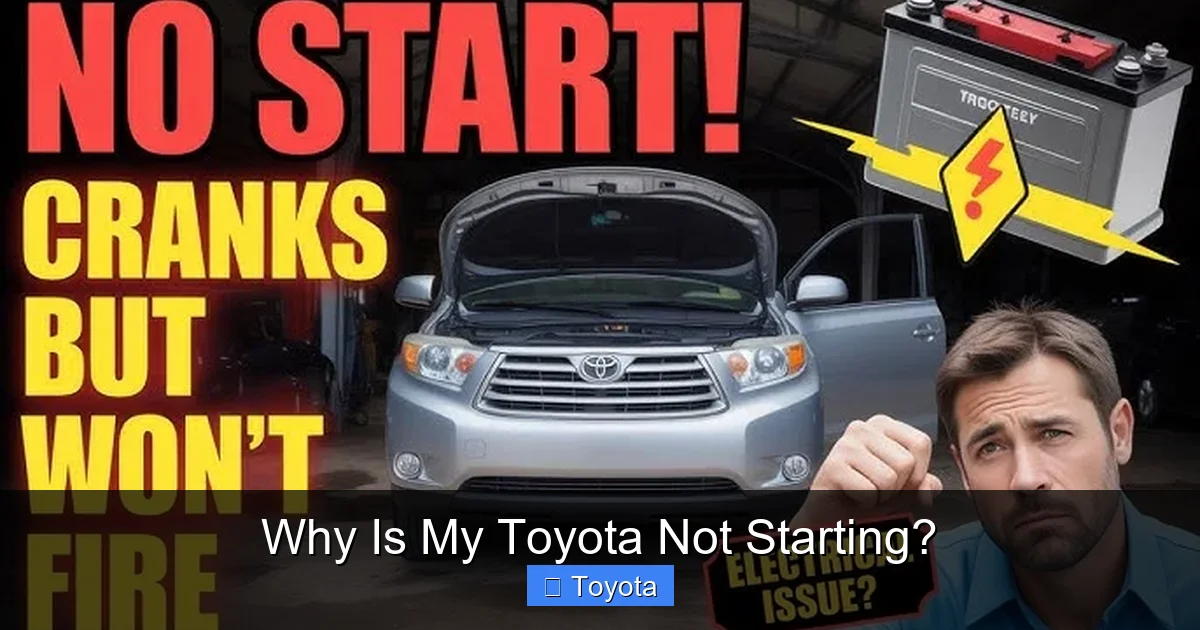
Visual guide about Why Is My Toyota Not Starting?
Image source: buzzlyo.com
Check the terminals for corrosion. Clean them with baking soda and water, then tighten any loose clamps. Try starting after cleaning.
Listen for the Click
A single click often comes from the starter relay. If the relay fails, you’ll hear a click but no cranking. Swap the relay with a known good one, or test it with a test light.
A click from the fuel pump relay may mean the pump is dead. After the click, listen for a faint hum—if it’s missing, replace the pump.
Check the Fuel Gauge and Smell
If the gauge reads empty, the sender unit may be faulty. Visually check the fuel level by removing the cap. If the tank isn’t empty, the gauge likely needs repair.
A fuel smell near the engine can signal a leak. Do not start the car if you suspect a leak. Inspect lines, connections, and the cap for tightness.
Inspect the Keys and Remote
Smart keys use a transponder chip. A dead chip will block the immobilizer. Try a second key; if it starts, replace the bad key.
Most newer Toyotas require you to press the brake while pressing the start button. If you skip the brake, the car won’t start. For more on this, see Do You Press The Brake When Starting A Car.
When to Seek Professional Help
Diagnostic Tools
If basic checks don’t reveal the issue, use an OBD‑II scanner. The scanner reads fault codes that point to specific problems. Technicians can also view live data to see voltage, pressure, and temperature.
Visual guide about Why Is My Toyota Not Starting?
Image source: knowmyauto.b-cdn.net
Advanced tools can test the starter, alternator, and sensor circuits. A professional will have the right equipment to diagnose hidden faults safely.
Common Repairs and Costs
Typical repairs include battery replacement ($100‑$200), starter repair ($300‑$500), and fuel pump replacement ($200‑$400). Spark plug changes are cheaper, around $40‑$80.
Preventive maintenance, like regular battery checks and fuel filter changes, can keep these costs low. Investing a little now often saves money later.
Preventive Maintenance to Keep Your Toyota Starting Smoothly
Regular Battery Care
Check terminals every few months. Clean corrosion with baking soda and water, then tighten connections. Test the battery voltage annually; replace it after 3‑5 years.
Fuel System Maintenance
Replace the fuel filter every 30k‑60k miles. Use a fuel system cleaner periodically to remove deposits. Inspect lines for leaks and tighten connections.
Ignition and Electrical Checks
Replace spark plugs per the service schedule. Test the alternator output (should be 13.5‑14.5V). Keep the immobilizer antenna clear of damage.
Conclusion
A Toyota that won’t start can be frustrating, but most issues are manageable. Start with simple checks: battery voltage, click sounds, fuel presence, and brake engagement. If the problem persists, let a professional use diagnostic tools to pinpoint the fault.
Regular maintenance—battery care, fuel system checks, and ignition service—helps prevent start‑up problems. By staying proactive, you’ll enjoy reliable starts and fewer unexpected breakdowns.
Understanding “Why Is My Toyota Not Starting?” gives you the confidence to act quickly, save money, and keep your vehicle dependable. With the right knowledge, you can turn a silent engine into a smooth start.
Frequently Asked Questions
Why does my Toyota click once and not start?
A single click usually comes from the starter relay or fuel pump relay. Test the relay with a test light or try a second key. If the click persists, the relay or pump may need replacement.
Can a dead battery cause other starting issues?
Yes. A weak battery can cause the starter to turn slowly, trigger warning lights, and strain the alternator. Always check voltage first before assuming other components are at fault.
How do I know if the fuel pump is failing?
Listen for a faint hum after the key is turned. If you only hear a click, the pump may be dead. Use a fuel pressure gauge or have a mechanic test pump output for an accurate diagnosis.
What should I do if my Toyota’s security light is flashing?
A flashing security light often means the immobilizer detects a bad key. Try a second key, check for a dead transponder chip, and ensure the key’s battery (if applicable) is functional.
Does low brake fluid affect starting?
Low brake fluid can cause the brake switch to malfunction, leading the ECU to think the brake isn’t pressed. This can lock out the start sequence. Top up the fluid and inspect the switch if needed.
How often should I replace spark plugs?
Spark plugs typically need replacement every 60,000‑100,000 miles, depending on the model and driving conditions. Follow your Toyota’s maintenance schedule for optimal performance and reliable starts.