How Much Is a 2004 Toyota Sienna Worth?

The 2004 Toyota Sienna typically sells for between $2,500 and $5,500 depending on condition, mileage, and trim. Knowing these factors helps you price it fairly whether you’re buying or selling. Use online tools and local listings to refine your estimate.
Key Takeaways
- Price Range: Most 2004 Siennas fall between $2,500 for high‑mileage, fair‑condition examples and $5,500 for low‑mileage, well‑maintained models.
- Trim Matters: The LE, XLE, and Limited trims affect value, with Limited models commanding the highest prices due to premium features.
- Mileage Impact: Every 10,000 miles over 100k typically reduces value by about $300‑$500, assuming average condition.
- Condition Is Key: Rust, interior wear, and mechanical issues can drop the price sharply; a clean title and recent maintenance add value.
- Regional Differences: Prices vary by climate and demand; northern states with harsh winters may see lower values due to rust concerns.
- Use Valuation Tools: Online calculators and local classifieds provide a realistic baseline before negotiating.
- Timing Helps: Selling in spring or early summer often yields better offers as families look for minivans for road trips.
📑 Table of Contents
Introduction
The 2004 Toyota Sienna holds a special place in the minivan segment. Launched during a period when families prioritized space, reliability, and fuel efficiency, this model year offered a blend of practicality and Toyota’s renowned durability. If you’re considering buying or selling a 2004 Sienna, understanding its current market worth is essential to make an informed decision.
In this guide we’ll break down the factors that influence the value of a 2004 Toyota Sienna, examine how trim levels, mileage, and condition affect price, and provide practical tips for both buyers and sellers. By the end you’ll have a clear picture of what to expect when negotiating a deal.
Overview of the 2004 Toyota Sienna
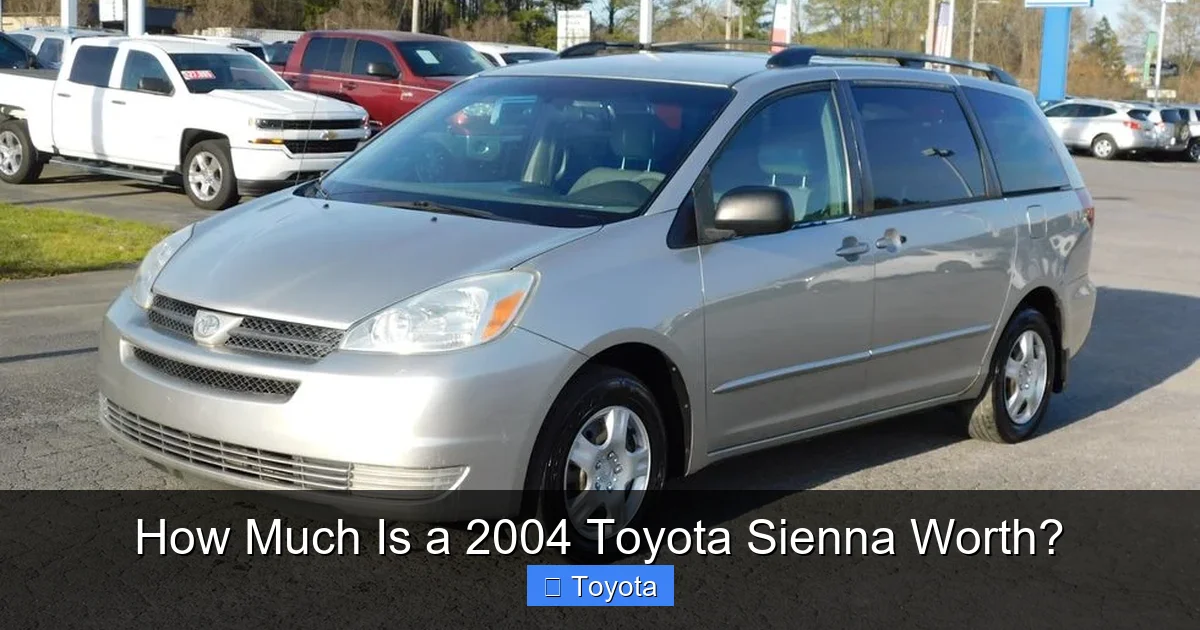
The 2004 Sienna was part of the second generation, which ran from 1998 to 2003 with a facelift for the 2004 model year. It came equipped with a 3.3‑liter V6 engine producing around 210 horsepower, paired with a five‑speed automatic transmission. Front‑wheel drive was standard, though all‑wheel drive was available on certain trims.
Visual guide about How Much Is a 2004 Toyota Sienna Worth?
Image source: cf-img.autorevo.com
Standard features included dual‑zone climate control, a CD player, and ample cargo space behind the third row. Higher trims added leather upholstery, power‑adjustable seats, and a rear‑seat entertainment system. Safety equipment featured dual front airbags, side‑impact airbags, and anti‑lock brakes.
Because the Sienna was built on a car‑based platform, it offered a smoother ride than many truck‑based minivans of the era. This combination of comfort and reliability has helped the 2004 model retain a loyal following among used‑car shoppers.
Factors That Influence Value
Several variables determine how much a 2004 Toyota Sienna is worth today. Understanding each factor lets you adjust your expectations and negotiate more effectively.

Visual guide about How Much Is a 2004 Toyota Sienna Worth?
Image source: carscoops.com
Market Demand
Demand for used minivans fluctuates with seasons and economic conditions. In periods when families plan vacations or need extra passenger space, interest in vehicles like the Sienna rises, nudging prices upward. Conversely, during economic downturns or when fuel prices spike, demand can soften.
Vehicle History
A clean title with no accidents or flood damage significantly boosts value. Services like Carfax or AutoCheck provide history reports that buyers often scrutinize. A Sienna with a reported collision, even if repaired, may see its price drop by 10‑20%.
Maintenance Records
Documented regular oil changes, timing belt replacements (if applicable), and brake services signal a well‑cared‑for vehicle. Sellers who can present a full maintenance log often command a premium, as it reduces the perceived risk for the buyer.
Location and Climate
Vehicles sold in regions with harsh winters and heavy road salt use tend to exhibit more rust, especially on the undercarriage and wheel wells. This can lower the resale price. In contrast, Siennas from warmer, drier climates often retain better body condition, supporting higher valuations.
Trim Levels and Options Impact
The 2004 Sienna was offered in three primary trims: LE, XLE, and Limited. Each tier adds features that affect market value.

Visual guide about How Much Is a 2004 Toyota Sienna Worth?
Image source: aautomotives.com
LE – The Base Model
The LE trim includes cloth seats, manual air conditioning, and a basic audio system. It’s the most affordable option when new, and consequently the least expensive on the used market. A well‑maintained LE with average mileage might sell for $2,500‑$3,500.
XLE – Mid‑Range Comfort
Moving up to the XLE adds leather‑trimmed seats, power‑adjustable front seats, dual‑zone automatic climate control, and upgraded interior trim. These comforts make the XLE more desirable for families willing to pay a bit more. Typical prices range from $3,500‑$4,500 for a solid example.
Limited – Premium Features
The Limited trim tops the lineup with leather upholstery, wood‑grain interior accents, a premium sound system, and often a rear‑seat DVD entertainment system. Because of these added luxuries, Limited models can fetch $4,500‑$5,500, assuming low mileage and excellent condition.
Optional Packages
Certain options, such as the all‑wheel‑drive system, roof rack, or tow package, can also influence value. AWD versions are particularly appealing in snowy regions and may add $500‑$800 to the price. A tow package, while niche, can be a selling point for those who need to haul small trailers.
Mileage and Condition Guidelines
Mileage and overall condition are the two most tangible factors that buyers evaluate. Here’s how they translate into dollar amounts.
Mileage Bands
- Under 80,000 miles: Considered low mileage for a 20‑year‑old vehicle. Expect prices at the top of the range, especially if the car shows minimal wear.
- 80,000‑120,000 miles: Average mileage for the age. Prices typically sit in the middle of the band.
- 120,000‑150,000 miles: Higher mileage begins to affect value more noticeably; deduct roughly $300‑$500 per 10,000 miles over 120k.
- Over 150,000 miles: High‑mileage examples often need upcoming maintenance (e.g., suspension work, transmission service). Prices may fall to $2,000‑$3,000 unless the car has been exceptionally well cared for.
Condition Assessment
Use a simple three‑tier scale: Excellent, Good, and Fair.
- Excellent: No visible rust, interior shows little wear, all electronics work, tires have good tread, and recent major services (timing belt, brakes) are documented. This condition can add $800‑$1,200 to the base price.
- Fair: Noticeable cosmetic flaws, minor mechanical issues, or missing service records. Expect a deduction of $500‑$1,000.
- Poor: Significant rust, non‑functional components, or a salvage title. Value may drop below $2,000.
Practical Example
Imagine a 2004 Sienna XLE with 105,000 miles, a clean title, and recent brake replacement. Starting from the XLE midpoint of $4,000, subtract $300 for the extra 5,000 miles over 100k, add $600 for excellent condition, and add $400 for the documented brake job. The estimated value lands around $4,700.
Regional Market Variations
Where you buy or sell can shift the price by several hundred dollars.
Northern States
Areas with heavy snowfall and road salt (e.g., Minnesota, Michigan, New York) often see more underbody rust. Buyers in these regions may discount a Sienna by $500‑$1,000 compared to identical vehicles in the south.
Southern and Western States
Warmer climates like Texas, Arizona, and California tend to preserve bodywork better. Demand for family vehicles remains steady, especially in suburban areas, which can keep prices toward the higher end of the range.
Urban vs. Rural
In densely populated cities, parking space is at a premium, making larger minivans less desirable. Consequently, urban listings may sit lower unless the vehicle is exceptionally well maintained. Rural buyers, who often need extra cargo space for farming or recreational equipment, may pay a premium.
Tips for Buyers and Sellers
Whether you’re on the buying or selling side, a few strategies can help you achieve a fair deal.
For Buyers
- Research Listings: Check multiple platforms—Craigslist, Facebook Marketplace, Autotrader, and local dealerships—to gauge the going rate.
- Use a Valuation Calculator: Tools like the How Much Is My Car Worth Calculator provide a baseline based on zip code, mileage, and condition.
- Inspect Thoroughly: Look for rust under the wheel wells, test all electronics, and take the vehicle for a test drive to listen for unusual noises.
- Check Service Records: Ask for receipts for timing belt, transmission fluid, and brake work. Missing records can be a red flag.
- Negotiate Based on Findings: Use any issues discovered during inspection as leverage to lower the price.
For Sellers
- Clean and Detail: A spotless interior and exterior make a strong first impression and can justify a higher asking price.
- Gather Documentation: Compile the title, service history, and any receipts for recent repairs. Transparency builds trust.
- Take Quality Photos: Capture clear images of the exterior, interior, engine bay, and any wear points. Good photos attract more inquiries.
- Set a Competitive Price: Start slightly above your target to allow room for negotiation, but stay within the market range to avoid lingering listings.
- Consider Timing: List in early spring when families start planning summer trips; demand for minivans tends to rise.
Conclusion
The 2004 Toyota Sienna remains a practical choice for families seeking a reliable, spacious minivan without the premium price of newer models. Its worth today hinges on a combination of trim level, mileage, condition, and regional factors. By understanding these variables and leveraging tools like online valuation calculators, you can confidently navigate the buying or selling process.
Whether you’re hunting for a low‑mileage Limited model for road trips or looking to sell a dependable LE to upgrade, the insights shared here will help you arrive at a fair price. Remember that a well‑maintained Sienna with a clean title can still deliver many miles of comfortable travel, making it a smart investment in the used‑car market.
Frequently Asked Questions
What is the average price range for a 2004 Toyota Sienna?
The average price ranges from about $2,500 for high‑mileage, fair‑condition examples to roughly $5,500 for low‑mileage, well‑maintained Limited trims. Most vehicles fall somewhere in the middle depending on specific factors.
How does mileage affect the value of a 2004 Sienna?
Every additional 10,000 miles over the 100,000‑mile mark typically reduces the value by $300‑$500, assuming average condition. Lower mileage vehicles command a premium, while high‑mileage models may need upcoming maintenance that lowers their price.
Which trim level offers the best resale value?
The Limited trim generally holds the highest resale value due to its leather seats, premium audio, and often rear‑seat entertainment system. XLE models follow, with LE models being the most affordable.
Should I worry about rust on a 2004 Sienna?
Yes, especially if the vehicle has spent time in regions with heavy road salt use. Rust on the undercarriage, wheel wells, or frame can significantly reduce value and may lead to costly repairs.
How can I verify the vehicle’s history before buying?
Obtain a vehicle history report from services like Carfax or AutoCheck using the VIN. The report will reveal past accidents, title issues, odometer discrepancies, and service records if reported.
Is it worth paying extra for all‑wheel drive on a 2004 Sienna?
If you live in an area with frequent snow or icy roads, AWD can provide added traction and peace of mind, often justifying a $500‑$800 premium. In milder climates, the benefit may not outweigh the added cost.