2001 Toyota Corolla Tire Size Guide
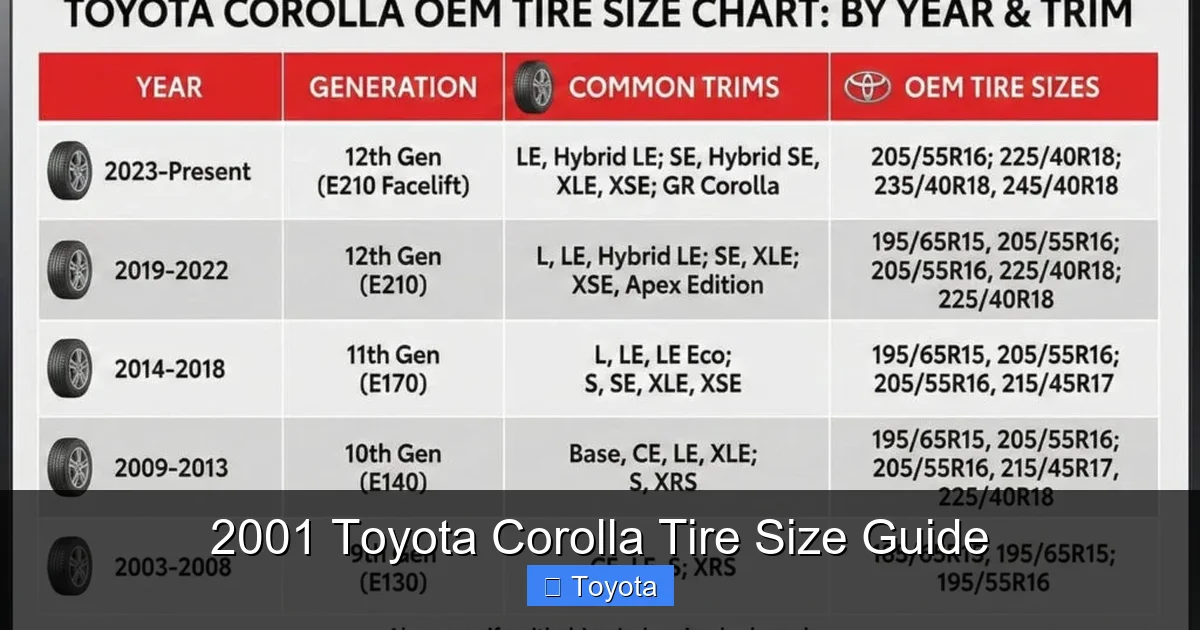
The 2001 Toyota Corolla typically uses 185/60R14 or 195/55R15 tires depending on trim level. Always verify your current tire size before purchasing replacements.
Key Takeaways
- Standard Sizes: 185/60R14 and 195/55R15 are the most common OEM sizes
- Trim Variations: Different trim levels may require different tire sizes
- Check Door Jamb: Your vehicle’s door jamb sticker lists the correct tire size
- Pressure Matters: Maintain 32-35 PSI for optimal performance and fuel economy
- Upgrading Carefully: Staying within manufacturer specs ensures safety and compatibility
- Seasonal Considerations: Winter and summer tires should match your vehicle’s specifications
📑 Table of Contents
- Understanding Your 2001 Toyota Corolla Tire Size
- Common Tire Sizes for the 2001 Toyota Corolla
- How to Find Your Exact Tire Size
- Making the Right Choice: Tips for Buying Tires
- Maintaining Your Tires for Longevity
- When to Consider Upgrading
- Final Thoughts on 2001 Corolla Tire Selection
- Getting Professional Help When Needed
- Conclusion: Your Perfect Tire Match
Understanding Your 2001 Toyota Corolla Tire Size
If you’re driving a 2001 Toyota Corolla, knowing the right tire size isn’t just about keeping your car looking good. It’s about safety, performance, and making sure you don’t end up with tires that don’t fit properly. The 2001 Corolla came with a few different tire sizes depending on the trim level, and picking the wrong one can lead to everything from poor fuel economy to handling issues.
Let me break this down for you in simple terms. Your tire size isn’t just random numbers and letters. Each part means something specific, and understanding that helps you make better decisions when it’s time to replace your tires. Whether you’re buying your first set of replacement tires or upgrading to something performance-oriented, this guide will walk you through everything you need to know.
What Do Those Numbers Actually Mean?
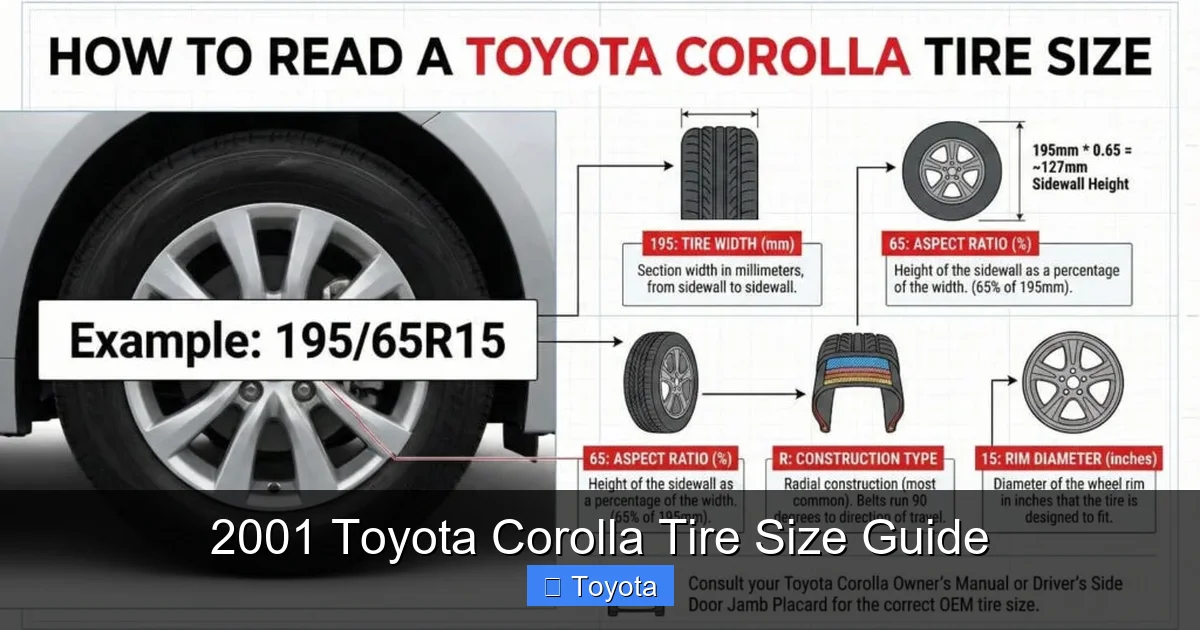
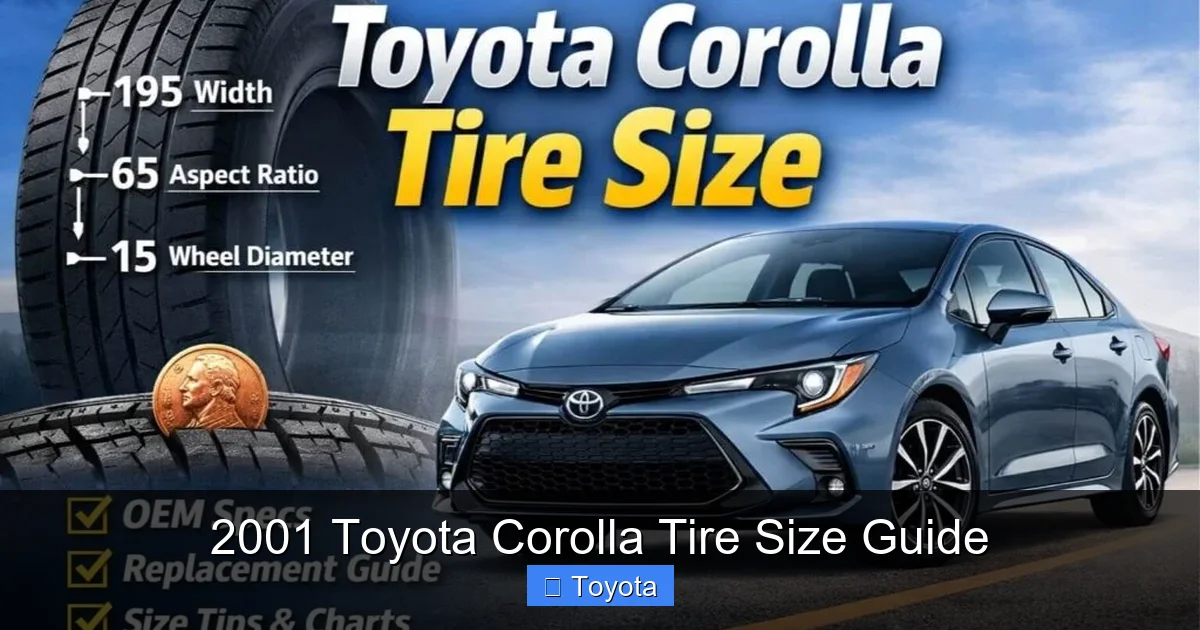
Before we dive into the specific sizes for your 2001 Corolla, let’s decode what those numbers and letters actually mean. Take a tire size like 185/60R14 as an example:
- 185: This is the tire width in millimeters – how wide the tire is from sidewall to sidewall
- 60: This is the aspect ratio – the height of the sidewall as a percentage of the width
- R: This indicates the construction type – Radial, which is standard for most modern tires
- 14: This is the wheel diameter in inches – what size rim the tire fits on
Understanding this code helps you see why staying within certain parameters matters. Going too wide might rub against your fender wells, while going too narrow could affect your load capacity.
Common Tire Sizes for the 2001 Toyota Corolla
The 2001 Toyota Corolla wasn’t a one-size-fits-all kind of car when it came to tires. Depending on whether you had the base model, LE, S, or another trim level, you might have different tire requirements. Here’s what you’re most likely to find on the road:
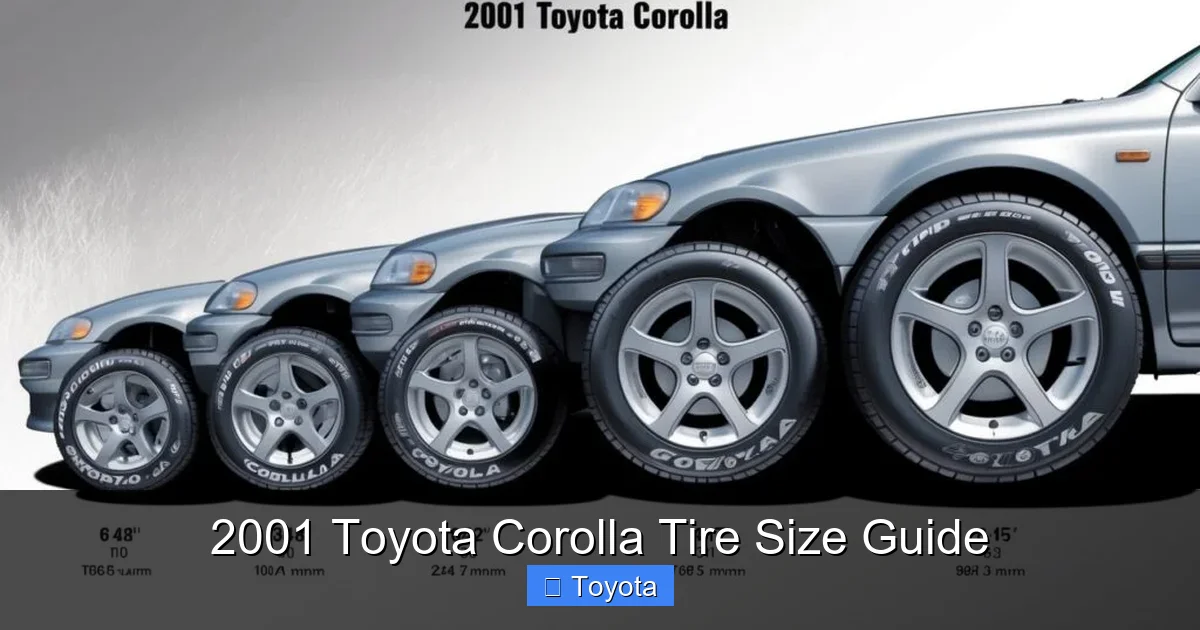
Visual guide about 2001 Toyota Corolla Tire Size Guide
Image source: amazingcarsanddrives.com
OEM Tire Sizes by Trim Level
Most 2001 Corolla owners will find one of these two sizes on their vehicles:
- 185/60R14: This was common on base models and some LE trims
- 195/55R15: This larger size was typically found on S trims and some LE models
The difference between these sizes might seem small, but it affects everything from ride comfort to handling characteristics. The 195/55R15 setup generally provides a bit more stability at highway speeds, while the 185/60R14 offers slightly better fuel economy due to lower rolling resistance.
Why Trim Level Matters
Toyota designed each trim level with specific performance characteristics in mind. The base model Corolla was focused on efficiency and economy, which is why it often came with the smaller 14-inch wheels. Meanwhile, the sportier S trim got the larger 15-inch wheels to improve cornering response and give the car a more aggressive stance.
If you’re not sure what trim level you have, don’t worry – there are several ways to figure it out. Check your owner’s manual, look at the driver’s door jamb sticker, or simply measure your current tires if they’re still the originals.
How to Find Your Exact Tire Size
While we can give you general information about 2001 Corolla tire sizes, the only way to be absolutely certain is to check your specific vehicle. Here are the most reliable methods:
Visual guide about 2001 Toyota Corolla Tire Size Guide
Image source: yourautovision.com
Checking the Driver’s Door Jamb
This is probably the easiest and most accurate way to find your tire size. Open your driver’s door and look at the edge of the door frame – you’ll see a sticker that lists all sorts of important information including the recommended tire size. This sticker was put there by Toyota specifically for situations like this, so trust what it says.
The door jamb sticker will show you the OEM (Original Equipment Manufacturer) tire size, which is what Toyota originally equipped your car with. This is usually your best bet for replacement tires unless you have a specific reason to change sizes.
Reading Your Current Tires
If your current tires are still the originals (or at least the correct size), you can simply read the sidewall. Look for the numbers and letters that match the format we discussed earlier. Keep in mind that someone might have put the wrong size on your car at some point, so cross-reference with the door jamb if possible.
Also, check both front and rear tires – sometimes people put different sizes on different axles, though this isn’t recommended for most vehicles including the Corolla.
Consulting Your Owner’s Manual
Your owner’s manual is another excellent resource. Toyota included tire size information along with recommended pressures and other specifications. If you don’t have the physical manual, you can usually find PDF versions online through Toyota’s website or various automotive databases.
Making the Right Choice: Tips for Buying Tires
Now that you know what size you need, let’s talk about actually choosing good tires. Size is important, but it’s not the only factor. Here are some key considerations:
Visual guide about 2001 Toyota Corolla Tire Size Guide
Image source: yourautovision.com
Stick with OEM When Possible
Unless you have a specific performance or aesthetic reason to change, sticking with the original equipment size is usually your safest bet. This ensures proper fitment, maintains your speedometer accuracy, and keeps your warranty intact. Going significantly larger or smaller can cause issues with clearance, handling, and even transmission shift points.
However, there are legitimate reasons to consider alternatives. Maybe you want better winter traction, improved fuel economy, or enhanced comfort. Just make sure any changes stay within reasonable parameters.
Consider Your Driving Habits
Think about how you actually drive your Corolla. If you’re mostly commuting on highways, you might prioritize quiet, comfortable tires with good longevity. City drivers might want something with better grip for frequent stopping and starting. And if you occasionally hit mountain roads, performance-oriented tires could be worth considering.
Different tire compounds and tread patterns serve different purposes. All-season tires offer a good compromise for most drivers, but dedicated summer or winter tires will outperform them in their respective conditions.
Don’t Forget About Load Rating
Your Corolla isn’t a heavy vehicle, but you still need tires rated for your car’s weight plus cargo and passengers. The load index is usually listed alongside the tire size, and you want to make sure it meets or exceeds what Toyota specifies. Under-rated tires can fail prematurely or even blow out under load.
Maintaining Your Tires for Longevity
Buying the right tires is only half the battle. Proper maintenance will help them last longer and perform better throughout their lifespan. Here are some key maintenance tips:
Keep Proper Tire Pressure
This is probably the most important thing you can do for your tires. Check your pressure at least once a month when the tires are cold (before driving). The correct pressure for most 2001 Corollas falls between 32-35 PSI, but always check your door jamb sticker for the exact specification.
Under-inflated tires wear unevenly, reduce fuel economy, and generate excess heat that can lead to premature failure. Over-inflated tires have similar problems but in reverse – they wear in the center and provide a harsher ride.
Regular Rotation and Alignment
Routinely rotating your tires every 5,000-7,500 miles helps ensure even wear patterns. Front tires typically wear faster than rear ones, so rotation extends their useful life. While you’re at it, have your alignment checked periodically. Poor alignment causes uneven wear and can affect your car’s handling.
Many tire shops offer free rotation with purchases, and alignments are relatively inexpensive compared to buying new tires every few years because you neglected maintenance.
When to Consider Upgrading
There might come a time when you want to go beyond the stock tire size. This is perfectly fine as long as you do your homework. Just remember that any changes affect your car’s overall dynamics.
Safety First with Size Changes
If you decide to change sizes, stay within a few percentage points of the original diameter. This keeps your speedometer accurate and maintains proper clearance. Going much larger requires checking for rubbing against fender wells, especially when turning or over bumps.
You might also need to recalibrate your speedometer if you make significant changes to tire diameter. Some aftermarket systems can handle this automatically, but it’s something to be aware of.
Performance vs. Practicality
Performance tires offer better grip but often come with trade-offs like increased road noise and shorter lifespan. For a daily driver like the Corolla, all-season tires usually make the most sense unless you have specific needs. Track-focused tires would be overkill for normal driving and could actually reduce safety in wet conditions.
Think about what matters most to you. Are you chasing maximum fuel economy? Prioritizing ride comfort? Wanting the longest possible tire life? Your priorities should guide your tire choice more than trends or what looks cool.
Final Thoughts on 2001 Corolla Tire Selection
Choosing tires for your 2001 Toyota Corolla doesn’t have to be complicated. Start with the correct size from your door jamb sticker, consider your driving needs and habits, and don’t forget about proper maintenance. Whether you stick with OEM specifications or decide to make some upgrades, the key is making informed decisions based on facts rather than guesswork.
Remember that tires are literally your car’s only contact with the road. Investing in quality tires and maintaining them properly pays dividends in safety, performance, and cost savings over time. Your 2001 Corolla has served you well for over two decades – give it the tires it deserves.
Takeaway for related reading: If you’re interested in keeping your vehicle in top condition, check out our guide on driving in snow conditions and our recommendations for quality tire shops that can help with installation and maintenance.
Getting Professional Help When Needed
While much of tire selection can be done yourself, don’t hesitate to consult professionals when needed. Tire shop staff deal with these questions daily and can offer valuable insights about specific brands, tread patterns, and suitability for your particular situation.
They can also help with mounting and balancing, which really should be left to professionals unless you have experience and proper equipment. Improper mounting can lead to dangerous situations including tire separation at speed.
Plus, many reputable tire shops offer warranties and road hazard protection that can save you money if something goes wrong. It’s worth considering these packages, especially if you drive in areas with lots of debris or construction zones.
Conclusion: Your Perfect Tire Match
Your 2001 Toyota Corolla represents reliability and longevity, and the right tires will help maintain those qualities. By understanding your vehicle’s specifications, considering your driving needs, and maintaining your investment properly, you’ll keep enjoying that legendary Corolla dependability for miles to come.
Whether you’re replacing worn-out originals or upgrading for better performance, the information in this guide gives you the foundation to make smart choices. And remember, when in doubt, consult with tire professionals who can provide personalized advice based on your specific situation and local driving conditions.
Frequently Asked Questions
What is the standard tire size for a 2001 Toyota Corolla?
The standard tire size varies by trim level, with 185/60R14 being common on base models and 195/55R15 found on sportier S trims. Always check your driver’s door jamb sticker for the exact specification for your particular vehicle.
Can I put 195/55R15 tires on my Corolla if it came with 185/60R14?
This depends on your wheel size. If your car has 14-inch wheels, you cannot mount 15-inch tires on them. However, if you upgrade to 15-inch wheels, the 195/55R15 size would be compatible with your Corolla’s specifications.
Where can I find my 2001 Corolla’s tire size?
The easiest place to check is the driver’s door jamb sticker, which lists the manufacturer’s recommended tire size. You can also read the size printed on your current tire sidewalls, though these may not be the original equipment.
What tire pressure should I maintain for my 2001 Corolla?
Most 2001 Corollas require 32-35 PSI, but you should check your driver’s door jamb sticker for the exact specification. Always check pressure when tires are cold and before driving for the most accurate reading.
Are all-season tires good for a 2001 Corolla?
All-season tires are excellent for the 2001 Corolla since they provide good performance in various conditions without the need for seasonal changes. They offer a balance of comfort, durability, and adequate traction for most driving situations.
Can I use winter tires on my 2001 Corolla?
Yes, winter tires can be used on your 2001 Corolla as long as they match your vehicle’s tire size specifications. Many drivers in snowy climates benefit from dedicated winter tires, which provide significantly better traction in cold and snowy conditions compared to all-season tires.