How Does Leasing a Car Work with Toyota
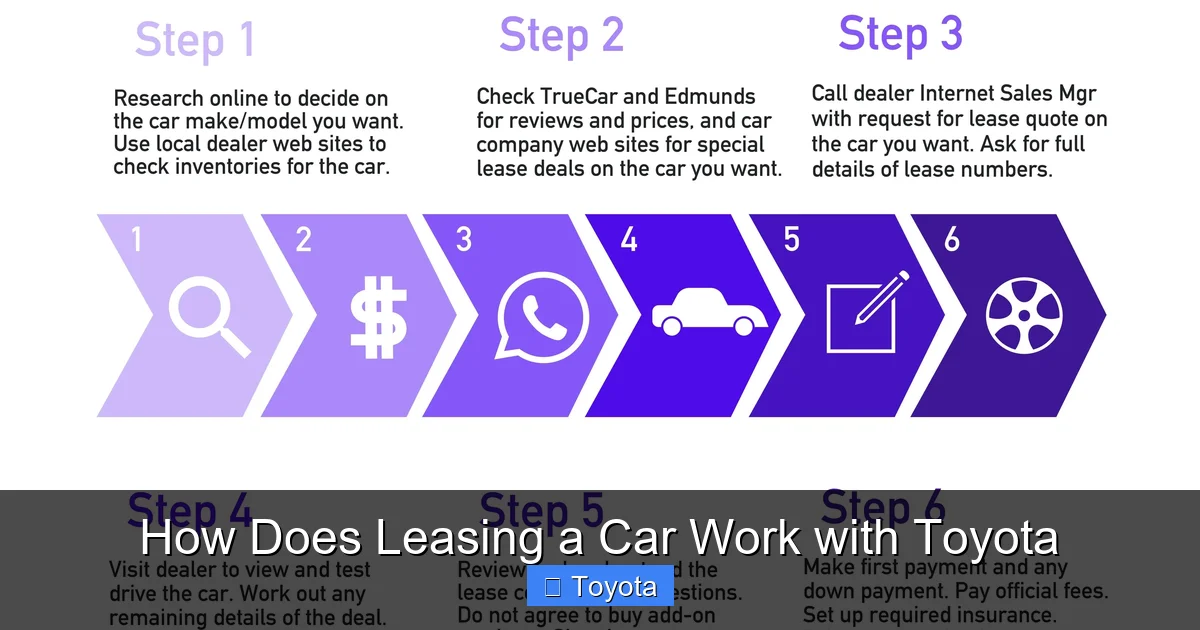
Leasing a Toyota is a flexible alternative to buying, letting you drive a new model for less monthly cost. You’ll pay for depreciation, not ownership, with options to upgrade every 2-4 years. Ensure you understand mileage limits and end-of-lease choices before signing.
Key Takeaways
- Lease Terms: Toyota leases typically last 2-4 years, with lower monthly payments than loans.
- Cost Breakdown: Payments cover depreciation, fees, and profit, not full vehicle value.
- Mileage Limits: Exceeding 12,000-15,000 annual miles incurs $0.15–$0.30 per-mile penalties.
- Maintenance: You’re responsible for routine upkeep unless covered by Toyota’s warranty.
- End Options: Return the car, buy it at a pre-set price, or lease a new model.
- Credit Requirements: Better credit scores secure lower lease rates and approval.
📑 Table of Contents
Introduction to Toyota Leasing
If you’re considering driving a new Toyota but aren’t ready to commit to ownership, leasing might be your perfect match. Unlike traditional car loans, leasing lets you drive a vehicle for a set period—typically 2 to 4 years—while paying for its depreciation, not the full purchase price. This model appeals to drivers who love upgrading to the latest features, want lower monthly payments, or simply prefer not to worry about long-term ownership responsibilities. Toyota, known for its reliability and affordable maintenance, makes leasing an attractive option for many. But how exactly does the process work? Let’s break it down step by step.
Understanding the Lease Agreement
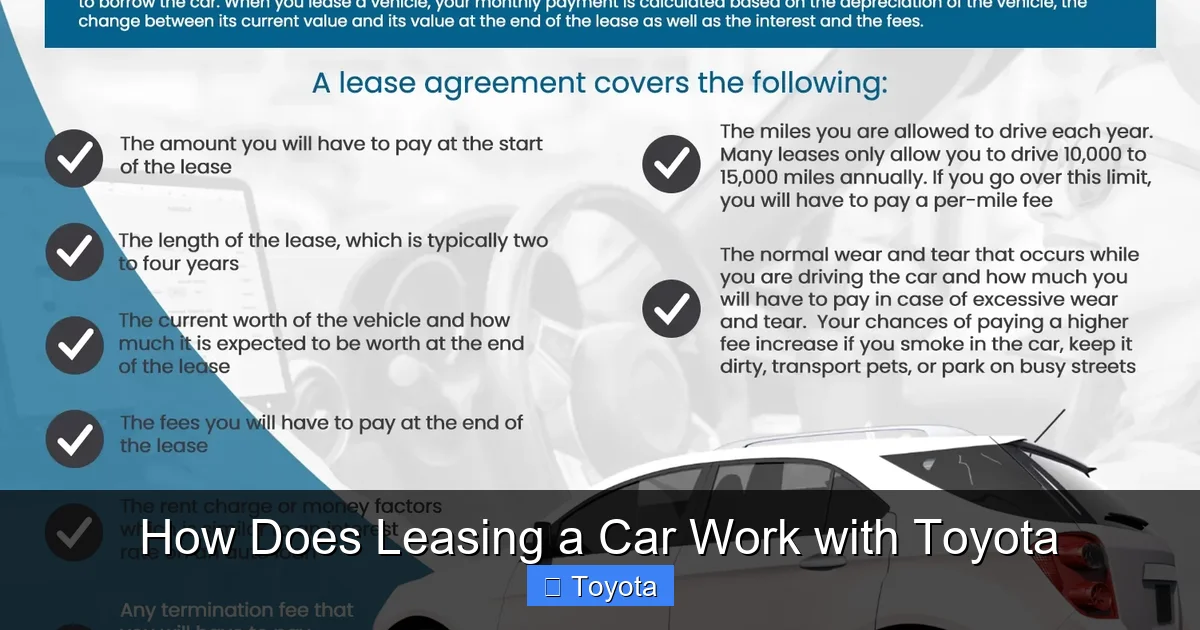
Visual guide about How Does Leasing a Car Work with Toyota
Image source: eautolease.com
When you lease a Toyota, you’re essentially renting the vehicle for a specific term. The lease agreement outlines key details like monthly payments, mileage allowances, and end-of-term options. Think of it like renting a furnished apartment: you pay for the use of the space, and at the end of the lease, you either return it or renew the agreement. Here’s what to expect:
Monthly Payments
Your lease payment is calculated based on three factors: the car’s residual value (its worth at the end of the lease), the total depreciation (how much it loses in value during the lease), and the interest rate (also called the money factor). For example, if a Toyota RAV4 has a residual value of 60% after 36 months, your payments will cover the remaining 40% plus fees and profit. This typically results in lower payments compared to a loan where you’re paying off 100% of the vehicle’s value.
Mileage Allowances
Most leases include a mileage cap, usually between 12,000 and 15,000 miles per year. Exceeding this limit means paying a penalty—often $0.15 to $0.30 per additional mile. If you’re a high-mileage driver, leasing might not be the best fit unless you negotiate a higher mileage allowance upfront.
End-of-Term Options
At the end of your lease, you can return the car, buy it at a predetermined price (called a “buyout”), or lease another new model. Returning the vehicle is ideal if you want to upgrade without the hassle of selling. Buying it out makes sense if the car’s market value exceeds the buyout price.
Applying for a Toyota Lease
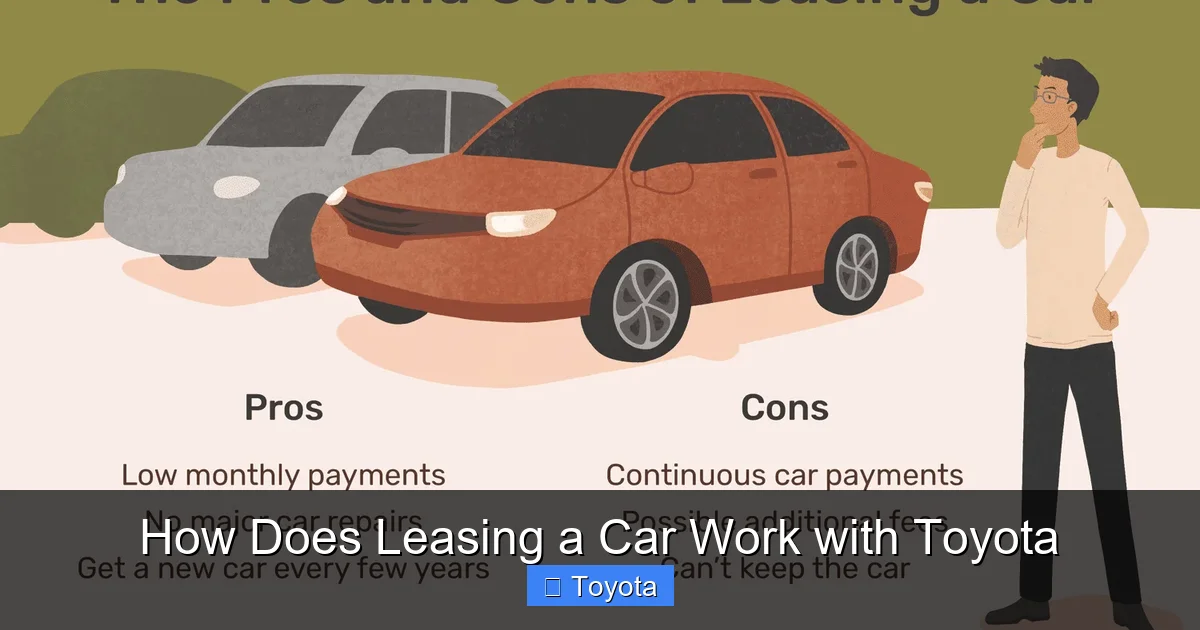
Visual guide about How Does Leasing a Car Work with Toyota
Image source: thebalancemoney.com
The leasing process starts with credit approval. Toyota Financial Services (TFS) and third-party lenders evaluate your credit score, income, and debt-to-income ratio. A higher credit score (typically 680+) increases your chances of approval and secures better rates. Here’s how to apply:
Step 1: Research Models and Deals
Visit a Toyota dealership or their website to explore available lease offers. Look for incentives like cashback rebates or low-money-factor promotions. Compare terms across different trims—leasing a base model Camry might cost less than a high-end Lexus.
Step 2: Pre-Qualification
Some dealerships offer pre-qualification online, which gives you an estimate of your eligibility and potential payments. This helps you negotiate better deals before visiting the showroom.
Step 3: Negotiate the Deal
Just like with a car purchase, negotiation matters. Focus on the capitalized cost (the vehicle’s agreed-upon value) and the money factor. A lower capitalized cost reduces your monthly payments. Also, negotiate the residual value and acquisition fees.
Step 4: Review and Sign
Once terms are agreed upon, review the contract carefully. Check for hidden fees, wear-and-tear charges, and the exact mileage allowance. If anything seems unclear, ask questions. Signing the lease locks in your terms for the duration.
Cost Considerations and Savings
Visual guide about How Does Leasing a Car Work with Toyota
Image source: eautolease.com
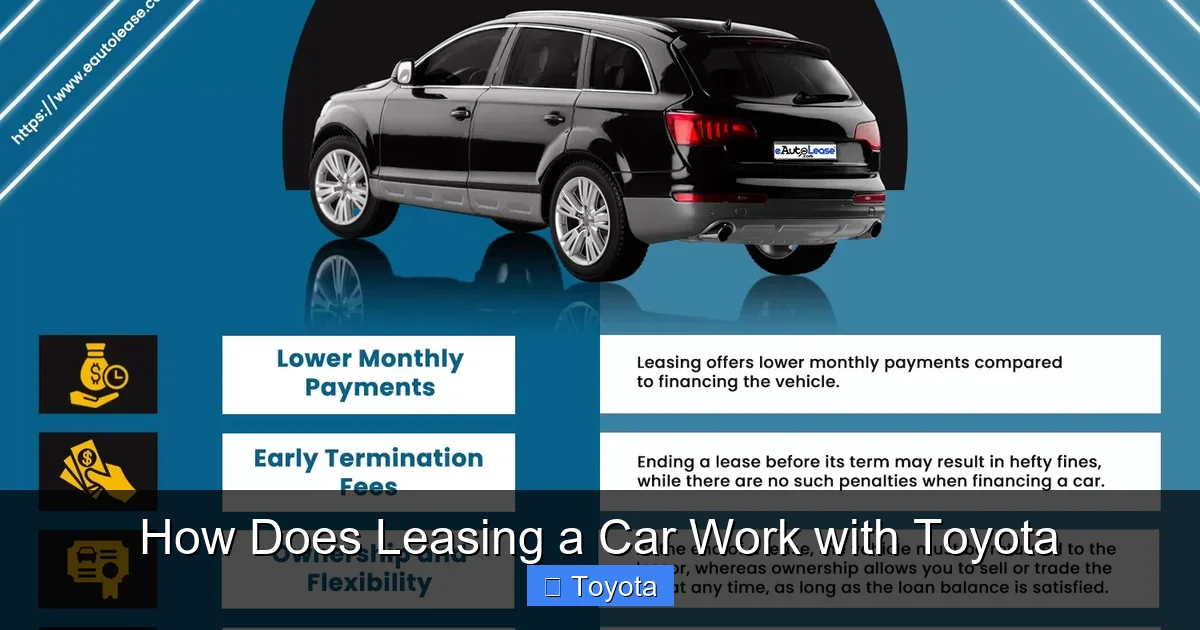
Leasing can save you money, but only if you plan wisely. Let’s compare a hypothetical lease versus a loan for a $30,000 Toyota Highlander:
Monthly Payments
A 36-month lease might cost $400/month, while a 60-month loan could be $550/month. Over time, the lease saves you $9,000 in total payments. However, remember you won’t own the car at the end of the lease.
Additional Fees
Watch out for acquisition fees (often $500–$1,000), disposition fees (around $300–$500), and wear-and-tear charges. These can add up quickly, so budget for them.
Maintenance and Repairs
Toyota’s warranty typically covers major repairs during the lease term, but you’re still responsible for routine maintenance like oil changes and tire rotations. Consider setting aside a monthly fund for these costs.
Responsibilities and Limitations
Leasing isn’t just about low payments—it comes with trade-offs. Here’s what you need to know:
Mileage Restrictions
If you drive 20,000 miles annually, a lease with a 12,000-mile cap could cost you $1,200 in penalties over three years. Plan your driving habits carefully before signing.
Customization Limits
You can’t modify the vehicle (e.g., installing a lift kit or custom paint) without the lessor’s approval. Minor changes like floor mats or phone mounts are usually allowed.
Insurance Costs
Leasing requires full-coverage insurance, which can increase premiums. Check with your insurer for lease-specific policies that might offer discounts.
End-of-Lease Scenarios
When your lease expires, you’ll face a decision. Here’s how to navigate each option:
Returning the Vehicle
This is the simplest choice. Ensure the car is in good condition, and return it within the agreed timeframe. You’ll pay for excessive wear or mileage overages, if applicable.
Buying the Car
The buyout price is set in the lease agreement. Compare it to the car’s market value using tools like Kelley Blue Book. If the buyout is lower, purchasing makes financial sense. You can often finance the buyout through a traditional auto loan.
Leasing a New Model
Upgrade to the latest Toyota with no trade-in hassles. Dealers often offer loyalty incentives for returning lessees.
Is Leasing Right for You?
Leasing works best if you:
– Want lower monthly payments.
– Drive fewer than 15,000 miles annually.
– Prefer driving new models every few years.
– Don’t mind not owning the car long-term.
However, if you plan to keep a vehicle for over a decade or drive extensively, buying might be better. Compare both options using our guide on how much should I pay for a car to make an informed decision.
Conclusion
Leasing a Toyota can be a smart financial move if you understand the terms and responsibilities. From negotiating favorable lease rates to planning for end-of-term options, careful preparation ensures you maximize benefits. Whether you’re drawn to the latest safety features or simply want budget-friendly transportation, Toyota leases offer flexibility without the long-term commitment of ownership. Just remember: read the fine print, track your mileage, and choose a plan that aligns with your lifestyle.
Frequently Asked Questions
What’s the typical lease term for a Toyota?
Most Toyota leases run for 24 to 36 months, though some offer 48-month terms. Shorter terms mean lower total costs but more frequent transitions to new vehicles.
How is the monthly lease payment calculated?
Your payment covers the car’s depreciation over the lease term, plus fees and interest. Use an online lease calculator to estimate costs based on the vehicle’s MSRP, residual value, and money factor.
Can I buy the car at the end of the lease?
Yes! The lease agreement includes a “buyout” price, typically the car’s residual value. If the market value exceeds this price, purchasing can be a smart investment.
What happens if I exceed the mileage limit?
You’ll pay a penalty, usually $0.15 to $0.30 per extra mile. For example, driving 18,000 miles annually with a 12,000-mile cap costs $900 in penalties over three years.
Are there early termination fees for leasing?
Yes, ending a lease early can cost 10–25% of the remaining payments. Negotiate a shorter-term lease upfront to avoid penalties.
Do I need full-coverage insurance for a lease?
Most leases require full-coverage insurance, including collision and comprehensive. Check with your insurer for lease-specific policies or discounts.
=== END OF ARTICLE ===