What Year Toyota Avalon Should I Avoid?
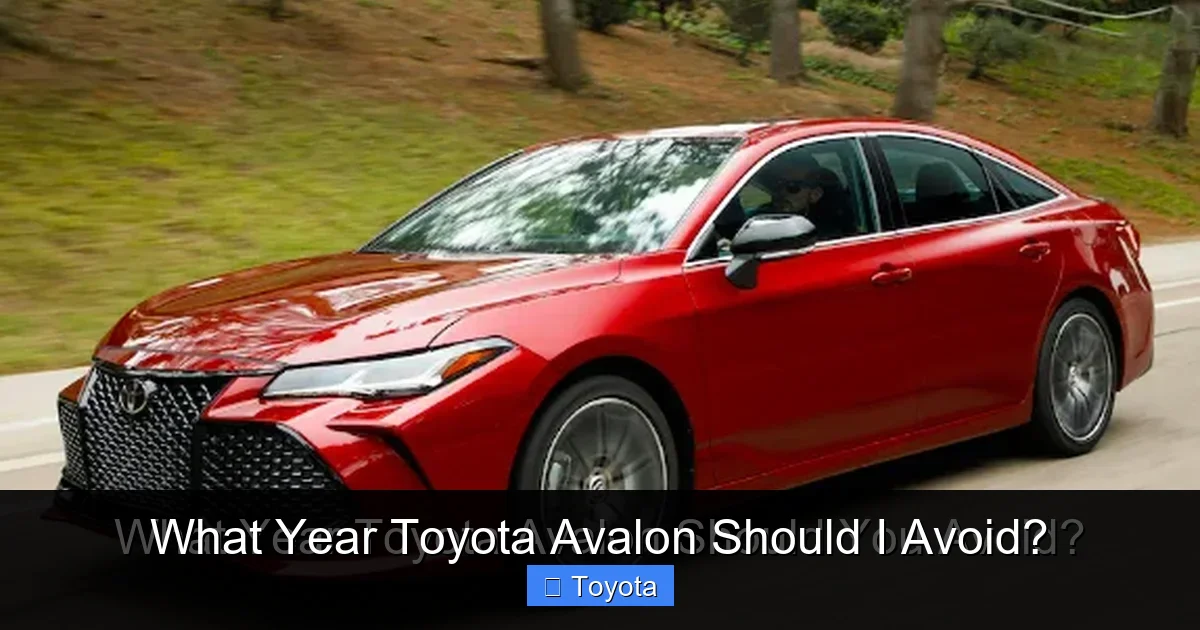
If you are shopping for a used Toyota Avalon, you need to know which years to avoid. The 2000, 2001, 2002, 2008, and 2010 model years come with serious reliability issues ranging from transmission failures to engine oil consumption problems. Stick with the 2005, 2013, 2014, 2015, and 2016 model years for a much smoother ownership experience.
Key Takeaways
- Avoid the 2000-2002 Avalon years: These early models suffered from transmission failures and engine reliability issues that plagued owners for years.
- 2008 and 2010 are problematic too: Both years had significant oil consumption problems and electrical gremlins that cost owners hundreds in repairs.
- Stick with 2005 and 2006: These years represent a major improvement in reliability and are considered the sweet spot for used Avalon buyers.
- 2013 through 2016 are excellent choices: These later models fixed most early issues and offer modern features with strong reliability ratings.
- Always get a pre-purchase inspection: Even in good years, a professional inspection can reveal hidden problems before you commit to buying.
- Budget for maintenance: No matter the year, regular upkeep like replacing spark plugs on schedule keeps your Avalon running strong.
- Consider your budget carefully: Use resources like how much you should pay for a car to ensure you are getting fair value.
📑 Table of Contents
Understanding the Toyota Avalon’s Legacy
The Toyota Avalon has been a staple in the full-size sedan market since it first rolled out in 1995. For decades, it offered buyers a comfortable ride, spacious interior, and the legendary reliability Toyota is known for. But not every model year lived up to that promise.
If you are in the market for a used Toyota Avalon, you might be wondering, “What Year Toyota Avalon Should I Avoid?” That is a smart question. Some years came with serious factory defects and design flaws that turned what should have been a dependable family car into a money pit. Knowing which years to skip can save you thousands of dollars and countless headaches.
The Avalon competed with the likes of the Honda Accord, Hyundai Azera, and the Nissan Maxima. Toyota built it as their flagship sedan, a position it held until the Camry took over the spotlight in many ways. Over the years, the Avalon evolved from a traditional American-style sedan into a more refined, comfortable cruiser. But evolution does not always mean improvement, and some years clearly fell short.
The good news is that most of the bad years are well documented. Owners reported problems, mechanics documented common failures, and Toyota even issued recalls for certain model years. In this article, we will break down exactly which years to avoid, why they are problematic, and which years you should target instead.
Years to Avoid: The Problematic Model Years
When asking “What Year Toyota Avalon Should I Avoid,” several model years stand out immediately. These are the years where Toyota made design choices or manufacturing decisions that led to widespread problems. Let us take a closer look at each one.
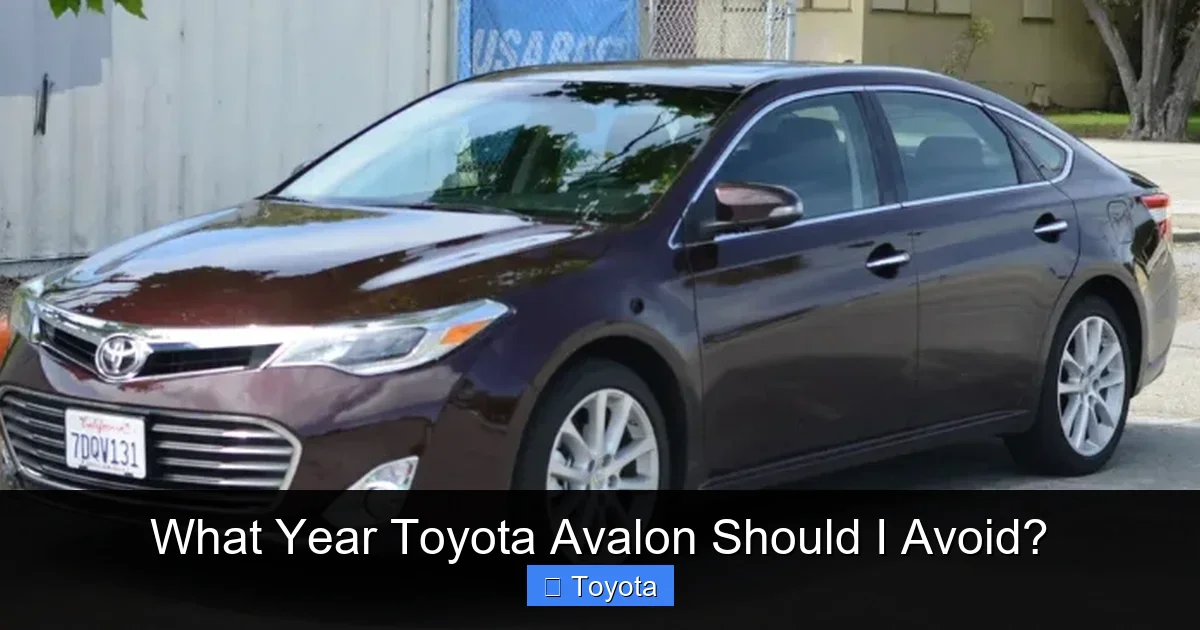
Visual guide about What Year Toyota Avalon Should I Avoid?
Image source: aautomotives.com
The 2000-2002 Avalon Years
The early 2000s Avalon years are the ones most experts warn buyers away from. The 2000, 2001, and 2002 model years all shared the same 3.0-liter V6 engine paired with an automatic transmission. Unfortunately, the transmission in these years was a known weak point. Many owners reported transmission failure as early as 60,000 miles. Replacing a transmission on an Avalon can cost anywhere from $2,000 to $4,000, making it a devastating repair for a car that might only be worth $5,000 at that point.
Beyond the transmission, the 2000-2002 models also suffered from engine oil leaks. The rear main seal was a common failure point, and fixing it requires significant engine teardown. Owners also reported issues with the catalytic converter clogging prematurely, which led to poor fuel economy and a noticeable loss of power.
The 2008 Model Year
The 2008 Toyota Avalon is another year to be cautious about. This model year introduced a new 3.5-liter V6 engine, which was a step up in power. However, it came with a serious oil consumption problem. Many 2008 Avalon owners reported burning through a quart of oil every 1,000 to 2,000 miles. That is far above normal consumption and can lead to engine damage if not addressed.
The 2008 model also had issues with the electrical system. Owners reported flickering dashboards, malfunctioning power windows, and intermittent check engine lights. These electrical gremlins are frustrating to diagnose and expensive to fix. If you are wondering “What Year Toyota Avalon Should I Avoid,” the 2008 should be at the top of your list.
The 2010 Model Year
The 2010 Avalon carried forward some of the issues from 2008 and added a few of its own. The oil consumption problem persisted, and Toyota did not fully address it until later model years. Additionally, the 2010 model had reports of the engine overheating in hot climates, which pointed to potential cooling system design flaws.
The 2010 Avalon also had a problematic steering rack in some units. Owners reported excessive play in the steering wheel and vibrations at highway speeds. The steering rack replacement is not cheap, and it is not a DIY fix for most people.
Common Issues in the Worst Avalon Years
Now that we have identified the worst years, let us look at the specific problems you might encounter if you accidentally buy one of these models. Understanding these issues helps you know what to look for during a test drive or inspection.

Visual guide about What Year Toyota Avalon Should I Avoid?
Image source: carsmite.com
Transmission Failures
The automatic transmission in the early 2000s Avalons is the single biggest red flag. Signs of transmission trouble include rough shifting, slipping between gears, and delays when shifting from park to drive. If you feel any of these symptoms during a test drive, walk away from the deal. No amount of negotiation is worth a transmission replacement.
Excessive Oil Consumption
The 2008 and 2010 models are notorious for burning oil. Before buying one of these years, ask the seller for oil change records. A car that needs oil added every few thousand miles has an underlying problem. Check the tailpipe for blue smoke, especially when the engine is cold. That is a telltale sign of oil burning.
Electrical Problems
Electrical issues are common in the 2008 and 2010 model years. Test every electrical feature before purchasing. Work the power windows, adjust the seats, test the infotainment system, and check all the dashboard warning lights. If something feels off, get a pre-purchase inspection from a trusted mechanic.
What to Look for When Buying a Used Avalon
Avoiding the bad years is only half the battle. Even in good years, you need to know what to look for. Here are some practical tips to help you make a smart purchase.

Visual guide about What Year Toyota Avalon Should I Avoid?
Image source: aautomotives.com
Always Get a Vehicle History Report
Before you even set foot in a dealership or meet a private seller, pull a vehicle history report. Services like Carfax or AutoCheck will tell you about past accidents, title issues, and service records. A clean history report gives you peace of mind, and a messy one gives you reasons to walk away.
Request Maintenance Records
A well-maintained Avalon from a problematic year might still be worth considering if it has solid service records. Ask the seller for receipts and invoices. Regular oil changes, transmission fluid flushes, and brake pad replacements show that the previous owner took care of the car.
Take It for a Thorough Test Drive
Do not skip the test drive. Drive the Avalon on both city streets and highways. Listen for unusual sounds. Pay attention to how the car accelerates, brakes, and handles. If something feels wrong, trust your instincts. A test drive can reveal problems that a visual inspection never will.
Budget for Repairs
Even the best-used car needs repairs eventually. When budgeting for a used Avalon, set aside at least $1,000 to $2,000 for immediate repairs and maintenance. This is especially important if you are buying a higher-mileage vehicle. If the price seems too good to be true, it probably is.
Consider a Pre-Purchase Inspection
This is the single best thing you can do before buying any used car. A pre-purchase inspection costs between $100 and $200, but it can save you thousands. A qualified mechanic will check the engine, transmission, brakes, suspension, and electrical systems. They will tell you exactly what is wrong and what is coming soon.
Better Years Worth Considering
Now that you know which years to skip, let us talk about the years that actually deliver on Toyota’s promise of reliability and comfort.
The 2005 and 2006 Model Years
The 2005 and 2006 Avalon years represent a major leap forward in quality. Toyota addressed many of the transmission issues from the early 2000s, and the engines in these years proved much more durable. The 2005 and 2006 models also came with improved sound insulation, making for a quieter, more refined ride. These years are often considered the sweet spot for used Avalon buyers.
The 2013 Through 2016 Model Years
If you want a modern Avalon with up-to-date features, the 2013 through 2016 model years are your best bet. These years came with redesigned interiors, improved fuel economy, and advanced safety features like backup cameras and blind spot monitoring. The engines in these models are robust, and the transmission issues that plagued earlier years were largely resolved.
The 2013 and 2014 models are particularly well-regarded for their balance of comfort and reliability. The 2015 and 2016 models added even more refinements and are still relatively affordable on the used market. When someone asks “What Year Toyota Avalon Should I Avoid,” pointing them toward these years is the right answer.
The 2017 and 2018 Model Years
The 2017 and 2018 Avalon years brought a completely redesigned platform. Toyota moved away from the old body-on-frame design to a lighter unibody construction. This improved handling and fuel economy significantly. The 2017 and 2018 models also introduced Toyota’s Toyota Safety Sense suite, which includes automatic emergency braking, lane departure warning, and adaptive cruise control.
These are excellent years if your budget allows. They are still relatively new on the used market, so prices may be higher. But the investment is worth it for the peace of mind and modern features they offer.
Final Thoughts on Avoiding Bad Avalon Years
So, what year Toyota Avalon should I avoid? The answer is clear: the 2000, 2001, 2002, 2008, and 2010 model years come with too many known issues to recommend confidently. The transmission problems in the early 2000s, the oil consumption in the 2008 and 2010 models, and the electrical gremlins make these years risky purchases for most buyers.
On the flip side, the 2005, 2006, 2013, 2014, 2015, 2016, 2017, and 2018 model years offer much better ownership experiences. They fixed the major flaws and delivered the kind of reliable, comfortable driving experience the Avalon was always meant to provide.
Remember that buying a used car always involves some risk. Even in the best years, you might encounter issues. That is why doing your homework, getting inspections, and setting a realistic budget are so important. The Toyota Avalon is a great car when you choose the right year. Do your research, take your time, and you will find a reliable ride that will serve you well for years to come.
Whether you are buying your first Avalon or your fifth, knowing which years to avoid puts you ahead of most buyers. Use this guide as your starting point, and always trust your instincts when something feels off. Happy car shopping.
Frequently Asked Questions
What is the most unreliable year for the Toyota Avalon?
The 2000-2002 model years are widely considered the most unreliable for the Toyota Avalon. The combination of transmission failures, engine oil leaks, and premature catalytic converter failures makes these years a risky choice for buyers looking for a dependable vehicle.
Are 2008 Toyota Avalons bad cars?
The 2008 Avalon is not a bad car overall, but it has some significant known issues. The 3.5-liter V6 engine consumed excessive oil in many units, and the electrical system was prone to intermittent failures. If you are considering a 2008 model, a thorough pre-purchase inspection is essential.
Which Toyota Avalon year is the most reliable?
The 2013 through 2016 model years are generally regarded as the most reliable for the Toyota Avalon. These years addressed most of the earlier design flaws, offered modern safety features, and delivered strong long-term durability with proper maintenance.
Can I still buy a 2000 or 2001 Avalon safely?
It is possible, but not recommended unless you have a significant repair budget and thorough documentation of the car’s history. These early models have well-documented transmission and engine issues that can be expensive to fix, and they are best avoided by most buyers.
How much should I budget for a used Toyota Avalon?
Your budget depends on the model year and condition you are targeting. A well-maintained 2005 or 2006 Avalon might cost between $3,000 and $6,000, while a 2015 or 2016 model could range from $10,000 to $18,000. Use a pricing guide like how much you should pay for a car as a reference point to ensure you are getting fair value.
What maintenance should I prioritize on a used Avalon?
Regular oil changes, transmission fluid flushes, and spark plug replacements should be your top priorities. For Avalon owners, using the best spark plugs for Toyota Avalon on schedule can help prevent engine misfires and maintain fuel efficiency over time.