Can I Take My Toyota to Any Dealer for Service

Thinking about whether you can drop your Toyota at any dealer for service? This article breaks down warranty requirements, independent shop benefits, and practical tips to keep your vehicle running smoothly while protecting your investment.
Key Takeaways
- Warranty Matters: Original dealers can honor factory warranties, while non‑Toyota shops may not.
- Independent Shops: They often offer lower prices and flexible schedules.
- Service Records: Keeping a detailed log is vital for resale value.
- OEM Parts: Use original parts for critical components to maintain warranty.
- Communication: Always clarify parts and labor costs before starting work.
- Insurance Coverage: Some policies require Toyota‑approved service for certain repairs.
- After‑market Mods: Non‑Toyota service can affect aftermarket warranties.
📑 Table of Contents
Introduction
Owning a Toyota is a smart choice—reliability, longevity, and resale value are part of the package. But when it comes to routine maintenance and unexpected repairs, you might wonder: Can I take my Toyota to any dealer for service? The answer isn’t a simple yes or no. It depends on your warranty, the type of repair, and whether you want to preserve the vehicle’s resale value. In this guide, we’ll walk through the factors that influence your decision, compare dealer and independent options, and give you practical tips for making the best choice for your budget and peace of mind.
1. Understanding Toyota’s Warranty Structure
1.1 The New Car Warranty
When you buy a new Toyota, you receive a limited warranty—typically 3 years/36,000 miles (basic) and 5 years/60,000 miles (powertrain). These warranties cover defects in materials or workmanship.
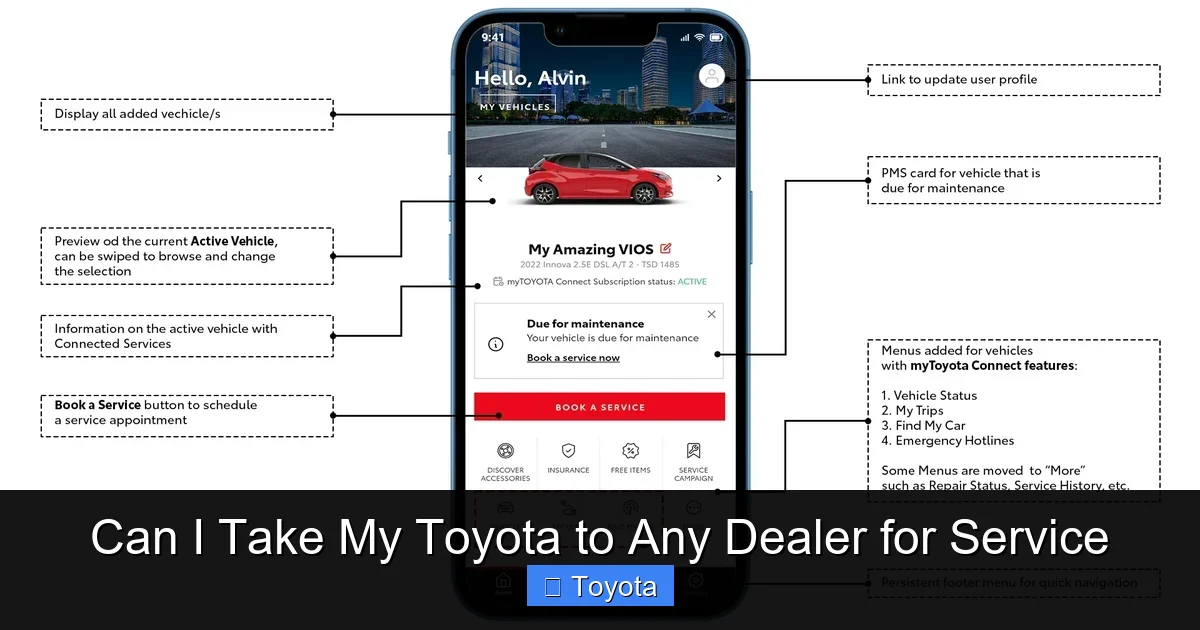
Visual guide about Can I Take My Toyota to Any Dealer for Service
Image source: toyotaautodealer.com
1.2 What “Authorized Dealer” Means
Authorized Toyota dealers are required to use Toyota‑approved parts and technicians trained on Toyota systems. They can therefore honor the full warranty on most repairs.
1.3 Out‑of‑Warranty Repairs
Once the warranty expires, you’re free to choose any shop. However, if you’re still under warranty and the repair is covered, using a non‑Toyota shop could void the warranty on that part or system.
2. Dealer Service vs. Independent Shops
2.1 Pros of Dealer Service
- Warranty Compliance: Repairs are guaranteed to meet Toyota’s standards.
- Certified Technicians: Staff receive regular training on Toyota models.
- Original Parts: OEM parts ensure compatibility and longevity.
- Convenience: Many dealers offer shuttle, loaner vehicles, and scheduled appointments.
2.2 Cons of Dealer Service
- Higher Labor Rates: Dealer labor is typically 1.5–2× the market average.
- Longer Wait Times: Popular models can lead to scheduling delays.
- Limited Flexibility: Dealers may have strict policies on part sourcing.
2.3 Benefits of Independent Mechanics
- Cost Savings: Lower labor rates and competitive pricing.
- Transparency: Many shops publish labor rates online.
- Personal Service: Smaller shops often build lasting relationships with customers.
2.4 Potential Drawbacks of Independent Shops
- Warranty Risk: Non‑OEM parts or improper repairs can void warranties.
- Variable Skill Levels: Not all mechanics are equally experienced with Toyota systems.
- Parts Availability: Some rare parts may take longer to order.
3. When to Stick With a Toyota Dealer
3.1 Factory‑Installed Features
If your car has Toyota‑specific tech—like the Entune infotainment system or advanced safety suites—dealer technicians are best equipped to handle diagnostics and updates.
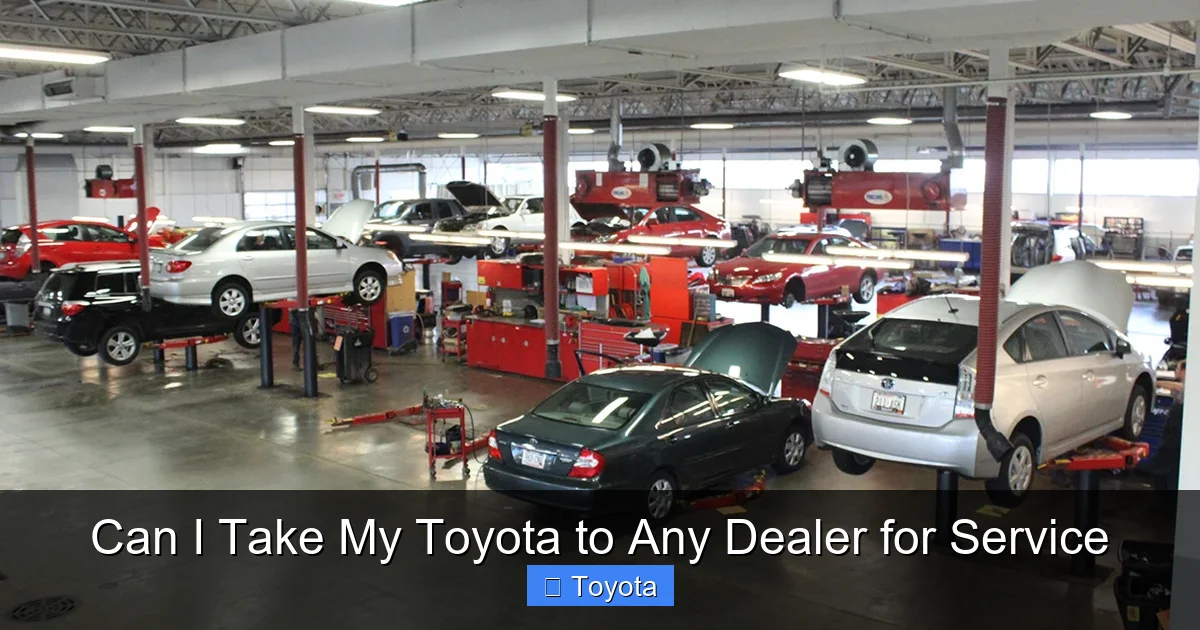
Visual guide about Can I Take My Toyota to Any Dealer for Service
Image source: smarttoyota.com

Visual guide about Can I Take My Toyota to Any Dealer for Service
Image source: toyotaautodealer.com
3.2 Warranty‑Covered Repairs
Always use a dealer for repairs that fall under the original warranty. This protects your coverage and ensures any future claims are honored.
3.3 Major Overhauls
Engine rebuilds, transmission work, or major suspension replacements are safer with certified Toyota technicians.
4. When Independent Service Makes Sense
4.1 Routine Maintenance
Oil changes, filter replacements, and tire rotations are generally safe at any reputable shop. Look for shops that list Toyota-specific parts in their inventory.
4.2 After‑Warranty Repairs
Once the warranty expires, you can choose any shop. Compare estimates and verify parts quality before signing.
4.3 Minor Cosmetic Work
Paint touch‑ups, minor dents, or interior cleaning can be handled by independent specialists.
5. Choosing the Right Independent Shop
5.1 Certifications Matter
Look for ASE (Automotive Service Excellence) certifications or Toyota Technical Training Program (TTP) credentials.
5.2 Read Reviews and Ask for Referrals
Check Google, Yelp, or local forums. Ask friends who own Toyotas for recommendations.
5.3 Request a Detailed Estimate
Get a written quote that lists each part, labor hours, and cost. This helps avoid surprise charges.
5.4 Verify OEM Parts
Ask if the shop uses OEM or high‑quality aftermarket parts. For critical components like timing belts or water pumps, OEM is preferable.
6. Practical Checklist Before You Go
- Check Warranty Status: Verify if the repair is covered.
- Get Two Estimates: Compare dealer vs. independent prices.
- Ask About Parts: OEM vs. aftermarket.
- Schedule a Follow‑Up: Ensure any potential issues are monitored.
- Keep Documentation: Save receipts, service logs, and warranties.
Conclusion
In short, you can take your Toyota to any dealer for service, but the decision should be guided by warranty status, the nature of the repair, and your budget. For warranty‑covered or complex issues, a Toyota dealer is the safest bet. For routine maintenance or after‑warranty work, a reputable independent shop can save you money without sacrificing quality—provided you verify certifications and part quality. By staying informed and keeping detailed records, you’ll keep your Toyota running smoothly and maintain its resale value for years to come.
Frequently Asked Questions
Can I take my Toyota to any dealer for service?
Yes, but if your vehicle is still under warranty, using an authorized Toyota dealer ensures repairs meet warranty requirements and are covered. Non‑Toyota shops may not honor warranty claims for certain parts.
Will an independent shop damage my Toyota’s warranty?
Only if they use non‑OEM parts or perform work that violates the warranty terms. For warranty‑covered repairs, stick with a Toyota dealer.
Do I have to use a Toyota dealer for oil changes?
No. Routine maintenance like oil changes can be done at any reputable shop, but make sure the oil type meets Toyota’s specifications.
Can a non‑Toyota mechanic fix my Toyota’s advanced safety features?
Advanced systems like Toyota Safety Sense typically require specialized diagnostics. It’s safer to use a dealer or a shop with Toyota training.
What if my Toyota’s dealer is too far away?
Consider a local independent shop that offers Toyota‑approved parts and certified technicians. Always verify credentials before booking.
How do I know if a repair is covered under warranty?
Check your warranty booklet or contact your dealer’s service department. They can confirm whether a specific issue falls under coverage.