How Much Does It Cost to Paint a Toyota Tundra?
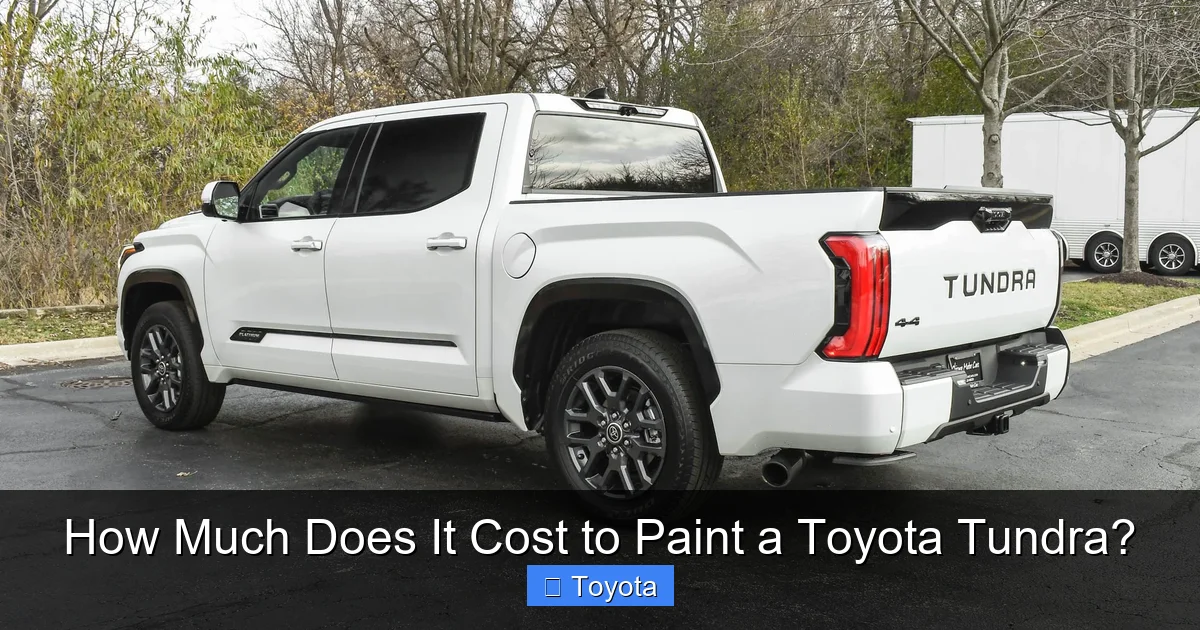
Painting a Toyota Tundra typically costs between $500 for a basic DIY job and $10,000+ for a premium professional finish. Most owners spend $3,000 to $5,000 for a quality respray at a reputable shop. Your final price depends on paint quality, prep work needed, and whether you choose a color change or same-color refresh.
So you’re staring at your Toyota Tundra thinking it could use a fresh coat of paint. Maybe the clear coat is peeling on the hood. Maybe you want a custom color that turns heads at the job site. Or maybe you just bought a used truck with more scratches than a stray cat’s scratching post. Whatever brought you here, the big question burning in your mind is simple: how much does it cost to paint a Toyota Tundra?
The short answer? It depends. A lot. You could spend $500 doing it yourself in a buddy’s garage. You could drop $12,000 at a high-end restoration shop. Most Tundra owners land somewhere in the middle. This guide breaks down every factor that affects your final bill so you can budget smart and avoid expensive surprises.
Key Takeaways
- Budget DIY jobs start around $500: Basic single-stage paint and supplies for a garage respray cost the least but require skill and patience.
- Professional same-color resprays average $3,000 to $5,000: This includes proper prep, quality basecoat/clearcoat, and a warranty.
- Color changes add $1,000 to $3,000 more: Painting door jambs, engine bay, and trunk increases labor and material costs significantly.
- Paint quality dramatically affects price: Single-stage enamel costs less than premium urethane or ceramic-infused clearcoats.
- Body damage repair adds hidden costs: Dent removal, rust repair, and panel replacement can double your total bill before painting starts.
- Shop reputation matters more than the lowest quote: Cheap shops often skip prep steps that lead to peeling or orange peel within a year.
- Timing your project can save money: Winter months often bring shop discounts of 10 to 15 percent during slow seasons.
📑 Table of Contents
- Understanding the Price Range for a Tundra Paint Job
- What Drives the Cost Up or Down
- Breaking Down a Typical $4,500 Mid-Range Quote
- DIY vs. Professional: The Real Trade-offs
- Hidden Costs That Catch Owners Off Guard
- How to Get Accurate Quotes and Avoid Getting Burned
- Money-Saving Strategies That Don’t Sacrifice Quality
- Maintaining Your Fresh Paint
- Special Considerations for the Toyota Tundra
- Real Owner Experiences: What Tundra Drivers Actually Paid
- Frequently Asked Questions About Tundra Painting
- Final Thoughts: Your Tundra, Your Call
Understanding the Price Range for a Tundra Paint Job
Let’s start with the numbers you actually came for. Painting a full-size truck like the Tundra costs more than painting a Civic. You have more surface area, more panel gaps, and usually more prep work thanks to years of truck duty.
DIY Budget Range: $500 to $2,000
If you have a garage, a compressor, and weekends to burn, you can paint your Tundra for the cost of materials. A basic single-stage enamel kit from an auto parts store runs $300 to $600. Add sandpaper, masking tape, primer, clear coat, and safety gear, and you’re looking at $500 to $1,000 total.
Step up to a two-stage basecoat/clearcoat system with decent urethane paint, and materials jump to $1,200 to $2,000. You save all the labor cost, which is usually 60 to 70 percent of a pro quote. But you pay in time, frustration, and the very real risk of having to pay a pro to fix your mistakes later.
Budget Professional Shops: $1,500 to $3,000
Maaco, Earl Scheib (where they still exist), and similar production shops offer the cheapest professional work. They’ll tape off your trim, scuff the old paint, spray two coats of single-stage urethane, and send you home same-day or next-day.
Expect thin paint, minimal prep, overspray on your windows, and a finish that lasts two to four years before fading or peeling. These shops make money on volume. Your Tundra is just another unit on the line. If you plan to sell the truck in a year or two, this might make sense. If you’re keeping it long-term, keep reading.
Mid-Roe Quality Shops: $3,000 to $6,000
This is the sweet spot for most Tundra owners. A reputable independent body shop or collision center will strip trim, repair minor dents, block-sand the entire truck, apply epoxy primer, spray quality basecoat/clearcoat, and reassemble with care.
You get a finish that lasts 7 to 10 years with proper care. Most shops in this tier offer a 3 to 5 year warranty on adhesion and gloss retention. They’ll color-match your factory code or help you pick a custom shade. This is where value meets quality.
High-End Restoration Shops: $7,000 to $15,000+
Concours-level work. Every panel comes off the truck. The frame gets painted. Door jambs, engine bay, underhood, bed interior — everything matches. Multiple clear coat layers. Wet-sanding and polishing between coats. Paint thickness measured with a gauge. This is show-truck territory.
Unless you’re building a SEMA rig or restoring a first-generation Tundra to museum condition, this is overkill. But if that’s your goal, budget accordingly and expect a 4 to 8 week turnaround.
What Drives the Cost Up or Down
Two Tundras. Same shop. Same paint brand. Totally different prices. Here’s why.
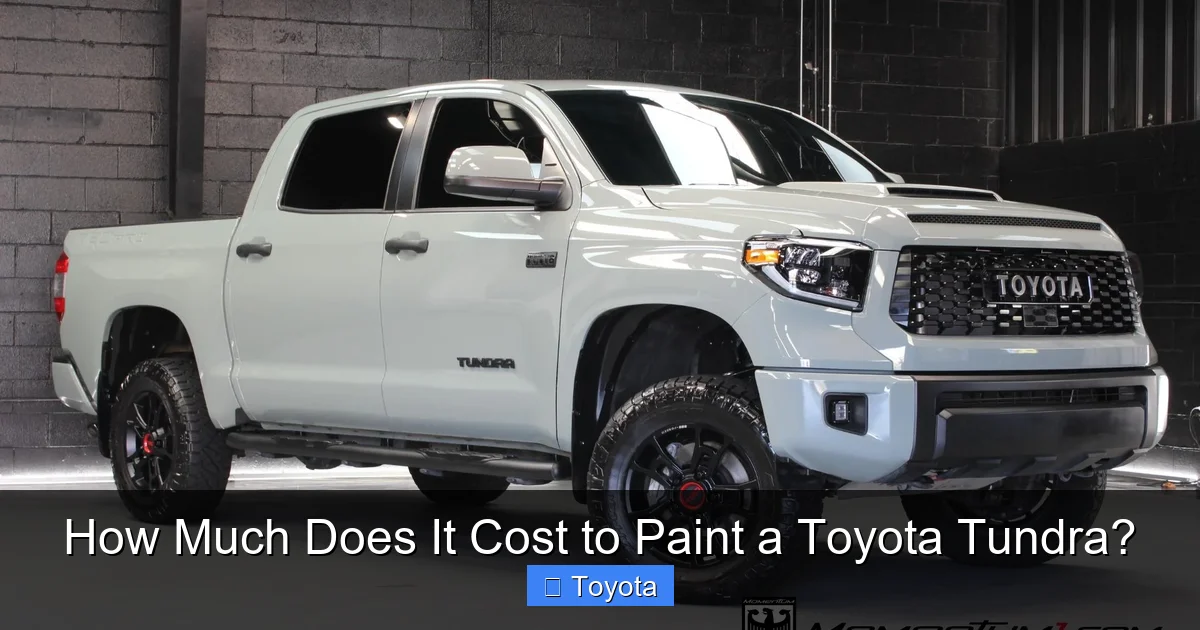
Visual guide about How Much Does It Cost to Paint a Toyota Tundra?
Image source: momentummotorcars.com
Same Color vs. Color Change
Sticking with your factory color? The shop masks off door jambs, hood underside, and bed interior. They spray the outside panels only. Labor drops significantly.
Want to go from Magnetic Gray to Cavalry Blue? Now they spray door jambs, engine bay, trunk, bed interior, and sometimes the frame. That’s 30 to 50 percent more labor hours. Plus more paint, more masking, more cleanup. A color change typically adds $1,500 to $3,500 to a mid-range quote.
Paint System Choice
Single-stage urethane: Color and gloss in one coat. Cheaper materials. Faster application. Less depth. Fades faster. Good for work trucks.
Basecoat/clearcoat (two-stage): Color base plus separate clear coat. Standard for modern factory finishes. Better UV protection. Deeper gloss. Repairable. This is what you want.
Three-stage (pearl/metallic): Basecoat, mid-coat (pearl or candy), clearcoat. Most expensive materials. Trickiest to match. Adds $500 to $1,500 in paint cost alone.
Ceramic-infused clearcoats: Newer tech. Harder surface. Better chemical resistance. Adds $300 to $800 in materials. Worth it if you daily-drive in harsh climates.
Body Condition and Prep Work
This is the wildcard. A clean, straight 2020 Tundra with factory paint in good shape needs minimal prep. Maybe 8 to 12 hours of sanding and masking.
A 2007 with Texas pinstripes, door dings, surface rust on the wheel arches, and peeling clear coat on the roof? That’s 40 to 60 hours of body work before a single drop of primer hits metal. Dent repair runs $75 to $150 per panel. Rust repair $200 to $500 per area. Panel replacement $300 to $1,000+ per side.
Always get a thorough inspection before committing. Shops that quote blind over the phone will hit you with “supplements” halfway through.
Trim Removal vs. Masking
Proper shops remove bumpers, grille, headlights, taillights, mirrors, door handles, and bed rails. They paint edges and gaps. Reassembly takes time but prevents peeling at panel edges.
Budget shops mask everything. Tape lines show. Paint bridges gaps and cracks when panels flex. Moisture traps under tape edges. It saves 4 to 6 hours labor but costs you longevity.
Breaking Down a Typical $4,500 Mid-Range Quote
Let’s look at where your money actually goes on a quality same-color respray for a 2018 Tundra CrewMax in good condition.
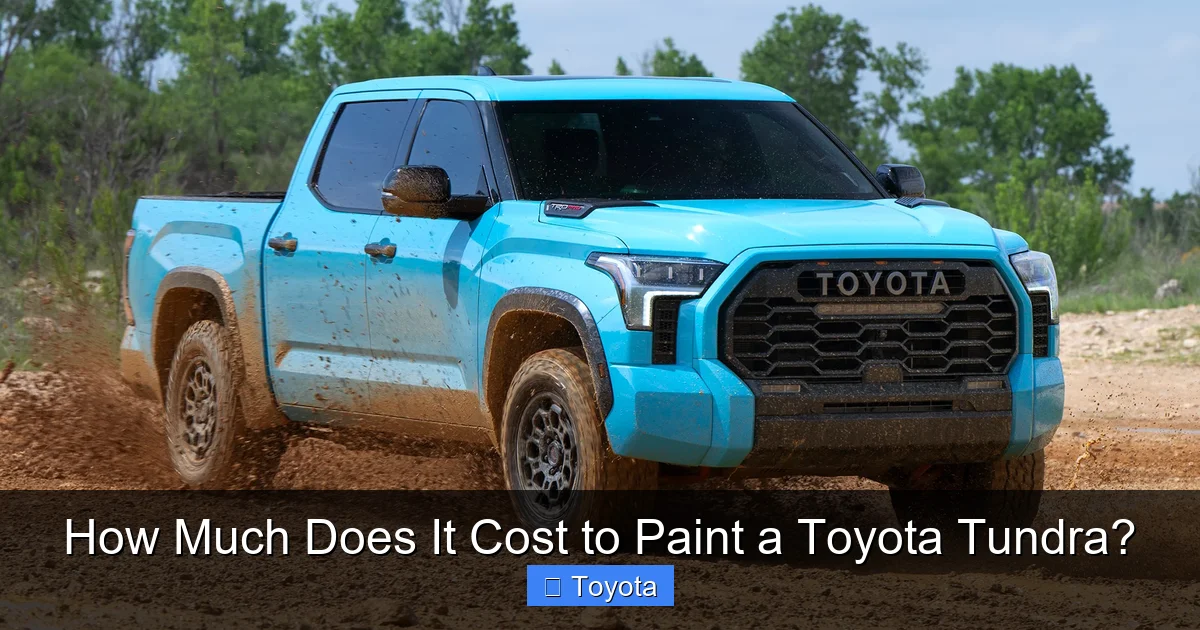
Visual guide about How Much Does It Cost to Paint a Toyota Tundra?
Image source: motortrend.com
Materials: $1,200 to $1,500
- Premium urethane basecoat (2 gallons mixed): $450 to $600
- High-solids clearcoat (2 gallons mixed): $350 to $500
- Epoxy primer/sealer: $150 to $200
- Body filler, sandpaper, masking supplies: $150 to $200
- Solvents, tack cloths, PPE: $100 to $150
Labor: $2,500 to $3,000
- Disassembly/trim removal: 4 to 6 hours
- Body repair (minor dents/scratches): 6 to 10 hours
- Block sanding/prep: 12 to 18 hours
- Masking: 3 to 4 hours
- Priming: 2 to 3 hours
- Basecoat application: 3 to 4 hours
- Clearcoat application: 2 to 3 hours
- Wet sand/polish: 4 to 6 hours
- Reassembly/detail: 3 to 4 hours
At $75 to $100 per hour shop rate, that’s 35 to 45 hours. The rest covers shop overhead, booth time, waste disposal, and profit margin.
DIY vs. Professional: The Real Trade-offs
I’ve seen gorgeous DIY paint jobs. I’ve seen professional jobs that peeled in six months. The shop name on the invoice doesn’t guarantee results. But the odds favor pros for reasons beyond skill.
Visual guide about How Much Does It Cost to Paint a Toyota Tundra?
Image source: di-sitebuilder-assets.s3.amazonaws.com
Equipment You Can’t Fake
A downdraft paint booth with temperature and humidity control costs $80,000 to $150,000. It filters air to near-cleanroom standards. It bakes the finish at 140°F for proper curing. Your garage with a box fan and a space heater? Not the same.
Dust nibs, fish eyes, solvent pop — these defects come from environment. Pros control it. You can’t, not without massive investment.
Paint Systems Require Precision
Modern urethane clearcoats have narrow application windows. Too wet = runs. Too dry = orange peel. Wrong flash time = solvent pop. Wrong gun pressure = mottling. Pros spray daily. Their muscle memory is calibrated. Your first time? You’re guessing.
Color Match Is a Science
Toyota has dozens of white variants. Super White. Blizzard Pearl. Classic Silver Metallic. Each has specific tint formulas. Pros use spectrophotometers and variant decks to nail the match. You’re eyeballing a spray-out card under fluorescent light.
When DIY Makes Sense
- You’re painting a beater truck for rust prevention only
- You have prior bodywork experience
- You’re doing a single panel (bed side, hood, bumper)
- You’re learning the craft and accept imperfection
- Budget is absolutely fixed under $1,500
Hidden Costs That Catch Owners Off Guard
The quote says $4,200. The final invoice says $5,800. Here’s what happened.
Rust Repair
Surface rust sands out. Scale rust needs cutting and welding. Perforation needs panel replacement. Shops can’t see the full extent until they strip paint. Budget $500 to $2,000 contingency for trucks over 10 years old in salt-belt states.
Plastic Parts
Bumpers, mirror caps, grille surrounds, bed rail caps — these flex. They need flex additive in the clearcoat. They often need separate prep and spray sessions. Some shops charge $200 to $400 extra per plastic piece.
Window and Trim Damage
Removing 15-year-old molding clips breaks them. Windshield reveal moldings crack. Antenna bases seize. Shops should warn you, but replacements add up. Budget $100 to $500 for clips and incidental trim.
Alignment and Recalibration
If the shop removes bumpers with parking sensors or cameras, those systems may need recalibration. $150 to $300 per system. Forward collision warning. Blind spot monitors. 360-degree cameras. Modern Tundras are sensor-heavy.
Paint Protection Film or Ceramic Coating
Fresh paint is vulnerable for 30 to 60 days while it fully cures. Many owners add PPF on the hood, fenders, and mirror caps ($800 to $1,500) or ceramic coating ($500 to $1,200) immediately after pickup. Not required, but smart insurance.
How to Get Accurate Quotes and Avoid Getting Burned
Don’t call three shops and ask “how much to paint my Tundra?” You’ll get three useless numbers. Do this instead.
Prepare Your Spec Sheet
Write down: Year, trim, VIN, current color code (door jamb sticker), desired color code (if changing), known damage areas, your timeline, and your budget range. Email this to every shop. Apples to apples.
Visit In Person
Look at their current work. Check the booth. Ask to see a finished vehicle in their lot. Look for orange peel, dust nibs, masking lines, overspray on glass. Talk to the painter, not just the estimator. The painter knows what’s realistic.
Ask These Exact Questions
- “Do you remove bumpers, lights, and trim or mask them?”
- “What paint brand and system do you use? Single-stage or basecoat/clearcoat?”
- “How many coats of clear? What mil thickness do you target?”
- “What’s your warranty cover and for how long?”
- “Do you block-sand the entire vehicle or just scuff and shoot?”
- “What’s the contingency process if you find hidden rust?”
- “Can I see the booth and a recent complete job?”
Read the Fine Print
Some quotes exclude: door jambs, engine bay, bed interior, frame, plastic parts, color sanding, polishing, reassembly, disposal fees, shop supplies fees (often 5 to 10 percent), and tax. Get a line-item estimate. “Complete paint job” means nothing without details.
Money-Saving Strategies That Don’t Sacrifice Quality
You want a good job. You also want to keep your kidney. Try these.
Time It Right
January through March is slow season in most regions. Shops discount 10 to 20 percent to keep painters busy. Avoid April through October — wedding season, car show season, “I want my truck nice for summer” season.
Do Your Own Disassembly
If you’re handy, offer to remove bumpers, grille, lights, mirrors, bed rails, and badges yourself. Save 4 to 6 shop hours ($300 to $600). Label every bolt. Bag and tag hardware. Take photos. Don’t break clips. Shops love this — but confirm they’ll deduct the labor first.
Provide Your Own Paint (Sometimes)
Some shops let you supply paint if it’s a brand they spray regularly. You buy at jobber price (30 to 40 percent off retail). Shop charges full labor. Risk: if paint is bad, warranty void. Only do this with shop approval in writing.
Skip the Color Change
Same-color respray saves $1,500 to $3,500. If you hate your factory color, wrap it instead. Quality wrap: $2,500 to $4,000. Removable. Protects original paint. Changes in a weekend. No door jamb mismatch.
Bundle Repairs
Need a windshield? Rocker panel repair? Bed liner removal? Do it all at once. One booth cycle. One disassembly. One reassembly. Shops often discount bundled work 5 to 10 percent.
Maintaining Your Fresh Paint
You spent $4,500. Now protect it.
The First 30 Days
No wax. No sealant. No ceramic coating. No automatic car washes. No pressure washers. Hand wash only with pH-neutral soap and clean microfiber. The paint is still outgassing solvents. Sealing it traps vapors = hazing or adhesion failure.
Days 30 to 60
Light polymer sealant okay. Still no wax with abrasives. No clay bar. If you must remove contamination, use a dedicated fresh-paint cleaner.
After 60 Days
Full detail. Ceramic coating. PPF. Whatever you want. The paint is cured.
Ongoing Care
Wash weekly. Dry with clean towels. Bird droppings and bug guts off immediately — they etch clearcoat in hours. Park in shade. Use a cover if garaged. Your $4,500 paint job lasts 10+ years with basic discipline.
Special Considerations for the Toyota Tundra
The Tundra has quirks that affect paint cost. Know them going in.
Bed Configuration
Standard bed (6.5 ft) vs. long bed (8 ft) changes surface area by ~15 percent. More bed = more paint, more masking, more clear. CrewMax cabs have four full doors. Double Cab has smaller rear doors. Regular cab has two. Each door adds jamb painting time on color changes.
Factory Colors
Toyota’s pearl whites (Blizzard Pearl, Super White) and magnetic grays are multi-stage from the factory. Matching them perfectly requires three-stage application. Some shops quote two-stage and hope you won’t notice. You will. In sunlight. Every time.
TRD Pro and Special Editions
Heritage Blue. Army Green. Lunar Rock. Cement. These colors use unique flake packages. Matching requires custom tinting. Expect $300 to $600 extra in paint cost and an extra day for spray-outs and approval.
Aluminum Panels
2022+ Tundras use aluminum hoods and some door skins. Aluminum requires different prep (acid etch primer) and flex additives. Not all shops handle it correctly. Verify experience with current-gen trucks.
Sensor Locations
Front grille: radar for adaptive cruise. Front bumper corners: parking sensors. Rear bumper: blind spot radar. Tailgate: camera. Bed: tie-down sensors on some trims. All need careful R&R and possible recalibration.
Real Owner Experiences: What Tundra Drivers Actually Paid
I pulled data from Tundra forums, Reddit, and shop invoices shared by owners in 2023-2024. Names changed. Prices rounded.
Case 1: 2015 CrewMax, Magnetic Gray, Same Color
Shop: Independent collision center, Midwest
Condition: Good, minor door dings, clear coat failing on roof
Work: Full exterior, basecoat/clearcoat, trim R&R, door jambs masked
Price: $3,800
Time: 6 days
Owner take: “Looks factory. Zero issues 18 months later. Would use again.”
Case 2: 2008 Double Cab, Black, Color Change to White
Shop: High-end restoration, Southeast
Condition: Rust on rockers, dented bed side, faded paint
Work: Full color change, jambs/engine bay/bed interior, rocker repair, bed side replacement
Price: $11,200
Time: 5 weeks
Owner take: “Expensive but it’s a show truck now. Rust repair was the real cost.”
Case 3: 2020 SR5, Super White, DIY Single-Stage
Location: Home garage, Southwest
Condition: Clean, wanted matte flat white look
Work: Owner prep and spray, Eastwood single-stage urethane
Price: $850 materials
Time: 3 weekends
Owner take: “Runs looked okay from 10 feet. Up close it’s rough. Good enough for a work truck. Would not do again on a nice vehicle.”
Case 4: 2018 Limited, Midnight Black, Maaco “Ambassador” Package
Shop: Maaco franchise, West Coast
Condition: Good, wanted refresh
Work: Top-tier Maaco package, basecoat/clearcoat, 3-year warranty
Price: $2,100
Time: 2 days
Owner take: “Looked great at pickup. Six months later, clear peeling on hood edge. Maaco honored warranty but it’s a hassle. Get what you pay for.”
Frequently Asked Questions About Tundra Painting
Can I just paint over the existing clear coat?
Only if the clear is perfectly bonded with no peeling, cracking, or oxidation. You must sand it to a uniform 600-800 grit profile for mechanical adhesion. Any lifting areas will telegraph through. Most pros strip to primer or metal for warranty work.
How long does a professional paint job take?
Same-color respray at a mid-range shop: 4 to 7 business days. Color change: 7 to 14 days. High-end restoration: 4 to 8 weeks. DIY: 2 to 4 weekends depending on skill and weather.
Will insurance cover a paint job?
Only for collision or comprehensive claims (hail, vandalism, theft recovery). Cosmetic fading, peeling clear coat, or “I want a new color” are never covered. If you have a claim, you choose the shop — insurance cannot steer you.
Is wrapping cheaper than painting?
Quality full wrap: $2,500 to $4,500. Comparable to mid-range paint. Wrap lasts 5 to 7 years. Paint lasts 10+. Wrap protects original paint. Paint is permanent. Wrap can’t fix body damage. Different tools for different jobs.
What’s the cheapest way to fix peeling clear coat on just the hood and roof?
Panel-only respray: $400 to $800 per panel at a shop. DIY rattle-can touch-up: $50, looks terrible. Vinyl wrap just those panels: $300 to $500, reversible. Best value: shop panel repair with blend into adjacent panels.
Does painting a Tundra decrease its value?
Quality same-color respray on a damaged truck: increases value. Poor quality respray: decreases value. Color change on a collectible/low-mile truck: may decrease collector value. On a daily driver: neutral to positive if done well. Document the work with photos and receipts.
Final Thoughts: Your Tundra, Your Call
Painting a Toyota Tundra isn’t a commodity purchase. It’s a craft service wrapped in materials. The $1,500 job and the $8,000 job both result in a painted truck. But one lasts two years and peels at the door edges. The other looks factory-fresh a decade later.
Match your investment to your timeline. Flipping the truck in 18 months? Budget shop or wrap. Keeping it until the wheels fall off? Mid-range pro shop with basecoat/clearcoat. Building a showpiece? High-end restoration.
Get three detailed estimates. Visit the shops. Talk to the painters. Trust your gut. And whatever you do — don’t cheap out on prep. The paint you see is only as good as the surface you don’t.
Your Tundra works hard. Give it a finish that works just as hard.
Frequently Asked Questions
How much does it cost to paint a Toyota Tundra at Maaco?
Maaco prices for a Tundra range from $600 for their basic single-stage package to $2,500 for their premium “Ambassador” basecoat/clearcoat service. Most owners pay $1,200 to $1,800 for a decent mid-tier job with a 3-year warranty.
Can I paint my Toyota Tundra myself to save money?
Yes, a DIY paint job costs $500 to $2,000 in materials depending on paint quality. You need a clean garage, compressor, spray gun, and patience. Results vary wildly — first-timers often get runs, orange peel, or dust contamination that pros avoid with booths.
Does a color change cost more than painting the same color?
Yes, a color change adds $1,500 to $3,500 because shops must paint door jambs, engine bay, bed interior, and sometimes the frame. This requires complete disassembly, more paint, and 30 to 50 percent more labor hours.
How long does a professional paint job last on a Tundra?
A quality basecoat/clearcoat job from a reputable shop lasts 7 to 10 years with proper care. Single-stage budget jobs last 2 to 4 years. Ceramic-infused clearcoats can extend life to 10+ years. Maintenance (washing, garage storage) matters enormously.
What’s the difference between single-stage and basecoat/clearcoat paint?
Single-stage combines color and gloss in one coat — cheaper, faster, less UV protection, harder to repair. Basecoat/clearcoat separates color and protection — standard on modern vehicles, deeper gloss, better durability, spot-repairable. Always choose basecoat/clearcoat for a Tundra.
Should I wrap or paint my Toyota Tundra?
Wrap ($2,500-$4,500) if you want temporary color change, paint protection, or plan to sell in 3-5 years. Paint ($3,000-$6,000 for quality) if you want permanent finish, have body damage to repair, or keep the truck long-term. Wraps can’t fix dents or rust.