How to Fix Ac Light Flashing on a Toyota Tacoma
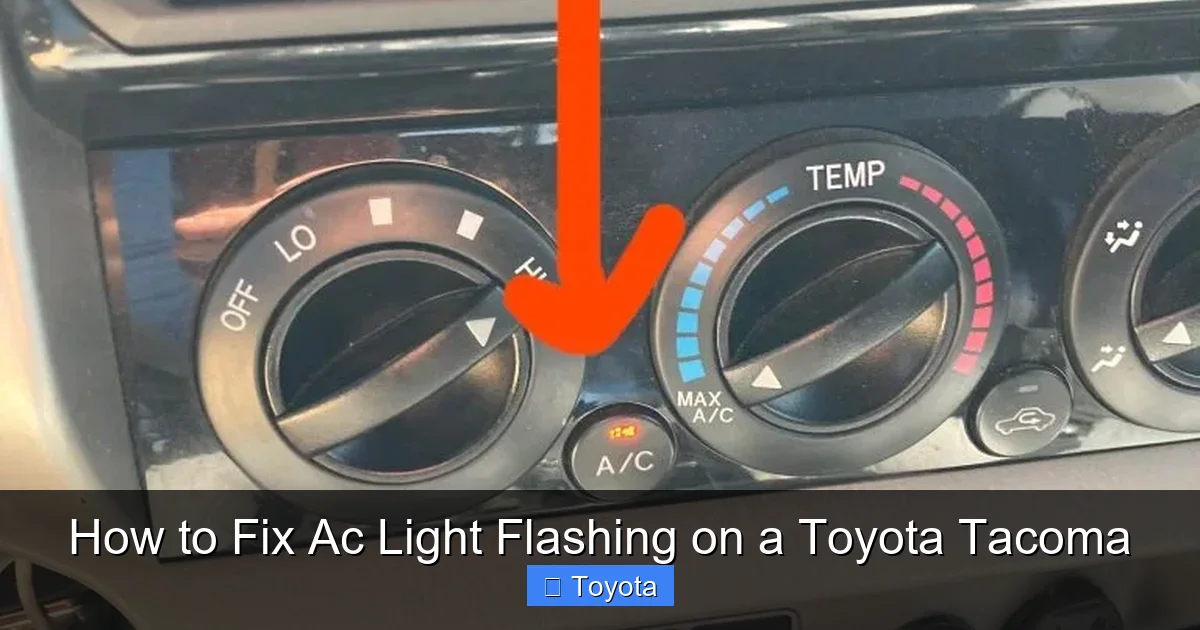
A flashing AC light on your Toyota Tacoma usually signals a system fault like low refrigerant, a bad relay, or a clogged filter. This guide walks you through common causes, simple resets, and when to seek professional repair to restore your cool air.
If you own a Toyota Tacoma, you might have seen the AC light flashing on your dashboard. It is annoying, especially on a hot day when you need cool air the most. That flashing light is the truck’s way of telling you something is wrong with the air conditioning system. The good news is that many causes are simple to fix at home. In this guide, we will explain why the AC light flashes, how to troubleshoot it, and when to call a mechanic.
We will cover everything from a quick system reset to checking refrigerant levels and replacing relays. By the end, you will have a clear plan to get your AC blowing cold again. Let’s dive in and solve that AC light flashing on a Toyota Tacoma once and for all.
Key Takeaways
- Flashing light means a fault: The AC light flashes when the system detects an issue such as low pressure, electrical problems, or sensor failures.
- Start with a reset: Turning the engine off and on or pressing the AC button in a sequence can sometimes clear the code.
- Check the cabin air filter: A dirty filter restricts airflow and can trigger the flashing light.
- Low refrigerant is common: If the system is low on refrigerant, the compressor won’t engage and the light will flash.
- Relay and fuse issues: A faulty AC relay or blown fuse can prevent the compressor from running.
- Professional help for leaks: Refrigerant leaks and compressor failures require specialized tools and certification.
- Preventive maintenance matters: Regular filter changes and running the AC monthly keep the system healthy.
📑 Table of Contents
Understanding Why Your AC Light Is Flashing
The AC light on your Tacoma’s control panel does more than show the system is on. It acts as a warning indicator. When the light flashes, the AC control module has detected a fault and disabled the compressor to prevent damage. The pattern of flashes can sometimes indicate a specific code, but most models just flash steadily.
Common Causes of AC Light Flashing
Several issues can trigger the flashing light. The most common include low refrigerant charge, a faulty AC compressor relay, a blown fuse, a bad pressure switch, or a clogged cabin air filter. Electrical problems like a damaged wiring harness or a failing AC amplifier can also cause it. Sometimes the system just needs a reset after a battery disconnect.
What the Flashing Pattern Means
On some model years, the number of flashes corresponds to a diagnostic trouble code. For example, two flashes might mean a pressure sensor issue, while three flashes could indicate a compressor lock sensor fault. Check your owner’s manual or a repair database for your specific year. If you don’t have a code reader, you can still perform the basic checks we outline below.
Quick Checks Before You Start Repairing
Before you buy parts or tools, do these simple checks. They take only a few minutes and can save you time and money.
Check the AC Button and Settings
Make sure the AC button is actually pressed and the fan is on. Set the temperature to cold and the mode to face or foot vents. If the light flashes immediately after you press the button, the system is detecting a fault right away. If it comes on solid for a few seconds then flashes, the compressor tried to engage but something stopped it.
Inspect the Cabin Air Filter
A dirty cabin air filter restricts airflow over the evaporator. This can cause the evaporator to freeze up, triggering a low-temperature lockout and flashing the light. Pull the filter out and hold it up to a light. If you can’t see light through it, replace it. This is a cheap and easy fix. For detailed steps, see our guide on how to clean a car air conditioner filter.
Look at the AC Compressor Clutch
With the engine running and AC on, open the hood and watch the compressor pulley. The center clutch plate should spin with the pulley when the AC is engaged. If it stays still while the pulley spins, the compressor is not engaging. This could be due to low refrigerant, a bad relay, or a failed clutch coil.
Step-by-Step Fixes for AC Light Flashing
Now we move to the actual repairs. Work through these in order from easiest to most involved.
Reset the AC System
Sometimes the control module just needs a reboot. Turn the engine off. Remove the key or press the start button to shut everything down. Open the driver’s door for 30 seconds to let modules power down. Restart the engine and try the AC again. On some models, you can also try pressing the AC and recirculation buttons simultaneously for a few seconds to initiate a self-test. If the light stops flashing, you had a temporary glitch.
Recharge the Refrigerant
Low refrigerant is the number one reason for AC light flashing on a Toyota Tacoma. The system has a low-pressure switch that prevents the compressor from running if pressure is too low. This protects the compressor from damage due to lack of lubrication. You can buy a recharge kit with a gauge at any auto parts store. Connect it to the low-side service port (usually on the larger line near the firewall). Follow the kit instructions to add refrigerant until the gauge reads in the green zone for the ambient temperature. Do not overcharge. If the system takes a full can and the light stops flashing, you likely had a slow leak. You should add UV dye to find the leak later.
Replace the AC Relay
The AC compressor relay is a common failure point. It is usually located in the engine bay fuse box. Check your owner’s manual for the exact location. Swap the AC relay with another identical relay in the box (like the horn relay) to test. If the AC works with the swapped relay, buy a new relay and replace the old one. They cost less than $20 and plug right in.
Clean or Replace the Cabin Air Filter
We mentioned checking the filter earlier. If it is dirty, replace it. A new filter costs $15-$30 and takes five minutes to install. Usually, the filter housing is behind the glove box. Remove the glove box stops, drop the glove box down, and unclip the filter cover. Slide the old filter out and slide the new one in with the airflow arrow pointing down. Reassemble. This simple step often stops the flashing light caused by evaporator freeze-up.
Check the AC Pressure Switch
If the refrigerant level is good but the light still flashes, the pressure switch might be faulty. There are two switches: a low-pressure switch and a high-pressure switch. They screw into the AC lines. You can test them with a multimeter for continuity. If a switch is open when it should be closed (or vice versa), replace it. This requires some mechanical skill and may need a line wrench to avoid rounding the fittings. If you are not comfortable, let a pro handle it.
Inspect the AC Compressor Clutch Coil
If the relay is good and refrigerant is full, but the clutch still won’t engage, the clutch coil may have an open circuit. You can test this by applying 12V directly to the compressor connector (with the engine off). If the clutch clicks and engages, the coil is good and the problem is upstream (wiring, control module). If it doesn’t click, the coil is bad. Replacing the coil usually requires removing the compressor, which is a job for a shop unless you have the tools.
When to Seek Professional Help
DIY repairs can solve many flashing light issues, but some problems need a certified technician. Here are signs you should visit a shop.
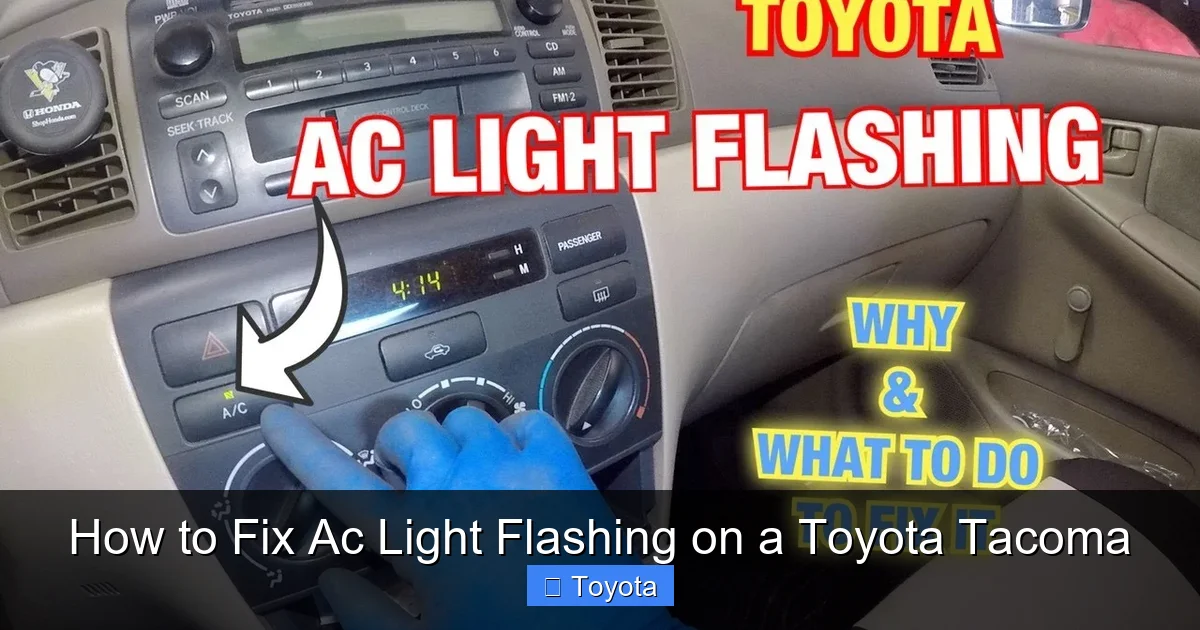
Visual guide about How to Fix Ac Light Flashing on a Toyota Tacoma
Image source: i.ytimg.com
Complex Electrical Issues
If you have checked fuses, relays, and switches but the light still flashes, there may be a wiring harness fault or a failed AC amplifier (control module). Diagnosing these requires wiring diagrams, a scan tool that reads body codes, and experience. A shop can pinpoint the break quickly.
Compressor Failure
If the compressor makes loud noises, leaks oil, or the clutch is seized, the compressor must be replaced. This involves evacuating the system, removing the old compressor, flushing the lines, installing a new compressor, and recharging. It also requires replacing the receiver/drier. This is not a driveway job for most people.
Refrigerant Leaks
If you recharge the system and the AC works for a few days then the light flashes again, you have a leak. Finding leaks often requires UV dye, a blacklight, and sometimes nitrogen pressure testing. Repairing leaks may involve replacing O-rings, hoses, the condenser, or the evaporator. The evaporator is inside the dash and requires dash removal. That is a big job. Also, handling refrigerant requires EPA Section 608 certification. For more on AC system maintenance, see our article on how to remove excess oil from car AC system.
Preventive Maintenance to Avoid Future Flashing
Once your AC is fixed, keep it running strong with these habits.
Regular AC System Inspections
Have a shop check the AC system once a year, preferably before summer. They can check pressures, inspect for leaks, and verify the compressor clutch air gap. Catching a small leak early saves you from a major repair later.
Keep the Cabin Air Filter Clean
Replace the cabin air filter every 15,000 to 20,000 miles, or once a year. If you drive on dusty roads, do it more often. A clean filter ensures proper airflow and prevents evaporator freeze-up.
Run the AC Regularly
Even in winter, run the AC for 10 minutes every couple of weeks. This circulates the oil in the system and keeps seals lubricated. It also prevents the compressor from seizing due to inactivity. Many modern cars run the AC automatically in defrost mode, but it’s good to manually turn it on occasionally.
Conclusion
Dealing with an AC light flashing on a Toyota Tacoma can be frustrating, but it is often fixable with basic tools and a little patience. Start with the easy stuff: reset the system, check the cabin air filter, and verify the compressor clutch engages. If the refrigerant is low, a recharge kit might do the trick. A faulty relay is a cheap and common fix. If those don’t work, you may have a pressure switch, wiring, or compressor issue that needs professional attention. Regular maintenance like filter changes and running the AC year-round will help prevent the light from flashing again. Stay cool out there!
Frequently Asked Questions
Why is my Toyota Tacoma AC light blinking?
The AC light blinks when the system detects a fault such as low refrigerant, a bad pressure switch, a faulty relay, or a clogged cabin air filter. It disables the compressor to prevent damage.
Can I drive with the AC light flashing?
Yes, you can drive the truck. The flashing light only means the air conditioning is disabled. The engine and other systems are unaffected. However, you won’t have cold air or defrost assist.
How do I reset the AC light on a Toyota Tacoma?
Turn the engine off, open the driver’s door for 30 seconds, then restart. On some models, pressing the AC and recirculation buttons together for a few seconds initiates a self-test reset.
Will adding refrigerant stop the AC light from flashing?
If the cause is low refrigerant, recharging to the correct pressure will usually stop the light from flashing. If the light returns quickly, there is a leak that must be repaired.
How much does it cost to fix a flashing AC light on a Tacoma?
Cost varies widely. A DIY relay or filter costs under $30. A professional recharge with dye is $150-$300. Compressor replacement can run $800-$1,500. Evaporator replacement is $1,000-$2,000 due to labor.
Can a bad cabin air filter cause the AC light to flash?
Yes. A severely restricted filter reduces airflow over the evaporator, causing it to freeze. The system detects the freeze-up and flashes the light to protect the compressor.