How to Tell Which Tpms Sensor Is Bad on a Toyota
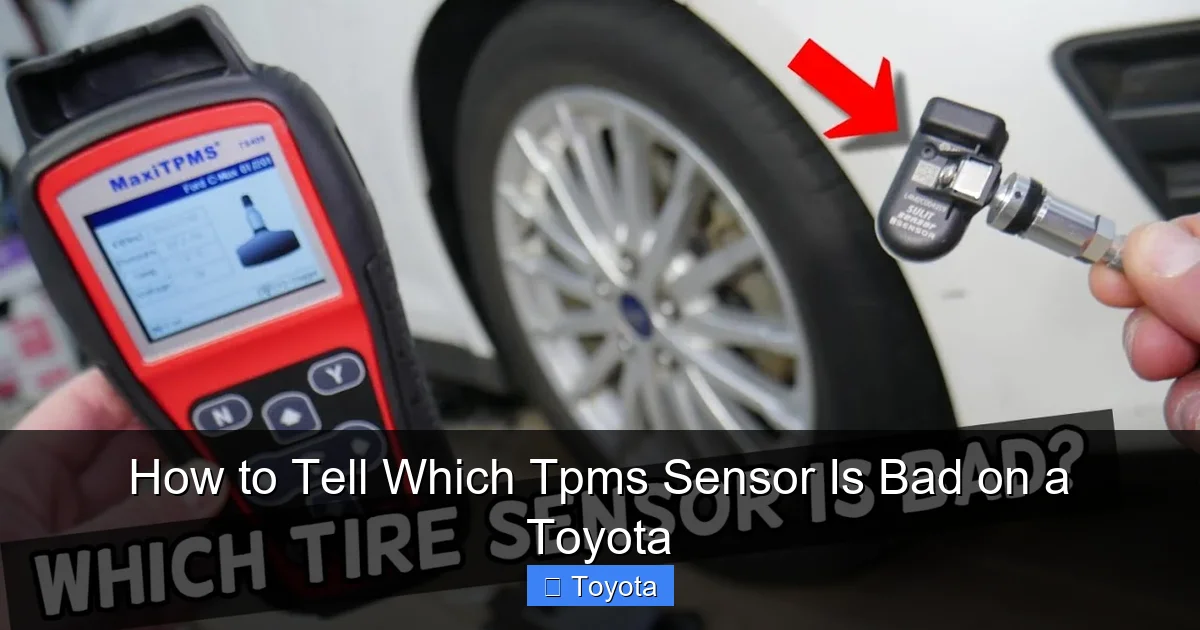
Knowing how to tell which TPMS sensor is bad on a Toyota can save you time and money. The easiest way is to use a scan tool or watch which tire light stays on after filling air.
Have you ever been driving your Toyota and noticed a small yellow light shaped like a horseshoe with an exclamation point in the middle? That is the tire pressure warning lamp. It can be scary the first time you see it. Most folks panic and think they have a flat tire. Often, the real issue is a bad TPMS sensor. Today I will help you learn how to tell which TPMS sensor is bad on a Toyota. This skill will save you money and stress.
We will talk like friends here. I will keep things simple. You do not need a fancy degree. You just need to read your dash and maybe use a small tool. By the end, you will know the exact steps. You will be able to point at the bad wheel and say, “That is the one!” Let me share a quick story. My neighbor Jane owned a 2015 RAV4. Her light blinked every morning. She paid for four new tires thinking that was the fix. It was just one dead TPMS sensor. She could have found it in ten minutes with this guide.
Key Takeaways
- Watch the warning light: Toyota’s dashboard shows which tire is low if a sensor fails.
- Use a scan tool: A TPMS reader tells you the exact sensor ID and battery status.
- Check tire pressure manually: Sometimes the sensor is fine but air is low.
- Rotate tires to test: Moving a wheel can reveal a bad sensor by changing the warning.
- Listen for odd clicks: A failing sensor may not send signals to the car.
- Replace in sets: Toyota often needs all sensors matched to the car.
📑 Table of Contents
What Is a TPMS Sensor and How Does It Work?
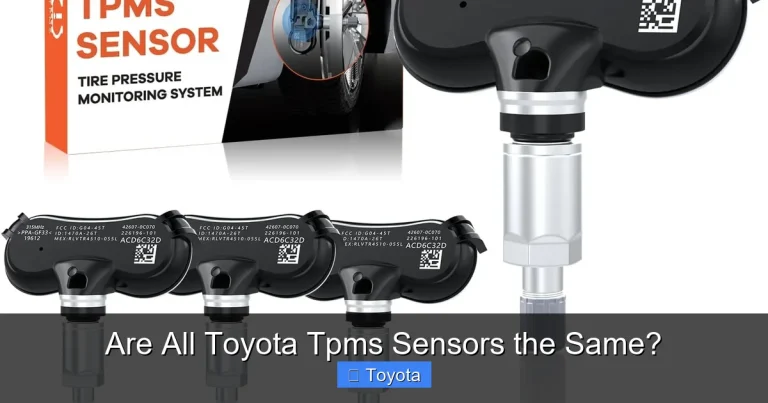
A TPMS sensor is a tiny radio device. It sits inside your tire, mounted on the valve stem. Its main job is to watch air pressure. It then sends that info to the car’s computer wirelessly. Think of it as a small reporter inside each wheel. The report travels on a radio wave.
The Two Types of TPMS
There are two families of tire monitoring. The first is direct TPMS. This uses a real TPMS sensor in every tire. The second is indirect TPMS. It uses wheel speed sensors to guess pressure by comparing rotation. Toyota uses direct TPMS on almost all models sold in the USA. That means each corner has its own TPMS sensor bolted to the stem.
Direct sensors run on a small lithium battery. The battery is sealed inside the plastic shell. It lasts about 5 to 10 years. Heat, cold, and long drives can shorten life. When the battery dies, the TPMS sensor goes silent. Your car then throws a warning on the dash.
Why Toyota Uses Direct TPMS
Toyota cares about safety. Direct sensors give real numbers. You can see “FL 32 psi” on the screen. That is clear and helpful. Indirect systems only guess and can be wrong. Direct meets strict US rules for cars after 2007. So your Toyota likely has four TPMS sensor units talking to the dash every few seconds.
Most Toyota TPMS sensor units broadcast at 315 MHz. Some import models use 433 MHz. Always check the label before purchase. A mismatched TPMS sensor is useless. Understanding this base helps you later. You will see why a silent TPMS sensor causes a blink. You will also see why finding the bad one is a game of elimination. Now let’s look at the clues your car gives you when a unit fails.
Common Signs of a Bad TPMS Sensor on a Toyota
Your Toyota will try to tell you when a TPMS sensor fails. But the signs can look like normal low pressure. Here is how to split the two with confidence.
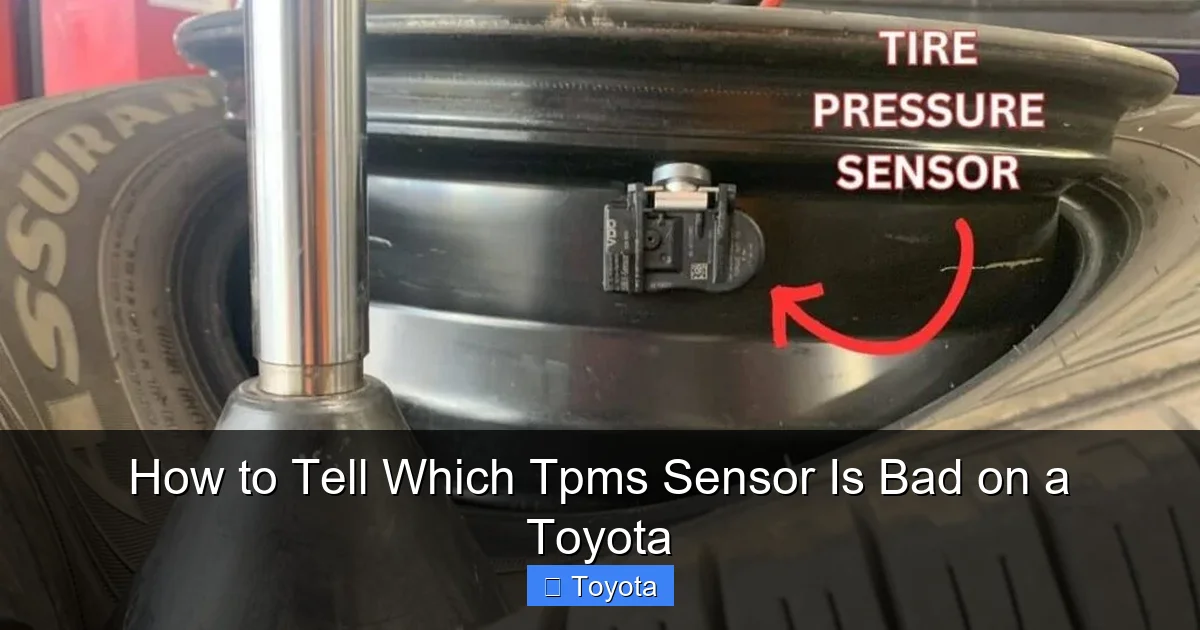
Visual guide about How to Tell Which Tpms Sensor Is Bad on a Toyota
Image source: tpmsreset.com
Dashboard Light Patterns
If the light blinks for about 60 seconds and then stays solid, that is a fault code. It means the car lost contact with a TPMS sensor. A steady light with no blink often means a tire is just low on air. Learn this pattern. It keeps you from filling tires that are fine and wasting time at the pump.
Inconsistent Pressure Readings
Many Toyotas show each tire’s pressure on the info screen. Grab a manual gauge from the glove box. Compare the dash number to the gauge. If one tire shows 28 psi on dash but gauge says 35, that TPMS sensor is lying. That is a clear sign of a bad unit. Cold mornings can make this worse as batteries weaken.
- Blink then solid: A TPMS sensor is not talking to the car.
- Dashes on one corner: That sensor is dead or missing.
- Light returns after fill: The fault remains in the system.
- Random warnings: Weak battery in a TPMS sensor causes drops.
- No readout on spare: Some Toyota hide the spare sensor issue.
Winter is hard on sensors. Cold slows the battery. You may see false alarms in January. Do not ignore them, but check with a gauge first. If you just bought a new ride, you should also read our guide on how to break in a new car Toyota. A fresh car may have sat on a dealer lot for months. Sensor batteries age even when parked. That guide helps protect all systems, including tires and brakes.
How to Tell Which TPMS Sensor Is Bad on a Toyota by Reading the Dash
The cheapest method is free. It uses the dash display you already have. This is the core of how to tell which TPMS sensor is bad on a Toyota without spending a dime. You can do it in your driveway.
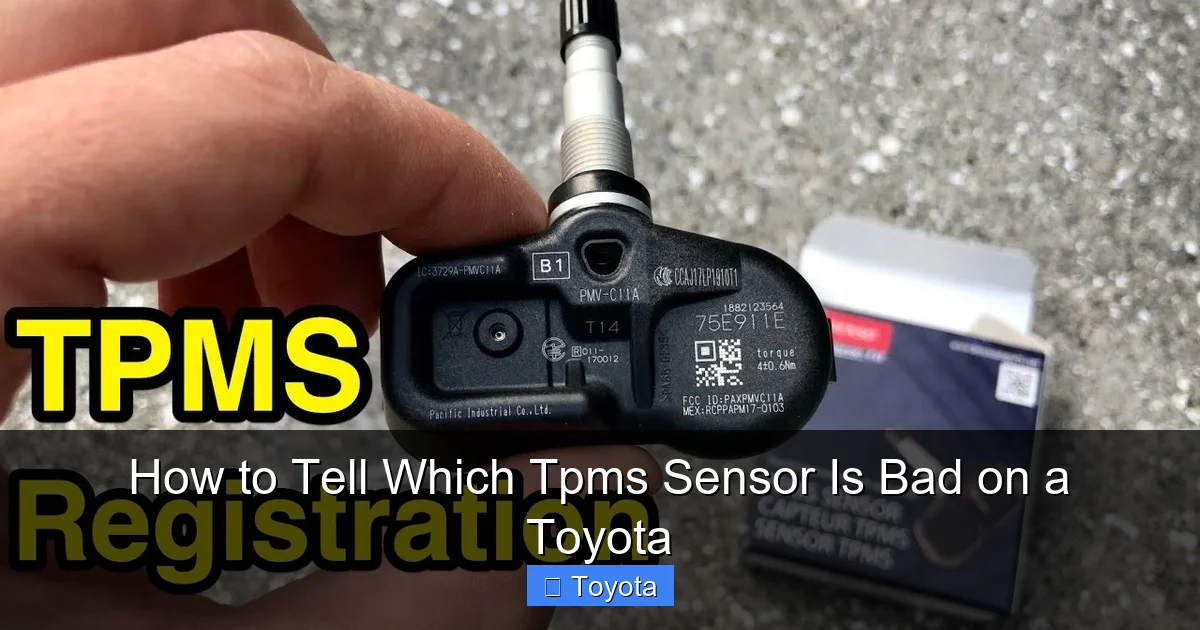
Visual guide about How to Tell Which Tpms Sensor Is Bad on a Toyota
Image source: i.ytimg.com
Reading the Toyota Warning Display
Turn the ignition to ON but do not start the engine. Look at the multi-info display. You will see four tire marks. Each shows a number or bars. If one spot shows “–” or nothing, that TPMS sensor is silent. That is your bad unit. On a Camry, the screen is in the center cluster. On a Tacoma, it may be in the small trip computer.
On older Toyota like a 2008 Corolla, the light may just glow. It may not show corners. Check the owner manual. It maps the light to a wheel position. Use that map to guess the bad TPMS sensor. Write it down before you act.
Using the Reset Button Trick
Many Toyota have a small reset button left of the steering wheel. Hold it until the TPMS light blinks three times. Then drive for 10 minutes. If the light comes back and points to the same corner, you found the bad TPMS sensor. This trick is simple and costs nothing. It works on Highlander, RAV4, and Sienna alike.
If your Toyota lacks a reset button, the manual may say to drive above 25 mph. The car learns by itself. This still helps you find the bad TPMS sensor. Remember, this section shows how to tell which TPMS sensor is bad on a Toyota using only the car’s own brain. It works on most models from 2008 onward. If it fails, move to tools in the next section.
Best Tools to Pinpoint the Faulty Sensor
Sometimes the dash is not clear. Maybe all tires show numbers but the light still blinks. Then you need a tool to talk to each TPMS sensor directly. Good news, the tools are cheap and easy.
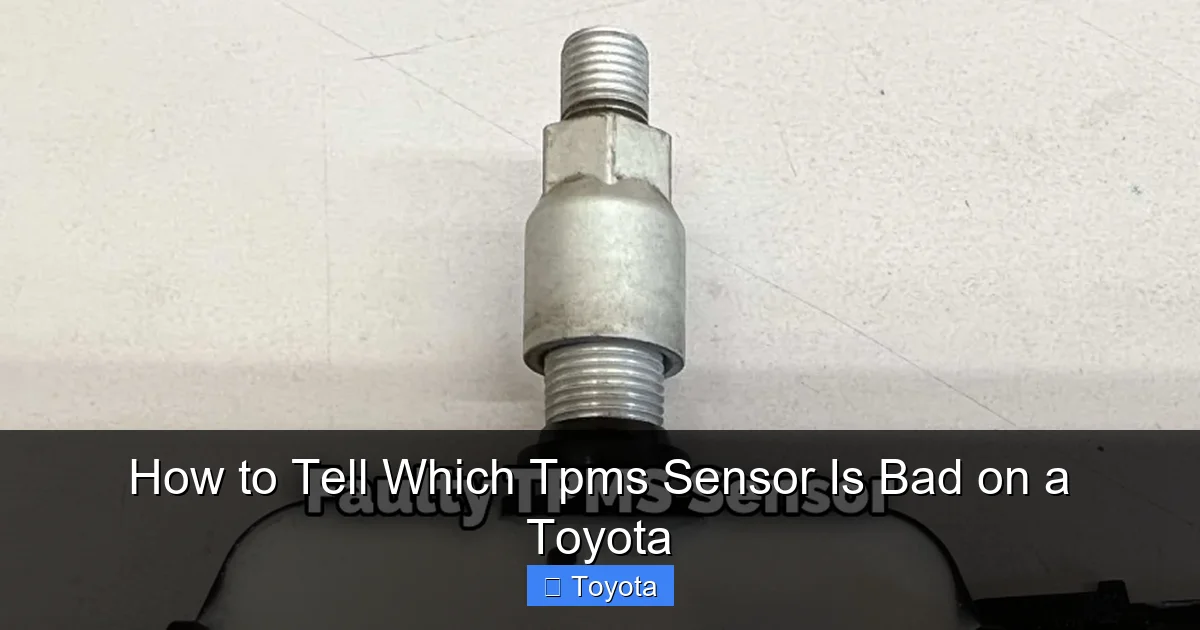
Visual guide about How to Tell Which Tpms Sensor Is Bad on a Toyota
Image source: safetyfic.com
TPMS Scan Tools
A hand-held TPMS scan tool looks like a small wand. You hold it near each valve stem. It wakes the TPMS sensor with a magnetic signal. The tool shows the sensor ID and battery percent. If one wheel gives no reply, that is the bad TPMS sensor. Popular brands are Autel and ATEQ. They cost $30 to $120 online.
Smartphone Apps and OBD2 Readers
You can buy a Bluetooth OBD2 dongle for $15. Pair it with a free app like Torque or Car Scanner. The app reads live data from all TPMS sensor units. You can see which one is missing in real time. This is fun and easy for DIY folks who like phones.
Pro tools at tire shops can read all sensors at once. They print a report. You can ask for this report free if you smile. If you enjoy tracing wires and signals, you might also like learning how to back probe a TPS sensor. The skill of checking sensor signals transfers well to TPMS work. Both need a careful hand and a multimeter to confirm power.
Also, after you replace a TPMS sensor, the car must learn it. This step is like when you calibrate a throttle position sensor. The computer needs to match the new ID to a wheel. Without that, the light stays on and you waste time.
A Simple Step-by-Step Test You Can Do at Home
You can be a detective with no special gear. Follow these steps to trap the bad TPMS sensor. All you need is a jack and a gauge.
Manual Air Check
Buy a $5 pencil gauge. Check all four tires when they are cold in the morning. Write the numbers on paper. Compare to the dash readout. A big gap on one tire means that TPMS sensor is false. For example, gauge says 36 but dash says 30. That sensor is suspect and should be tested more.
Tire Rotation Test
Swap the front left wheel with the rear left. Use a jack and safety stands. Be safe and block the wheels. Then reset the TPMS with the button or scan tool. Drive a bit. If the warning moves to the new corner, the TPMS sensor is bad. This old trick never lies because the car follows the wheel.
Sensor Relearn Procedure
After moving wheels, Toyota needs to relearn positions. You can use a scan tool to trigger relearn mode. Or drive at 30 mph for 10 minutes. The computer matches each TPMS sensor to its corner. Then the dash shows correct data. You will know the exact bad unit and can order a part.
- Step 1: Check air with manual gauge and record.
- Step 2: Note which corner dash shows wrong or blank.
- Step 3: Rotate that wheel to a new spot on the car.
- Step 4: Reset the system and take a short drive.
- Step 5: Watch where the light appears now on the dash.
Always wear gloves when handling wheels. The TPMS sensor stem is fragile. Twisting it wrong breaks the unit. This method is great because it uses your car’s own logic. It proves which TPMS sensor is bad without guesswork or a trip to the shop. Many owners do this on a Saturday morning.
Replacing and Caring for Your Toyota TPMS Sensors
Once you know the bad one, you can fix it. Here is what to expect at the shop or in your garage. You have options.
Cost and Compatibility
A new Toyota TPMS sensor costs about $45 to $80 each. A tire shop charges $20 to mount and balance. Total per wheel is around $100. Always buy the right frequency. Toyota uses 315 MHz in the US. A wrong TPMS sensor will not bond to the car and you will cry at the bill.
Tips for Long Life
Do not spray fix-a-flat often. The goo can clog the TPMS sensor hole and ruin it. Check pressure every month with a good gauge. Proper air keeps the battery from overworking. When you buy new tires, replace all four TPMS sensor units if they are over 7 years old. It saves labor later and gives peace of mind.
Some Toyota dealers offer a warranty on sensors for 1 year. Keep your receipt. If a TPMS sensor dies early, they may replace it free. Taking care of your Toyota is a habit. From TPMS to wipers, small steps help. You now know how to tell which TPMS sensor is bad on a Toyota. That skill keeps you safe on the road and saves cash for fun trips.
We covered a lot today. You learned the blink codes, the dash readouts, and the rotation test. You saw which tools help and how to use them. Next time that yellow light pops on, you will smile. You know exactly how to tell which TPMS sensor is bad on a Toyota. Go check your tires now, friend. A few minutes could prevent a blowout on the highway.
Frequently Asked Questions
What does a blinking TPMS light mean on a Toyota?
A blinking light that stays solid means the car lost contact with a TPMS sensor. It is a fault code, not just low pressure. Check the dash readings to find the bad wheel.
Can I drive with a bad TPMS sensor on my Toyota?
Yes, you can drive, but the warning light will stay on. You lose tire pressure alerts. Always check tires manually until you fix the bad TPMS sensor.
How much does it cost to replace one Toyota TPMS sensor?
The part costs $45 to $80. Labor adds $20 to $30. Total is about $100 per wheel. Buying the right frequency avoids extra trips.
Do I need to replace all TPMS sensors at once?
No, you can replace just the bad one. But if they are old, replacing all four saves labor. It also keeps the system uniform.
Will a TPMS sensor from another car fit my Toyota?
Maybe, if the frequency and part number match. Toyota uses 315 MHz in the US. Always check compatibility before purchase to ensure the TPMS sensor talks to your car.
How long do Toyota TPMS sensor batteries last?
They last 5 to 10 years. Heat and cold affect life. When the battery dies, the whole TPMS sensor must be replaced since it is sealed.