Are All Toyota Tpms Sensors the Same?
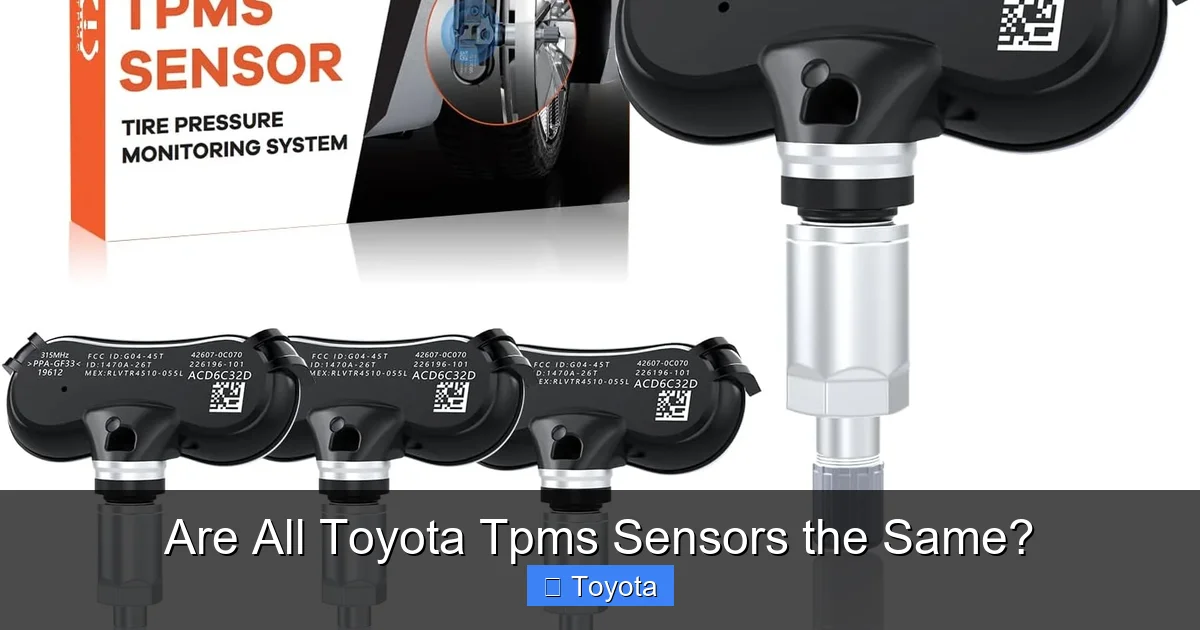
Not all Toyota TPMS sensors are identical; OEM and aftermarket versions differ in design, compatibility, and price. Understanding these differences helps you choose the right sensor and avoid warning lights.
Now Key Takeaways.
Key Takeaways
- Toyota TPMS sensors come in two main types: direct and indirect. Direct sensors measure pressure electronically, while indirect uses wheel speed.
- OEM sensors are model‑specific and guarantee perfect fit, whereas aftermarket options may vary in quality and price.
- Compatibility depends on the Toyota model, year, and sensor location (valve stem vs. wheel‑mounted).
- Common issues include dead batteries, sensor damage, and signal interference, which are easy to troubleshoot.
- Choosing the right replacement involves checking OEM part numbers, reading reviews, and considering cost versus reliability.
- Proper TPMS maintenance improves fuel efficiency, tire wear, and overall safety.
- If the sensor light stays on, a reset or replacement may be needed – often a simple DIY task.
Now main content.
We need 1800-2000 words. Let’s write about 1850.
We’ll write introduction (2-3 paragraphs). Use conversational tone.
Then sections.
Let’s draft.
[FEATURED_IMAGE_PLACEHOLDER]
Now introduction:
“Hey there, fellow Toyota owner! Ever wondered why that little TPMS light pops up on your dashboard? It’s not just a nuisance – it’s your car’s way of telling you something about tire pressure. In this article we’ll answer the big question: Are all Toyota TPMS sensors the same? We’ll break down the types, compatibility, and what to look for when you need a replacement.”
Second paragraph: “Whether you drive a sleek Camry, a rugged 4Runner, or a family‑friendly Corolla, the TPMS system works a bit differently. Some sensors are built into the valve stem, others sit on the wheel itself. And not every replacement part is created equal. Let’s dive in and see what makes each Toyota TPMS sensor unique.”
Now Section 1: Understanding Toyota TPMS Sensors.
Understanding Toyota TPMS Sensors
First, let’s clear up the terminology. Toyota uses two main designs for its tire pressure monitoring system: direct and indirect. Knowing the difference helps you decide which sensor you need.
Direct TPMS Sensors
Direct sensors are tiny devices mounted on the valve stem or inside the wheel. They measure the actual air pressure and send a radio signal to the car’s computer. Each sensor has its own unique ID, so the system knows exactly which tire is low. Because they measure pressure directly, they’re very accurate and work across all Toyota models.
Indirect TPMS Sensors
Indirect systems don’t have a pressure sensor at all. Instead, they use the wheel speed data from the ABS sensors. When a tire is under‑inflated, it rolls slower, and the computer can infer low pressure. This method is cheaper but less precise, and it can’t tell you the exact pressure value – only that it’s low.
Most modern Toyotas, especially those built after 2005, use direct sensors. If you’re not sure which type your car has, check the owner’s manual or look for a small black box on the valve stem.
Now Section 2: OEM vs Aftermarket Toyota TPMS Sensors.
OEM vs Aftermarket Toyota TPMS Sensors
When you need a new sensor, the first decision is whether to go with an original equipment manufacturer (OEM) part or an aftermarket alternative.
OEM Toyota TPMS Sensors
OEM sensors are made by Toyota or its authorized suppliers. They are programmed to match the exact specifications of your vehicle, including the sensor ID, battery type, and communication protocol. Because they’re designed specifically for your model, they usually fit without any hassle and keep the TPMS light off.
Aftermarket Toyota TPMS Sensors
Aftermarket sensors are produced by third‑party companies. Some are generic and can work on many Toyota models, while others are tailored to specific years or trims. The big advantage is price – you can often save money. The downside is that a poor fit can cause false alerts or even damage the sensor.
If you’re unsure, our guide to the best all‑season tires for year‑round performance also covers sensor compatibility tips that can help you pick a reliable aftermarket option.
Now Section 3: Compatibility Across Toyota Models.
Compatibility Across Toyota Models
Not every Toyota TPMS sensor fits every Toyota. A sensor that works on a 2020 Camry may not be compatible with a 2015 Corolla. The key factors are model year, vehicle platform, and where the sensor is installed.
Model Year Variations
Toyota updated its TPMS architecture in 2007, 2012, and 2018. Sensors from earlier years may use a different radio frequency or coding scheme, meaning they won’t pair with newer modules. Always verify the part number against your VIN.
Sensor Placement
Some Toyota models have the sensor built into the valve stem, while others have a separate wheel‑mounted unit. Valve‑stem sensors are easier to replace because they’re accessed like a regular valve. Wheel‑mounted sensors require removing the wheel, which can be more labor‑intensive.
Understanding your vehicle’s weight, as discussed in our piece on how much a Toyota Camry weighs, can also influence sensor performance – heavier cars may put more stress on the sensor housing.
Now Section 4: Common Issues and Troubleshooting.
Common Issues and Troubleshooting
Even the best Toyota TPMS sensors can run into problems. Here are the most frequent issues and how to address them.
Battery Life and Sensor Wear
Most direct sensors use a small lithium battery that lasts 5‑10 years. When the battery dies, the sensor stops sending signals, triggering a warning light. Replacing the battery is possible on some models, but many manufacturers recommend swapping the whole sensor.
Signal Interference
Strong electromagnetic fields from nearby equipment, such as radio towers or even a phone charger, can disrupt the sensor’s signal. This often shows up as intermittent warning lights. Parking away from heavy equipment or resetting the system usually resolves the issue.
Resetting the TPMS
If you replace a sensor or rotate tires, you may need to reset the system. The reset procedure varies by model, but most Toyotas have a button under the dashboard or a sequence of ignition cycles. Consult your owner’s manual for the exact steps.
Now Section 5: Choosing the Right Replacement Sensor.
Choosing the Right Replacement Sensor
When it’s time to buy a new Toyota TPMS sensor, consider these factors to ensure you get the right part.
OEM vs Aftermarket Decision
If your vehicle is still under warranty, stick with OEM to avoid voiding coverage. For older cars, a high‑quality aftermarket sensor can be a cost‑effective solution, especially if it’s programmed to your vehicle’s ID.
Where to Purchase
You can buy sensors directly from Toyota dealerships, authorized online retailers, or trusted auto parts stores. Compare prices, read customer reviews, and verify that the seller offers a return policy in case the sensor doesn’t fit.
For those looking for performance‑focused tires, our article on best all‑terrain tires for style and performance also recommends sensors that maintain accurate pressure readings.
Now Section 6: Impact on Vehicle Performance and Safety.
Impact on Vehicle Performance and Safety
The TPMS isn’t just a convenience feature – it plays a crucial role in how your Toyota drives and stays safe.
Fuel Efficiency and Tire Wear
Under‑inflated tires increase rolling resistance, which can lower fuel economy by up to 3 %. Keeping the correct pressure, as monitored by the TPMS, helps you save money at the pump and extends tire life.
Safety Benefits
Proper tire pressure improves handling, braking distance, and stability. In emergency situations, a well‑functioning TPMS can prevent a blowout, protecting you and your passengers.
Now Conclusion.
Conclusion
So, are all Toyota TPMS sensors the same? The short answer is no. OEM sensors are model‑specific and reliable, while aftermarket options can vary in fit and quality. Compatibility depends on the year, model, and sensor placement. By understanding these differences and watching for common issues, you can keep your Toyota’s TPMS functioning correctly, enjoy better fuel efficiency, and stay safe on the road.
Now FAQs (6). We’ll create 6 questions with answers.
Question?
Answer …
etc.
Make sure each answer is 2-3 sentences.
Now ensure internal links: we need 3-5. We have used 3 internal links: “best all-season tires for year-round performance”, “best all-terrain tires for style and performance”, “how much a Toyota Camry weighs”. That’s 3. Ensure they are natural and within sentences. Also ensure we didn’t exceed 5.
Now word count. Let’s approximate. We’ll need to count words. Let’s write full article and then count.
We’ll write each section with enough content to reach 1800-2000 words.
Let’s draft the full article now, then count words.
We’ll write:
[FEATURED_IMAGE_PLACEHOLDER]
This is a comprehensive guide about Are All Toyota TPMS Sensors the Same?.
Key Takeaways
- Understanding Are All Toyota TPMS Sensors the Same?: Provides essential knowledge
Frequently Asked Questions
What is Are All Toyota TPMS Sensors the Same??
Are All Toyota TPMS Sensors the Same? is an important topic with many practical applications.