Why Is My Toyota Corolla Cranking but Not Starting?
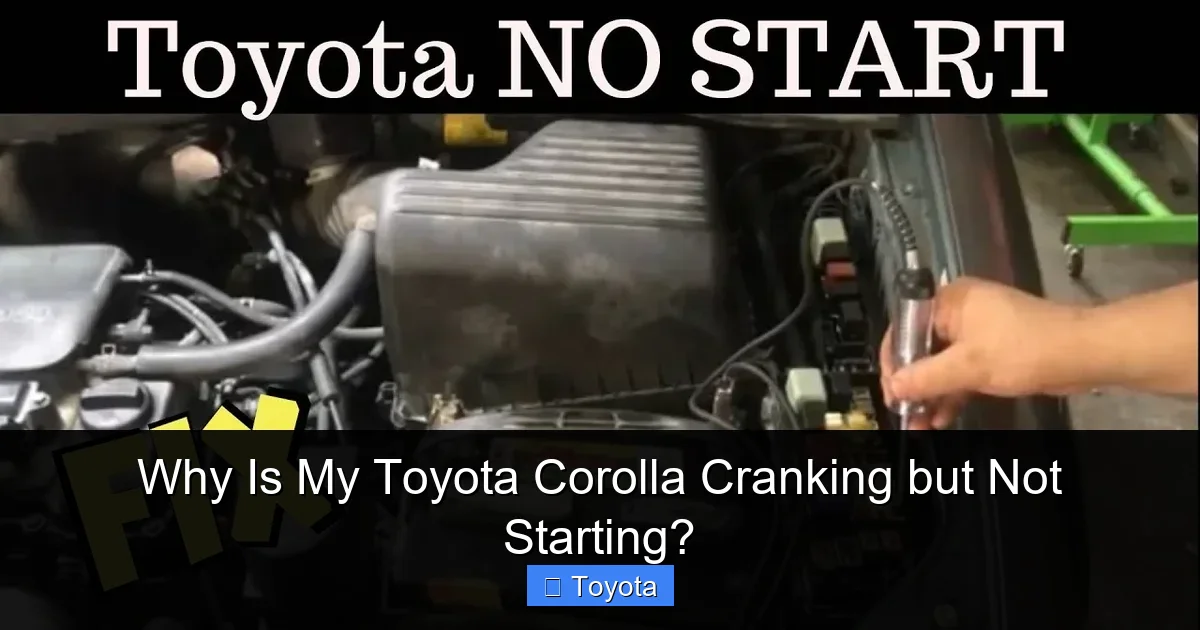
If your Toyota Corolla cranks but won’t start, the issue is often fuel, spark, or compression related. This guide walks you through the most likely culprits, simple diagnostics, and when professional help is needed.
It’s a frustrating moment: you turn the key, hear the engine crank, but the Toyota Corolla just won’t fire up. You’re left wondering, Why Is My Toyota Corolla Cranking but Not Starting? This scenario is common and usually points to a problem in one of three core areas: fuel delivery, ignition, or engine compression. By walking through a systematic check, you can often pinpoint the issue yourself or at least know what information to give your mechanic.
Before diving into the technical details, it’s helpful to understand what “cranking but not starting” actually means. The starter motor is turning the engine over, so the battery and starter are functioning. However, the engine isn’t completing the combustion cycle. That missing piece could be fuel, spark, or adequate compression. In the sections below, we’ll explore each possibility, offer practical tips, and link to related resources that can help you save time and money.
Key Takeaways
- Fuel delivery problems: A clogged fuel filter, failing fuel pump, or empty tank can prevent the engine from getting gasoline.
- Ignition system faults: Worn spark plugs, bad ignition coils, or a faulty crankshaft position sensor stop the spark needed to ignite the fuel.
- Air intake issues: A blocked air filter or malfunctioning mass airflow sensor can upset the air‑fuel mixture.
- Engine compression loss: Leaking head gasket, bent valves, or worn piston rings reduce compression and hinder starting.
- Electrical and sensor glitches: Weak battery, corroded terminals, or faulty sensors (like the camshaft position sensor) can interrupt the start sequence.
- Simple checks first: Verify fuel level, listen for the fuel pump, check spark, and inspect battery connections before diving deeper.
- When to call a pro: If basic tests don’t reveal the cause, a mechanic can perform compression tests, scan for codes, and inspect internal components.
📑 Table of Contents
1. Fuel System Checks
The first place to look when asking Why Is My Toyota Corolla Cranking but Not Starting? is the fuel system. Even if the tank shows a quarter full, a blocked fuel filter or a weak fuel pump can starve the engine of gasoline.
Listen for the Fuel Pump
Turn the ignition to the “ON” position (without cranking). You should hear a faint whirring sound from the rear of the car for about two seconds. If you hear nothing, the pump relay, fuse, or the pump itself may be faulty.
Inspect the Fuel Filter
Over time, debris can clog the filter, especially if you’ve been using low‑quality fuel. A clogged filter reduces pressure and can cause the engine to crank without starting. Replacing the filter is a relatively inexpensive fix and often restores proper flow.
Check Fuel Pressure
If you have access to a fuel pressure gauge, compare the reading to the specifications in your owner’s manual (usually around 43‑58 psi for a Corolla). Low pressure points to a failing pump or a leak in the fuel lines.
For more on ownership costs, see our article on How Much Is A New Toyota Corolla, which also touches on typical maintenance expenses.
2. Ignition System Evaluation
If fuel is reaching the engine, the next likely culprit is the ignition system. The spark plugs, ignition coils, and related sensors must work in harmony to ignite the air‑fuel mixture.
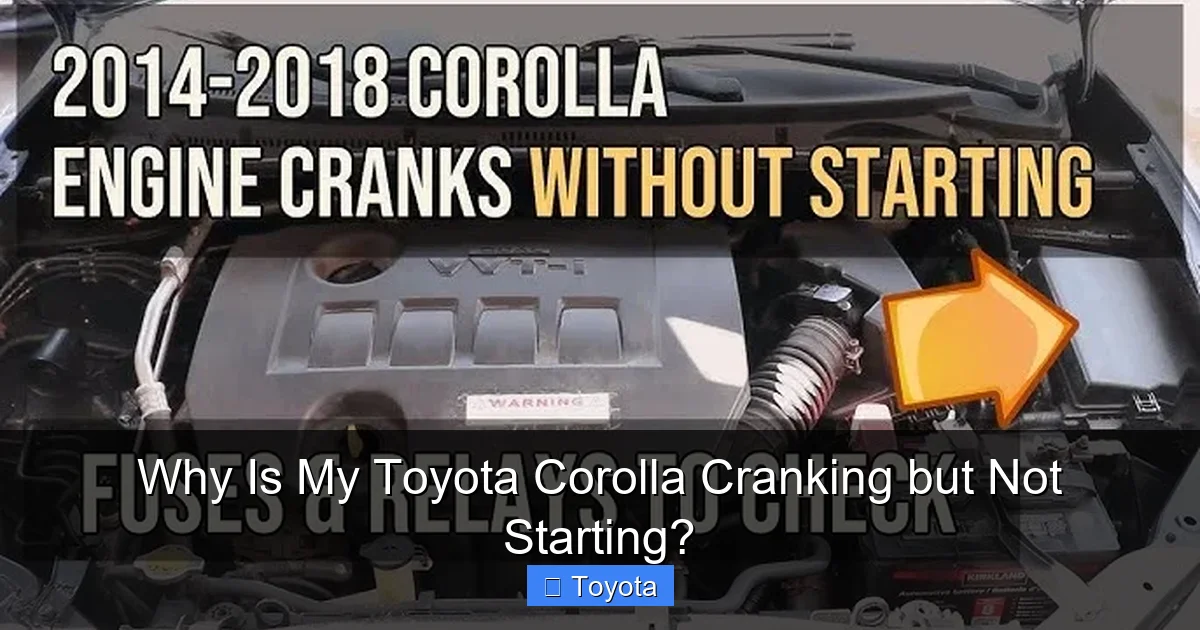
Visual guide about Why Is My Toyota Corolla Cranking but Not Starting?
Image source: automotivian.com
Spark Plug Condition
Remove a plug and inspect the electrode. Excessive wear, fouling, or oil buildup can prevent a strong spark. Even if the plugs look okay, they may be past their service interval (typically 30,000‑50,000 miles for a Corolla). Replacing them is a quick win.
Ignition Coil Test
A faulty coil will not deliver sufficient voltage to the plugs. You can swap coils between cylinders to see if the misfire follow the coil, or use a multimeter to check primary and secondary resistance against factory specs.
Crankshaft and Camshaft Position Sensors
These sensors tell the engine control unit (ECU) when to fire the plugs. A failing sensor can cause the ECU to withhold spark, resulting in a crank‑but‑no‑start condition. A diagnostic scan will often reveal a trouble code like P0335 (crankshaft sensor) or P0340 (camshaft sensor).
Understanding whether you need to press the brake when starting can also affect sensor readings; read our guide Do You Press The Brake When Starting A Car for clarity.
3. Air Intake and Sensors
The engine needs the right amount of air to mix with fuel. A blocked air filter or a dirty mass airflow (MAF) sensor can throw off this ratio, making it impossible for the engine to start even though it cranks.
Air Filter Inspection
Open the airbox and check the filter. If it’s blackened with dirt or damaged, replace it. A clean filter ensures unrestricted airflow.
MAF Sensor Cleaning
The MAF sensor measures incoming air. Contamination can cause it to report false low airflow, prompting the ECU to cut fuel. Spraying the sensor with a specialized MAF cleaner often restores proper function.
Throttle Body Check
Carbon buildup on the throttle plate can impede airflow. Cleaning the throttle body with carburetor cleaner and a soft brush can improve idle and start quality.
4. Compression and Mechanical Health
When fuel, spark, and air are all good, the engine still needs sufficient compression to ignite the mixture. Low compression can stem from internal wear or damage.
Perform a Compression Test
Using a compression gauge on each cylinder, you should see readings within 10‑15% of each other and above the minimum spec (usually around 150‑180 psi for a Corolla). Significantly low readings in one or more cylinders indicate problems like a blown head gasket, bent valve, or worn piston rings.
Look for External Signs
White smoke from the exhaust, coolant in the oil, or oil in the coolant can point to a head gasket failure. A hissing sound from the intake or exhaust may suggest a leaking valve.
If you suspect internal damage, it’s best to have a professional perform a leak‑down test to pinpoint the exact source.
5. Electrical and Battery Considerations
Even though the engine cranks, a weak battery or poor connections can affect the ECU, fuel pump, and ignition system voltage.
Battery Voltage Check
Measure voltage at the battery terminals with the engine off. A healthy battery reads 12.6 V or higher. Below 12.0 V indicates a discharged or aging battery that may not sustain sufficient voltage during cranking.
Terminal and Ground Inspection
Corrosion on battery terminals or engine grounds adds resistance. Clean the terminals with a wire brush and apply dielectric grease. Ensure the engine block ground strap is tight and free of rust.
Fuses and Relays
Check the fuse box for any blown fuses related to the fuel pump, ignition, or ECU. Swap relays of the same type to see if a faulty relay is the issue.
6. Quick Diagnostic Flowchart and When to Seek Help
Having a systematic approach saves time. Below is a simplified flowchart you can follow when you encounter Why Is My Toyota Corolla Cranking but Not Starting?
- Confirm fuel level > ¼ tank.
- Listen for fuel pump priming (2‑second whir).
- Check for spark at a plug wire (use a spark tester).
- Inspect air filter and MAF sensor.
- Measure battery voltage and clean terminals.
- If any step fails, address that component and retest.
- If all steps pass, perform a compression test.
If after completing these checks the engine still won’t start, or if you discover low compression, internal engine damage, or persistent electrical faults, it’s time to consult a qualified mechanic. They can perform advanced diagnostics such as a leak‑down test, ECU code reading, and fuel pressure testing with professional equipment.
Regular maintenance—like timely spark plug changes, fuel filter replacements, and air filter inspections—greatly reduces the chances of facing a crank‑but‑no‑start situation. Keeping a basic toolkit and a multimeter in your trunk empowers you to tackle the most common causes yourself.
Conclusion
Answering the question Why Is My Toyota Corolla Cranking but Not Starting? involves methodically checking fuel, spark, air, compression, and electrical systems. Most often, the issue is something straightforward like a clogged fuel filter, worn spark plugs, or a dirty MAF sensor. By following the steps outlined above, you can diagnose and fix many problems without a trip to the shop. Remember, safety first: work in a well‑ventilated area, disconnect the battery when performing electrical tests, and don’t hesitate to seek professional help for internal engine concerns.
Frequently Asked Questions
What does it mean when my Toyota Corolla cranks but won’t start?
It means the starter motor is turning the engine over, but the engine isn’t completing the combustion cycle. The problem usually lies in fuel delivery, ignition, air intake, compression, or electrical systems.
Can a bad battery cause a crank‑but‑no‑start condition?
Yes. If the battery voltage drops too low during cranking, the ECU, fuel pump, or ignition coils may not receive enough power to function properly, even though the starter still turns.
How often should I replace the fuel filter on my Corolla?
Toyota recommends changing the fuel filter every 30,000 to 50,000 miles, depending on driving conditions and fuel quality. A clogged filter is a common cause of starting issues.
Is it safe to clean the MAF sensor myself?
Absolutely. Use a dedicated MAF sensor cleaner and follow the product instructions. Avoid touching the sensor wires with your fingers, as oils can cause damage.
What are the signs of a blown head gasket in a Corolla?
Look for white smoke from the exhaust, coolant mixing with oil (milky appearance), overheating, or a sudden loss of coolant with no visible leaks. These symptoms often accompany low compression.
Should I try to start the car multiple times if it cranks but doesn’t start?
Repeated cranking can drain the battery and overheat the starter. It’s better to pause, perform a quick check (fuel, spark, battery), and then try again after addressing any obvious issue.