When Will the Toyota Stout Be Available in the U.s.?
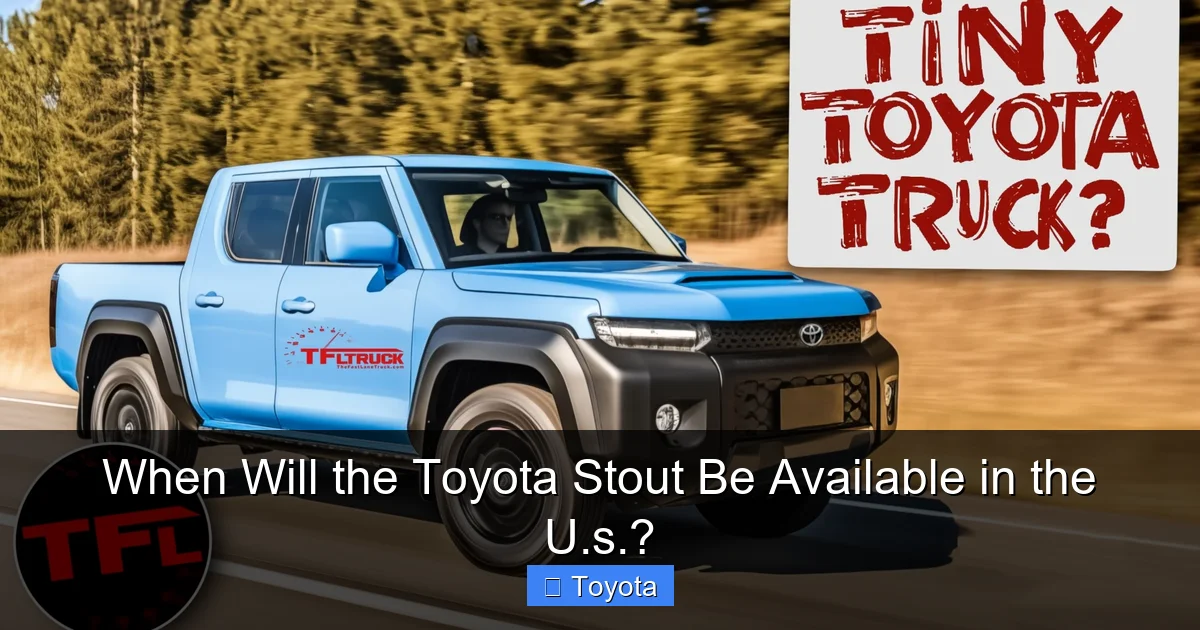
The Toyota Stout is generating buzz, but its U.S. arrival is still uncertain. Regulatory hurdles, market strategy, and production plans all play a role in determining when the Toyota Stout will be available in the U.S.
Key Takeaways
- Regulations drive timing: Federal safety and emissions standards are the biggest gatekeepers.
- Production location matters: Toyota may need to shift the Stout to a U.S. plant or modify the existing model.
- Market demand influences launch: Strong interest from off‑road enthusiasts could speed up the rollout.
- Import options exist: Until official sales start, the Stout can be brought in via the 25‑year rule or special‑purpose vehicle (SPV) imports.
- Pricing will reflect tariffs: Expect a higher MSRP than the Japanese market due to duties.
- Dealership readiness: Toyota dealers will need training and parts inventory before the Stout hits showrooms.
- Stay updated: Follow official Toyota announcements and reputable auto news sources for the latest timeline.
📑 Table of Contents
- Introduction: Why the Toyota Stout Is Making Headlines
- 1. Understanding the Regulatory Roadblocks
- 2. Production Strategy: From Japan to America
- 3. Market Demand and Toyota’s Business Calculus
- 4. Import Options While Waiting for Official U.S. Release
- 5. Pricing, Warranty, and Dealership Support
- 6. What to Watch For: Timeline Indicators
- Conclusion: When Will the Toyota Stout Be Available in the U.S.?
- Related Reading
Introduction: Why the Toyota Stout Is Making Headlines
If you’ve been scrolling through forums or watching YouTube reviews, you’ve probably heard the phrase “When will the Toyota Stout be available in the U.S.?” The Stout, a rugged midsize pickup that debuted in Japan in the early 2020s, has captured the imagination of off‑road fans, small‑business owners, and anyone who loves a classic Toyota vibe with modern tech.
But excitement alone doesn’t answer the real question: when will the Toyota Stout be available in the U.S.? The answer depends on a mix of regulations, production logistics, market strategy, and even a bit of patience from the fanbase. In this article we’ll break down every factor that influences the timeline, explore realistic scenarios, and give you practical tips on how to get your hands on a Stout today.
1. Understanding the Regulatory Roadblocks
Federal Safety Standards
The U.S. National Highway Traffic Safety Administration (NHTSA) mandates strict crash‑test criteria, airbag deployment rules, and lighting requirements. The Japanese‑spec Stout was built to meet J‑NCAP standards, which differ in several key areas—especially side‑impact protection and pedestrian safety.
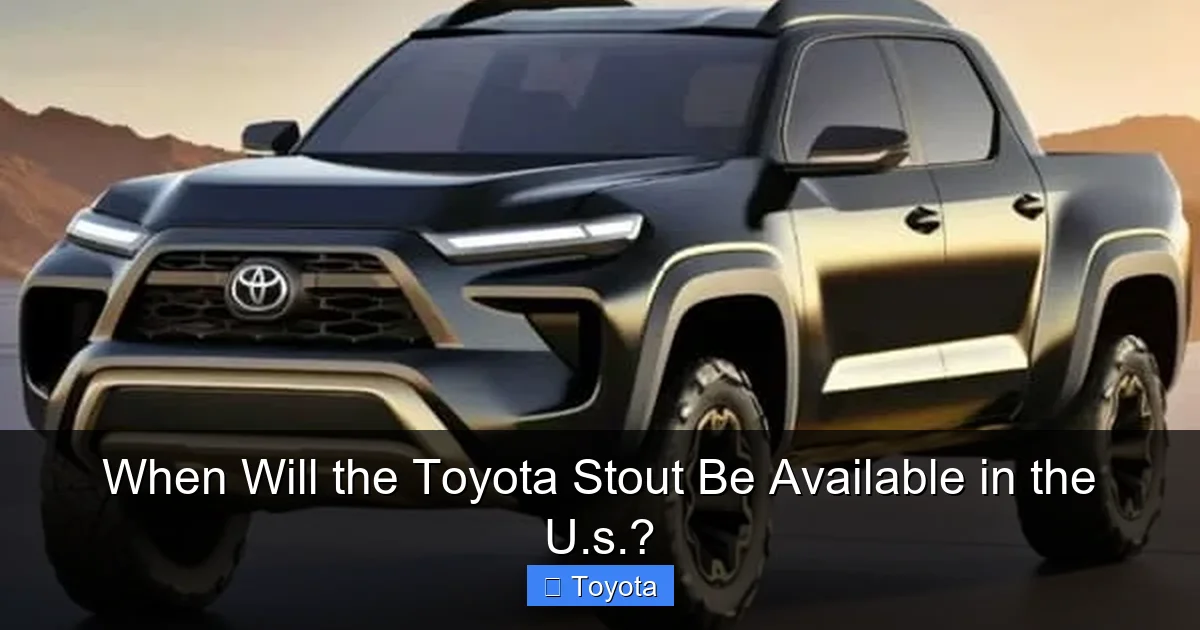
Visual guide about When Will the Toyota Stout Be Available in the U.s.?
Image source: pictures.dealer.com
To sell the Stout legally, Toyota must either:
- Re‑engineer the vehicle to pass NHTSA tests, or
- Obtain a “low‑volume” certification that allows limited sales under special‑purpose vehicle (SPV) rules.
Both paths add months, sometimes years, to the launch schedule.
Emissions and EPA Compliance
The Environmental Protection Agency (EPA) sets limits on CO₂, NOx, and particulate emissions. The Stout’s current diesel engine (or hybrid variant, depending on the market) needs a calibrated exhaust after‑treatment system that meets U.S. standards. Toyota has announced plans to equip future models with a “Clean‑Tech” diesel that should clear the EPA hurdle, but certification testing can be lengthy.
Why This Matters for the Timeline
Regulatory compliance is the single biggest reason why the exact release date remains vague. Even if Toyota decides to ship the Japanese version under the 25‑year import rule, most buyers want a warranty and dealer support, which only comes with full certification.
2. Production Strategy: From Japan to America
Current Manufacturing Footprint
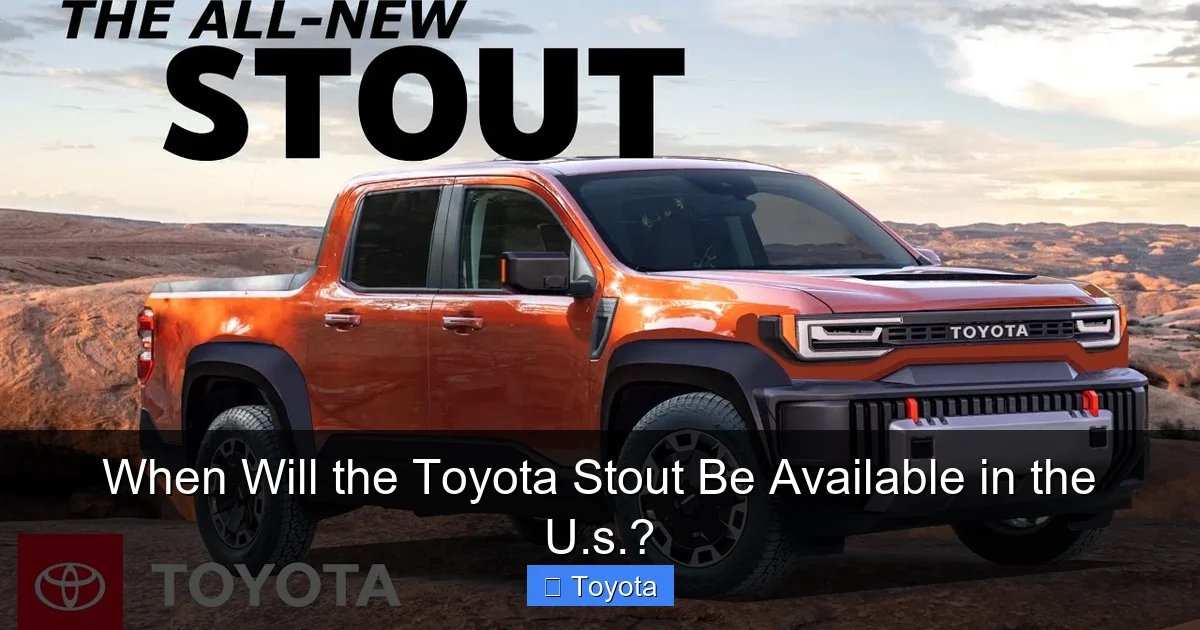
Today the Stout rolls off Toyota’s Takaoka plant in Japan. Shipping a fully built unit to the U.S. incurs high freight costs and import duties (around 2.5% for trucks). To keep the price competitive, Toyota may relocate production to a North American facility such as the Texas or Kentucky plant.
Visual guide about When Will the Toyota Stout Be Available in the U.s.?
Image source: i.ytimg.com
Potential U.S. Assembly Plans
Moving production would require new tooling, supply‑chain adjustments, and workforce training. Toyota has a history of such moves—recall how the Tacoma shifted to the San Antonio plant in 2005. If they follow a similar path, the Stout could be ready for U.S. sale within 18–24 months after the decision is made.
Impact on Availability
Should Toyota keep production overseas, the Stout may first appear as a limited‑run import for enthusiasts. Conversely, a domestic assembly line would signal a broader market launch, meaning dealer lots would be stocked within a year of the announcement.
3. Market Demand and Toyota’s Business Calculus
What Do American Buyers Want?
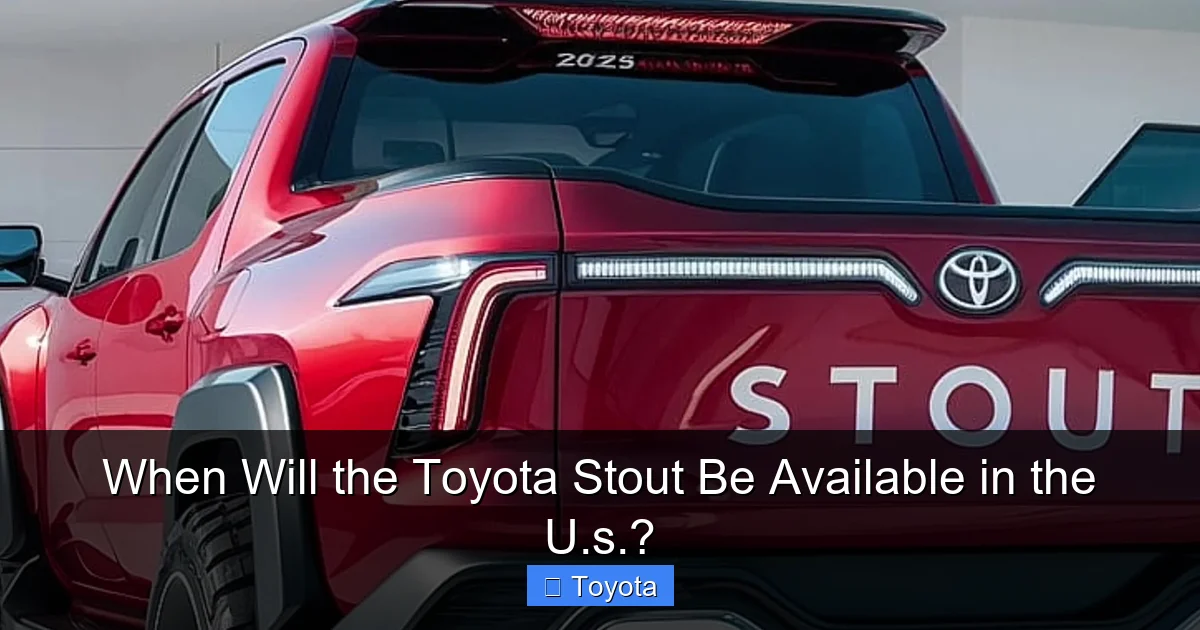
Recent surveys show a surge in interest for midsize pickups that blend utility with fuel efficiency. The Stout’s compact dimensions (about 5.5‑foot wheelbase) and off‑road capability place it between the Tacoma and the newly revived Toyota Hilux (which is currently sold only in select states).
Visual guide about When Will the Toyota Stout Be Available in the U.s.?
Image source: cdn.louhu.com
Competitive Landscape
Competitors like the Ford Ranger, Chevrolet Colorado, and the upcoming Rivian R1T are all vying for the same buyer segment. Toyota’s decision will hinge on whether the Stout can carve a niche with its reputation for reliability and lower price point.
How Demand Affects Timing
Strong pre‑order numbers could accelerate the launch. Toyota monitors online interest, dealer inquiries, and social‑media buzz. If the “When will the Toyota Stout be available in the U.S.?” question keeps trending, executives may push for a faster certification schedule.
4. Import Options While Waiting for Official U.S. Release
25‑Year Rule for Classic Vehicles
If you’re eager to own a Stout today, the 25‑year import rule is a legal shortcut. Vehicles older than 25 years are exempt from EPA and NHTSA certification, allowing private importers to bring them in without major modifications. This route is popular among collectors, but the Stout won’t qualify until 2048.
Special‑Purpose Vehicle (SPV) Imports
For newer models, the SPV pathway lets individuals import up to 2,500 units per year for non‑commercial use, provided the vehicle meets certain safety standards or is modified accordingly. This is a viable short‑term solution for enthusiasts willing to handle conversion work.
Practical Tips for Prospective Importers
- Partner with a licensed Importer of Record (IOR) who understands EPA paperwork.
- Budget for conversion costs—expect $3,000‑$5,000 for lighting, bumper, and emission tweaks.
- Check your state’s registration rules; some states (e.g., California) have stricter emissions enforcement.
5. Pricing, Warranty, and Dealership Support
Projected MSRP
Based on current Japanese pricing (≈¥2.8 million) and accounting for tariffs, conversion, and dealer markup, the U.S. MSRP could land between $30,000 and $35,000 for the base model. Higher trims with advanced off‑road packages may exceed $40,000.
Warranty Coverage
One of the biggest draws of buying through an official Toyota dealer is the 3‑year/36,000‑mile warranty (or 5‑year/60,000‑mile for hybrid powertrains). Imported SPV units typically lack this coverage, so factor in potential out‑of‑pocket repair costs.
Dealer Training and Parts Availability
Before the Stout can roll onto showroom floors, Toyota will need to train service technicians on the new engine, transmission, and body‑panel repairs. Parts logistics will also shift—expect a dedicated inventory of OEM components within 6 months of the official launch.
6. What to Watch For: Timeline Indicators
Official Announcements
Keep an eye on Toyota’s North American press releases, especially during major auto shows (Detroit, LA Auto Show). A “concept” reveal often precedes a production commitment by 12–18 months.
Regulatory Filings
The EPA and NHTSA publish certification filings online. A sudden appearance of a “Toyota Stout” entry suggests the paperwork is moving forward.
Dealer Inventory Listings
Some Toyota dealers may list the Stout under “pre‑order” or “coming soon.” Signing up for these alerts can give you a front‑row seat when the vehicle finally hits the lot.
Conclusion: When Will the Toyota Stout Be Available in the U.S.?
In short, the answer isn’t a single date but a series of milestones. Expect the first official U.S. sales to begin **late 2025 to early 2026** if Toyota fast‑tracks certification and decides to produce the Stout locally. If the company opts for a limited import strategy, enthusiasts could see SPV‑approved units as early as 2024, but without dealer support or warranty.
While you wait, stay informed by following Toyota’s official channels, monitor EPA/NHTSA filings, and consider the import pathways if you can’t wait for the dealer lot. The excitement surrounding the Stout is real, and with the right preparation you’ll be ready to drive one as soon as it’s legally on U.S. soil.
Related Reading
- How To Break In A New Car Toyota
- Do You Press The Brake When Starting A Car
- Car Squeaks When Driving But Not Braking
Frequently Asked Questions
When will the Toyota Stout be officially sold in U.S. dealerships?
Most analysts predict a dealer launch between late 2025 and early 2026, assuming Toyota completes safety and emissions certification and decides on U.S. production.
Can I import a brand‑new Toyota Stout now?
Yes, through the Special‑Purpose Vehicle (SPV) route, but you’ll need to handle emissions and safety modifications, and you won’t receive a factory warranty.
Will the U.S. Stout have the same engine as the Japanese model?
Toyota plans to offer a U.S.-spec diesel or hybrid powertrain that meets EPA standards. The exact configuration may differ slightly to comply with local regulations.
How much extra will I pay due to tariffs and import fees?
Expect an additional $2,000‑$4,000 on top of the Japanese MSRP to cover duties, freight, and conversion costs.
Will Toyota provide a warranty on imported Stouts?
Only units sold through authorized dealers will carry the standard Toyota warranty. SPV imports typically do not include factory coverage.
What are the best accessories to add to a Toyota Stout for off‑road use?
Consider a lifted suspension, skid plates, all‑terrain tires, and a snorkel intake. Upgrading the lighting with LED bar lights also improves night‑time visibility.