Who Makes Toyota Oil?
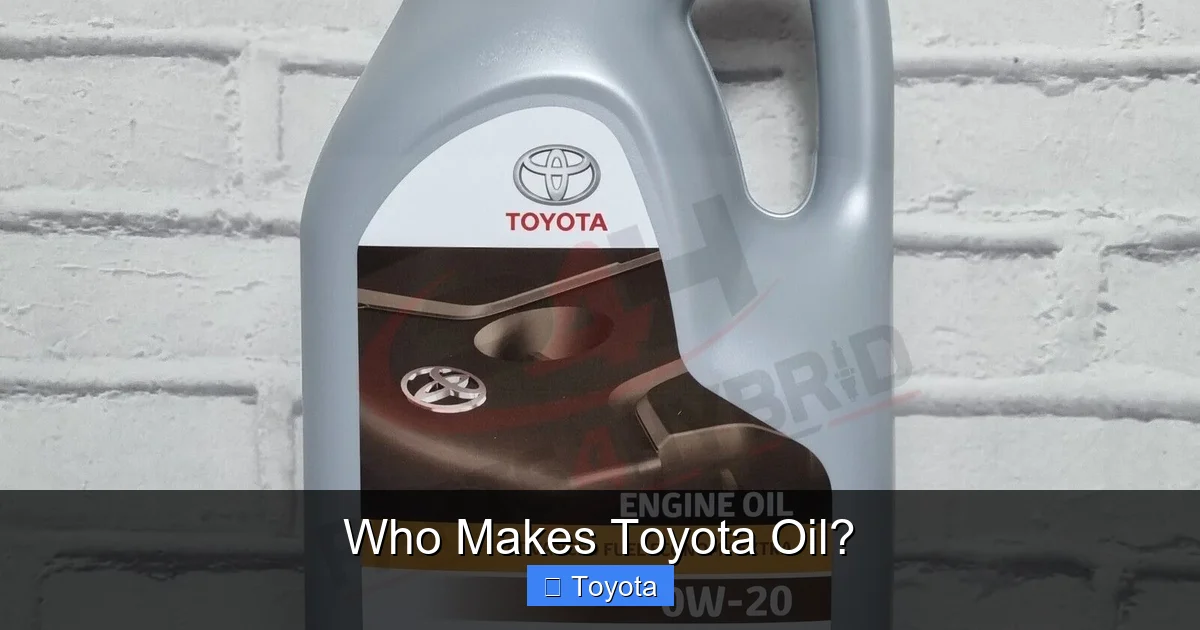
Understanding who makes Toyota oil reveals the blend of OEM expertise and third‑party suppliers that keep your Toyota running smoothly. This article explores the key manufacturers, the differences between genuine and aftermarket oils, and how to choose the right oil for your vehicle.
When you pop the hood of your Toyota, the first thing you notice is the oil. It’s the lifeblood of the engine, and knowing who makes Toyota oil can help you make smarter choices about maintenance and performance.
In this guide, we’ll pull back the curtain on the companies that blend and bottle the oil that ends up in your Toyota. You’ll learn about the automaker’s own facilities, the major third‑party suppliers, and how to tell genuine oil from aftermarket alternatives. By the end, you’ll feel confident picking the right oil for your vehicle.
Key Takeaways
- Toyota Genuine Motor Oil is blended by Toyota‑approved partners. These partners include Idemitsu, Nippon Oil, and ExxonMobil.
- Aftermarket oils can meet Toyota specs if they display the correct API rating and viscosity. Look for the API symbol and SAE grade.
- The most common viscosity for modern Toyotas is 0W‑16. This grade improves fuel economy while protecting the engine.
- Using the wrong viscosity can reduce fuel efficiency and increase wear. Always follow the owner’s manual.
- Regular oil changes extend engine life and maintain performance. Severe driving may require more frequent changes.
- Pair your oil with a quality filter to maximize protection. A good filter traps particles and extends oil life.
📑 Table of Contents
The Manufacturers Behind Toyota Oil
Toyota does not own a single oil refinery. Instead, it partners with large chemical companies that specialize in base oil production and additive packages. These partners blend the oil to Toyota’s exact specifications, then package it under the Toyota brand or as “Toyota Genuine Motor Oil.”
Toyota’s In‑House Blending
Toyota operates its own blending plants in Japan and the United States. At these facilities, base oils from partner refineries are mixed with proprietary additive packages developed by Toyota’s engineering team. The result is a consistent formulation that meets the automaker’s viscosity and performance requirements.
Key Third‑Party Suppliers
The most common suppliers include Idemitsu Kosan, Nippon Oil & Energy, and ExxonMobil. Each of these companies provides base stocks and additive packages that Toyota then blends. Their involvement ensures that the oil meets Toyota’s strict durability and emissions standards.
Each supplier follows a rigorous refining process that involves vacuum distillation, solvent deasphalting, and hydrocracking to produce base stocks with minimal sulfur content. The resulting base oils are then blended with additive packages that include antioxidants, detergents, and anti‑wear compounds. Toyota’s engineers work closely with these suppliers to fine‑tune the blend for each engine family, ensuring optimal performance across a wide temperature range.
Toyota also invests in research to develop bio‑based oils derived from plant esters. These renewable alternatives aim to reduce carbon emissions while maintaining performance, and they may appear in future hybrid models.
Toyota’s quality assurance team runs spectrometric analysis on every lot, checking for metal contaminants and ensuring the additive package is within specification. This rigorous testing means that even minor variations in crude oil origin are corrected before the oil reaches the factory floor.
Genuine vs Aftermarket Oil
When you walk into an auto parts store, you’ll see bottles labeled “Toyota Genuine” alongside other brands that claim to meet Toyota specifications. Understanding the difference is crucial for engine health.
Visual guide about Who Makes Toyota Oil?
Image source: vehiclefreak.com
What Makes “Genuine” Different
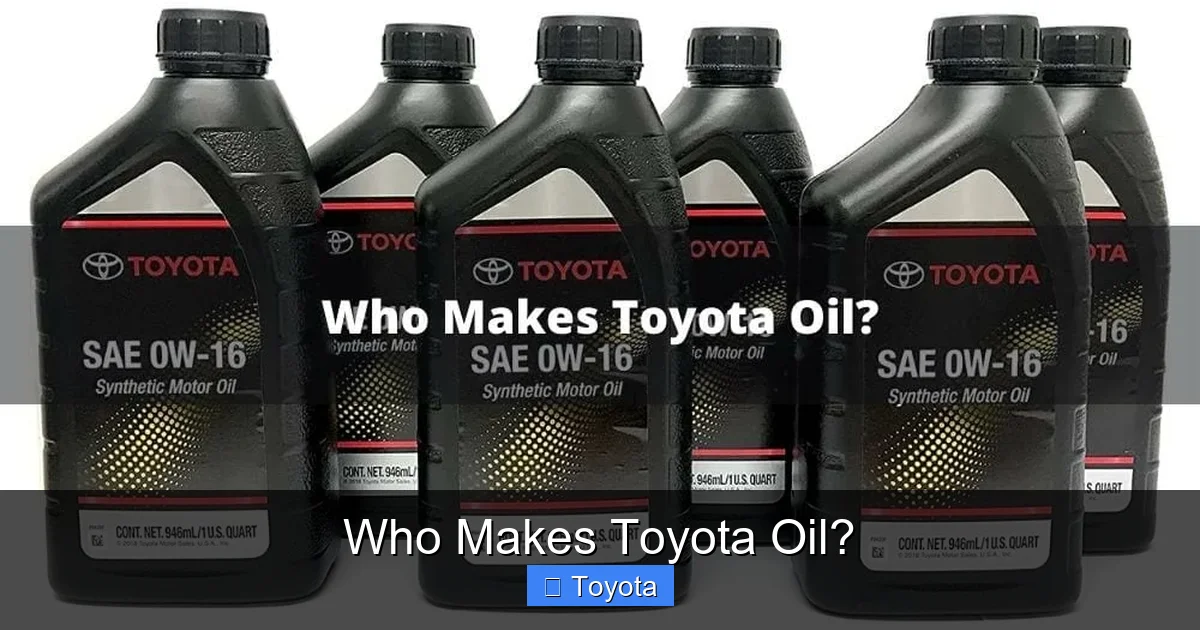
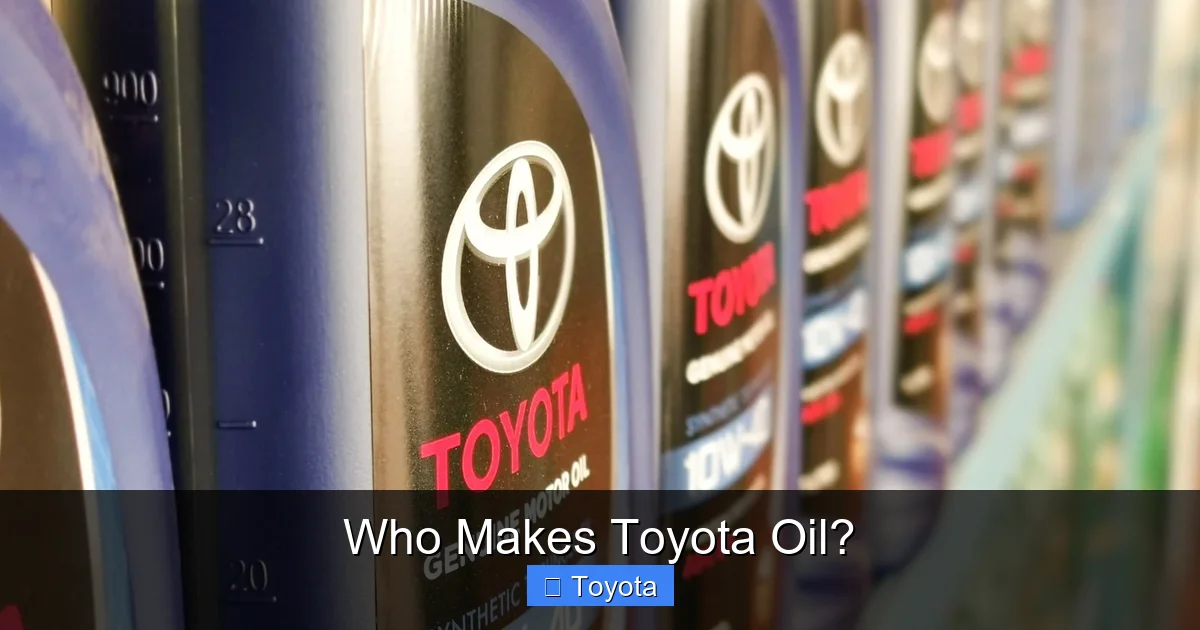
Genuine Toyota oil is blended according to the manufacturer’s own formula. It carries the Toyota part number and is tested to work with the engine’s tolerances, valve train components, and emission system. The oil also meets the latest API (American Petroleum Institute) service categories, such as SP or SN Plus.
Beyond the base oil, Toyota’s additive package includes detergents, dispersants, and anti‑wear agents that are tuned for the specific tolerances of Toyota engines. This customization is why many mechanics recommend using genuine oil for high‑performance or turbocharged models.
Genuine Toyota oil contains a balanced additive package that includes zinc, phosphorus, and molybdenum. These elements work together to reduce friction and protect against wear, particularly in high‑stress components like camshafts and lifters.
When Aftermarket Oil Is Acceptable
Aftermarket oils can be a good choice if they display the API rating and the SAE viscosity grade printed on the label. Look for the words “Toyota Approved” or a reference to the specific viscosity, like 0W‑16. For more details on how to verify these claims, check our article on Who Makes Toyota Synthetic Oil.
Some aftermarket brands, such as Mobil 1, Pennzoil, and Castrol, formulate oils that meet or exceed Toyota’s requirements. They often display the API rating and may state “Meets Toyota specification” on the label. If you choose one of these, double‑check the viscosity grade matches your owner’s manual.
Price is another factor. Genuine Toyota oil typically costs 10‑20% more than comparable aftermarket brands. However, the higher price reflects the cost of proprietary additives and the assurance of meeting Toyota’s exact specifications. For many owners, the peace of mind outweighs the extra expense.
Using a non‑Toyota oil that does not meet the required specification can void portions of your powertrain warranty. Dealerships often check the oil label during service to verify compliance.
Look for the API “donut” symbol, the SAE viscosity grade, and any mention of Toyota‑approved certifications. If the bottle lacks these marks, it’s safer to choose a different product.
Oil Formulation and Viscosity
The viscosity of Toyota oil is not arbitrary. Each engine model requires a specific grade to balance flow, film strength, and fuel efficiency.
Visual guide about Who Makes Toyota Oil?
Image source: slashgear.com
Understanding 0W‑16 and Other Grades
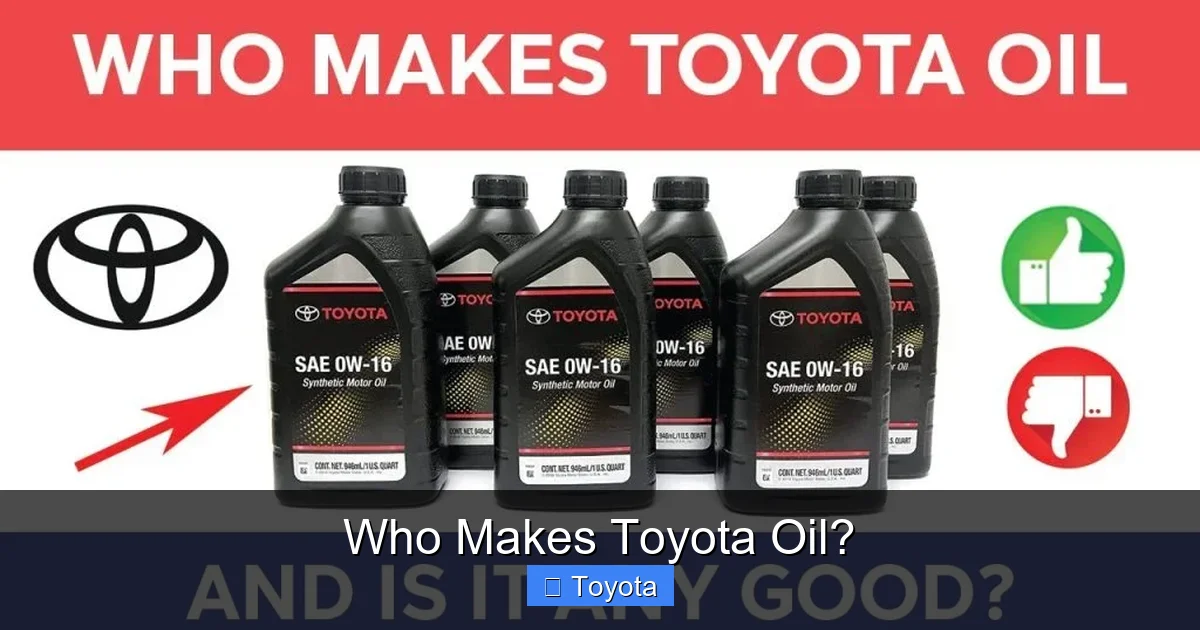
Modern Toyota engines often use 0W‑16, a low‑viscosity oil that improves fuel economy while still providing protection at high temperatures. Older models may call for 5W‑30 or 10W‑30. The “W” indicates winter performance, and the number after the dash shows the oil’s flow at 100 °C.
If you’re curious why Toyota leans toward 0W‑16, see our deep dive on Why Does Toyota Use 0W 16 Oil.
Toyota oil typically uses a blend of Group III synthetic base stocks, which offer better flow at low temperatures and higher thermal stability compared to conventional mineral oils. This synthetic foundation is why Toyota can recommend longer drain intervals in certain models.
The “W” rating reflects the oil’s flow at -10°C, -20°C, or -30°C. A 0W rating means the oil remains fluid enough to protect the engine during cold starts, while the second number (e.g., 16, 20, 30) indicates thickness at 100°C. Lower second numbers generally improve fuel economy but may require more frequent changes in severe conditions.
Choosing a viscosity that is too thick can increase drag on the crankshaft, reducing fuel economy and increasing wear during cold starts. Conversely, an oil that is too thin may not provide adequate film thickness under high loads, leading to increased friction and potential engine damage.
Low‑viscosity oils like 0W‑16 can improve fuel economy by 1‑3% compared to 5W‑30, according to EPA tests. This efficiency gain is especially noticeable in city driving where engines spend more time at low speeds.
Choosing the Right Oil for Your Toyota
With so many options, picking the correct oil can feel overwhelming. Here are practical steps to simplify the decision.
Visual guide about Who Makes Toyota Oil?
Image source: automotivian.com
Check Your Owner’s Manual
The manual lists the exact viscosity and any required certifications. Follow it closely, especially if your vehicle has a turbocharged or hybrid powertrain.
The manual may also specify any unique requirements, such as a particular friction modifier for hybrid transmissions or a low‑ash formulation for diesel engines.
Consider the Climate
Colder regions benefit from lower “W” numbers, while hot climates may tolerate higher viscosities. A 0W‑20 or 5W‑30 often works well across a wide temperature range.
In regions where winter temperatures regularly drop below -20°C, a 0W‑20 or even 0W‑30 oil may be beneficial. Conversely, in consistently hot climates, a 5W‑30 or 10W‑30 can provide extra film strength.
Look for API and ILSAC Labels
Ensure the bottle shows the latest API symbol and the ILSAC GF‑6 standard. These markings guarantee the oil meets modern engine requirements.
The latest API service category is SP, which replaces SN Plus. Oils labeled SP are backward compatible, meaning they can be used in engines that originally required older categories.
Use a Quality Filter
Pair your oil with a reliable filter. For a comprehensive guide, read our piece on Who Makes Toyota Oil Filters.
Pair your oil with a filter that has a high micron rating and a sturdy bypass valve. A good filter traps particles as small as 10 microns, extending the life of your oil and protecting delicate engine parts.
Using an oil filter with a higher flow rate can reduce pressure drop, but it may also allow larger particles to pass. Match the filter’s micron rating with the oil’s intended service life to maximize protection.
For vehicles with over 75,000 miles, consider an oil labeled “high mileage.” These formulations include additional seal conditioners and antioxidants to help reduce leaks and protect older engine components.
If you want to fine‑tune your oil change interval, you can send a used oil sample to a lab for analysis. The report will show metal content, viscosity breakdown, and additive depletion, helping you decide when the next change is due.
There are several mobile apps that can help you select the right oil. Toyota’s own “Toyota Oil” app recommends viscosity based on your model, year, and driving habits. Third‑party tools such as “Oil Selector” cross‑reference manufacturer data with independent test results, providing a second opinion.
Maintenance and Longevity
Even the best oil breaks down over time. Regular changes keep your engine running smoothly.
When to Change Oil
Toyota recommends changing the oil every 5,000 to 10,000 miles, depending on driving conditions. Severe service—such as frequent short trips or extreme temperatures—may require more frequent changes.
If you frequently drive in stop‑and‑go traffic, tow heavy loads, or operate in extreme heat or cold, you should shorten the interval to every 3,000–5,000 miles. The owner’s manual provides a “severe service” schedule for these conditions.
Signs That Oil Needs Replacing
Watch for dark, sludgy oil, increased engine noise, or the oil light turning on. If any of these occur, schedule a service promptly.
Burnt smell, milky appearance (indicating coolant contamination), or a gritty texture when you touch the oil are all warning signs. Promptly address these to avoid costly repairs.
Tips for Extending Oil Life
Use the correct viscosity, avoid idling for long periods, and keep up with regular filter changes. These habits can extend the interval between oil changes and improve engine efficiency.
Allow the engine to reach operating temperature before driving aggressively, use the correct viscosity, and avoid extended idling. These habits reduce thermal stress and keep the oil’s additives effective longer.
Set a calendar reminder for your next oil change, especially if your vehicle does not have an oil life monitor. A simple phone alert can prevent you from forgetting and extend engine life.
Many newer Toyotas feature an oil life monitor that calculates remaining oil life based on engine speed, temperature, and driving style. When the display reads 0%, it’s time for a change, regardless of mileage.
Over time, oil loses its ability to suspend contaminants and neutralize acids. This can lead to sludge formation, increased wear, and reduced fuel efficiency. Regular changes prevent these issues.
Professional oil analysis is recommended every two oil changes for high‑performance vehicles. The test reveals trends in wear metals, allowing you to adjust maintenance intervals before minor issues become major repairs.
Proper disposal of used oil is essential for environmental protection. Many auto parts stores and service centers offer recycling programs where you can drop off old oil. Never pour oil down the drain or onto the ground, as it can contaminate soil and waterways.
Conclusion
Understanding who makes Toyota oil empowers you to choose between genuine and aftermarket products with confidence. By matching the correct viscosity, respecting service intervals, and pairing the oil with a quality filter, you can protect your engine for years to come. Remember, the right oil is a small investment that yields big returns in reliability and performance.
Frequently Asked Questions
What companies actually manufacture Toyota oil?
Toyota oil is blended by Toyota’s own facilities and by major suppliers such as Idemitsu Kosan, Nippon Oil & Energy, and ExxonMobil. These partners provide base stocks and additive packages that are mixed to meet Toyota’s exact specifications.
Is Toyota genuine oil better than aftermarket oil?
Genuine Toyota oil is formulated specifically for Toyota engines and meets the automaker’s durability and emissions standards. Aftermarket oils can be acceptable if they display the correct API rating and viscosity, but they may not include Toyota’s proprietary additive package.
How can I tell if my oil meets Toyota specifications?
Look for the API “donut” symbol, the SAE viscosity grade, and any statement that the oil is Toyota‑approved on the label. If these markings are absent, the oil likely does not meet the required specs.
What viscosity oil does my Toyota need?
Your owner’s manual lists the exact viscosity, such as 0W‑16, 5W‑30, or 10W‑30. Using the recommended grade ensures proper flow, protection, and fuel efficiency for your specific engine.
How often should I change Toyota oil?
Toyota generally recommends an oil change every 5,000 to 10,000 miles, depending on driving conditions. Severe service may require changes every 3,000 to 5,000 miles.
Can I use synthetic oil in my Toyota?
Yes, many Toyota models are compatible with synthetic oil, especially those that specify 0W‑16 or other synthetic grades. Always verify that the synthetic oil meets the API and ILSAC standards listed in your manual.