What Size Tires Fit a Toyota 4runner?

Toyota 4Runner tire sizes vary by generation and trim level. Most modern models (2010-present) come with 265/70R17 or 265/65R18 wheels. Older generations often use 265/70R16 or 245/75R16. You can go larger with a lift or minor trimming, but always check clearance and load ratings first.
Key Takeaways
- Stock sizes depend on the model year: 5th gen (2010+) typically uses 265/70R17 or 265/65R18; 4th gen (2003-2009) often uses 265/70R16 or 265/65R17.
- Plus-sizing is popular: Many owners upgrade to 275/70R17, 265/70R17, or 285/70R17 for better off-road traction and ground clearance.
- Lift kits allow larger tires: A 2-3 inch lift lets you run 285/70R17 or 33-inch tires with minimal rubbing; 35s require more modification.
- Load rating matters: The 4Runner is a heavy SUV. Choose tires with a Load Range C, D, or E (10-ply) for safety and durability.
- Wheel offset and backspacing affect fitment: Stock wheels have high positive offset. Aftermarket wheels with less offset (or spacers) help clear wider tires.
- Speedometer recalibration may be needed: Larger diameter tires throw off speedometer and odometer readings. A programmer or dealer flash can fix this.
- Consider your driving style: All-terrain tires balance highway manners and trail performance; mud-terrains excel off-road but wear faster and roar on pavement.
📑 Table of Contents
- Introduction: Finding the Right Rubber for Your 4Runner
- Stock Tire Sizes by Generation
- Understanding Tire Size Nomenclature
- Popular Upgrade Paths: No Lift Required
- Popular Upgrade Paths: With a Lift Kit
- Critical Fitment Factors Beyond Diameter
- Tire Type Selection: Match the Terrain
- Speedometer and Odometer Correction
- Maintenance Tips for Your New Tires
- Conclusion: Measure Twice, Buy Once
Introduction: Finding the Right Rubber for Your 4Runner
So you are staring at your Toyota 4Runner and wondering what size tires fit it. You are not alone. This is one of the most common questions in the 4Runner community. The answer depends on your model year, your trim level, and how you plan to use the vehicle. Are you a daily commuter? A weekend warrior? A serious rock crawler? The right tire size changes everything. It affects your ground clearance, your fuel economy, your speedometer accuracy, and even your braking distance. In this guide, we will break down stock sizes by generation. We will explore popular upgrade paths. We will also cover the critical details like load ratings, wheel offset, and rubbing issues. By the end, you will know exactly what fits your rig without guessing.
Toyota has built the 4Runner for over three decades. Across five distinct generations, the platform has grown larger and more capable. Wheel wells have changed. Suspension geometry has changed. Brake caliper sizes have changed. All of these factors dictate the maximum tire size you can run. We will walk through each generation. We will give you the factory specs. Then we will show you what the community runs successfully. Let’s dive in.
Stock Tire Sizes by Generation
First Generation (1984-1989): The Compact Era
The original 4Runner was essentially a Hilux pickup with a fiberglass shell on the bed. It was narrow and light. Factory tire sizes were modest. Most came with 225/75R15 tires. Some SR5 models or later years might have seen 235/75R15 or even 31×10.50R15 on optional alloy wheels. These are small by modern standards. If you own a first-gen, you have a very tight wheel well. Going much larger than 31 inches requires serious cutting or a body lift. Keep it simple on these classics.
Visual guide about What Size Tires Fit a Toyota 4runner?
Image source: autopadre.com
Second Generation (1990-1995): A Bit Wider
The second gen grew slightly. It shared the chassis with the pickup but got a full steel roof. Base models often kept the 225/75R15. The popular SR5 and Limited trims frequently came with 265/70R15 (which is roughly a 31-inch tire) or 235/75R15. The wheel well opening is still tight. A 31×10.50R15 fits well stock. A 32×11.50R15 might fit with minor trimming of the front valence. Anything larger usually needs a suspension lift.
Third Generation (1996-2002): The IFS Transition
This generation switched to independent front suspension (IFS) and coil springs in the rear. It was wider and heavier. Stock sizes shifted to 16-inch wheels. The most common factory size was 265/70R16 (approx 30.6 inches). Some base models had 245/75R16. The Limited trim sometimes came with 265/65R17 on 17-inch wheels late in the run. This generation has a bit more room. Many owners run 265/75R16 (31.6 inches) or 285/75R16 (32.8 inches) with a small lift and trimming of the front fender liner.
Fourth Generation (2003-2009): The V8 Era
The 4th gen 4Runner got bigger, heavier, and more powerful. It rode on 17-inch wheels as standard for most trims. The dominant stock size is 265/70R17 (approx 31.6 inches). The Sport Edition and some Limiteds came with 265/65R17 on 17×7.5 wheels. The V8 models had larger brakes, which limits wheel options. The wheel wells are generous. A very popular upgrade is 265/70R17 to 275/70R17 (32.2 inches) with zero lift. Many run 285/70R17 (33 inches) with a 2-inch leveling kit and minor plastic trimming. This is the sweet spot for this generation.
Fifth Generation (2010-Present): The Modern Standard
The current 5th generation has been around for a long time. It shares the frame with the Tacoma and FJ Cruiser. Stock wheel sizes are 17-inch and 20-inch. The most common factory tire is 265/70R17 on SR5, TRD Off-Road, and TRD Pro trims (17×7 wheels). The Limited and Nightshade trims often come with 265/65R18 on 18-inch wheels. Some early models had 265/60R20 on 20s. The wheel wells are large but the front fender liner and mud flap bracket are common rub points. The community consensus for a “no-lift” max size is 275/70R17 (32.2 inches) or 265/70R18. With a 2-3 inch lift, 285/70R17 (33 inches) fits well with trimming. 35-inch tires (like 315/70R17) require a 3-inch lift, heavy trimming, aftermarket upper control arms, and often body mount chopping.
Understanding Tire Size Nomenclature
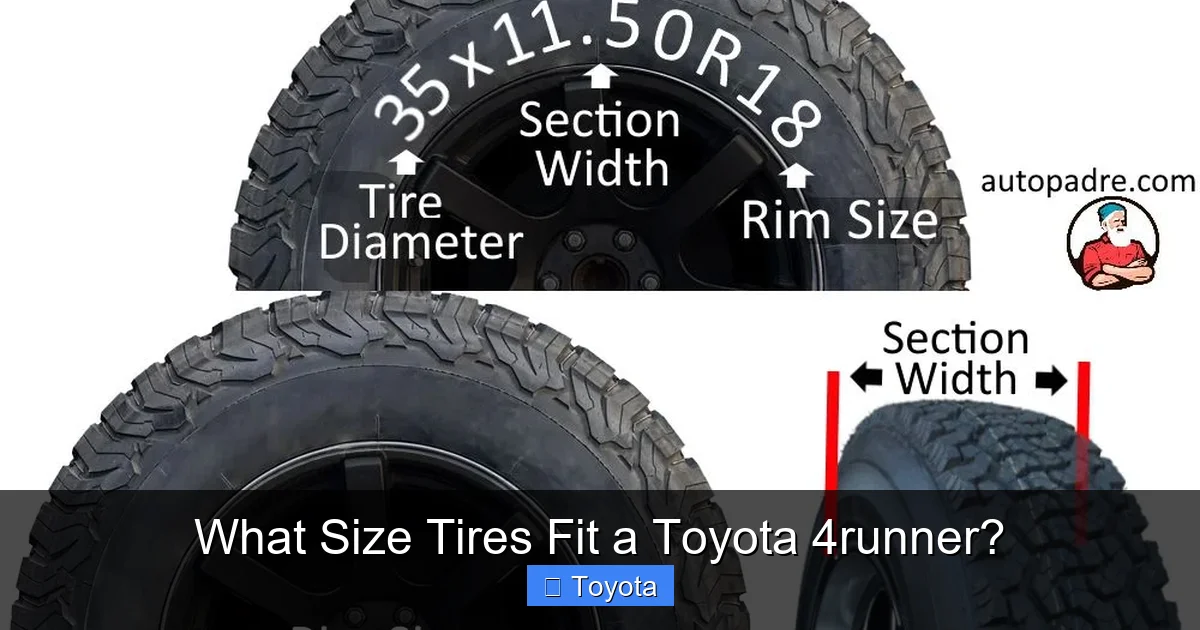
Before we go further, let’s decode the numbers. A size like 265/70R17 tells you three things. The first number (265) is the section width in millimeters. The second number (70) is the aspect ratio. It means the sidewall height is 70% of the width. The letter R means radial construction. The last number (17) is the wheel diameter in inches. To get the overall diameter in inches, you do the math: (Width x Aspect Ratio x 2 / 25.4) + Wheel Diameter. For 265/70R17: (265 x 0.70 x 2 / 25.4) + 17 = 31.6 inches. Knowing this math helps you compare sizes instantly. A 285/70R17 is wider (285mm vs 265mm) and taller (33 inches vs 31.6 inches). A 275/70R17 splits the difference at 32.2 inches.
Visual guide about What Size Tires Fit a Toyota 4runner?
Image source: canadiangearhead.com
Popular Upgrade Paths: No Lift Required
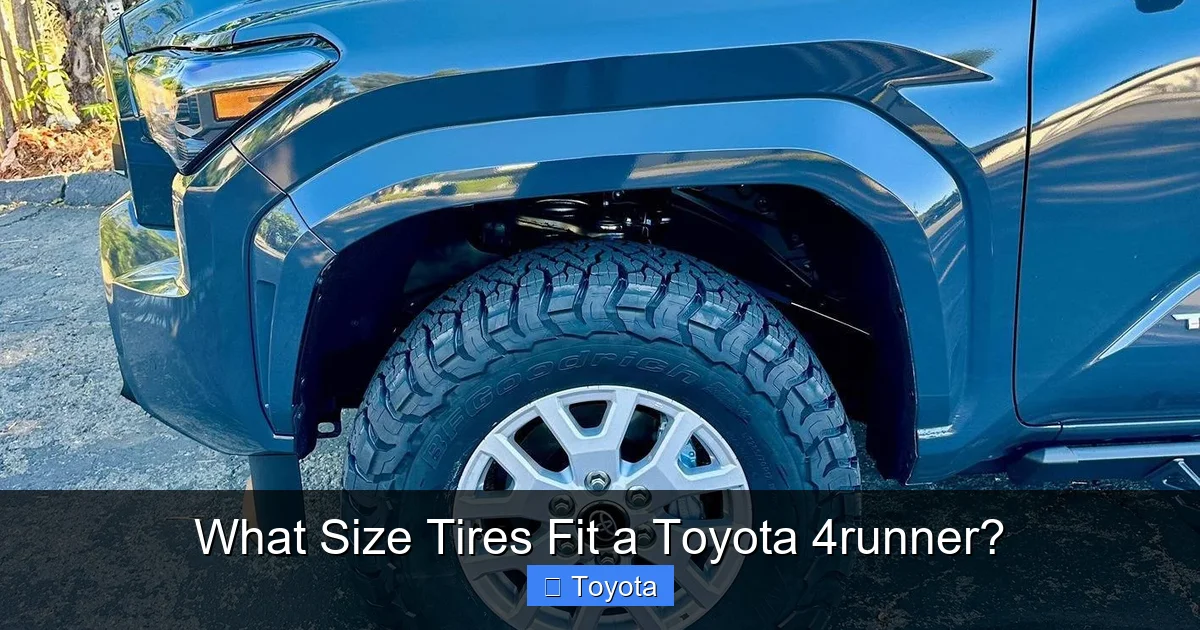
Many 4Runner owners want a slightly larger tire for better looks and traction without buying a lift kit. This is the “leveling” or “stock suspension” route. It saves money and preserves the factory ride quality. Here are the most proven sizes that fit 5th gen (2010+) models with zero suspension modification.
Visual guide about What Size Tires Fit a Toyota 4runner?
Image source: 4runner6g.com
275/70R17 (32.2 inches)
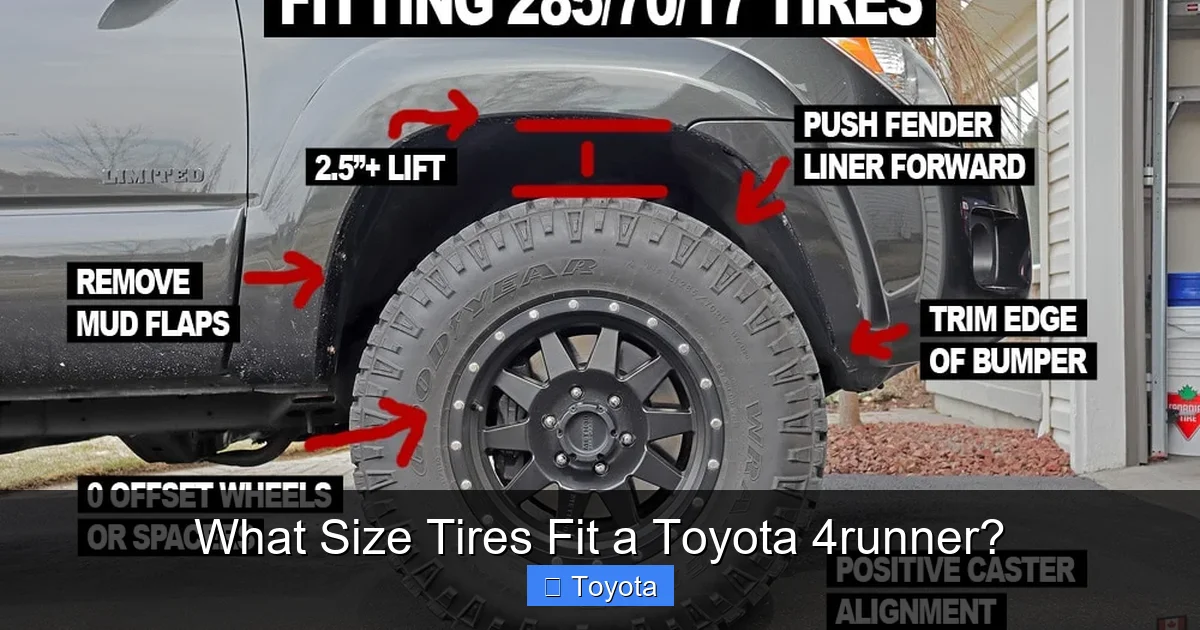
This is widely considered the golden size for a stock 5th gen 4Runner on 17-inch wheels. It is only about 0.6 inches taller and 10mm wider than the stock 265/70R17. It fits the factory 17×7 wheel perfectly. It usually clears the upper control arm (UCA) and the fender liner at full lock. You might need to remove the front mud flap bracket (two bolts) and do a “pinch weld mod” (bending the welded seam flat with a hammer) on the front of the rear wheel well. That is it. No rubbing on the frame or body mount. This size gives you a noticeable ground clearance bump and a beefier look.
265/70R18 (32.6 inches)
If you have the factory 18-inch wheels (Limited, Nightshade, some TRD Pro years), this is your equivalent. It is slightly taller than the 275/70R17 but narrower. It fits the stock 18×7.5 wheel. Clearance is similar. You will likely need the same pinch weld mod and mud flap removal. It is an excellent choice if you don’t want to buy new wheels.
255/80R17 (33.1 inches) – The “Pizza Cutter”
This size is tall and narrow. It fits on the stock 17×7 wheel. Because it is narrow (255mm vs 265mm), it clears the UCA easily. The height (33 inches) gives great clearance. However, it looks skinny on the heavy 4Runner. Load ratings can be harder to find in this size. It is popular with overlanders who want maximum height without width for tight trails. You will still need the pinch weld mod.
Popular Upgrade Paths: With a Lift Kit
If you install a 2 to 3 inch lift (like Bilstein 5100s, Old Man Emu, or Icon), your options open up significantly. You gain clearance at the fender liner and the body mount. However, you introduce new geometry issues. The front droop travel increases. The tire can contact the front of the rear wheel well (the pinch weld) and the rear of the front wheel well (the body mount). You also stress the stock upper control arms.
285/70R17 (33 inches) – The King of Compromise
This is the most popular size for lifted 4Runners. On a 2.5 to 3 inch lift, it fits beautifully. It offers a massive contact patch, great load ratings (usually Load Range E), and a perfect 33-inch diameter. You will need aftermarket wheels with less backspacing (4.5 to 5 inches) or 1.25-inch wheel spacers to clear the UCA. You must do the pinch weld mod. You will likely need to trim the front fender liner plastic. Some owners melt or cut the plastic body mount cover. It is a proven, reliable setup. For specific tire recommendations in this size, check out our guide on the best all-terrain tires in 265/70R18 which covers similar diameter options.
275/70R18 (33.2 inches)
For those sticking with 18-inch or 20-inch wheels, this is the 33-inch equivalent. It fits lifted 4Runners with 18×8 or 18×9 wheels. Same mods required: pinch weld, fender liner trim, UCA clearance via offset or spacers.
315/70R17 (34.4 inches) – “35s” on 17s
True 35-inch tires (315/70R17 or 35×12.50R17) are the next step. They require a minimum 3-inch lift. You must do the body mount chop (cutting the steel body mount behind the front wheel well). You need aftermarket upper control arms (like Total Chaos, SPC, or JBA) to regain caster and clear the tire at full droop. You need wheels with 4.5-inch backspacing or less. You will cut the fender liner extensively. You will likely need to re-gear your differentials (4.88 or 5.29) to restore power and braking. This is a major commitment. It is not a bolt-on upgrade.
Critical Fitment Factors Beyond Diameter
Diameter is just the start. Three other factors determine if a tire actually fits: Load Rating, Wheel Offset/Backspacing, and Tire Width/Section Width.
Load Rating: Don’t Skimp Here
The 4Runner weighs 4,400 to 4,750 lbs curb weight. Add passengers, gear, a roof top tent, and a bumper. You are easily over 5,500 lbs. Your tires must handle this. Load Range C (6-ply) is the absolute minimum for a daily driver. Load Range D (8-ply) is better. Load Range E (10-ply) is the gold standard for lifted, loaded rigs. E-rated tires have stiffer sidewalls. They resist punctures better. They handle heavy loads without overheating. They do ride firmer. Check the load index number on the sidewall (e.g., 121/118Q). Ensure the single/dual load capacity exceeds your axle weight. Never run P-metric (Passenger) tires on a modified 4Runner. Use LT (Light Truck) tires only.
Wheel Offset and Backspacing: The Secret to Clearing the UCA
Stock 4Runner wheels have a high positive offset (+55mm to +60mm). This tucks the tire under the fender. It looks conservative. It also puts the tire sidewall very close to the Upper Control Arm (UCA). When you go wider (285mm or 315mm), the tire hits the UCA at full lock or full droop. You have two fixes. Option A: Wheel Spacers. 1.25-inch (32mm) hub-centric spacers push the stock wheel out. Cheap ($150/pair). Effective. Adds stress to wheel bearings. Option B: Aftermarket Wheels. Buy 17×8.5 or 17×9 wheels with +25mm to 0mm offset (4.5 to 5-inch backspacing). This moves the tire centerline outward. It clears the UCA naturally. It looks better. It puts more leverage on bearings but is generally preferred over spacers. For 18s and 20s, similar logic applies.
Section Width and Tread Width: The Real Rub Points
The stated section width (285mm) is measured at the widest point of the sidewall on a specific rim width. The actual tread width varies by brand. A 285/70R17 Nitto Ridge Grappler might have a 11.2-inch tread width. A 285/70R17 KO2 might have 10.8 inches. The sidewall bulge differs too. This changes where the tire rubs. Always check the manufacturer’s spec sheet for “Measured Rim Width” and “Overall Width”. Mount the tire on a rim width in the middle of the approved range. For a 285, that is usually an 8.5 or 9-inch wide wheel. Mounting a 285 on a stock 7-inch wheel creates a “lightbulb” shape. It bulges the sidewall out, increasing rub risk on the UCA and fender liner.
Tire Type Selection: Match the Terrain
Now that you know what size fits, what type of tire should you buy? The 4Runner does everything. Your tire should match your 80/20 split.
Highway All-Season (H/T)
Best for: 90% pavement, 10% dirt roads. Examples: Michelin Defender LTX, Continental CrossContact LX25. Quiet, long tread life (60k-70k miles), great wet braking. Zero off-road traction in mud, sand, or snow. Sidewalls are weak. Not recommended for any serious 4Runner use.
All-Terrain (A/T) – The Sweet Spot
Best for: 50/50 to 70/30 pavement/trail. This is what 80% of 4Runner owners should run. Examples: BFGoodrich KO2, Falken Wildpeak AT3W, Toyo Open Country AT3, Nitto Ridge Grappler (hybrid). They have the 3PMSF (Three Peak Mountain Snowflake) rating for severe snow. They have tough sidewalls (usually 2 or 3 ply polyester). They last 40k-55k miles. They hum on the highway but are livable. They grip rocks, dirt, and mud well. If you want a deep dive into the best options for your specific 4Runner, read our comprehensive review of the best all-terrain tires for Toyota 4Runner.
Rugged Terrain / Hybrid Terrain (R/T)
Best for: 60% pavement, 40% aggressive trail. A middle ground between A/T and M/T. Examples: Nitto Ridge Grappler, Toyo Open Country RT, Falken Wildpeak RT. They have larger voids and more aggressive shoulders than A/Ts. They are louder. They wear faster (30k-40k miles). They excel in mud and sand. Great choice if you hit difficult trails monthly but drive highways weekly.
Mud Terrain (M/T)
Best for: 80% off-road, 20% pavement. Examples: BFGoodrich KM3, Nitto Trail Grappler, Toyo Open Country MT, Maxxis Trepador. Massive tread blocks. Huge voids. Extremely tough sidewalls. Terrible on wet pavement. Very loud. Poor ice braking. Heavy (hurts fuel economy and acceleration). Wear fast (20k-30k miles). Only buy these if your 4Runner is a dedicated trail rig or you live at the end of a muddy logging road.
Speedometer and Odometer Correction
You put larger tires on. Your speedometer now reads slow. Your odometer racks up fewer miles than you actually travel. Why? The vehicle speed sensor counts axle revolutions. The computer assumes a stock tire diameter (e.g., 31.6 inches). Your new 33-inch tire travels further per revolution. At 70 mph indicated, you are actually doing 73 mph. Over 10,000 miles, your odometer will be off by ~300 miles. There are three fixes. 1. Dealer Flash. Some dealers can reprogram the tire size in the ECU. Not all will. Cost varies. 2. Hypertech / Superchips Programmer. Plugs into OBD2. Lets you input new tire size and gear ratio. Fixes speedo, shift points, and TPMS thresholds. ~$200-300. 3. GPS Speedometer Overlay. Use a phone app or Garmin HUD. Cheap, but doesn’t fix the ECU or transmission shift logic. The programmer is the best all-around solution for lifted 4Runners.
Maintenance Tips for Your New Tires
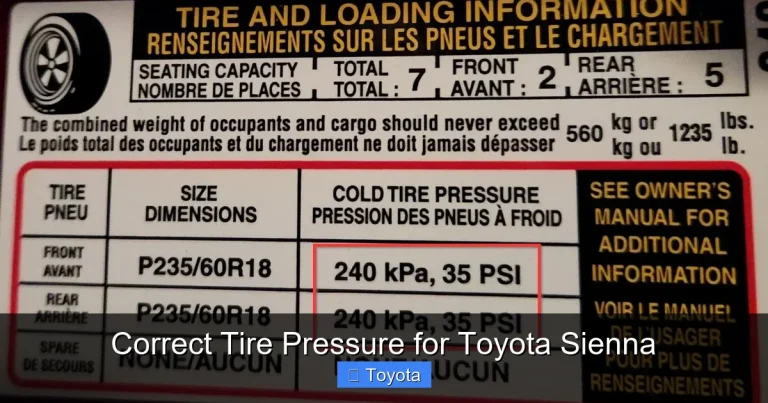
You spent $1,000-$2,000 on tires. Make them last. Rotate every 5,000 miles. The 4Runner is rear-biased. The rear tires wear faster. Cross-rotation (rear to front, front to opposite rear) is best for directional tires. For non-directional, do a modified X-pattern. Check pressure monthly. Run the door placard pressure (usually 33-35 psi) for stock size. For larger LT tires, you often need more pressure to support the load, not less. Consult the tire manufacturer’s load/inflation table. Align annually. Lifts change camber and caster. A proper alignment (caster ~2.5-3.5°, camber ~0° to -0.5°, toe slightly in) prevents feathering. Inspect sidewalls. LT tires hide damage. Look for cuts, bulges, or exposed cords after every trail run. Balance beads vs weights. Many off-roaders use internal balancing beads (Counteract, Dyna Beads). They rebalance dynamically as the tire wears and mud cakes on. They work well for large LT tires.
Conclusion: Measure Twice, Buy Once
Choosing the right tire size for your Toyota 4Runner is a balance of math, mechanics, and mission. Start by identifying your exact generation and trim. Know your stock size. Decide if you are lifting or staying stock. If stock, 275/70R17 (17s) or 265/70R18 (18s) are your safest, easiest wins. If lifting 2-3 inches, 285/70R17 is the community standard for a reason. It offers the best blend of clearance, traction, load capacity, and drivability. Going to 35s is a lifestyle change, not just a tire swap. It demands gears, UCAs, body mounts, and money. Always prioritize Load Range E LT tires for a vehicle this heavy. Pick an All-Terrain for 90% of drivers. Match your wheel offset to your tire width to avoid UCA contact. Correct your speedometer. Rotate religiously. Do this, and your 4Runner will carry you further, safer, and with more style than ever before. Now get out there and enjoy the ride.
Frequently Asked Questions
What is the biggest tire I can fit on a stock 5th gen 4Runner?
The largest tire generally agreed upon for a stock 5th gen 4Runner (2010+) with no lift is 275/70R17 (32.2 inches) on 17-inch wheels or 265/70R18 (32.6 inches) on 18-inch wheels. You will need to remove the front mud flap brackets and perform the pinch weld modification on the front of the rear wheel wells. Some rubbing on the fender liner at full lock may still occur but is easily trimmed.
Do I need to re-gear my differentials for 33-inch tires?
Re-gearing is not strictly required for 33-inch tires (285/70R17), but it is highly recommended. The 4Runner’s 4.0L V6 and 5-speed automatic lose noticeable low-end torque and fuel economy with 33s. The transmission may hunt for gears on hills. Re-gearing to 4.56 or 4.88 restores stock performance. For 35-inch tires, re-gearing to 4.88 or 5.29 is essentially mandatory for drivability and transmission health.
Can I run 285/70R17 on stock 17×7 wheels?
Technically yes, 285/70R17 is within the approved rim width range (7.5-9.5 inches) for many tires, but it is at the very bottom. Mounting a 285 on a 7-inch wheel creates excessive sidewall bulge. This increases the risk of sidewall damage, bead unseating at low pressure, and rubbing on the upper control arm. It also handles poorly. An 8.5 or 9-inch wide aftermarket wheel is strongly recommended for this tire size.
Will larger tires void my Toyota warranty?
Installing larger tires alone will not void your entire vehicle warranty under the Magnuson-Moss Warranty Act. However, if a failure occurs that the dealer can prove was caused by the larger tires (e.g., wheel bearing failure, CV axle failure, transmission overheating), they can deny warranty coverage for that specific repair. Keep your stock tires and wheels. Reinstall them before taking the truck in for warranty work on drivetrain components.
What is the pinch weld mod and do I really need it?
The pinch weld mod involves bending or grinding down the sharp welded seam where the front of the rear wheel well meets the rocker panel. On 4th and 5th gen 4Runners, this seam sits right where a larger tire (32 inches+) wants to sit at full compression or full lock. If you don’t flatten it, the tire sidewall will slice open on that sharp metal edge. It takes 10 minutes with a hammer and a grinder. Yes, you need it for any tire larger than ~31.5 inches.
Are wheel spacers safe on a 4Runner?
High-quality, hub-centric wheel spacers (like Spidertrax or Bora) in 1.25-inch or 1.5-inch widths are widely considered safe for 4Runners by the off-road community. They must be installed correctly: clean mating surfaces, thread locker on spacer studs, proper torque on spacer nuts and wheel lug nuts, and re-torqued after 50-100 miles. They increase leverage on wheel bearings, accelerating wear slightly. Many owners prefer aftermarket wheels with correct offset as a more robust long-term solution.