What Kind of Oil Does a 2008 Toyota Camry Take?
Know the right oil for your 2008 Toyota Camry to keep the engine healthy and efficient. This guide covers oil type, viscosity, change intervals, and real‑world tips. Keep your Camry running smoothly with confidence.
Key Takeaways
- Correct Viscosity: 5W‑30 is the standard for most 2008 Camry engines.
- Synthetic vs. Conventional: Synthetic offers better protection, especially in extreme temperatures.
- Change Interval: Follow Toyota’s 5,000‑mile schedule or use the oil life monitor.
- Manufacturer Specs: Always check the owner’s manual for exact requirements.
- Cost vs. Quality: Balance price with long‑term engine health.
- DIY Tips: A simple step‑by‑step can save you money if you’re comfortable.
- Watch for Signs: Unusual noise or low oil levels mean you need a check‑up.
📑 Table of Contents
Why Oil Matters in a 2008 Toyota Camry
Engine oil isn’t just a lubricant; it’s the lifeblood of your vehicle. In a 2008 Toyota Camry, the engine is designed to run on a specific oil type that keeps moving parts sliding smoothly, reduces wear, and helps the engine stay cool.
When the oil gets old or contaminated, it loses its ability to protect the engine. That can lead to increased friction, higher≈emission levels, and eventually costly repairs.
Engine Design and Oil Requirements
The Camry’s 2.5‑liter inline‑four has a tight crankcase design, making the right viscosity critical. A thinner oil can’t form a proper film, while a too‑thick oil burdens the engine.
Benefits of Using the Correct Oil
Using the exact oil type recommended by Toyota means better fuel economy, smoother idling, and a longer engine life. It also ensures you stay covered under warranty.
What Kind of Oil Does a 2008 Toyota Camry Take?
Answering the key question: What Kind of Oil Does a 2008 Toyota Camry Take? helps you avoid common mistakes and keep the engine running well.
Recommended Viscosity (5W‑30)
Toyota’s 2008 Camry uses a 5W‑30 oil. The “5W” refers to winter cold flow, while the “30” indicates the oil’s resistance to thinning at high temperatures. This balance provides protection across a wide temperature range.
Synthetic vs. Conventional
Synthetic oils have engineered molecules that resist breakdown. They keep the engine cleaner and maintain viscosity better in extreme heat or cold. Conventional oils are cheaper but may require more frequent changes.
Manufacturer’s Specifications
Always check the owner’s manual. It lists the oil’s API (American Petroleum Institute) rating and the “SAE” number. For the 2008 Camry, look for oils that read “API SN” or higher and match the 5W‑30 viscosity.
How Often Should You Change the Oil?
The oil life monitor in newer Camrys can tell you when it’s time for a change, but a good rule of thumb is every 5,000 miles or six months, whichever comes first.

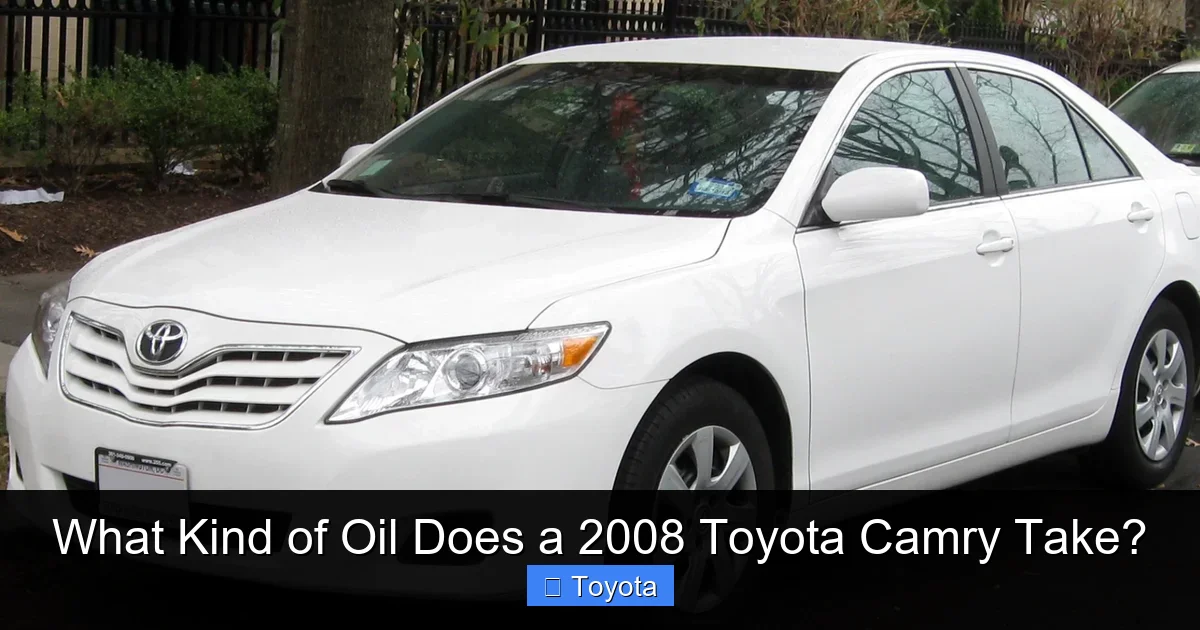
Visual guide about What Kind of Oil Does a 2008 Toyota Camry Take?
Image source: oilcapacityguide.com
Maintenance Schedule
Follow Toyota’s schedule unless you drive under harsh conditions. Extreme temperatures, dusty roads, or towing can shorten the oil’s life.
Driving Conditions & Mileage
City driving with short trips keeps the engine from reaching its optimal temperature, causing the oil to break down faster. If you do a lot of city driving, consider changing the oil more often.
Oil Life Monitoring
The dashboard displays the oil life percentage. When it drops below 50%, it’s time for a change. This system uses sensors to gauge oil quality, making it a reliable guide.
When you change oil, the cost can vary widely; here’s a breakdown of how much an oil change may cost. How Much Does An Oil Change Cost
Choosing the Best Oil: Brands & Prices
Not all oils are created equal. Look for reputable brands that meet or exceed Toyota’s specifications.
Popular Brands and Their Features
Brands like Mobil 1, Castrol Edge, and Valvoline SynPower offer synthetic blends that keep the Camry’s engine clean and protect against wear.
Cost vs. Quality: How to Decide
A higher price often means better protection. However, a high‑grade conventional oil can still be adequate if you’re on a tight budget and drive under mild conditions.
Where to Buy (Dealership vs. Online)
Dealerships may offer a discount for loyalty, but onlineUnit stores can be cheaper. Just ensure the product matches the OEM rating.
Practical Tips for Oil Changes & Engine Care
Doing the oil change yourself saves money, but it requires the right tools and precautions.
DIY Oil Change Checklist
- Gather tools: oil filter wrench, socket set, funnel, and a suitable container.
- Warm up the engine first so the oil drains faster.
- Replace the oil filter with a new one that matches the Camry’s specifications.
- Use a funnel to pour the new 5W‑30 oil and avoid spills.
- Check the oil level with the dipstick afterward.
Common Mistakes to Avoid
Using the wrong viscosity, not tightening the filter properly, or forgetting to check for leaks can lead to engine damage.
Additional Maintenance Tips
Regularly inspect the oil filter housing for leaks, replace the oil filter at each change, and keep the engine clean to avoid dust buildup.
Troubleshooting & When to Seek Help
Signs of Wrong Oil
- Increased engine noise or knocking.
- Visible sludge or discoloration in the oil.
- Engine performance drops or higher fuel consumption.
Engine Noise & Leaks
If you hear a ticking or hissing sound after an oil change, it may indicate a leak or a filter that wasn’t tightened.
Professional Inspection
When in doubt, bring your Camry to a qualified mechanic. An engine specialist can check oil pressure and engine wear.
Conclusion
Knowing what kind of oil a 2008 Toyota Camry takes is just the first step to keeping the engine healthy. By selecting the right 5W‑30 synthetic or conventional oil, adhering to Toyota’s maintenance schedule, and performing or scheduling regular oil changes, you’ll enjoy reliable performance and fewer repairs. Keep an eye on the oil life monitor and stay on top of any unusual symptoms—your Camry will thank you for the care you give it.
Frequently Asked Questions
What is the recommended oil viscosity for a 2008 Toyota Camry?
The official recommendation is 5W‑30, which balances cold‑start flow with high‑temperature protection.
Can I use a lower viscosity oil in my Camry?
Using a thinner oil like 5W‑20 can reduce fuel efficiency and may not meet the engine’s protection needs.
How much does an oil change cost for a 2008 Camry?
Prices vary by location and oil type, but a typical change ranges from $30 to $70, including labor.
When should I replace the oil filter?
Replace the oil filter every time you change the oil, as it captures contaminants that could damage the engine.
Do I need synthetic oil for my Camry?
Synthetic oil offers better protection and longevity, especially in extreme temperatures, but a high‑quality conventional oil can also suffice.
How can I tell if my oil is worn out?
Check the oil’s color and consistency; it should be amber and slightly oily. If it looks dark and gritty, it’s time for a change.