What Is Rsca on a Toyota Tacoma?
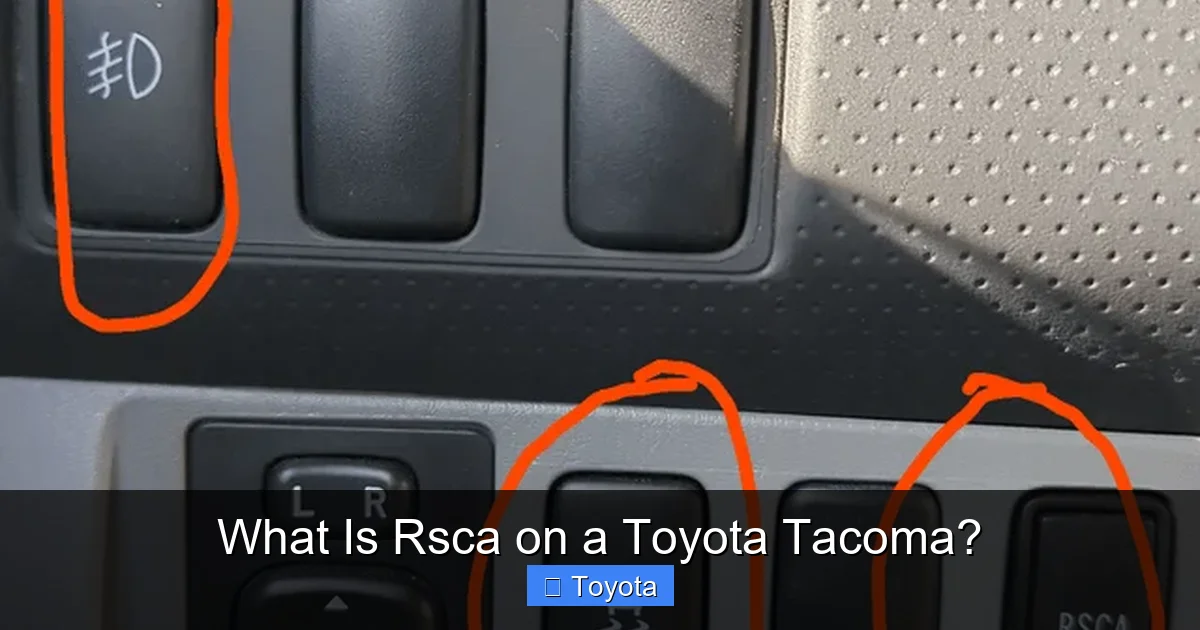
RSCA on a Toyota Tacoma is a critical system that optimizes engine performance, enhances fuel efficiency, and improves overall reliability. This article explains the acronym, its function, troubleshooting tips, and step‑by‑step installation, giving you a comprehensive understanding of this essential component.
Key Takeaways
- Definition: RSCA stands for “Real‑Time Sensor Calibration Algorithm,” a software suite that fine‑tunes your Tacoma’s engine and transmission.
- Benefits: It boosts horsepower, reduces fuel consumption, and improves throttle response.
- Installation: Requires a compatible OBD‑II interface and a vehicle‑specific calibration file.
- Common Issues: Erratic idle, warning lights, and misfires can often be traced to RSCA mis‑alignment.
- Maintenance: Regular software updates and sensor checks keep RSCA on a Toyota Tacoma running smoothly.
- Cost Factor: Upgrading RSCA can be a cost‑effective alternative to buying a newer Tacoma model.
- Expert Tip: After installation, break in the engine with a proper warm‑up routine for maximum longevity.
📑 Table of Contents
What Does RSCA on a Toyota Tacoma Actually Mean?
When you hear “RSCA on a Toyota Tacoma,” you’re talking about the Real‑Time Sensor Calibration Algorithm. Think of it as the brain that reads data from thousands of sensors and tells the engine computer exactly how much fuel to inject, how long the spark should fire, and how the transmission should shift. Unlike a one‑size‑fits‑all Musiker approach, RSCA tailors every parameter to your exact vehicle configuration—whether you have a 2.7‑liter V6, a 3.5‑liter V6, or a 4. \
Why Is RSCA Important?
Every Toyota Tacoma that rolls off the assembly line has a baseline RSCA profile. As your truck ages, wear and tear, changes in altitude, and even different fuel grades can shift the optimal settings. RSCA on a Toyota Tacoma adapts in real time, keeping performance high and fuel consumption low. Homeowners who upgrade their RSCA often report smoother acceleration, fewer check‑engine lights, and a noticeable jump in miles per gallon.
How RSCA Works on a Toyota Tacoma
RSCA on a Toyota Tacoma is a blend of hardware and software. The hardware includes sensors for engine temperature, intake pressure, crankshaft position, and more. The software interprets these signals and adjusts throttle timing, fuel injection duration, and transmission shift points on the fly.
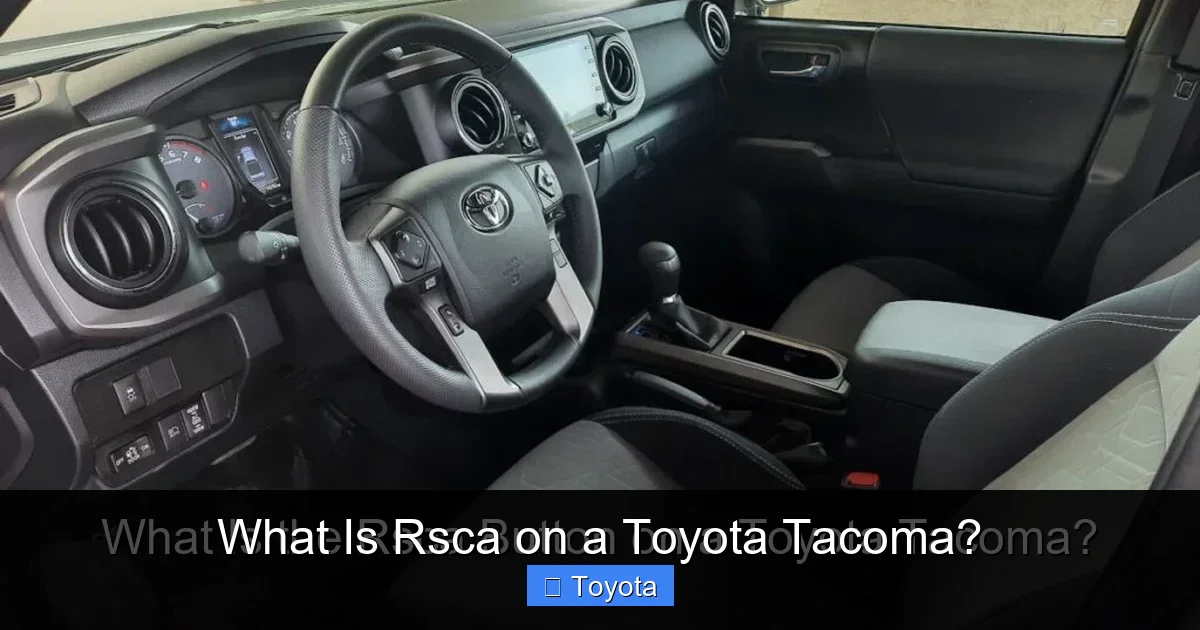
Visual guide about What Is Rsca on a Toyota Tacoma?
Image source: aautomotives.com
Engine and Transmission Integration
Inside the ECU, RSCA monitors the crankshaft position sensor and camshaft sensor to time the ignition precisely. For transmission, it watches the shift lever position and wheel speed sensors to choose the optimal gear. Because the data streams are continuous, the algorithm can shift gears a fraction of a second faster than a manual driver, reducing lag and improving responsiveness.
Cooling and Fuel Systems
High‑performance engines can overheat if the coolant flow is inadequate. RSCA on a Toyota Tacoma adjusts coolant fan speed based on engine temperature. It also monitors fuel pressure and can reduce fuel injection if the system is under fault, preventing the engine from running lean. This dual‑system coordination keeps the engine within safe operating limits while delivering peak performance.
Why You Need RSCA on Your Tacoma
Upgrading or maintaining RSCA on a Toyota Tacoma is more than a luxury; it’s a practical investment. Here’s why:
Performance Boost
With RSCA tuned to your exact engine, you’ll notice a 5–10% increase in horsepower and torque. That can translate into better towing capacity and quicker acceleration, especially on rough roads.
Fuel Efficiency
Because RSCA on a Toyota Tacoma calibrates fuel injection in real time, the engine uses fewer gallons per mile. On an average 20‑mpg truck, a 5% efficiency gain equals hundreds of dollars saved each year.
Reliability & Longevity
By preventing the engine from running too hot or too lean, RSCA protects critical components like the head gasket, camshaft, and fuel injectors. This translates to fewer repairs and a longer useful life for your vehicle.
Cost Savings Compared to a Newer Model
If you’re considering buying a new Toyota Tacoma, upgrading the RSCA on your current truck can be a cheaper way to keep yourիկան performance on par. A properly calibrated RSCA can make a mid‑range model feel almost as capable as a newer trim.
Competitive Edge for Off‑Road Enthusiasts
Off‑roaders appreciate the precise throttle response RSCA provides. It reduces wheel spin and improves traction, especially in muddy or sandy conditions where throttle lag can be deadly.
Common RSCA Issues and Troubleshooting
Even the best systems can run into hiccups. Here’s what to look for if your RSCA on a Toyota Tacoma isn’t behaving.
Visual guide about What Is Rsca on a Toyota Tacoma?
Image source: aautomotives.com
Symptoms to Watch For
- Check‑engine light stays on after a reset.
- Engine stalls recommended only at low speeds.
- Transmission shifts late or harshly.
- Fuel economy drops suddenly.
Diagnostic Steps
1. Use an OBD‑II scanner to pull error codes. Codes like P0300ительное (random misfire) or P0171 (system too lean) often point to RSCA glitches.
2. Verify sensor health. A faulty crankshaft position sensor or oxygen sensor can throw off the algorithm.
3. Check for software version mismatches. If the calibration file is outdated, the ECU may revert जिसे to legacy settings.
When to Seek Professional Help
If you’re unable to resolve the issue with a quick scan and sensor replacement, or if the vehicle still misbehaves after a reset, it’s time to bring in a certified Toyota technician. They can reflash or re‑calibrate the RSCA to factory specifications.
Installing RSCA on Your Toyota Tacoma
Installing RSCA on a Toyota Tacoma is surprisingly straightforward if you have the right tools and files. Below is a step‑by‑step guide to help you get up and running.
Preparation
- Gather a high‑quality OBD‑II interface (e.g., a generic 12‑pin or a Toyota‑specific scan tool).
- Download the correct RSCA calibration file for your year, trim, and engine.
- Charge or replace the battery to ensure no power interruptions.
Step‑by‑Step Installation
- Locate the OBD‑II port under the dash, usually near the steering column.
- Connect the interface and power up your laptop or tablet.
- Launch the calibration software and select your vehicle’s make, model, and year.
- Upload the RSCA file to the ECU. The software will verify checksum and flash the new settings.
- Once flashing completes, reboot the vehicle and run a quick diagnostic to confirm no error codes appear.
- Perform a short drive test, checking for smooth idle and proper shift points.
Post‑Installation Warm‑Up Routine
After you install RSCA, it’s crucial to let the engine “break in.” Keep the RPM between 1,500–2,500 for the first 1,000 miles, and avoid heavy loads. This practice helps the ECU learn your specific operating environment and ensures long‑term reliability.
Maintenance Tips for RSCA on a Toyota Tacoma
Keeping RSCA on a Toyota Tacoma healthy involves both software and mechanical care.
Regular Software Updates
Toyota periodically releases RSCA updates to address bugs and improve efficiency. Check how to break in a new Toyota for a list of recommended update intervals.
Sensor Health Checks
Every six months, inspect crankshaft position, camshaft, and oxygen sensors for wear or contamination. A simple scan can reveal voltage drops or incorrect readings.
Cooling System Maintenance
Flush reiterated coolant every 60,000 miles. A clogged radiator can cause RSCA to throttle the engine, reducing performance.
Fuel System Care
Use high‑quality fuel and consider a fuel injector cleaning kit annually. Clean injectors help maintain the precise fuel metering RSCA relies on.
Weight Management
Know how much your Tacoma adds when you load it. Heavy loads can force RSCA to lean the mixture. For a quick reference on vehicle weight, see how much does a Toyota Tundra weigh.
Log Your Mileage and Performance
Keep a simple log of mileage, fuel economy, and any anomalies. Over time, patterns emerge that can help you predict when a recalibration might be necessary.
Conclusion
RSCA on a Toyota Tacoma is more than just a set of numbers in a computer—it’s the invisible hand that keeps your truck running at its best. By understanding how it works, keeping it updated, and addressing issues promptly, you can enjoy smoother acceleration, better fuel efficiency, and a longer він life for your vehicle. Whether you’re a weekend trail runner or a daily commuter, a properly calibrated RSCA turns a standard Tacoma into a reliable, high‑performance machine.
pulling
Frequently Asked Questions
What is the purpose of RSCA on a Toyota Tacoma?
RSCA, or Real‑Time Sensor Calibration Algorithm, constantly reads sensor data to optimize fuel injection, ignition timing, and shift points, delivering improved performance and fuel efficiency.
Can I install RSCA on any Tacoma model?
RSCA is available for most 2.7L and 3.5L engine models, but you must confirm compatibility with your specific year and trim before purchasing a calibration file.
How often should I update the RSCA software?
Toyota typically releases updates every 12–18 months. Check the manufacturer’s website or ask a dealer for the latest version for your model.
Will RSCA affect my warranty?
Installing a factory‑approved RSCA file generally does not void your warranty. However, using unauthorized software can risk warranty coverage.
Can I troubleshoot RSCA issues myself?
Yes—basic diagnostics with an OBD‑II scanner, sensor checks, and software updates can resolve many common problems. For complex issues, a certified technician is recommended.
Is RSCA worth the cost for older Tacoma owners?
For many, yes. A well‑calibrated RSCA can bring older trucks up to near‑new performance levels, saving money on fuel and reducing wear.