What Happens If We Put Diesel in Petrol Car
Putting diesel in a petrol car can cause serious engine problems because diesel doesn’t combust properly in a petrol engine. The fuel system can get clogged, the engine may stall, and expensive repairs might be needed. Acting quickly by draining the tank and cleaning the fuel system can save you from major damage.
Key Takeaways
- Fuel System Contamination: Diesel in a petrol engine prevents proper combustion, leading to clogged filters and injectors.
- Engine Performance Issues: Symptoms include rough idling, loss of power, misfiring, and difficulty starting the engine.
- Immediate Action Required: Do not start the engine. Drain the fuel tank, replace the fuel filter, and flush the system to prevent damage.
- Cost Implications: Early intervention can cost a few hundred dollars, while ignoring the issue may lead to thousands in engine repairs.
- Prevention Tips: Always double-check the fuel nozzle and label colors at the pump to avoid misfuelling incidents.
- Professional Help Recommended: Mechanics use specialized equipment to safely drain and clean the fuel system without causing further harm.
📑 Table of Contents
- What Happens If We Put Diesel in Petrol Car
- The Immediate Effects of Diesel in a Petrol Engine
- How Much Diesel Is Too Much?
- What Should You Do Immediately After Misfuelling?
- Can You Drive a Petrol Car With Diesel in It?
- Real-Life Scenarios and Lessons Learned
- Prevention: How to Avoid Putting Diesel in a Petrol Car
- When to See a Mechanic
- Final Thoughts
What Happens If We Put Diesel in Petrol Car
Imagine this: You’re at a busy gas station, rushing to fill up before work. You grab the nozzle, start pumping, and then it hits you—did I just put diesel in my petrol car? This mistake, known as misfuelling, is more common than you think. While it might sound like a small error, putting diesel in a petrol car can lead to big problems under the hood.
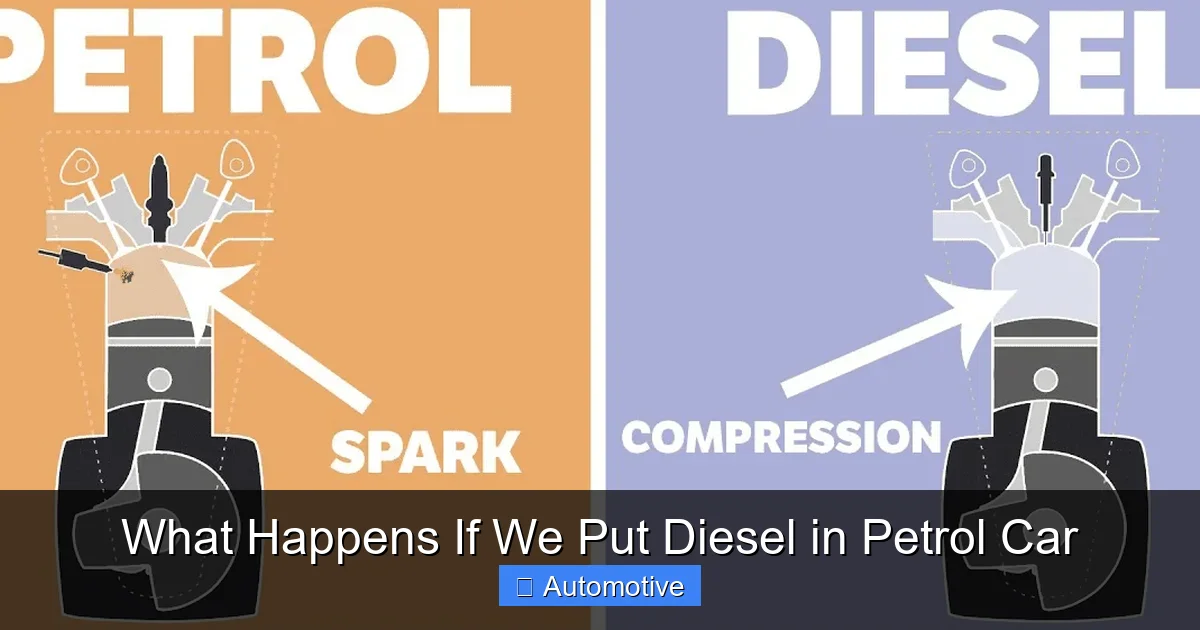
Petrol engines and diesel engines are built differently. A petrol engine relies on spark plugs to ignite a mixture of petrol and air, while a diesel engine compresses air until it gets hot enough to ignite diesel fuel automatically. When you introduce diesel into a petrol engine, things go wrong fast. Diesel is thicker, heavier, and less volatile than petrol, so it doesn’t burn the same way. This mismatch causes a chain reaction of issues that can leave your car stranded—or worse, damage the engine beyond repair.
In this article, we’ll walk you through exactly what happens when diesel ends up in a petrol car, the warning signs to watch for, and most importantly, what you should do to fix it before the damage becomes irreversible.
Understanding the Basics: Petrol vs Diesel Engines
Before diving into the consequences, it helps to understand how these two types of engines work. In a petrol engine, the fuel-air mixture is ignited by spark plugs at just the right moment. The fuel must be volatile enough to vaporize easily and burn quickly. Diesel, on the other hand, is designed to ignite under high compression, not from a spark.
Because of this fundamental difference, diesel fuel behaves very differently when introduced into a petrol engine. It won’t ignite properly, which means the engine struggles to run—or stops altogether. Over time, the unburned diesel can coat internal components, clog filters, and even damage sensitive parts like fuel injectors.
The Immediate Effects of Diesel in a Petrol Engine
When diesel is accidentally added to a petrol car, the problems begin almost instantly. Here’s what typically happens:
Visual guide about What Happens If We Put Diesel in Petrol Car
Image source: askcarmechanic.com
Engine Won’t Start or Stalls
One of the first signs that diesel has contaminated your petrol engine is that the car won’t start. Even if it does, it may stall shortly after. Since diesel doesn’t ignite well in a petrol engine, the combustion process fails, and the engine shuts down.
Rough Idling and Misfiring
If the engine manages to run, you’ll likely notice rough idling, hesitation, and misfiring. The engine may shake or vibrate excessively, and acceleration will feel sluggish or inconsistent.
Fuel System Blockages
Diesel is thicker than petrol and tends to settle at the bottom of the tank. It can clog the fuel filter, fuel lines, and fuel injectors. These blockages restrict fuel flow and prevent the engine from getting the clean, atomized fuel it needs to run smoothly.
Warning Lights and Error Codes
Your car’s onboard computer may detect the issue and trigger the check engine light. Diagnostic scans often reveal error codes related to fuel pressure, misfiring, or sensor malfunctions.
How Much Diesel Is Too Much?
Not all cases of accidental misfuelling are equally severe. The amount of diesel in the tank plays a major role in determining the extent of damage:

Visual guide about What Happens If We Put Diesel in Petrol Car
Image source: northern-assessors.co.uk
- Small Amount (less than 10%): If only a small amount of diesel is mixed with petrol, the engine might still run—though poorly. However, long-term use can still cause wear and clogging.
- Moderate Amount (10–30%): At this level, the engine will struggle significantly. You’ll see clear performance issues, and the fuel system will begin to show signs of contamination.
- Large Amount (over 30%): This is critical. The engine likely won’t start at all, and immediate action is required to avoid permanent damage.
Regardless of the amount, it’s always best to address the problem right away rather than hoping it resolves itself.
What Should You Do Immediately After Misfuelling?
If you realize you’ve put diesel in your petrol car, here’s what you should do—fast:

Visual guide about What Happens If We Put Diesel in Petrol Car
Image source: d3jvxfsgjxj1vz.cloudfront.net
Don’t Start the Engine
The golden rule: never start the engine after misfuelling. Running the engine circulates the diesel throughout the fuel system, making the cleanup more complex and expensive.
Call for Professional Help
Many areas have mobile fuel recovery services that can come to your location and drain the tank safely. These professionals have the tools and expertise to remove the contaminated fuel without causing additional damage.
Drain the Fuel Tank
If you can’t get professional help immediately, you can attempt to drain the tank yourself—but only if you’re mechanically inclined. Remove the fuel line or tank, siphon out the mixture, and refill with fresh petrol. Be sure to dispose of the old fuel properly.
Replace the Fuel Filter
Even after draining the tank, diesel residue may remain in the fuel filter. Replace it to ensure clean fuel flows to the engine.
Flush the Fuel System
To fully clean the system, consider having the fuel lines, injectors, and combustion chamber professionally flushed. This step is especially important if the engine was started with diesel in the tank.
Can You Drive a Petrol Car With Diesel in It?
Technically, yes—but you really shouldn’t. Driving with diesel in a petrol engine can cause cascading damage:
- Fuel pump failure due to thickened fuel
- Clogged fuel injectors requiring replacement
- Engine knocking or pinging from improper combustion
- Carbon buildup in the combustion chamber
If you’ve already driven the car after misfuelling, don’t panic. Stop driving immediately and seek professional assistance.
Real-Life Scenarios and Lessons Learned
Let’s look at a couple of real-world examples to illustrate the importance of quick action:
Case Study 1: Quick Thinking Saves the Day
Sarah filled up at a unfamiliar gas station and noticed the nozzle felt different. She didn’t start the engine and called a mobile fuel recovery service within 20 minutes. The tank was drained and refilled for about $200. No engine damage occurred.
Case Study 2: Ignoring the Problem Costs Thousands
Mike accidentally put a few gallons of diesel in his Honda Civic but decided to “drive it off.” Within days, the engine began misfiring, the fuel filter clogged, and he needed a full fuel system cleaning plus new injectors—costing over $2,000.
These stories show that acting fast can save you hundreds—or even thousands—of dollars.
Prevention: How to Avoid Putting Diesel in a Petrol Car
Of course, the best solution is to prevent misfuelling in the first place. Here are some practical tips:
Know the Nozzle Sizes
Diesel nozzles are typically larger than petrol nozzles and won’t fit into a petrol filler neck. However, some older vehicles or aftermarket parts may allow the wrong fuel to be inserted. Always double-check before pumping.
Look for Color Coding
In many countries, diesel pumps are color-coded (often green or black), while petrol pumps are another color (usually red or yellow). Pay attention to signage and labels at the pump.
Stay Alert at Unfamiliar Stations
If you’re in a new area or using a different brand of gas station, take an extra second to confirm you’re using the correct fuel type. Rushing increases the risk of mistakes.
Use Apps to Locate the Right Fuel
Some smartphone apps can help identify fuel types at nearby stations, which is especially useful when traveling.
When to See a Mechanic
Even if you drain the tank and refill with petrol, it’s wise to have a mechanic inspect the fuel system. They can check for hidden damage, verify that all components are functioning, and ensure no residual diesel remains.
If the engine was started with diesel in the tank, a professional cleaning is almost always necessary. Ignoring the issue can lead to repeated breakdowns and expensive repairs down the road.
Final Thoughts
Putting diesel in a petrol car is a stressful situation, but it’s not always catastrophic—if you act quickly. The key is to recognize the mistake early, avoid starting the engine, and get the fuel system cleaned or drained as soon as possible. Whether you call a mobile service, visit a mechanic, or handle it yourself, taking immediate action can save you from serious engine damage and costly repairs.
Remember, prevention is always better than cure. Stay alert at the pump, know your vehicle’s fuel requirements, and don’t let a momentary lapse in attention turn into a major headache. Your car—and your wallet—will thank you.
Got more questions about fuel systems or car maintenance? Check out our other guides on topics like using fuel injector cleaner in a half tank or choosing the right portable jump starter. We’re here to help keep your car running smoothly.
Frequently Asked Questions
What happens if a small amount of diesel gets into a petrol car?
A small amount of diesel may not prevent the engine from running, but it can still cause performance issues like rough idling and misfiring. It’s best to drain the tank and clean the fuel system to avoid long-term damage.
Can I just add petrol to dilute the diesel?
No, adding petrol does not fix the problem. The diesel will still settle and clog filters and injectors. Draining the tank and cleaning the system is the only reliable solution.
Is it safe to start the engine after misfuelling?
Never start the engine after misfuelling. Doing so spreads diesel throughout the fuel system, increasing the risk of damage and raising repair costs significantly.
How much does it cost to fix a petrol car with diesel in the tank?
Costs vary depending on how quickly you act. If caught early, draining and refilling may cost $100–$300. If the engine was run, repairs can range from $500 to over $2,000.
Can diesel in a petrol car cause permanent engine damage?
Yes, if the engine is run with diesel in the tank, it can lead to clogged injectors, fuel pump failure, and carbon buildup. These issues may require expensive engine repairs or replacements.
Should I call a mechanic or try to fix it myself?
If you’re not experienced with fuel systems, it’s safest to call a professional. Mobile fuel recovery services or mechanics can safely drain the tank and clean the system without risking further damage.