What Does “b” Mean on a Toyota Corolla?
The “B” on a Toyota Corolla stands for Brake Mode, a feature that enhances engine braking to help slow the vehicle without relying heavily on the brakes. It’s especially useful for descending steep hills or maintaining control in slippery conditions. Understanding how to use this function can improve your driving experience and vehicle longevity.
Key Takeaways
- Brake Mode Function: The “B” light activates regenerative braking, slowing the car by converting kinetic energy into electricity.
- Hill Descent Aid: It’s ideal for steep slopes, reducing strain on brake pads and improving safety.
- Fuel Efficiency: Using “B” mode can enhance mileage by minimizing brake usage during deceleration.
- Not a Cruise Control: “B” works alongside cruise control but doesn’t replace it; it’s a supplemental tool.
- Safety First: Always pair “B” mode with proper braking techniques, especially in emergencies.
📑 Table of Contents
What Does “B” Mean on a Toyota Corolla?
If you’ve ever driven a Toyota Corolla and noticed a small “B” illuminated on your dashboard, you might have wondered what it means. This indicator isn’t just a random symbol—it’s a key part of your car’s driving dynamics. The “B” stands for **Brake Mode**, a feature designed to enhance engine braking and improve control in specific driving conditions. Whether you’re navigating steep hills or slippery roads, understanding how this system works can make your drive safer and more efficient. In this article, we’ll break down what the “B” means, how it functions, and why it’s a valuable tool for Corolla owners.
Understanding the “B” Indicator
The “B” light on your Toyota Corolla’s dashboard is a visual cue that the vehicle’s **Brake Mode** is active. This feature isn’t a traditional brake system but rather a smart technology that uses the car’s engine and regenerative braking to slow you down. When you engage “B” mode, the car’s computer adjusts the throttle and braking system to create resistance, reducing your speed without relying solely on the brake pedal. This is particularly useful in situations where you need to maintain control without overusing your brakes, such as on long descents or in heavy traffic.
How Brake Mode Works
When you activate “B” mode, the Toyota Corolla’s system engages a combination of engine braking and regenerative braking. Engine braking works by limiting the amount of fuel and air entering the engine, which naturally slows the vehicle. Meanwhile, regenerative braking captures the energy lost during deceleration and converts it into electricity, which is stored in the battery. This dual approach not only helps you slow down more efficiently but also improves your car’s fuel economy. However, it’s important to note that “B” mode doesn’t replace the standard brake system—it’s a supplement that works alongside it.
When to Use “B” Mode
Knowing when to use “B” mode can make a big difference in your driving experience. For instance, if you’re driving on a steep hill, activating “B” mode can help you maintain a steady speed without constantly pressing the brake pedal. This reduces wear on your brake pads and prevents overheating. Similarly, in slippery conditions like rain or snow, the “B” mode can provide better traction by allowing you to control your speed more smoothly. However, it’s not recommended for use in heavy traffic or on flat roads, as it can make acceleration feel sluggish and reduce responsiveness.
Benefits of Using “B” Mode
One of the main advantages of “B” mode is its ability to improve fuel efficiency. By reducing the need for frequent brake use, the system helps conserve energy and extend the life of your brake components. Additionally, it offers enhanced control, especially in challenging driving scenarios. For example, if you’re driving through mountainous terrain, the “B” mode can act as a helpful tool for maintaining a consistent speed without straining your brakes. It’s also beneficial for drivers who prefer a more relaxed driving style, as it reduces the need for constant pedal adjustments.
Common Misconceptions About “B” Mode
Despite its benefits, “B” mode is often misunderstood. Some drivers assume it’s a substitute for traditional braking, but this isn’t the case. The “B” indicator is a supplemental feature that works best in specific situations. Others believe it’s only useful for electric or hybrid vehicles, but the Toyota Corolla’s “B” mode is available in both standard and hybrid models. It’s also worth noting that activating “B” mode doesn’t affect your car’s acceleration—it only influences how the vehicle slows down. Understanding these nuances can help you use the feature more effectively and avoid confusion.
How to Activate “B” Mode
Activating “B” mode on a Toyota Corolla is straightforward. Most models have a dedicated button on the dashboard or center console labeled “B.” Simply press the button to enable the feature, and the “B” light will illuminate. Some newer models may allow you to toggle between different driving modes, such as “Normal” and “B,” using the gear shift or touchscreen interface. If you’re unsure where the button is located, consult your owner’s manual for specific instructions. Once activated, you can deactivate it by pressing the same button or switching back to “Normal” mode.
Maintaining “B” Mode Performance
To ensure “B” mode functions properly, regular maintenance is essential. Check your brake fluid levels and inspect the brake pads for wear. If the “B” light flickers or doesn’t activate, it could indicate a system malfunction. In such cases, it’s best to have your vehicle inspected by a qualified technician. Additionally, avoid using “B” mode in extreme weather conditions, as it may not perform as expected on icy or snow-covered roads. By keeping your car in good condition and using the feature wisely, you can maximize its benefits and enjoy a smoother, safer drive.
Comparing “B” Mode to Other Driving Features
While “B” mode is unique to Toyota’s design, it shares similarities with other driving features found in different vehicles. For example, some cars use “L” mode for low gear, which is similar to “B” in that it provides engine braking. However, “B” mode is specifically tailored for the Corolla’s hybrid or standard engine, offering a balance between performance and efficiency. Unlike cruise control, which maintains a set speed, “B” mode focuses on deceleration. It’s also distinct from the “ECO” mode, which prioritizes fuel efficiency through various adjustments. Understanding these differences can help you choose the right setting for your driving needs.
Real-World Examples of “B” Mode in Action
Imagine you’re driving through a mountainous area with long, winding roads. Without “B” mode, you’d have to rely heavily on your brakes to descend the hills, which could lead to overheating and reduced braking performance. With “B” mode activated, the car’s engine and regenerative braking system work together to slow you down gradually. This not only prevents brake wear but also keeps you in control of the vehicle. Similarly, if you’re driving in a city with frequent stops, using “B” mode can help you maintain a steady speed between traffic lights, reducing the need for abrupt braking.
Tips for Using “B” Mode Effectively
To get the most out of “B” mode, consider these practical tips:
- Use it on long descents: Activate “B” mode when descending steep hills to reduce brake strain.
- Avoid using it in heavy traffic: The feature can make acceleration feel sluggish, so it’s best suited for open roads.
- Combine with cruise control: Use “B” mode alongside cruise control for a balanced driving experience.
- Monitor your battery (for hybrids): In hybrid models, “B” mode can help recharge the battery more efficiently.
By following these guidelines, you’ll be able to use “B” mode to its full potential and enjoy a more comfortable drive.
Conclusion: Mastering the “B” Feature
Understanding the “B” indicator on your Toyota Corolla is more than just knowing what the letter stands for—it’s about recognizing how this feature enhances your driving experience. From improving fuel efficiency to providing better control on challenging roads, “B” mode is a valuable tool for any Corolla owner. By learning when and how to use it, you can maximize its benefits while avoiding common pitfalls. Whether you’re navigating steep hills, driving in slippery conditions, or simply looking to reduce brake wear, the “B” mode is a smart addition to your vehicle’s capabilities. With the right knowledge and practice, you’ll be able to harness this feature like a pro, making every drive smoother and more efficient.
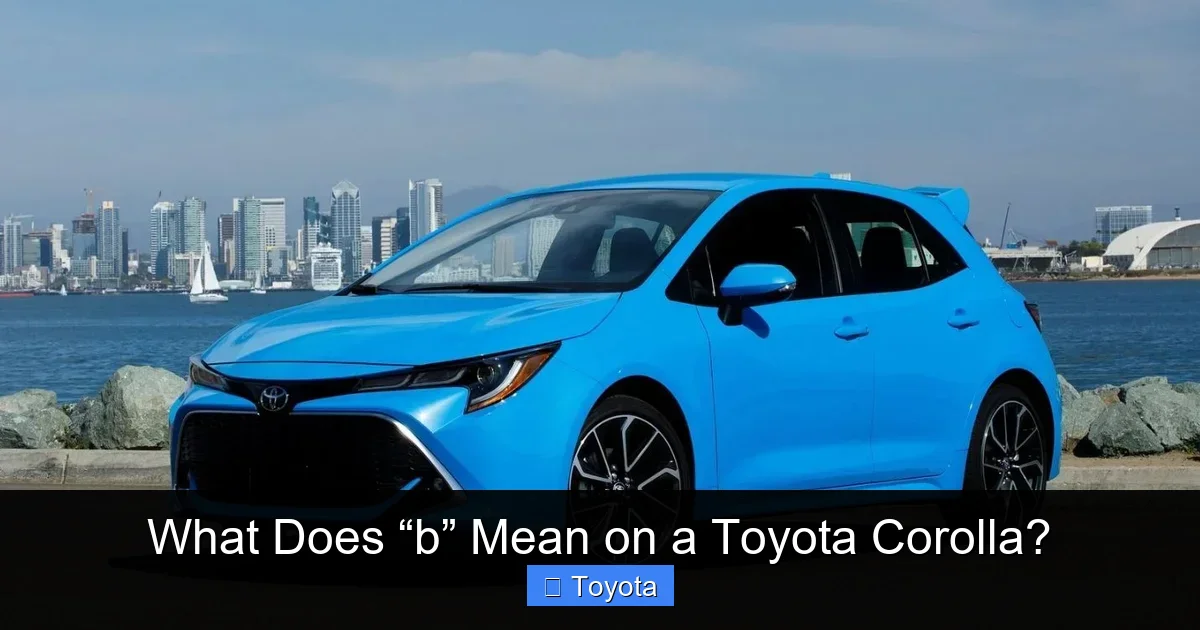
Visual guide about What Does “b” Mean on a Toyota Corolla?
Image source: aautomotives.com
Frequently Asked Questions
What does the “B” light mean on a Toyota Corolla?
The “B” light indicates that the vehicle’s Brake Mode is active, which uses engine braking and regenerative braking to slow the car. This feature is particularly useful for descending steep hills or maintaining control in slippery conditions.
Can I use “B” mode in heavy traffic?
It’s not recommended to use “B” mode in heavy traffic, as it can make acceleration feel sluggish and reduce responsiveness. It’s best suited for open roads or steep inclines.
Does “B” mode affect fuel efficiency?
Yes, “B” mode can improve fuel efficiency by reducing the need for frequent brake use. The system’s regenerative braking helps capture energy that would otherwise be lost, contributing to better mileage.
Is “B” mode available in all Toyota Corolla models?
Yes, “B” mode is available in both standard and hybrid Toyota Corolla models. However, the specific functionality may vary slightly depending on the model year and trim level.
How do I activate “B” mode on my Toyota Corolla?
To activate “B” mode, locate the “B” button on your dashboard or center console and press it. The “B” light will illuminate, indicating that the feature is engaged. Some models may require you to switch to a specific driving mode via the gear shift or touchscreen.
What should I do if the “B” light doesn’t activate?
If the “B” light doesn’t turn on when you press the button, check your owner’s manual for troubleshooting steps. It could be a system malfunction, and you may need to have your vehicle inspected by a professional.
=== INTERNAL LINKS ===
For more information on Toyota models, check out How Much Is A New Toyota Corolla. If you’re curious about other vehicles, explore How Much Does A Toyota Tundra Weight. For maintenance tips, visit How To Break In A New Car Toyota.