How to Get Toyota Tacoma Out of 4 Wheel Drive
Getting your Toyota Tacoma out of 4 wheel drive is simple when you know the correct procedure for your specific model and driving conditions. Follow the shift‑lever or button method, ensure the vehicle is stopped or moving slowly, and verify the 4WD indicator light turns off. If the first. If the system stays engaged, check for common issues like a faulty transfer case sensor or low fluid before seeking professional help.
Driving a Toyota Tacoma off‑road or in slippery conditions often means engaging four‑wheel drive (4WD) for extra traction. Once you’re back on dry pavement, knowing how to get Toyota Tacoma out of 4 wheel drive is essential to prevent unnecessary wear on the drivetrain, improve fuel economy, and maintain smooth handling. This guide walks you through the process for the most common Tacoma configurations, offers troubleshooting tips, and highlights when to call a professional.
Key Takeaways
- Know your Tacoma’s 4WD system: Identify whether you have a part‑time, full‑time, or electronic shift‑on‑the‑fly system to use the correct disengagement method.
- Stop or reduce speed before shifting: For part‑time systems, bring the vehicle to a complete stop or crawl at under 5 mph to avoid gear damage.
- Use the shift lever or button: Move the 4WD lever to 2H or press the 4WD button until the indicator light extinguishes.
- Verify disengagement: Check the dashboard indicator and feel for normal steering resistance; a lingering light means the system is still active.
- Troubleshoot persistent engagement: Inspect transfer case fluid, shift motor, and sensors; low fluid or a faulty sensor can keep 4WD locked.
- Consult the owner’s manual: Model‑year variations exist; the manual provides the exact procedure and torque specifications.
- Seek professional help when needed: If the 4WD won’t release after basic steps, a mechanic can diagnose electrical or mechanical faults.
📑 Table of Contents
- Understanding Your Tacoma’s 4WD System
- Step‑by‑Step: Disengaging Part‑Time 4WD
- Step‑by‑Step: Disengaging Electronic Shift‑On‑The‑Fly (ESOF)
- Verifying Disengagement
- Troubleshooting a Stuck 4WD System
- Preventive Tips to Keep 4WD Working Smoothly
- When to Use 4WD and When to Stay in 2H
- Model‑Year Variations and Resources
- Conclusion
Understanding Your Tacoma’s 4WD System
Before you attempt to disengage 4WD, it’s important to know which type of system your Tacoma uses. Toyota offers several variations across model years:
- Part‑time 4WD (manual shift‑on‑the‑fly): Found on many SR, SR5, and TRD Off‑Road trims. Requires the vehicle to be stopped or moving very slowly before shifting.
- Electronic shift‑on‑the‑fly (ESOF): Present on newer TRD Pro and Limited models. Allows shifting while driving at speeds under 60 mph, but still recommends low speed for smooth engagement.
- Full‑time 4WD (with center differential): Rare on Tacomas; if equipped, the system is always active and you cannot manually disengage it.
Knowing which system you have determines whether you need to stop, use a lever, or press a button. The owner’s manual is the best source for confirmation.
Step‑by‑Step: Disengaging Part‑Time 4WD
If your Tacoma uses a manual shift‑on‑the‑fly system, follow these steps to safely exit 4WD:
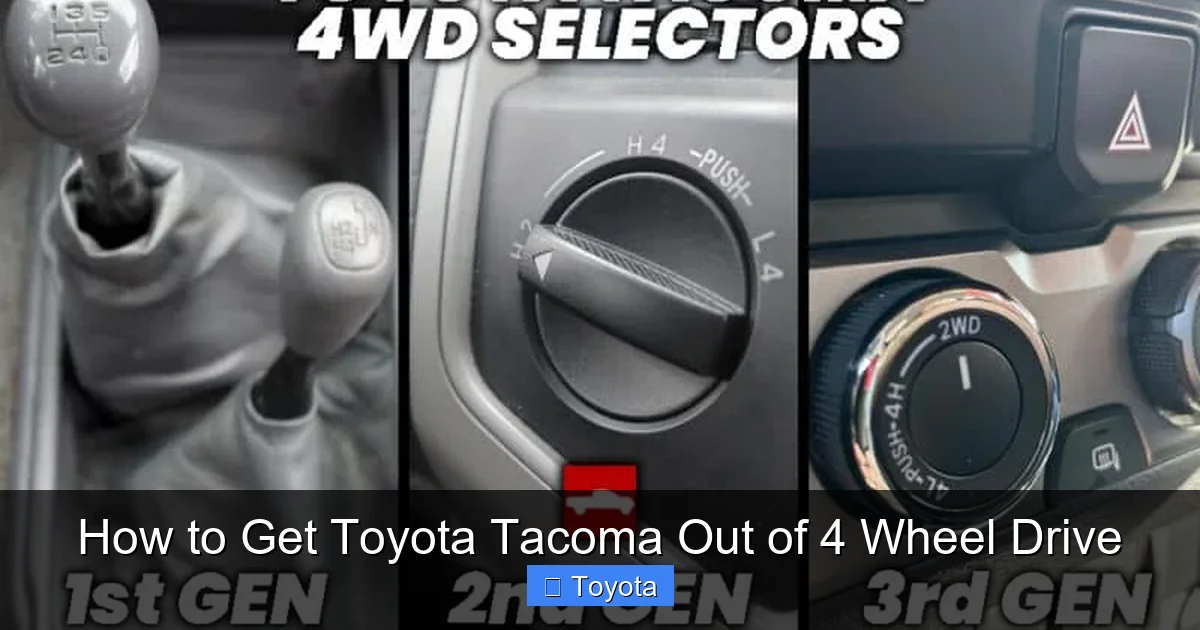
Visual guide about How to Get Toyota Tacoma Out of 4 Wheel Drive
Image source: canadiangearhead.com
- Bring the vehicle to a stop or reduce speed to under 5 mph. Shifting while moving faster can cause gear clash and damage the transfer case.
- Place the transmission in neutral (N) or keep it in drive (D) if the manual specifies. Some models allow shifting in drive, but neutral is safest.
- Move the 4WD shift lever from 4H (four‑wheel high) to 2H (two‑wheel high). You should feel a firm detent as the lever clicks into place.
- Release the clutch (if manual) or let the engine idle for a second. This allows the transfer case to fully disengage.
- Check the dashboard indicator. The 4WD light should turn off. If it remains illuminated, repeat the process or proceed to troubleshooting.
Performing these steps correctly ensures you have successfully learned how to get Toyota Tacoma out of 4 wheel drive without harming the drivetrain.
Step‑by‑Step: Disengaging Electronic Shift‑On‑The‑Fly (ESOF)
For Tacomas equipped with the push‑button ESOF system, the process is even simpler:
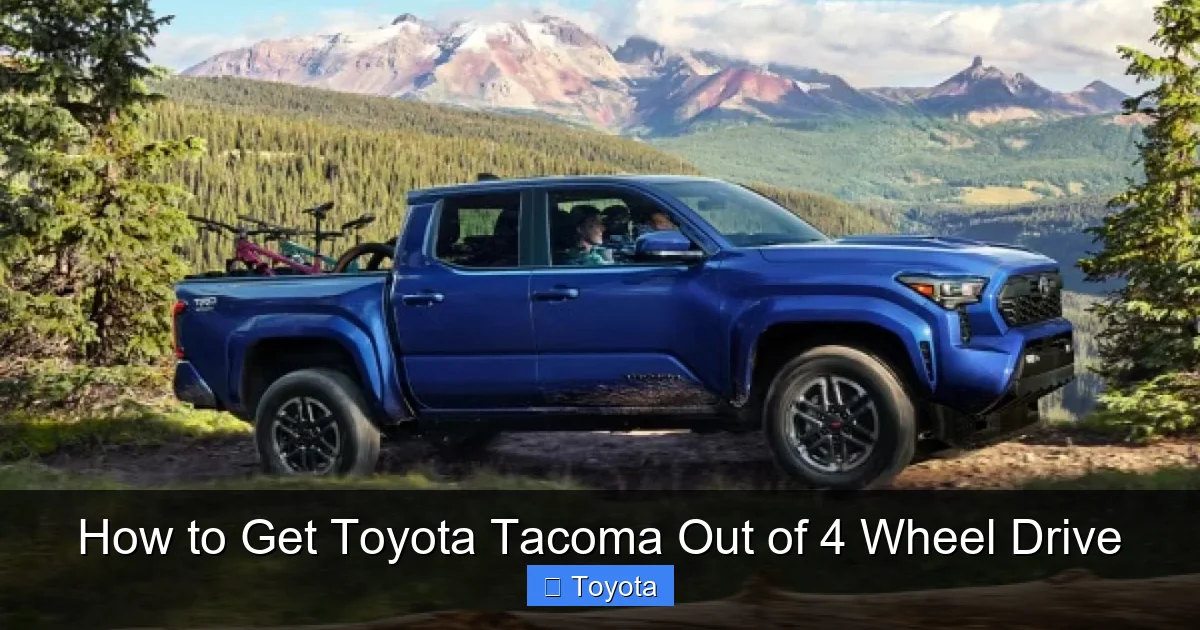
Visual guide about How to Get Toyota Tacoma Out of 4 Wheel Drive
Image source: di-sitebuilder-assets.dealerinspire.com
- Reduce speed to under 60 mph (ideally under 30 mph for smooth operation). The system permits shifting while moving, but low speed reduces wear.
- Press the 4WD button once. The button toggles between 2H, 4H, and 4L modes.
- Watch the indicator light. It should change from the 4WD symbol to the 2H symbol within a second or two.
- If the light does not change, press the button again. Sometimes a second press confirms the command.
- Test steering feel. The steering should return to normal, light resistance; if it feels heavy, the system may still be engaged.
This method lets you quickly learn how to get Toyota Tacoma out of 4 wheel drive while on the move, ideal for transitioning from a snowy trail to a dry highway.
Verifying Disengagement
After you’ve shifted, always double‑check that 4WD is truly off:
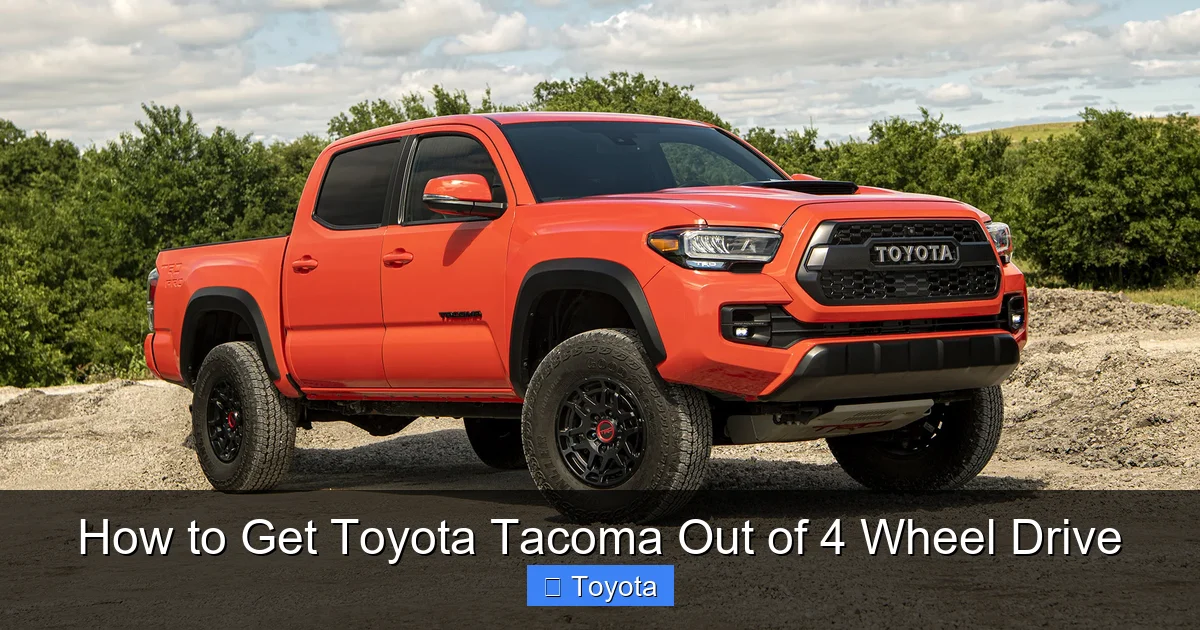
Visual guide about How to Get Toyota Tacoma Out of 4 Wheel Drive
Image source: motortrend.com
- Dashboard light: The 4WD indicator should be off.
- Steering effort: Turn the wheel lock‑to‑lock; it should feel light and smooth, not stiff.
- Fuel economy: You may notice a slight improvement in MPG after disengaging.
- Noise: No whining or grinding from the transfer case area.
If any of these signs suggest the system is still active, repeat the disengagement steps or move to troubleshooting.
Troubleshooting a Stuck 4WD System
Occasionally, the Tacoma may refuse to leave 4WD mode. Common causes include:
- Low transfer case fluid: Insufficient lubrication can cause the shift mechanism to bind.
- Faulty shift motor or actuator: The electronic component that moves the transfer case may fail.
- Damaged shift sensor: A bad sensor can send incorrect position data to the ECU.
- Mechanical obstruction: Debris or a bent shift fork can physically block movement.
Begin troubleshooting with these simple checks:
- Check transfer case fluid level. Locate the fill plug (consult the manual) and ensure fluid is at the proper mark. Top off with the recommended Toyota gear oil if low.
- Listen for the shift motor. When you press the button or move the lever, you should hear a faint whir. Silence may indicate a dead motor.
- Inspect the wiring harness. Look for loose connectors or corroded pins near the transfer case.
- Try a manual override. Some models have a manual release lever underneath the vehicle; refer to the service guide.
If the 4WD remains engaged after these steps, it’s time to visit a qualified Toyota technician. Driving with the system locked can cause overheating and premature wear.
Preventive Tips to Keep 4WD Working Smoothly
Regular maintenance helps avoid issues when you need to disengage 4WD:
- Change transfer case fluid every 30,000 mi or as specified in the owner’s manual.
- Exercise the 4WD system monthly by shifting into 4H and back to 2H, even if you don’t need off‑road traction.
- Keep the underside clean to prevent mud and debris from jamming the shift mechanism.
- Use the correct gear oil (Toyota‑specified GL‑5 or equivalent) to ensure proper lubrication.
- Monitor dashboard warnings and address any 4WD‑related error codes promptly.
Following these practices will make the process of learning how to get Toyota Tacoma out of 4 wheel drive routine and trouble‑free.
When to Use 4WD and When to Stay in 2H
Understanding the appropriate use of each mode protects your Tacoma and enhances driving comfort:
- Use 4H (four‑wheel high) for loose surfaces like gravel, sand, snow, or mud where extra traction is needed but speeds remain under 55 mph.
- Use 4L (four‑wheel low) for steep inclines, deep mud, rock crawling, or when you need maximum torque at low speeds (under 10 mph).
- Stay in 2H (two‑wheel high) for normal highway driving, city streets, and dry pavement to maximize fuel efficiency and reduce drivetrain wear.
Knowing when to switch back to 2H is just as important as knowing how to get Toyota Tacoma out of 4 wheel drive.
Model‑Year Variations and Resources
While the core steps remain similar, minor differences exist across Tacoma generations (2005‑2023). For example:
- 2005‑2015 models typically use a manual shift lever with a distinct 4H/2H/4L pattern.
- 2016‑2021 models introduced the electronic push‑button on the dashboard.
- 2022‑present models may feature an integrated dial with illuminated indicators.
Always consult the specific owner’s manual for your year and trim. If you’re considering a purchase, you might first check how much is a new Toyota Tacoma to budget appropriately.
Additionally, if you’re breaking in a new truck, follow the manufacturer’s break‑in procedure; see how to break in a new car Toyota for guidance that also applies to early 4WD usage.
Finally, after off‑road trips, protect your cabin from dirt and scratches with quality liners; learn how to protect car interior from scratches to keep your Tacoma looking fresh.
Conclusion
Mastering how to get Toyota Tacoma out of 4 wheel drive is a straightforward yet vital skill for any Tacoma owner. By identifying your 4WD type, following the correct disengagement steps, verifying the indicator light, and performing routine maintenance, you’ll keep your truck’s drivetrain healthy and ready for the next adventure. Remember to shift only at appropriate speeds, keep the transfer case fluid fresh, and address any warning signs promptly. With these practices, you’ll enjoy smooth transitions between off‑road capability and everyday efficiency, ensuring your Tacoma remains a reliable partner on and off the beaten path.
Frequently Asked Questions
What should I do if the 4WD light stays on after I shift to 2H?
First, repeat the disengagement procedure, ensuring the vehicle is stopped or moving very slowly. If the light remains illuminated, check the transfer case fluid level and inspect the shift motor wiring. Persistent issues may require a diagnostic scan at a Toyota service center.
Can I shift from 4H to 2H while driving at highway speeds?
For electronic shift‑on‑the‑fly systems, shifting at speeds under 60 mph is allowed, but doing so at lower speeds (under 30 mph) reduces wear on the transfer case. Manual part‑time systems require the vehicle to be stopped or crawling under 5 mph before shifting.
How often should I exercise the 4WD system to prevent it from seizing?
Engage 4H and then return to 2H at least once a month, even if you don’t need off‑road traction. This lubricates the shift components and helps you stay familiar with the process of getting the Tacoma out of 4 wheel drive.
Is it harmful to drive in 4WD on dry pavement?
Yes. Driving in part‑time 4WD on high‑traction surfaces can cause drivetrain binding, leading to premature wear on tires, axles, and the transfer case. Always switch to 2H when you’re on dry, paved roads.
What type of fluid should I use in the Tacoma’s transfer case?
Use the Toyota‑specified gear oil (typically GL‑5 75W‑85 or equivalent) as outlined in the owner’s manual. Using the correct fluid ensures smooth operation of the shift mechanism and protects internal components.
Can I manually disengage 4WD if the electronic switch fails?
Many Tacomas have a manual override lever located beneath the vehicle near the transfer case. Refer to the service manual for exact location and procedure. If unsure, seek professional assistance to avoid damaging the system.