How to Get Certified in Ceramic Coating
Getting certified in ceramic coating validates your expertise, builds customer trust, and opens doors to higher‑paying detailing jobs. This guide walks you through choosing a program, meeting prerequisites, completing training, passing the exam, and maintaining your credential for long‑term success.
Ceramic coating has become one of the most sought‑after services in the auto detailing world. Car owners love the long‑lasting gloss, hydrophobic properties, and protection against UV rays, chemical stains, and minor scratches. As demand rises, detailers who can prove they know how to apply these advanced polymers correctly stand out from the crowd. Earning a certification tells clients you’ve been trained, tested, and approved by a reputable authority.
But how do you actually get certified in ceramic coating? The process isn’t as opaque as it might seem. It involves picking the right program, making sure you meet the entry requirements, completing a blend of classroom and hands‑on training, and finally passing an exam that tests both theory and skill. In the sections below, we’ll break down each step so you can move from enthusiast to certified professional with confidence.
Key Takeaways
- Choose an accredited program: Look for certifications recognized by industry leaders like the International Detailing Association (IDA) or specific manufacturers.
- Meet the prerequisites: Most courses require basic detailing experience, knowledge of paint correction, and access to a well‑equipped workspace.
- Hands‑on training is essential: Expect a mix of online theory and practical workshops where you apply coatings to various substrates.
- Pass the written and practical exam: Demonstrating proper surface prep, application technique, and curing knowledge is key to earning your badge.
- Maintain and leverage your certification: Renew as required, showcase the badge on your website, and use it to justify premium pricing.
📑 Table of Contents
Understanding Ceramic Coating Certification
Before diving into applications and exams, it helps to know what a ceramic coating certification actually represents. Unlike a simple attendance certificate, a true certification means you’ve demonstrated competence according to an industry‑standard curriculum.
What the Badge Means
A certification badge signals that you understand the chemistry behind silica‑based or titanium‑enhanced coatings, know how to prepare a surface to achieve optimal bonding, and can apply the product evenly without high spots or streaks. It also shows you’re familiar with safety protocols, proper curing times, and how to educate customers about maintenance.
Why Certification Matters
First, it builds trust. Car owners are often wary of “miracle” products; a credential from a recognized body reassures them you won’t ruin their paint. Second, many suppliers only sell professional‑grade coatings to certified applicators, giving you access to higher‑performance products. Third, certified detailers can command premium prices—often 20‑40 % more per job—because customers perceive added value.
Choosing the Right Certification Program
Not all ceramic coating courses are created equal. Some are manufacturer‑specific, while others are independent and cover multiple brands. Your choice should align with your business model, the types of vehicles you service, and the level of support you desire.
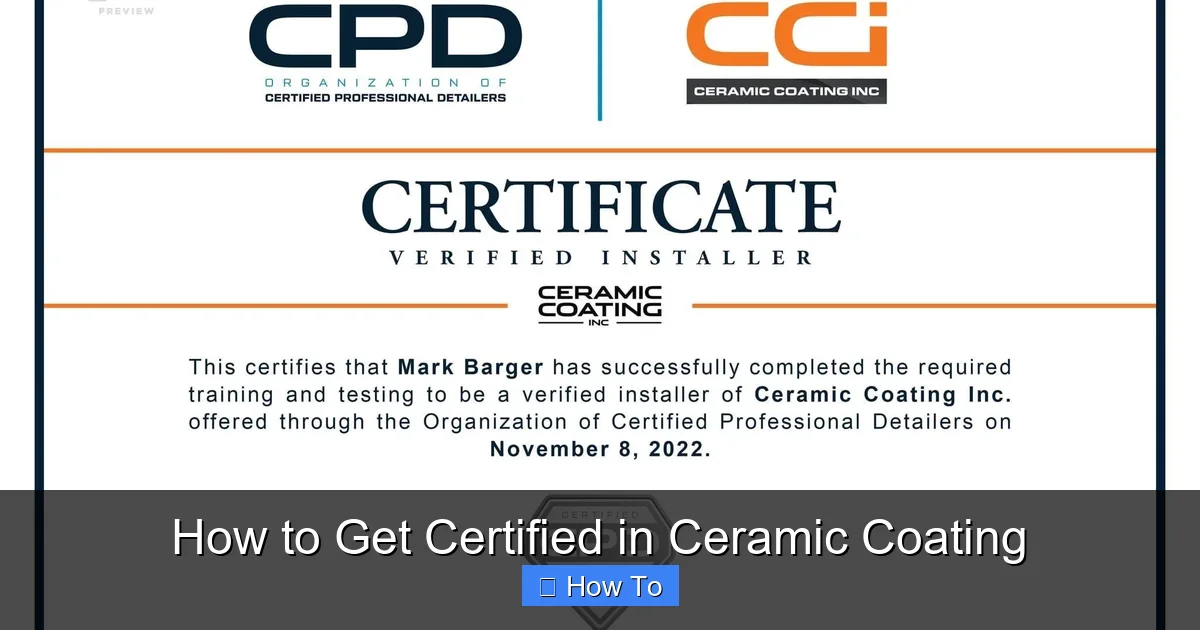
Visual guide about How to Get Certified in Ceramic Coating
Image source: ceramiccoatinginc.com
Manufacturer‑Backed Programs
Companies like Ceramic Pro, Gtechniq, and CarPro offer their own certification tracks. These programs tend to be highly focused on the specific product line, teaching you the exact application methods, layering strategies, and warranty processes that the brand honors. If you plan to sell and warranty a particular brand’s coating, going directly through the manufacturer is often the smoothest route.
Independent & Association Certifications
Organizations such as the International Detailing Association (IDA) and the Detailers’ Guild provide broader curricula that touch on several coating chemistries. These programs are ideal if you want flexibility to work with multiple suppliers or if you’re interested in a credential that isn’t tied to a single product’s marketing.
Evaluating Course Content
Look for a syllabus that covers:
- Surface preparation (washing, decontamination, paint correction)
- Coating chemistry and cure mechanisms
- Application techniques (spot, panel, full‑vehicle)
- Environmental considerations (temperature, humidity)
- Safety gear and waste disposal
- Customer consultation and after‑care advice
Programs that include both online modules and a live, hands‑on workshop tend to produce the most confident applicators.
Prerequisites and Preparation
Most certification providers expect you to have a baseline of detailing knowledge before you enroll. Jumping in without experience can lead to frustration and a higher chance of failing the practical exam.
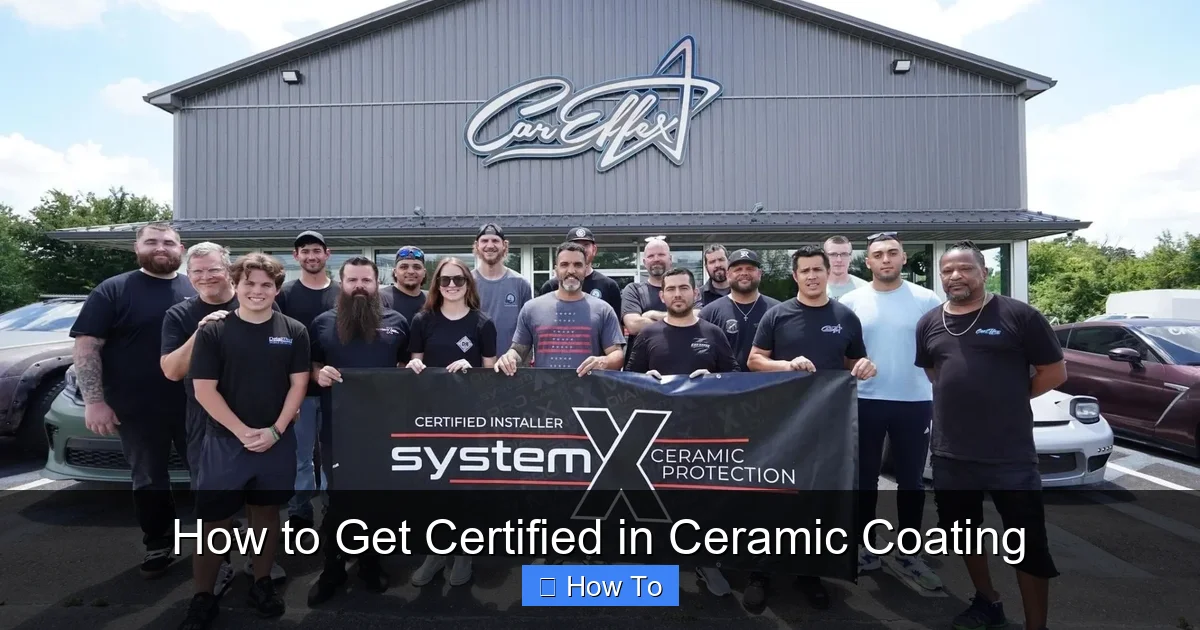
Visual guide about How to Get Certified in Ceramic Coating
Image source: lirp.cdn-website.com
Experience Requirements
Typical prerequisites include:
- At least six months of professional detailing experience
- Proficiency in paint correction (compounding, polishing)
- Familiarity with tools such as dual‑action polishers, paint thickness gauges, and infrared lamps
- A clean, well‑lit workspace with access to power and water
If you’re new to detailing, consider completing a foundational course or working under a mentor first.
Gathering the Right Gear
Before the training day, make sure you have:
- A set of microfiber towels (different grades for buffing and final wipe)
- Isopropyl alcohol (IPA) for surface cleaning
- Clay bar or synthetic clay mitt
- Paint thickness gauge (to verify you haven’t removed too much clear coat)
- UV lamp or flashlight for checking high spots
Having your own equipment not only prepares you for the exam but also shows the instructor you’re serious about the craft.
Pre‑Study Tips
Many programs release a pre‑course reading list or video series. Spend a few hours reviewing:
- The difference between SiO₂‑based and TiO₂‑enhanced coatings
- How humidity affects flash time
- Common defects like rainbowing, streaking, and uneven gloss
- Basic safety data sheets (SDS) for the chemicals you’ll handle
Walking into the workshop with this knowledge lets you focus on the practical side rather than scrambling to catch up.
The Training Process: What to Expect
Once you’re enrolled, the training usually follows a blended format: online theory followed by an in‑person workshop. This structure lets you absorb concepts at your own pace before applying them under expert supervision.
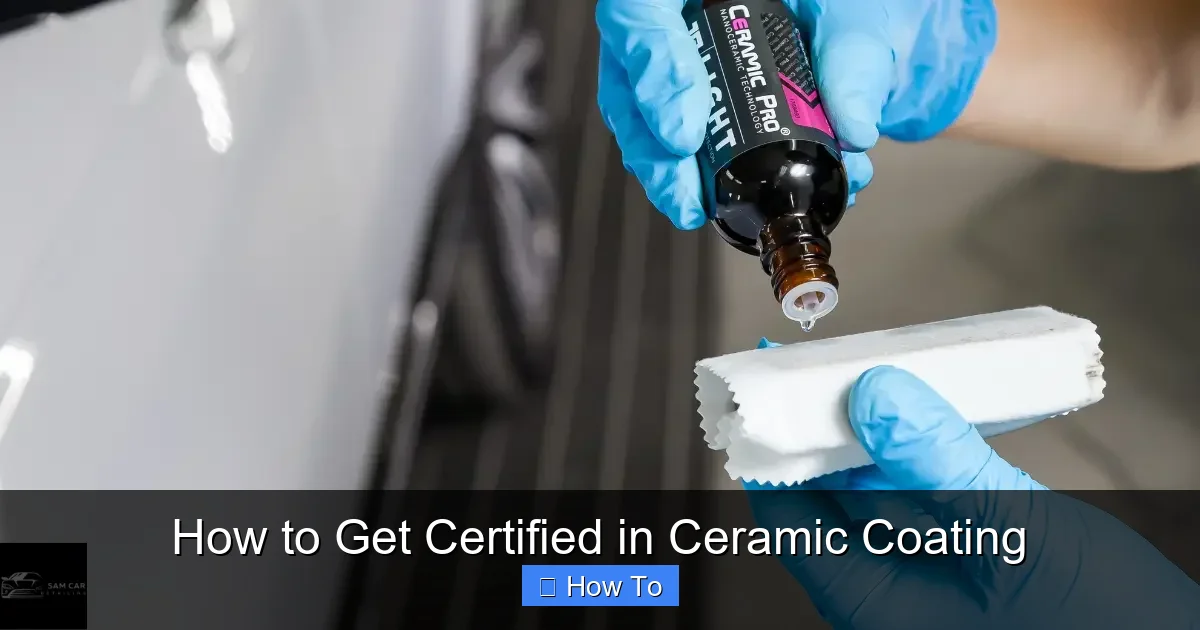
Visual guide about How to Get Certified in Ceramic Coating
Image source: samcardetailing.com.au
Online Theory Component
Expect modules that cover:
- The science of ceramic bonding (siloxane networks, cross‑linking)
- Step‑by‑step surface prep workflows
- Application methods for different substrates (paint, glass, wheels, trim)
- Troubleshooting common application errors
- Warranty terms and how to document a job for the manufacturer
Quizzes at the end of each module help reinforce learning; a passing score (often 80 % or higher) is usually required before you can attend the live session.
Hands‑On Workshop
The in‑person day is where you turn knowledge into skill. Typical activities include:
- Performing a full wash, clay bar treatment, and paint correction on a practice panel
- Measuring surface energy with a contact angle tester (if available)
- Applying the coating using the recommended technique (cross‑hatch, 50 % overlap, etc.)
- Using a paint thickness gauge before and after to ensure no excess removal
- Curing the coating under controlled lamps or ambient conditions
- Conducting a final inspection with a swirl‑free light and checking for high spots
- Practicing customer handoff: explaining cure time, maintenance washes, and what to avoid
Instructors will observe your technique, offer real‑time feedback, and note any areas that need improvement before you move to the exam.
Exam and Certification Requirements
After the workshop, most programs schedule a written test and a practical evaluation. Passing both earns you the official certification badge.
Written Examination
The written test typically consists of 30‑50 multiple‑choice questions covering:
- Coating chemistry and cure mechanisms
- Surface preparation standards
- Environmental limits (temperature, humidity ranges)
- Health and safety precautions
- Warranty coverage and claim procedures
Study the provided manuals, retake any module quizzes, and focus on the sections where you felt less confident during the workshop.
Practical Assessment
For the hands‑on portion, you’ll be asked to coat a vehicle panel or a small car under observation. The evaluator will look for:
- Proper decontamination (no residues left after IPA wipe)
- Even, streak‑free application with correct overlap
- Adherence to flash‑time and cure‑time guidelines
- Final finish free of high spots, haze, or rainbowing
- Clean work area and proper disposal of used materials
If you miss a criterion, you’ll usually receive a brief debrief and a chance to retest on the same day or schedule a follow‑up session.
Maintaining Your Certification and Growing Your Business
Earning the badge is a milestone, not the finish line. To keep your credential current and turn it into a business asset, follow these best practices.
Renewal and Continuing Education
Many certifications require renewal every 12‑24 months. Renewal may involve:
- Completing a short refresher course (often online)
- Submitting proof of a certain number of coated vehicles
- Passing a brief quiz on any updates to the product or application process
- Add the badge to your website header, Google Business profile, and social media covers
- Include it on invoices, service menus, and after‑care cards
- Mention it in your pitch: “I’m a certified ceramic coating applicator, which means I’ve been trained and tested to deliver the longest‑lasting protection available.”
- Paint correction packages (one‑step, two‑stage)
- Wheel and caliper coatings
- Glass and windshield treatments for added hydrophobic visibility
- Interior protection (fabric, leather, vinyl) using similar SiO₂‑based technologies
Staying current not only keeps your badge active but also ensures you’re aware of new formulations, improved application tools, and evolving warranty terms.
Marketing Your Credential
Display your certification prominently:
Clients are willing to pay more when they see proof of expertise.
Expanding Your Service Menu
Once certified, consider bundling coating with complementary services:
Offering tiered packages (basic, premium, elite) lets you upsell while showcasing the full range of your certified skills.
Building a Referral Network
Partner with local auto shops, dealerships, and car clubs. Provide them with a discount for referring clients who want certified coating work. In return, ask them to display your badge or brochure in their waiting areas. Word‑of‑mouth referrals from trusted sources often convert at a higher rate than cold advertising.
Conclusion
Getting certified in ceramic coating is a straightforward yet rewarding journey. By selecting a reputable program, meeting the experience prerequisites, completing both online and hands‑on training, and passing the written and practical exams, you earn a credential that signals professionalism and skill. Maintaining that certification through renewal and continued education keeps you at the forefront of the industry, while showcasing the badge helps you attract discerning customers willing to pay for quality.
Whether you’re detailing a daily commuter Toyota Corolla, a rugged Tacoma, or a luxurious Camry, the knowledge you gain will let you apply coatings that protect paint, enhance gloss, and simplify maintenance. Take the first step today—research the programs that fit your goals, gather your gear, and move toward becoming a certified ceramic coating expert.
Frequently Asked Questions
What is the typical cost of a ceramic coating certification program?
Most programs range from $300 to $800, depending on whether they include hands‑on workshops, material kits, and access to professional‑grade coatings. Manufacturer‑backed courses sometimes offer discounts if you purchase their products after certification.
Do I need to own a detailing shop to get certified?
No. Many certifications are open to mobile detailers, hobbyists looking to go pro, or technicians working at an existing shop. The key is having access to a suitable workspace and the necessary equipment for the practical portion.
How long does it take to complete the certification from start to finish?
If you study the online modules part‑time, you can finish the theory in one to two weeks. Adding the scheduled hands‑on workshop (usually one day) and the exam, most people earn their badge within three to four weeks.
Is the certification recognized across different coating brands?
It depends on the provider. Independent association certifications (like those from the IDA) are generally brand‑agnostic, while manufacturer‑specific programs are tied to that company’s products. Check the course description to see if the credential allows you to work with multiple brands.
What happens if I fail the practical exam?
Most providers give you detailed feedback and allow a retest, either later the same day or on a scheduled date. Some charge a modest retest fee, while others include one free retake in the original fee.
Can I use my certification to offer warranties on coatings?
Yes—if you certify through a manufacturer that offers a warranty program, your badge often qualifies you to register customer applications for that warranty. Independent certifications may not provide a warranty directly, but they still let you market your work as professionally applied and inspected.