How Much Is a Title for a Car
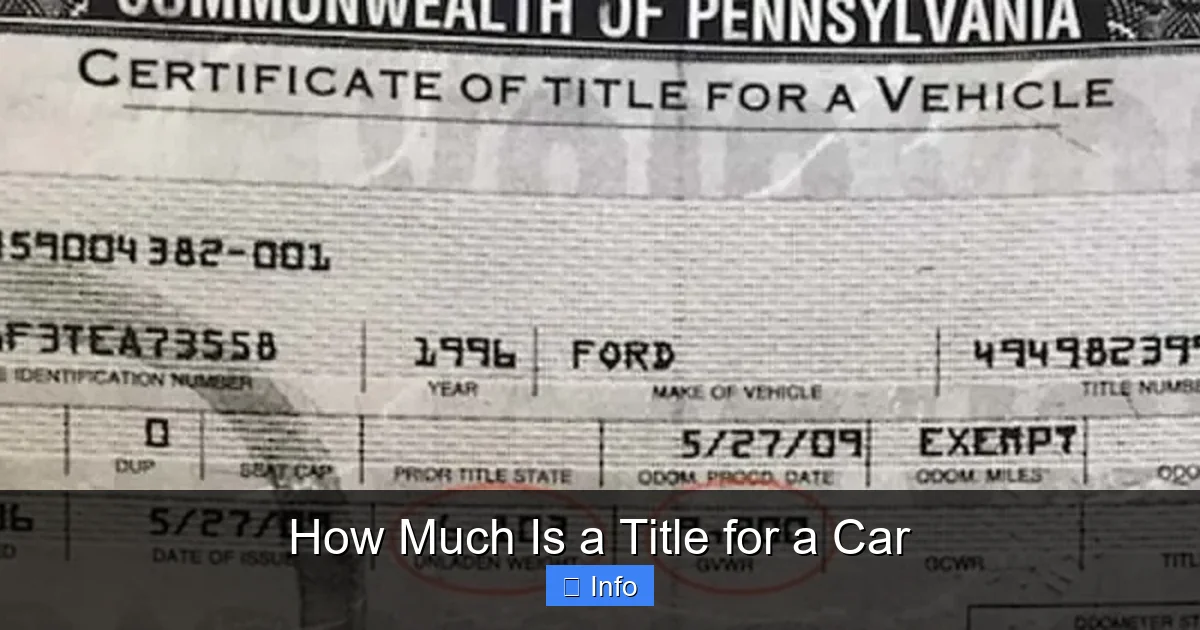
Getting a title for a car isn’t free—fees vary by state, vehicle type, and whether you’re buying new or used. Understanding the exact cost helps you budget correctly and avoid surprise charges at the DMV.
Key Takeaways
- State fees differ: Each state sets its own title fee, ranging from $5 to $50.
- New vs. used matters: New cars often include the title cost in dealer paperwork, while private sales usually require a separate payment.
- Additional charges apply: Late fees, duplicate titles, and lien releases can add to the base cost.
- Online services can save time: Many DMVs offer electronic filing that reduces processing time and sometimes the fee.
- Know your exemptions: Military personnel, senior citizens, and certain non‑profit organizations may qualify for reduced fees.
- Budget for the whole transaction: Include title fees with registration, sales tax, and insurance for a realistic total.
- Check local resources: Visit your state’s DMV website or read guides like How Much Does A Title Cost For A Car for the most current numbers.
📑 Table of Contents
- Introduction: Why Knowing the Title Cost Matters
- 1. The Basics: What Is a Car Title?
- 2. How Much Is a Title for a Car? State‑by‑State Overview
- 3. New vs. Used Cars: Does Ownership Type Change the Cost?
- 4. Additional Fees That Can Inflate the Price
- 5. How to Save Money on Your Title Fee
- 6. Real‑World Example: Calculating Total Cost for a Used Car in California
- Conclusion: Stay Informed, Stay Prepared
Introduction: Why Knowing the Title Cost Matters
When you buy a car, the excitement of getting the keys can quickly turn into paperwork. One of the most important pieces of that paperwork is the title. The title proves you own the vehicle, and without it you can’t register, insure, or legally drive the car. But how much is a title for a car? The answer isn’t a single number—it depends on where you live, what kind of car you have, and how you’re buying it.
In this guide we’ll break down every factor that influences the cost, show you real‑world examples, and give you practical tips to keep the expense as low as possible. By the end you’ll know exactly how much to expect and how to avoid hidden fees.
1. The Basics: What Is a Car Title?
What the title actually is
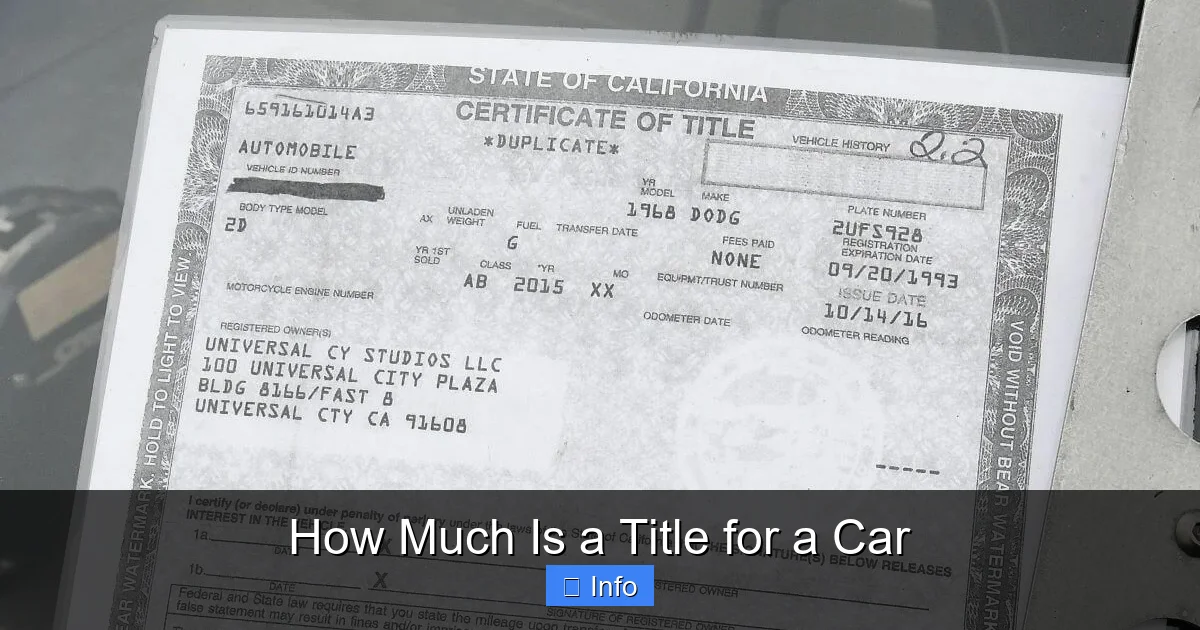
A car title is a legal document issued by your state’s Department of Motor Vehicles (DMV). It lists the vehicle’s make, model, VIN, and the name of the legal owner. If there’s a loan on the car, the lender’s name appears as a lienholder.
Visual guide about How Much Is a Title for a Car
Image source: motorbiscuit.com
Why the title matters
Without a clear title you can’t register the vehicle, sell it, or get insurance. A clean title also protects you from buying a stolen or salvaged car.
2. How Much Is a Title for a Car? State‑by‑State Overview
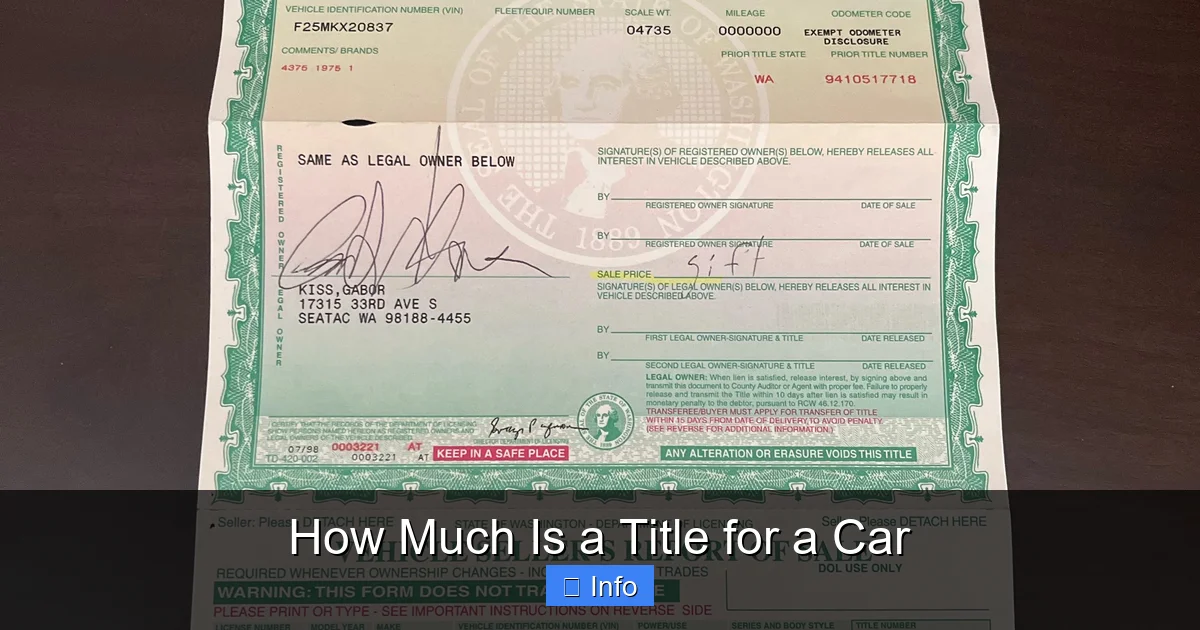
Each state sets its own fee schedule. Below is a snapshot of typical ranges:
Visual guide about How Much Is a Title for a Car
Image source: i.redd.it
- Alabama: $15
- California: $20 (plus a $15 processing fee)
- Florida: $77.25 for a standard title
- New York: $50
- Texas: $33
Most states keep the fee between $5 and $50, but a few, like Florida, charge higher amounts because they bundle additional services. To get the exact number for your state, check the official DMV website or read articles such as How Much To Get A Title For A Car.
Special cases
Some states waive fees for certain groups. Military members stationed overseas, seniors over 65, and non‑profit organizations often qualify for reduced or free titles.
3. New vs. Used Cars: Does Ownership Type Change the Cost?
Buying a brand‑new car
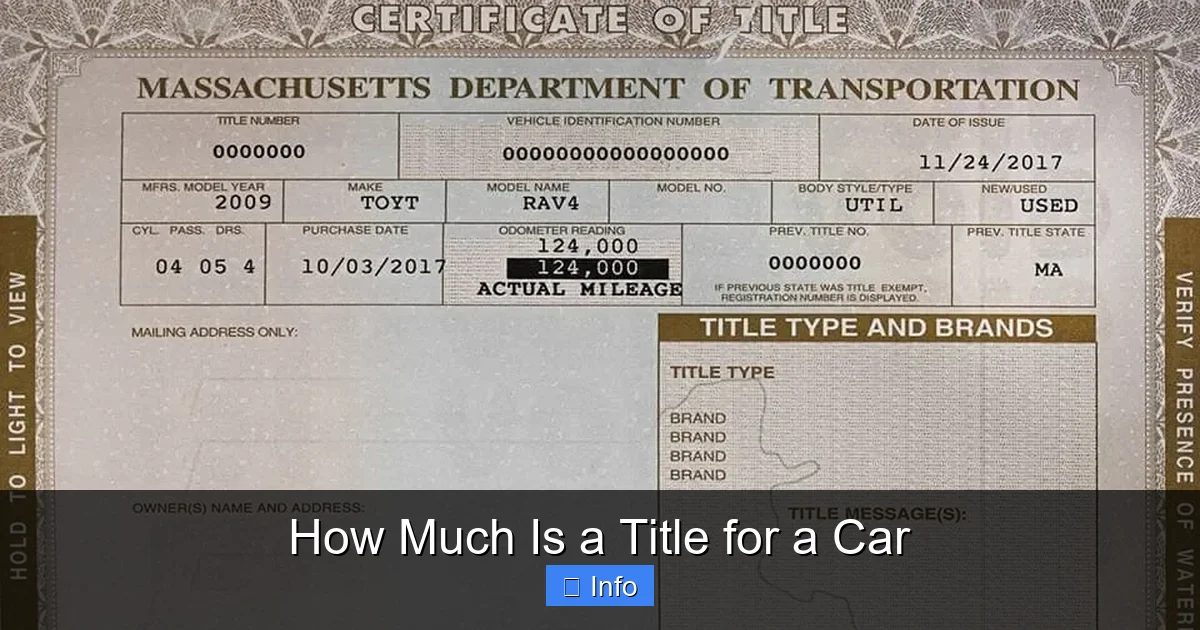
When you purchase a new car from a dealer, the dealer typically handles the title paperwork and includes the fee in the overall purchase price. You may not see a separate line item, but the cost is still there—usually around $15‑$30.
Visual guide about How Much Is a Title for a Car
Image source: goodcar.com
Private party sales
In a private sale, the buyer is responsible for filing the title transfer. This means paying the state’s base title fee plus any additional processing charges. For example, in California a private buyer pays $20 for the title and a $15 processing fee, totaling $35.
Trade‑ins and dealer swaps
If you trade in your old car, the dealer will handle the title surrender. Some dealers credit the title fee toward your down payment, effectively making it free for you.
4. Additional Fees That Can Inflate the Price
Late fees
If you miss the deadline to transfer the title, many states impose a late fee. This can range from $10 to $50, depending on how long you wait.
Duplicate titles
Losing your title means you’ll need a duplicate. Duplicate fees are typically higher than the original, often $20‑$30.
Lien releases
When you pay off a loan, the lender must release the lien. Some states charge a small fee—about $5‑$10—to process the release.
Electronic vs. paper filing
Many DMVs now offer electronic title filing (e‑title). This can shave $2‑$5 off the fee and speeds up processing. Check if your state offers e‑titles to save both time and money.
5. How to Save Money on Your Title Fee
Use online services
Filing online not only reduces the fee in some states but also eliminates the need to travel to the DMV. For instance, Texas allows you to complete the title transfer through their website for the standard $33 fee, with no extra processing charge.
Combine transactions
If you’re registering a new car, pay the registration and title fees together. Some states give a discount when you bundle services.
Check for exemptions
Before you pay, ask whether you qualify for any exemptions. A senior citizen in Florida may receive a reduced title fee, and many states waive fees for active military personnel.
Plan ahead
Avoid late fees by scheduling the title transfer as soon as you sign the bill of sale. Set a reminder for the deadline—usually 30 days after purchase.
Use reputable dealers
Dealers that handle title paperwork often have relationships with the DMV that can lower processing times and occasionally the fee itself. Look for dealers who advertise “title included” in the price.
6. Real‑World Example: Calculating Total Cost for a Used Car in California
Imagine you buy a 2015 Honda Accord for $12,000 from a private seller in Los Angeles. Here’s how the costs break down:
- Base title fee: $20
- Processing fee: $15
- Late fee (if filed after 30 days): $0 (file on time)
- Duplicate title (not needed): $0
- Sales tax (9.5% on $12,000): $1,140
- Registration fee: $150
- Insurance (average for a 20‑year‑old driver): $200/month (see How Much Is Car Insurance For A 20 Year Old Per Month)
Total out‑of‑pocket cost for paperwork alone: $35. Adding tax, registration, and insurance brings the first‑month total to about $1,525. Knowing the $35 title fee ahead of time helps you budget without surprise.
Conclusion: Stay Informed, Stay Prepared
How much is a title for a car? The short answer is: it depends. State fees, vehicle type, and whether you’re buying new or used all play a role. By understanding the components—base fee, processing charges, possible extras, and exemptions—you can plan your car purchase with confidence.
Take advantage of online filing, check for any applicable discounts, and always file on time. When you know exactly how much to expect, the title becomes just another step toward enjoying your new ride, not a hidden cost that derails your budget.
Frequently Asked Questions
What is the average cost of a car title in the United States?
The average title fee ranges from $10 to $30, but some states charge as low as $5 or as high as $77, depending on local regulations.
Do I have to pay a title fee when I buy a car from a dealer?
Yes, the fee is usually included in the dealer’s paperwork, so you may not see it as a separate charge, but it is still part of the total purchase price.
Can I get a title fee waived?
Some states waive or reduce the fee for military members, seniors, or certain non‑profit organizations. Check your DMV’s guidelines for eligibility.
How long does it take to receive a new title?
When filed online, many states issue an electronic title within a few days. Paper titles mailed by traditional filing can take 2‑4 weeks.
What should I do if I lose my car title?
Apply for a duplicate title through your DMV and pay the duplicate fee, which is typically $20‑$30.
Is the title fee the same as the registration fee?
No. The title fee proves ownership, while the registration fee allows you to legally drive the car on public roads. Both are separate charges.