How to Adjust a Track Bar
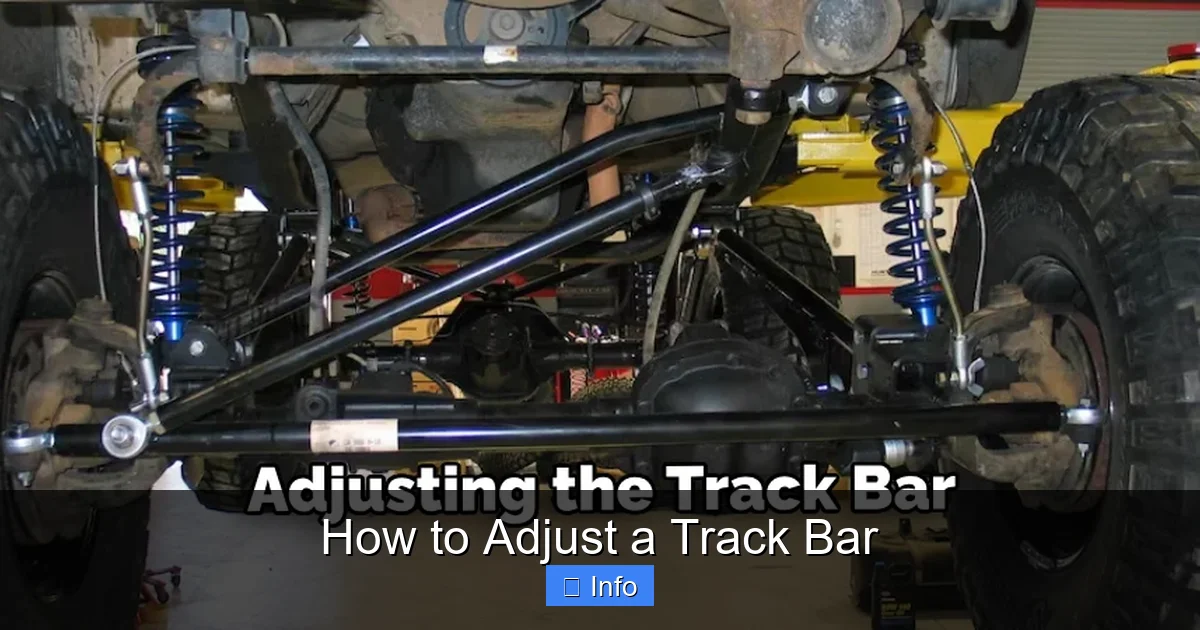
Adjusting a track bar is the best way to center your axle and stop your steering wheel from being off-center. By following a few simple steps, you can improve your vehicle’s handling and ensure your tires wear evenly.
Have you ever noticed that your steering wheel isn’t quite straight, even though you are driving in a perfectly straight line? Or maybe your truck feels like it is “wandering” across the lane, forcing you to constantly make small corrections? If so, you might have a track bar issue. For many truck and SUV owners, especially those who love off-roading or lifting their rigs, the track bar is a critical piece of the puzzle.
Learning how to adjust a track bar might sound like a job for a professional mechanic, but it is actually a very manageable DIY project. You don’t need a degree in engineering to get it done. With a few basic tools and a little bit of patience, you can center your axle and get that steering wheel pointing straight ahead again. It’s all about geometry and making sure the axle is sitting exactly where it should be in relation to the frame.
In this guide, we are going to walk through everything you need to know. We will cover why the track bar matters, the tools you need, and a step-by-step process to get the job done. Whether you just installed a new lift kit or you’re just maintaining an older vehicle, this guide will help you get your ride feeling tight and responsive once more.
Key Takeaways
- Purpose: Adjusting the track bar centers the axle relative to the chassis to ensure straight tracking.
- Signs of Need: Common signs include a crooked steering wheel while driving straight or uneven tire wear.
- Safety First: Always use jack stands and chock your wheels before working under a vehicle.
- The Process: It involves loosening the adjustment nut, shifting the bar, and re-tightening.
- Alignment: A track bar adjustment is often a prerequisite for a proper wheel alignment.
- Precision: Small movements make a big difference; always test drive after minor changes.
📑 Table of Contents
What Exactly is a Track Bar?
Before we dive into how to adjust a track bar, let’s talk about what this part actually does. The track bar (also known as a Panhard bar) is a heavy-duty rod that connects the axle to the vehicle’s frame. Its primary job is to keep the axle centered laterally. In simpler terms, it stops the axle from sliding left or right while you are moving.
The Role of the Track Bar in Steering
When your axle is perfectly centered, the steering linkage is in its neutral position. This means when the steering wheel is straight, the wheels are pointing straight. However, if the track bar is too long or too short, it pushes or pulls the axle to one side. This forces the steering linkage to compensate, which results in a crooked steering wheel.
Why Does the Track Bar Move?
There are a few reasons why your track bar might need an adjustment. The most common reason is installing a lift kit. When you lift a vehicle, the angle of the track bar changes. This change in angle effectively “shortens” the reach of the bar, pushing the axle to one side. If you are learning how to build your own lift kit, you will quickly find that track bar adjustments are a mandatory part of the process to maintain drivability.
Other reasons include wear and tear on the bushings or bolts, or perhaps a hard hit during an off-road adventure. Over time, the hardware can shift, or the rubber bushings can compress, leading to that annoying “wandering” feeling on the highway.
Tools and Preparation
You don’t need a professional shop to handle this. Most of the tools required are likely already in your garage. However, because you will be working under the vehicle, safety is the most important part of the preparation.
Visual guide about How to Adjust a Track Bar
Image source: i.ytimg.com
Required Tools
- Heavy-duty jack and jack stands: Never trust a jack alone; always use stands.
- Wrenches or sockets: Usually, a set of large sockets and a breaker bar are needed for the heavy bolts.
- Pry bar: This helps you move the axle slightly to center it.
- Torque wrench: To ensure the bolts are tightened to the manufacturer’s specifications.
- Measuring tape or a string: To help you check for symmetry.
- Degreaser or PB Blaster: To loosen up rusted bolts.
Setting Up Your Workspace
First, find a flat, level surface. If your vehicle is tilted, your measurements will be off, and you’ll end up with a crooked steering wheel again. Park the car, engage the parking brake, and chock the wheels that aren’t being lifted. This prevents the vehicle from rolling while you are underneath it.
Lift the vehicle just enough to take the tension off the suspension. You don’t necessarily need to hang the wheels in the air, but you want the axle to be free to move slightly. If the suspension is fully loaded, the tension can make it very difficult to shift the axle. Once the vehicle is secure on jack stands, you are ready to begin.
Step-by-Step Guide: How to Adjust a Track Bar
Adjusting the track bar is a game of inches (and sometimes fractions of an inch). The goal is to move the axle until the steering wheel is centered while the vehicle is moving forward in a straight line.
Step 1: Identify the Adjustment Point
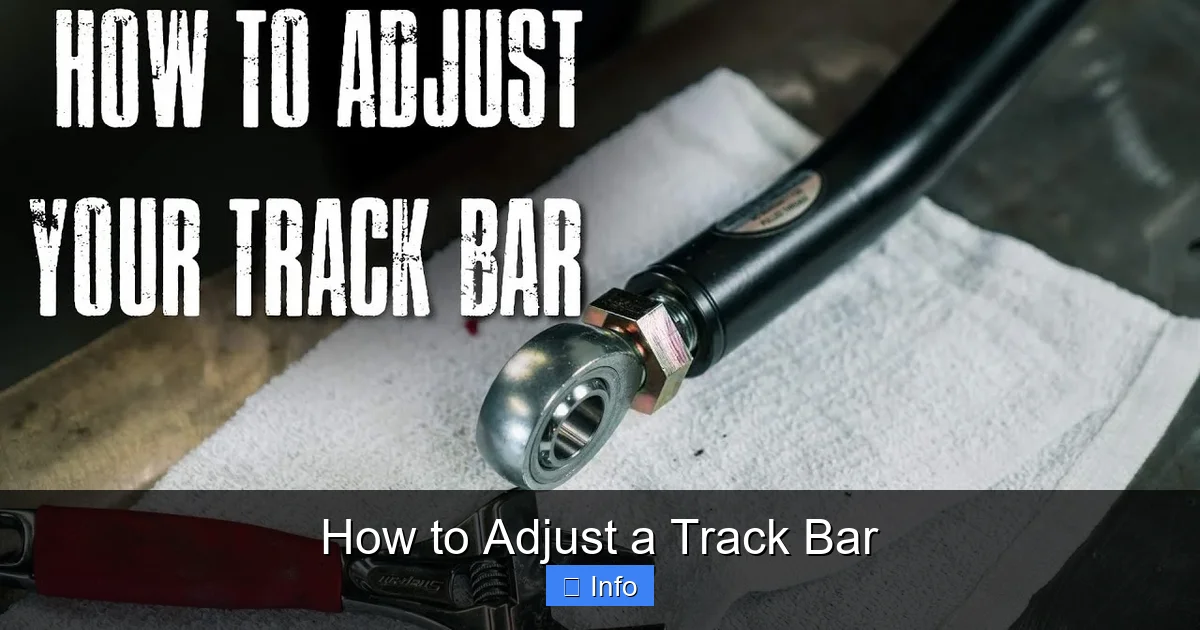
Look at your track bar. On some vehicles, the bar is a solid piece of steel, and you adjust it by moving the mounting point on the frame. On others, there is an adjustable sleeve (a threaded section) in the middle of the bar. Identify which type you have. If you have an adjustable bar, you will be turning a lock nut to lengthen or shorten the bar. If you have a fixed bar with a slotted bracket, you will be sliding the bracket.
Step 2: Loosen the Hardware
Using your breaker bar or large wrench, loosen the mounting bolt or the jam nut on the adjustable sleeve. Do not remove the bolt completely unless you have a way to keep the axle from shifting violently. Just loosen it enough so that the bar can move. If the bolts are rusted, spray them with a penetrating oil and let them soak for ten minutes before trying again.
Step 3: Centering the Axle
This is the part where the “magic” happens. You want to shift the axle so that it is centered under the chassis. There are two ways to do this:
- The Pry Bar Method: Use a pry bar to gently push the axle toward the center. You can push against the frame or another part of the suspension to nudge the axle into place.
- The Steering Method: Some people prefer to have a helper sit in the driver’s seat. While the bar is loose, the helper turns the steering wheel until it is perfectly level. This naturally pulls the axle into the centered position.
Step 4: Locking it Down
Once the axle is centered (or the steering wheel is straight), tighten the mounting bolt or the jam nut. Be careful not to over-tighten and strip the threads, but make sure it is snug. Use your torque wrench to hit the specific foot-pounds recommended in your owner’s manual. If the bolt is loose, the axle will shift again the moment you hit the brakes or accelerate.
Step 5: The Test Drive
Lower the vehicle and take it for a short drive on a flat road. Find a stretch where you can let the steering wheel “find its own center.” If the vehicle drifts to the left, the axle is pushed too far to the right. If it drifts to the right, the axle is pushed too far to the left. Note exactly how many degrees the steering wheel is off-center.
Common Mistakes to Avoid
Even for experienced DIYers, a few common errors can lead to frustration. Avoiding these will save you time and prevent you from having to do the job twice.
Visual guide about How to Adjust a Track Bar
Image source: i.ytimg.com
Over-Adjusting in One Go
It is tempting to move the bar a lot to “fix it quickly.” However, small movements make a huge difference. Move the bar in small increments. If you over-adjust, you’ll spend more time correcting your mistake than you would have if you went slowly.
Ignoring the Bushings
While you are adjusting the track bar, take a look at the rubber bushings at the ends. If they are cracked, torn, or missing, no amount of adjustment will fix your steering wander. A worn bushing allows the bar to “pivot,” which means your axle will shift while you drive. If the bushings are shot, replace the entire track bar before attempting the adjustment.
Forgetting the Final Alignment
A track bar adjustment changes the geometry of your front end. This often affects your toe-in and toe-out settings. If you adjust the track bar and then drive for 500 miles without a professional alignment, you will likely wear out your tires prematurely. Always get a professional alignment after any major suspension work. While you’re checking your suspension, it’s also a great time to check brake pads in your car to ensure your overall safety is up to date.
Tips for Different Vehicle Types
Not all vehicles are the same. Depending on whether you drive a stock SUV, a lifted truck, or a custom off-roader, your approach might vary slightly.
For Stock Vehicles
On stock vehicles, the track bar is usually fixed. If your steering wheel is crooked, it might be due to a bent bar or a shifted bracket. In these cases, you might need to install an “adjustable track bar” aftermarket kit to get the precision you need.
For Lifted Trucks
When you lift a truck, the track bar angle becomes steeper. This creates a “pull” to one side. Most lift kits come with a track bar relocation bracket. This bracket moves the mounting point to a lower position, flattening the angle and making the adjustment process much easier. If you’ve recently modified your vehicle, ensure your brackets are installed correctly before adjusting.
For Heavy-Duty Off-Roaders
If you use your vehicle for heavy rock crawling or mudding, your track bar takes a beating. Check for bends in the bar itself. A slightly bent bar can make it impossible to center the axle. If the bar is bent, don’t try to “bend it back”—replace it with a heavy-duty reinforced bar for better durability.
Maintaining Your Steering System
Adjusting the track bar is a great start, but keeping your steering tight requires a holistic approach to vehicle maintenance. Your suspension components work together as a system.
Regular Inspections
Every time you change your oil, take five minutes to look under the vehicle. Look for leaking shocks, worn tie-rod ends, and loose track bar bolts. Catching a loose bolt early can prevent a costly accident or a ruined set of tires.
Lubrication
If your track bar has grease fittings (Zerk fittings), make sure to grease them regularly. This reduces friction and prevents the bushings from wearing out. A well-lubricated suspension lasts longer and feels smoother on the road.
Balancing the Load
Remember that how you load your vehicle can affect how it handles. If you consistently carry a heavy load on one side of the truck, it can put uneven pressure on the track bar and other suspension components. Try to distribute weight evenly to keep your alignment stable.
Conclusion
Learning how to adjust a track bar is an empowering skill for any vehicle owner. It takes the guesswork out of steering wander and gives you the confidence that your vehicle is tracking straight. By centering your axle, you not only improve the driving experience but also protect your tires from uneven wear, saving you money in the long run.
Remember the golden rules: stay safe with jack stands, make small adjustments, and always finish the job with a professional alignment. Whether you are preparing for a cross-country trip or a weekend trail run, a centered axle is the foundation of a safe and comfortable ride. Now that you know the process, you can stop fighting the steering wheel and start enjoying the road again.
Frequently Asked Questions
How do I know if my track bar needs adjustment?
The most common sign is a crooked steering wheel while the vehicle is moving straight. You may also notice the vehicle “wandering” or drifting to one side, requiring constant steering corrections.
Can I adjust the track bar myself?
Yes, it is a DIY-friendly task if you have basic tools like sockets, a wrench, and jack stands. However, you should always get a professional wheel alignment after the adjustment is complete.
Will adjusting the track bar fix my tire wear?
It can help if the wear is caused by a misaligned axle. By centering the axle, you ensure the tires hit the road at the correct angle, though a full alignment is still necessary for total correction.
Do I need a special tool to center the axle?
Most people use a simple pry bar or a helper turning the steering wheel to center the axle. There are no specialized “track bar tools,” just standard mechanical tools.
How often should I check my track bar?
Check it after any major suspension modification or after a particularly rough off-road trip. For daily drivers, a visual inspection every 10,000 miles is usually sufficient.
What happens if the track bar is too loose?
A loose track bar allows the axle to shift side-to-side while driving. This causes “death wobble” or severe steering instability, which can be very dangerous at high speeds.